
Profacgen's Antimicrobial Peptides Services deliver integrated solutions for discover-to-development campaigns that involve antimicrobial peptide design, synthesis, characterization, and production support. We support cross-functional development efforts where antimicrobial peptides are core functional assets—enabling clients to convert biological concepts into reliable, reproducible materials and actionable data.
Antimicrobial peptides (AMPs) are increasingly used in therapeutic, diagnostic, and industrial applications due to their broad-spectrum activity, unique mechanisms of action, and potential to address resistant pathogens. Effective AMP development requires not only sound design and synthesis but also a strategy that supports comparability, functional reliability, and downstream integration.
Antimicrobial peptides (AMPs) are naturally produced by a wide range of organisms and play a central role in innate immunity, protecting hosts from pathogens. Typically composed of 12–50 amino acids, AMPs exhibit broad-spectrum activity against bacteria, fungi, yeasts, and viruses, as well as cytotoxic effects on cancer cells, along with anti-inflammatory and immunomodulatory properties. AMPs have been identified in bacteria, fungi, animals, and plants, with thousands of distinct types characterized. Most AMPs are cationic, which is key to their antimicrobial function.
Structurally, AMPs are often cationic and amphiphilic α-helical peptides. Their primary mechanism involves interaction with negatively charged microbial membranes, altering membrane electrochemical potential, inducing membrane damage, and allowing the permeation of larger molecules. This disrupts cell morphology and integrity, ultimately causing cell death.
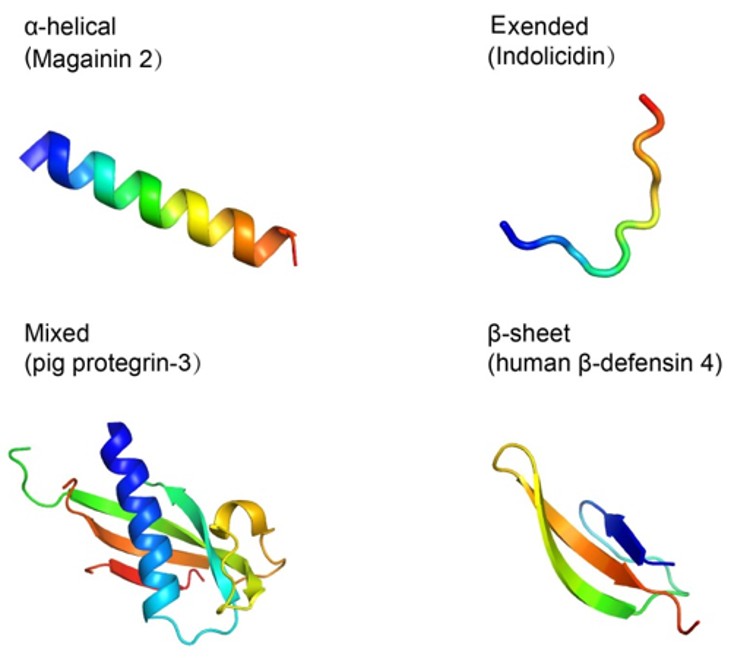 Figure 1. The three-dimensional structures of different types of antimicrobial peptides.
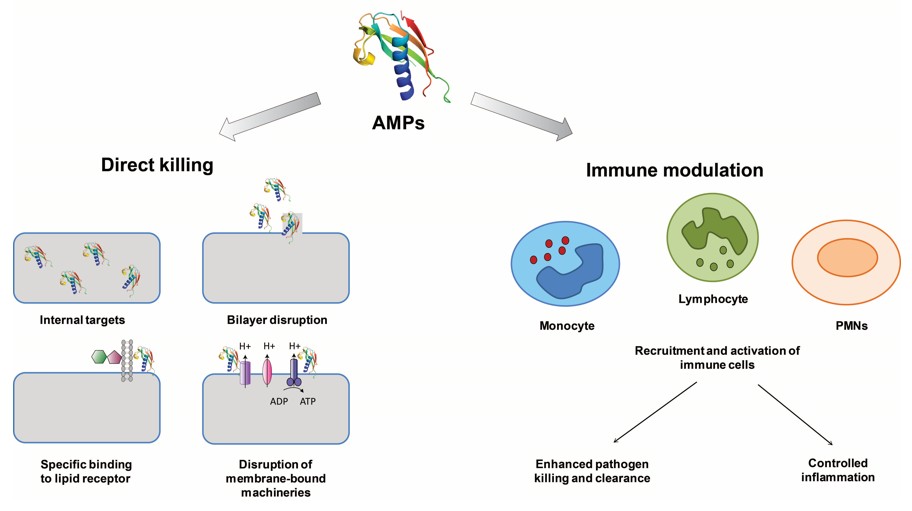 Figure 2. Various mechanisms of action of antimicrobial peptide. (Kumar et al., 2018)
AMPs offer several advantages over traditional antibiotics:
Given their distinct mechanisms and therapeutic potential, AMPs—both natural and synthetic—are being actively developed as novel antimicrobial agents, particularly in response to rising drug-resistant pathogens.
The success of AMP projects hinges on consistent material quality, well-designed functional testing, and strategic alignment with development goals. Profacgen's AMP services are designed to help teams:
AMPs have diverse structure–function relationships, and project decisions often depend on reproducible activity profiles, well-defined peptide quality attributes, and supporting analytical documentation. Our service suite prioritizes decision-relevant outputs, not just technical data.
AMP services are especially valuable when:
Rather than treating AMPs as isolated assets, we help integrate peptide workflows with your broader development and quality strategy.
Profacgen's Antimicrobial Peptides Services are structured around four major capability pillars:
Peptide Design and Sequence Optimization
Peptide Synthesis and Production
Functional Testing and Activity Evaluation
Characterization and Documentation
Each phase of the service is executed with controlled documentation and structured reporting, enabling you to interpret results in context and plan subsequent steps.

The following examples illustrate typical business-relevant use cases for AMP services. They are illustrative and not tied to specific client engagements.
Program Context:
A development team was evaluating multiple antimicrobial peptide (AMP) candidates and required consistent, high-quality peptide material for comparative functional assessment. Reliable and reproducible peptide batches were critical to benchmark activity across a panel of bacterial, fungal, and viral pathogens. Variability in peptide preparation could compromise assay results and impede the accurate prioritization of lead candidates.
Objective:
Generate reproducible peptide batches with defined activity profiles to support data-driven lead selection and ensure that the most promising candidates advanced efficiently into downstream functional studies.
Approach:
Custom synthesis of multiple AMP candidates was performed under controlled conditions. Each batch underwent rigorous in vitro testing against a standardized panel of pathogens. Comparative benchmarking allowed direct evaluation of potency, spectrum, and stability. Documentation of peptide quality and activity data ensured traceability and reproducibility, supporting decision-making across the discovery workflow.
Outcome:
The program delivered reliable and comparable activity profiles for all candidates. These results enabled the team to prioritize leads effectively, allocate resources efficiently, and advance the most promising AMPs into further preclinical studies with confidence.
Program Context:
A promising peptide candidate demonstrated strong antimicrobial activity in early screens but exhibited instability under intended formulation conditions, limiting its therapeutic potential. Stability concerns threatened reproducibility, shelf life, and downstream development.
Objective:
Produce characterized peptide material with modifications designed to improve stability while retaining antimicrobial activity, providing actionable data for formulation development.
Approach:
Sequence optimization strategies were employed to enhance stability without compromising function. Candidate peptides were synthesized and subjected to stability-focused functional testing under various conditions, including temperature, pH, and storage buffers. Analytical characterization confirmed structural integrity and activity retention. Documentation of modifications and performance data provided a clear understanding of the peptide's formulation compatibility.
Outcome:
High-quality peptide material with improved stability was produced, accompanied by detailed activity and characterization data. This enabled the formulation team to make informed decisions, select appropriate excipients, and advance the candidate toward preclinical and clinical development with reduced risk of degradation and activity loss.
Reference:
Fill out this form and one of our experts will respond to you within one business day.