We use cookies to understand how you use our site and to improve the overall user experience. This includes personalizing content and advertising. Read our
Privacy Policy
Profacgen provides end-to-end analytical similarity assessment services, designed to demonstrate that a biosimilar candidate is highly similar to its reference product, with no clinically meaningful differences in safety, purity, and potency. Our programs integrate comprehensive structural characterization, functional assessment, and statistical data interpretation within a regulatory-oriented framework that supports 351(k) submissions under the PHS Act.
Analytical similarity is the foundation of biosimilar development. Unlike generic small-molecule drugs, biosimilars exhibit high molecular complexity and sensitivity to manufacturing process changes. Section 351(k) of the PHS Act requires that analytical studies demonstrate the biological product is highly similar to the reference product notwithstanding minor differences in clinically inactive components. This makes analytical testing the crucial first step—and the scientific backbone—of every biosimilar development program.
Why Analytical Similarity Matters
Analytical similarity assessment establishes the scientific foundation for the totality of evidence required for biosimilar approval. By rigorously comparing the biosimilar candidate against the reference product across critical quality attributes (CQAs) using orthogonal methods, developers can reduce residual uncertainty and justify streamlined nonclinical and clinical programs.
Biosimilar Development Pipeline
The FDA and EMA emphasize that comprehensive analytical similarity data can reduce or eliminate the need for extensive clinical trials when the similarity exercise demonstrates high structural and functional congruence. Conversely, inadequate analytical characterization increases regulatory risk, extends development timelines, and may necessitate larger, more expensive clinical studies to address unresolved uncertainty.
Figure 1. A comprehensive map of orthogonal analytical platforms for different Critical Quality Attributes (CQAs) i.e., primary structure, Higher Order Structure (HOS), glycosylation, product-related and process-related variant used in analytical similarity assessment. (Nupur et al., 2022)
Critical Quality Attributes (CQAs): Molecular properties most relevant to safety and efficacy, ranked by risk and impact on mechanism of action
Orthogonal methods: Complementary analytical techniques that assess the same attribute through independent physicochemical or biological principles, increasing confidence in similarity conclusions
Similarity exercise: Structured, head-to-head comparison with predefined acceptance criteria, statistical evaluation, and tiered assessment based on CQA criticality
Totality of evidence: Integration of analytical, nonclinical, and clinical data demonstrating that minor differences do not affect safety or efficacy
Residual uncertainty reduction: Systematic elimination of analytical gaps that would otherwise require additional clinical investigation
Our Analytical Similarity Strategy
Profacgen employs a structured, stepwise analytical similarity strategy aligned with FDA, EMA, and WHO biosimilar guidelines:
Reference Product Selection: Sourcing and comprehensive characterization of representative reference product lots to establish the quality target profile
CQA Identification and Ranking: Risk-based assessment identifying critical quality attributes most relevant to safety and efficacy, with tier assignment (Tier 1: most critical; Tier 2: moderate; Tier 3: low)
Functional Assessment: Biological activity evaluation through binding, signaling, and mechanism-of-action assays
Purity and Impurity Profiling: Comparative assessment of aggregates, fragments, charge variants, and process-related impurities
Similarity Data Integration: Statistical comparison, trend analysis, and quality attribute ranking with regulatory-compliant documentation
Core Assessment Categories
Profacgen provides comprehensive analytical similarity assessment across four integrated capability domains, each supported by multiple orthogonal platforms:
Structural Similarity Assessment
Comprehensive physicochemical characterization comparing primary sequence, higher-order structure, and post-translational modifications between biosimilar and reference product. Capabilities include:
Peptide mapping with LC-MS/MS for sequence confirmation and modification site identification
Intact and subunit mass analysis by high-resolution mass spectrometry
Disulfide bond mapping and free thiol determination
Secondary and tertiary structure assessment by circular dichroism, FTIR, and NMR
Post-translational modification profiling including oxidation, deamidation, and glycation
Analytical similarity assessment extends beyond generating comparative data—it requires rigorous statistical evaluation and scientific interpretation to support regulatory decision-making. Profacgen provides comprehensive data analytics capabilities that transform raw analytical results into defensible similarity conclusions:
Quality attribute ranking: Risk-based CQA prioritization using failure mode effects analysis (FMEA) and impact scoring, with tier assignment guiding the stringency of similarity evaluation
Equivalence testing and similarity margins: Statistical frameworks including two one-sided tests (TOST) for Tier 1 CQAs, quality range approaches for Tier 2, and descriptive comparison for Tier 3
Multi-lot trend analysis: Evaluation of batch-to-batch variability for both reference and biosimilar products, ensuring that observed differences are consistent and not indicative of process drift
Acceptance criteria development: scientifically justified similarity margins based on reference product variability, analytical method precision, and clinical relevance thresholds
Residual uncertainty assessment: Systematic identification of analytical gaps and recommendations for additional characterization or clinical study to address remaining uncertainty
Integrated similarity reports: Regulatory-compliant documentation synthesizing all analytical data, statistical analyses, and scientific conclusions into coherent submission packages
Profacgen Biosimilar Testing Capabilities
Our integrated biosimilar testing platform spans the full range of physicochemical, structural, and functional characterization required for analytical similarity demonstration:
Protein Physicochemical Properties: Molecular mass (ultracentrifugation, SDS-PAGE, SE-HPLC, laser light scattering); isoforms (isoelectric focusing, capillary electrophoresis, IE-HPLC); extinction coefficient determination
Regulatory-Aligned Strategy: Programs designed around FDA, EMA, and WHO biosimilar guidelines with tiered CQA assessment, predefined similarity margins, and submission-ready documentation that preempts regulatory queries.
Orthogonal Method Depth: Multi-platform characterization using independent physicochemical and biological principles to maximize confidence in similarity conclusions and reduce residual uncertainty.
Statistical Rigor: Comprehensive data interpretation including equivalence testing, quality range analysis, multi-lot trending, and acceptance criteria justification that transforms raw data into defensible regulatory evidence.
Integrated Development Support: Seamless coordination from reference product characterization through analytical similarity, nonclinical toxicology, and clinical bioanalytical services within a unified program management framework.
Reference Product Expertise: Extensive experience sourcing, characterizing, and managing reference products with documented stability and batch-to-batch variability assessment supporting robust similarity baselines.
Residual Uncertainty Focus: Systematic identification and resolution of analytical gaps to minimize downstream clinical burden, accelerating development timelines and reducing program cost.
Representative Case Studies
Case 1: Analytical Similarity Strategy for Monoclonal Antibody Biosimilar
Background:
A biosimilar developer required a comprehensive analytical similarity package for a monoclonal antibody candidate targeting an autoimmune indication. The program needed to demonstrate high similarity across Tier 1 CQAs to support a streamlined clinical development pathway and 351(k) submission.
Our Solution:
Profacgen implemented a tiered analytical similarity strategy with 25 CQAs ranked by risk. Tier 1 attributes (potency, binding affinity, Fc function, glycosylation) were evaluated with equivalence testing using TOST with 90% confidence intervals. Orthogonal methods included SPR for binding kinetics, cell-based assays for potency, and HILIC-UPLC for glycan profiling. Ten reference product lots were characterized to establish quality ranges and batch-to-batch variability.
Final Results:
All Tier 1 CQAs met equivalence criteria with similarity margins within reference product variability. Glycan profiles showed minor differences in afucosylation levels that were demonstrated not to affect ADCC activity. The analytical package supported FDA scientific advice with positive feedback, enabling a reduced clinical program. The 351(k) application was submitted with analytical similarity as the primary evidence foundation.
Case 2: Multi-Lot Comparison Resolving Glycan Differences
Background:
Initial analytical comparison of a biosimilar candidate revealed higher high-mannose glycan content compared to the reference product, raising concerns about pharmacokinetic impact and immunogenicity risk. The developer needed to determine whether this difference was clinically meaningful or within acceptable analytical variability.
Our Solution:
Profacgen expanded the reference product characterization to twenty lots, revealing that high-mannose content varied substantially across reference batches (8–18% of total glycans). The biosimilar candidate fell within this observed range. Orthogonal confirmation included in vitro FcRn binding studies showing equivalent serum half-life prediction, and in vivo pharmacokinetic studies in non-human primates confirming comparable clearance profiles.
Final Results:
The multi-lot analysis demonstrated that the apparent glycan difference was within reference product batch-to-batch variability and not clinically meaningful. The orthogonal pharmacokinetic data provided additional confidence. The similarity assessment was accepted by EMA during the scientific advice procedure, and the biosimilar advanced to Phase III with the glycan difference documented as not clinically relevant.
Q: What is analytical similarity in biosimilar development?
A: Analytical similarity is the comprehensive, head-to-head comparison of a biosimilar candidate against its reference product using multiple orthogonal analytical methods. The goal is to demonstrate that the biosimilar is highly similar in structure and function, with no clinically meaningful differences, thereby supporting reduced nonclinical and clinical programs under the 351(k) biosimilar pathway.
Q: How many reference product lots are needed for similarity assessment?
A: FDA recommends a minimum of 10 reference product lots to adequately characterize batch-to-batch variability and establish meaningful quality ranges. More lots provide greater statistical confidence in variability estimates. Profacgen typically characterizes 10–20 lots depending on product availability, CQA criticality, and observed variability.
Q: What are Critical Quality Attributes (CQAs) in biosimilar assessment?
A: CQAs are molecular properties most relevant to the safety and efficacy of the product. In biosimilar development, CQAs are identified and ranked by risk (Tier 1: most critical; Tier 2: moderate; Tier 3: low) based on their impact on mechanism of action, immunogenicity potential, and clinical performance. Tier 1 CQAs require the most stringent similarity evaluation, typically equivalence testing with 90% confidence intervals.
Q: What analytical methods are typically used in similarity assessment?
A: Similarity assessment employs orthogonal methods across multiple platforms: mass spectrometry (intact mass, peptide mapping, glycan analysis), chromatography (SEC-HPLC, IEX, HILIC), electrophoresis (CE-SDS, icIEF), spectroscopy (CD, FTIR), and biological assays (binding, cell-based potency, ADCC/CDC). The specific panel is tailored to the product class, mechanism of action, and regulatory requirements.
Q: How are similarity acceptance criteria established?
A: Acceptance criteria are based on reference product batch-to-batch variability, analytical method precision, and clinical relevance. For Tier 1 CQAs, equivalence margins are typically set at 1.5 times the standard deviation of reference lots. Tier 2 attributes use quality ranges (mean ± 3 SD), while Tier 3 attributes are evaluated descriptively. Criteria are justified scientifically and agreed with regulators during scientific advice.
Q: Can analytical similarity reduce clinical study requirements?
A: Yes. Comprehensive analytical similarity demonstrating high structural and functional congruence can support reduced or waived clinical efficacy studies, particularly for products with well-understood mechanisms and established clinical endpoints. The FDA and EMA have approved biosimilars based primarily on analytical and pharmacokinetic similarity, with confirmatory clinical studies limited to immunogenicity assessment.
Q: What is the role of residual uncertainty in biosimilar development?
A: Residual uncertainty refers to analytical gaps or observed differences that remain after comprehensive characterization. Regulators expect developers to systematically address uncertainty through additional analytical studies, nonclinical evaluation, or clinical trials depending on the nature and potential clinical relevance of the gap. Profacgen's programs are designed to minimize residual uncertainty through exhaustive orthogonal characterization.
References:
FDA Guidance for Industry. Scientific Considerations in Demonstrating Biosimilarity to a Reference Product. U.S. Food and Drug Administration; 2015.
EMA. Guideline on Similar Biological Medicinal Products Containing Biotechnology-Derived Proteins as Active Substance: Quality Issues. European Medicines Agency; 2014.
WHO. Guidelines on Evaluation of Similar Biotherapeutic Products (SBPs). World Health Organization; 2009.
Public Health Service Act, Section 351(k). U.S. Code Title 42, Section 262.
Nupur N, Joshi S, Gulliarme D, Rathore AS. Analytical similarity assessment of biosimilars: global regulatory landscape, recent studies and major advancements in orthogonal platforms. Front Bioeng Biotechnol. 2022;10:832059. doi:10.3389/fbioe.2022.832059
Online Inquiry
Fill out this form and one of our experts will respond to you within one business day.

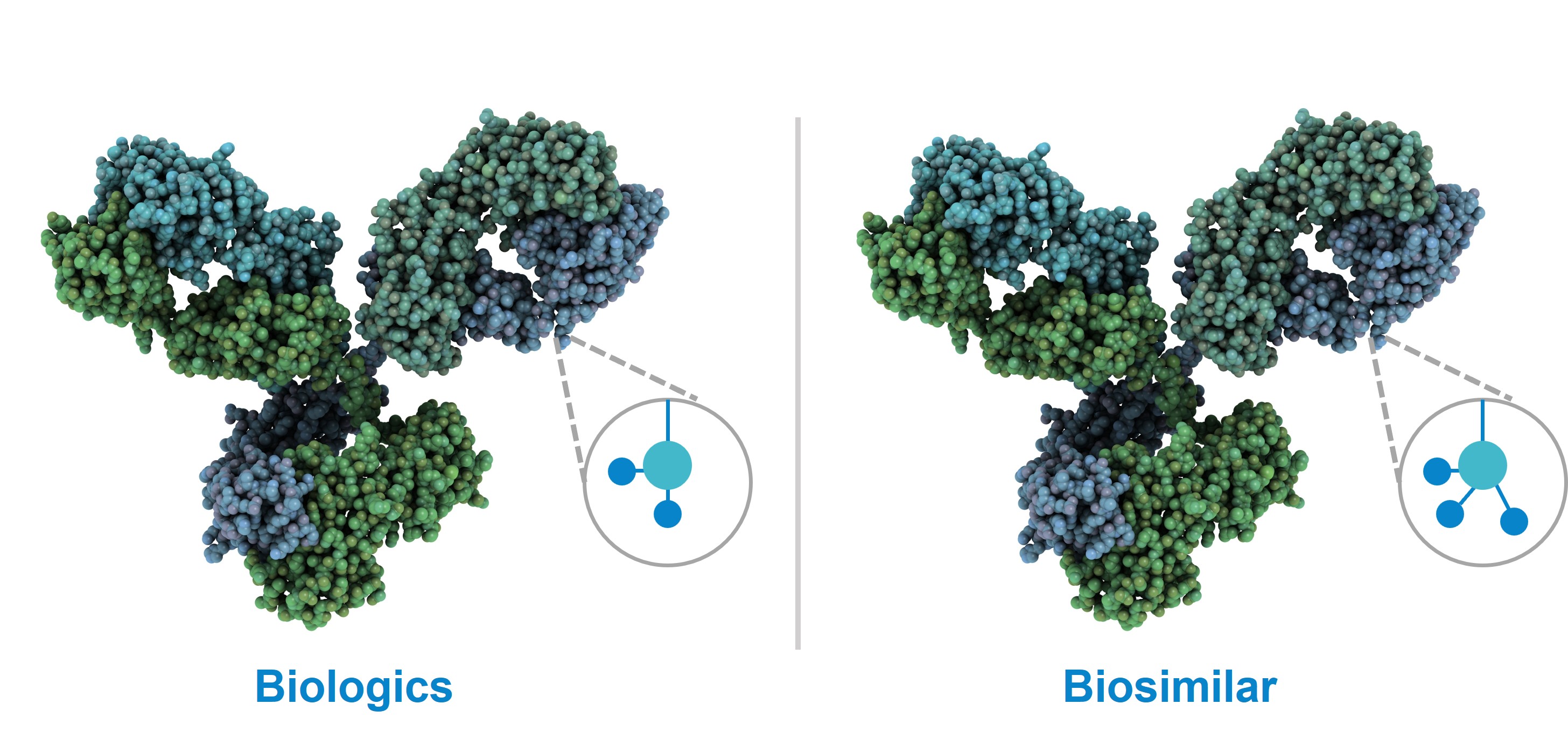
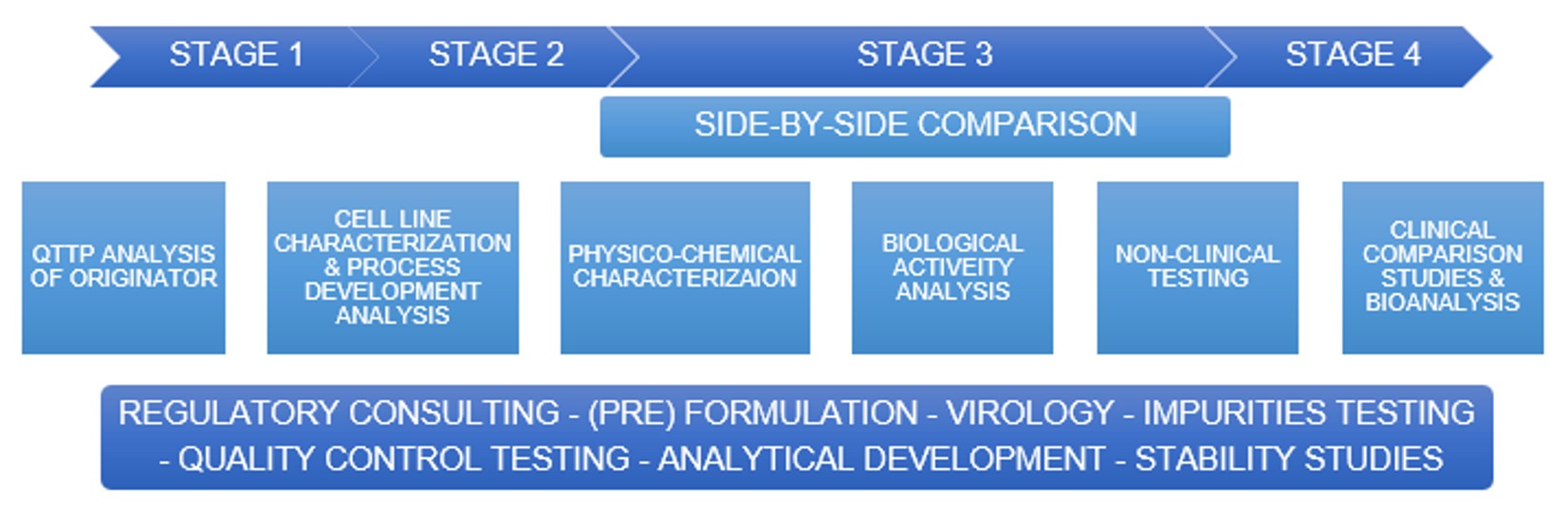
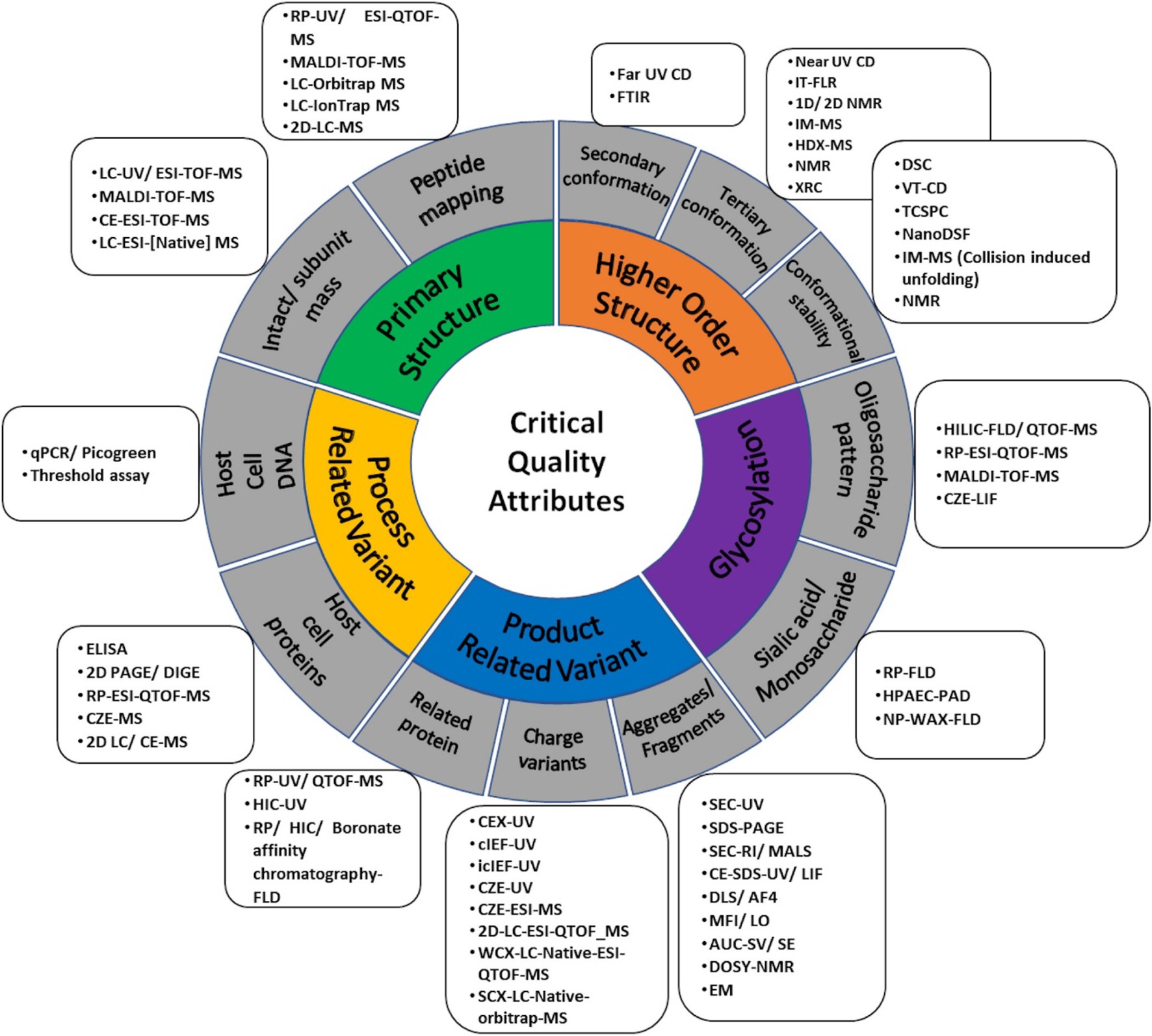 Figure 1. A comprehensive map of orthogonal analytical platforms for different Critical Quality Attributes (CQAs) i.e., primary structure, Higher Order Structure (HOS), glycosylation, product-related and process-related variant used in analytical similarity assessment. (Nupur et al., 2022)