
Microbial anaerobic fermentation is a powerful and versatile bioprocessing approach for producing a wide range of industrial chemicals, biofuels, nutraceuticals, and therapeutic molecules. By leveraging the metabolic capabilities of microorganisms under oxygen-limited or oxygen-free conditions, this technology enables efficient and scalable conversion of carbohydrates and biomass into valuable products.
Profacgen provides Microbial Anaerobic Fermentation services that integrate strain engineering, process optimization, and scalable bioprocess development. Our platform supports diverse microbial systems—including bacteria and yeast—and enables the production of organic acids, alcohols, gases, and bioactive compounds. With advanced metabolic engineering strategies and flexible fermentation modes, we help clients maximize yield, enhance product specificity, and accelerate industrial application across biotechnology, pharmaceutical, and consumer product industries.
Anaerobic fermentation is a metabolic process common to many microorganisms, including bacteria and certain eukaryotic microbes, in which carbohydrates (such as sugars) are converted into organic acids, gases, or alcohols under oxygen-limited conditions.
In microbial anaerobic fermentation:
This process forms the basis for producing:
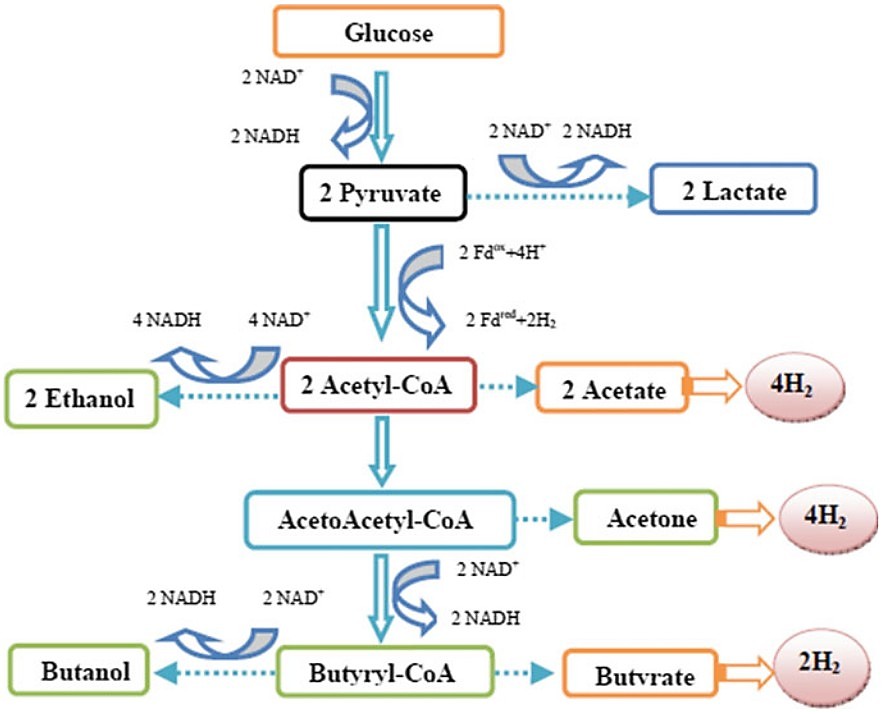 Figure 1. Schematic illustration of anaerobic fermentation pathways for the breakdown of glucose and production of various metabolites. (Kuppam et al., 2017)
Microorganisms are widely used to produce nutraceuticals or bacteriocins through accumulation of various primary metabolites, as well as complex secondary metabolites. To further enhance productivity, metabolic engineering strategies are often employed, including:
These approaches enable targeted production of specific metabolites with improved yield and efficiency.
Profacgen provides a comprehensive suite of microbial anaerobic fermentation services, covering strain development, fermentation optimization, and industrial-scale production.
Microbial Strain Selection and Engineering
We utilize a diverse range of microbial systems to support different fermentation objectives.
Supported Microorganisms:
Each strain can be used individually or in combination, depending on the desired metabolic outcome.
Advanced Capabilities:
Anaerobic Fermentation Process Development
We design and optimize fermentation processes tailored to specific products and microbial systems.
Fermentation Modes:
While most industrial fermentation processes use batch or fed-batch modes, continuous fermentation can offer improved economic efficiency when sterility and process control challenges are properly addressed.
Process Optimization Parameters:
Metabolite Production and Optimization
Our platform supports the production of a wide range of fermentation-derived products.
Examples of Metabolites:
Additional Product Categories:
We optimize fermentation pathways to maximize yield, purity, and productivity.
Biomass Conversion and Bioprocessing
Anaerobic fermentation is also used for efficient biomass utilization.
Capabilities:
These approaches support sustainable and environmentally friendly industrial processes.
Scale-Up and Industrial Manufacturing Support
We provide seamless transition from laboratory-scale development to industrial production.
Capabilities:
Our services support both small-scale development and large-scale manufacturing across multiple industries.
Process Integration and Customization
We offer flexible and customized solutions to meet diverse application needs.
Applications:
We help your fermentation product reach its full potential across these sectors.
Lactic acid bacteria (LAB), such as Lactobacillus species, are widely used in anaerobic fermentation for the production of lactic acid, probiotics, bacteriocins, and functional food ingredients. These organisms are particularly valuable for applications in food, nutraceutical, and pharmaceutical industries due to their safety profile and metabolic efficiency.
Our Lactic Acid Bacteria Fermentation services focus on strain optimization, media development, and process control to maximize lactic acid yield, enhance product purity, and support large-scale industrial production.
Challenge:
A client required high-yield lactic acid production for food-grade applications but faced limitations with existing strain performance and process efficiency that impacted commercial viability.
Approach:
Profacgen selected a high-performance Lactobacillus strain through rigorous screening for productivity and acid tolerance. Carbon source composition and concentration were optimized to maximize substrate utilization. Fed-batch fermentation strategies were developed to maintain optimal growth conditions and prevent product inhibition throughout the production cycle.
Outcome:
Achieved a significant increase in lactic acid yield compared to baseline processes, with improved product purity meeting food-grade specifications. A scalable industrial process was successfully established, enabling the client to transition to commercial production with enhanced cost efficiency and consistent quality.
Challenge:
A client developing renewable biofuels experienced low butanol yield in anaerobic fermentation using Clostridium species, limiting process economics and commercial feasibility due to inefficient carbon conversion and elevated solvent toxicity.
Approach:
Profacgen performed metabolic pathway optimization to redirect carbon flux toward butanol biosynthesis. Redox balance was adjusted through media supplementation and gas sparging strategies to support favorable reaction conditions. Fermentation parameters including pH, temperature, and nutrient feeding were systematically optimized.
Outcome:
Achieved increased butanol production with significantly improved fermentation efficiency. By-product formation was substantially reduced, enhancing overall process economics. The optimized fermentation platform provided the client with a viable pathway for scalable biofuel production.
Consult Our Experts on Your Project
References:
Fill out this form and one of our experts will respond to you within one business day.