We use cookies to understand how you use our site and to improve the overall user experience. This includes personalizing content and advertising. Read our
Privacy Policy
Madin-Darby Canine Kidney Cell Line (MDCK) Permeability Assay
Madin-Darby Canine Kidney Cell Line (MDCK) Permeability Assay
Profacgen's MDCK Permeability Assay Services deliver rapid, reproducible evaluation of membrane permeability, efflux transporter interactions, and drug transport characteristics using Madin-Darby canine kidney cell monolayers, supporting lead candidate selection and ADME screening for protein degraders and small molecule drug candidates.
The intestinal absorption of oral drug products is a critical determinant of efficacy, toxicity, and pharmacokinetics. Prediction of intestinal absorption greatly accelerates early-stage compound screening. Among cell-based methods, the MDCK model is widely used due to rapid proliferation, high monolayer integrity, and compatibility with high-throughput formats. MDR1-MDCK cells, derived from transfection with the human MDR1 gene encoding P-glycoprotein (P-gp), enable bidirectional transport assessment and efflux ratio determination, making MDCK-MDR1 an effective predictor of both intestinal and blood-brain barrier permeability.
Overview
Figure 1. Implementation of cell-based permeability studies in drug development (Jin et al., 2014).
The MDCK model offers distinct advantages for rapid permeability assessment and transporter-specific studies:
MDCK epithelial monolayers: MDCK cells are an epithelial line derived from canine kidney with rapid proliferation and differentiation characteristics. They form tight, homogeneous monolayers within 3 days, significantly faster than Caco-2 differentiation. Low endogenous transporter expression and metabolic activity minimize confounding variables, enabling cleaner interpretation of passive diffusion and engineered transporter effects
Passive permeability: The MDCK monolayer provides reliable measurement of passive diffusion at the cellular level. Lower transepithelial electrical resistance (TEER) values compared to Caco-2 reduce experimental variability, and compatibility with buffers containing organic solvents accommodates lipophilic compounds
Efflux transporter evaluation: MDR1-MDCK cells express human P-glycoprotein, enabling direct assessment of P-gp-mediated efflux. Bidirectional transport (A-B and B-A) with efflux ratio calculation identifies compounds susceptible to active efflux, predicting intestinal secretion, limited brain penetration, and potential drug-drug interactions
Drug transport studies: The 60-minute transport protocol and 24- or 96-well format enable high-throughput screening of compound libraries. LC-MS/MS quantification provides sensitive, specific compound detection with minimal sample consumption, supporting rapid ADME profiling and lead optimization cycles
Our Assay Capabilities
Profacgen provides comprehensive MDCK transport studies tailored to diverse compound types and screening requirements:
Bidirectional Permeability Assays
Apical-to-basolateral (A-B) and basolateral-to-apical (B-A) transport assessment.
A-B transport: Prediction of intestinal absorption and blood-brain barrier penetration from luminal to serosal direction
B-A transport: Detection of P-gp-mediated efflux and active secretion
Mass balance: Recovery assessment to identify metabolism, adsorption, or stability issues
Papp Measurement
Quantitative apparent permeability determination with standardized classification.
Low permeability: Papp ≤ 0.500 × 10⁻⁶ cm/s
Moderate permeability: 0.500 < Papp < 2.50 × 10⁻⁶ cm/s
High permeability: Papp ≥ 2.50 × 10⁻⁶ cm/s
LC-MS/MS quantification for sensitive, specific compound detection
Efflux Ratio Analysis
Identification of P-gp-mediated efflux and transporter interactions.
Efflux ratio calculation: B-A Papp / A-B Papp; values > 2 indicate active efflux
P-gp inhibition: Verapamil or cyclosporin A co-treatment to confirm P-glycoprotein contribution
Substrate classification: Identification of P-gp substrates, non-substrates, and inhibitors
Transport Characterization
Mechanism dissection and physicochemical correlation.
Temperature dependence: 4°C versus 37°C comparison to identify active transport
pH dependence: Assessment of ionization state effects on permeability
Concentration dependence: Saturation kinetics for carrier-mediated transport
Applications
Our MDCK permeability assay supports diverse drug discovery and development applications:
Protein degraders: Rapid permeability screening of PROTAC libraries to identify cellular uptake liabilities. MDCK-MDR1 assesses whether poor cellular activity stems from permeability or intrinsic degradation inefficiency, guiding linker and warhead optimization
Lead candidate selection: High-throughput ranking of compound series by Papp and efflux ratio to prioritize candidates with favorable absorption and distribution profiles. Integration with solubility and metabolic data enables multi-parameter ADME scoring
ADME screening: Early-stage prediction of intestinal absorption, brain penetration, and efflux-mediated drug-drug interaction potential. MDCK data informs biopharmaceutical classification, formulation strategy, and dosing regimen design
Drug discovery: Structure-permeability relationship development, transporter liability identification, and optimization of physicochemical properties to achieve target product profiles for oral and CNS indications
Deliverables
Profacgen provides comprehensive documentation aligned with regulatory and decision-making requirements:
Parameter
Description
Permeability Results
A-B and B-A Papp values, efflux ratios, mass balance recovery, and permeability classification (low/moderate/high) with replicate statistics
Transport Analysis
Mechanism assessment (passive/active), P-gp contribution, pH-dependent permeability, and concentration-dependent kinetics
Rapid Turnaround: 3-day monolayer formation versus 21 days for Caco-2, enabling faster screening cycles and earlier decision points in lead optimization.
High Reproducibility: Homogeneous monolayers with low transporter background reduce experimental variability and improve cross-study comparability.
P-gp-Specific Evaluation: MDR1-MDCK cells express human P-glycoprotein, enabling direct assessment of efflux liability and drug-drug interaction potential without confounding endogenous transporters.
High-Throughput Compatibility: 24-well and 96-well formats with 60-minute transport protocols support rapid library screening with minimal compound consumption.
Representative Program Scenarios
Scenario 1: High-Throughput MDCK Screening for PROTAC Library
Program Context:
A PROTAC program generated 50 analogs with similar biochemical potency but unknown cellular activity. The team needed rapid permeability screening to identify uptake-limited compounds and prioritize candidates for cellular validation.
Objective:
To rank all 50 analogs by MDCK Papp and efflux ratio within 3 weeks, correlating permeability with physicochemical properties and cellular degradation.
Approach:
Profacgen established MDCK-MDR1 monolayers in 96-well Transwell format with TEER validation. Compounds were screened at 10 µM in A-B and B-A directions with LC-MS/MS quantification. Papp and efflux ratios were calculated. Top, middle, and bottom performers were selected for Caco-2 confirmation and cellular degradation assays.
Outcome:
MDCK screening identified 12 high-permeability analogs (Papp > 1.0 × 10⁻⁶ cm/s) with acceptable efflux ratios (< 3). These 12 analogs showed significantly better cellular degradation than low-permeability counterparts, confirming permeability as the primary bottleneck. Two candidates with optimal balance of permeability and degradation advanced to in vivo PK studies.
Scenario 2: P-gp Efflux Assessment for CNS-Targeted Degrader
Program Context:
A CNS-targeted degrader showed good passive permeability but required confirmation of minimal P-gp efflux to predict brain penetration and guide medicinal chemistry.
Objective:
To characterize bidirectional transport in MDCK-MDR1, confirm P-gp involvement, and evaluate analogs with modified properties to reduce efflux liability.
Approach:
Profacgen performed A-B and B-A transport in MDCK-MDR1 with and without verapamil. The efflux ratio was calculated and P-gp contribution quantified. A panel of analogs with reduced hydrogen bond donors was evaluated in parallel. PAMPA-BBB provided orthogonal prediction of passive blood-brain barrier permeability.
Outcome:
The parent compound exhibited an efflux ratio of 7.2, indicating strong P-gp-mediated efflux. Verapamil reduced B-A transport by 80%, confirming P-gp dependence. Optimized analogs with fewer H-bond donors achieved efflux ratios < 2.5 while maintaining degradation potency. The lead analog progressed to in vivo brain penetration studies with predicted CNS exposure sufficient for target engagement.
Q: What is the difference between MDCK and MDCK-MDR1?
A: Wild-type MDCK cells have low endogenous transporter expression, suitable for passive permeability assessment. MDCK-MDR1 cells are transfected with human MDR1 encoding P-glycoprotein, enabling direct evaluation of P-gp-mediated efflux. We use MDCK-MDR1 as our standard platform for comprehensive transport characterization.
Q: When should I choose MDCK over Caco-2?
A: Choose MDCK for rapid screening (3-day setup vs. 21 days for Caco-2), high-throughput campaigns, and P-gp-specific questions. Choose Caco-2 for regulatory-grade absorption prediction requiring human intestinal transporter representation. Many programs use MDCK for initial screening and Caco-2 for validation of lead candidates.
Q: Can MDCK predict blood-brain barrier penetration?
A: Yes. MDCK-MDR1 is an effective predictor of both intestinal and blood-brain barrier permeability. P-gp efflux in MDCK-MDR1 correlates with limited brain penetration in vivo. We integrate MDCK data with PAMPA-BBB and physicochemical property analysis for comprehensive CNS penetration prediction.
Q: How do you handle compounds with poor aqueous solubility?
A: MDCK is compatible with buffers containing organic solvents and surfactants, accommodating lipophilic compounds better than some other platforms. We optimize vehicle composition within validated ranges to maximize compound concentration without compromising monolayer integrity. Solubility-limited permeability is clearly reported.
Q: What compound amount is required for MDCK studies?
A: We typically require 0.5–1 mg compound at >95% purity for a full bidirectional study. DMSO stock solutions (10 mM) are preferred. High-throughput screening of 20–50 compounds requires proportionally more material. We provide detailed submission guidelines and can accommodate limited supply situations.
Q: What is the typical turnaround for MDCK studies?
A: Monolayer formation requires 3 days. Single compound bidirectional transport with LC-MS/MS analysis delivers within 1–2 weeks from compound receipt. High-throughput screening of 20–50 compounds in 96-well format requires 2–3 weeks. Rush services are available for urgent timelines.
References:
Jin X, Luong TL, Reese N, et al. Comparison of MDCK-MDR1 and Caco-2 cell based permeability assays for anti-malarial drug screening and drug investigations. Journal of Pharmacological and Toxicological Methods. 2014;70(2):188-194. doi:10.1016/j.vascn.2014.08.002
Irvine JD, Takahashi L, Lockhart K, et al. Mdck (Madin-darby canine kidney) cells: a tool for membrane permeability screening. Journal of Pharmaceutical Sciences. 1999;88(1):28-33. doi:10.1021/js9803205
Online Inquiry
Fill out this form and one of our experts will respond to you within one business day.

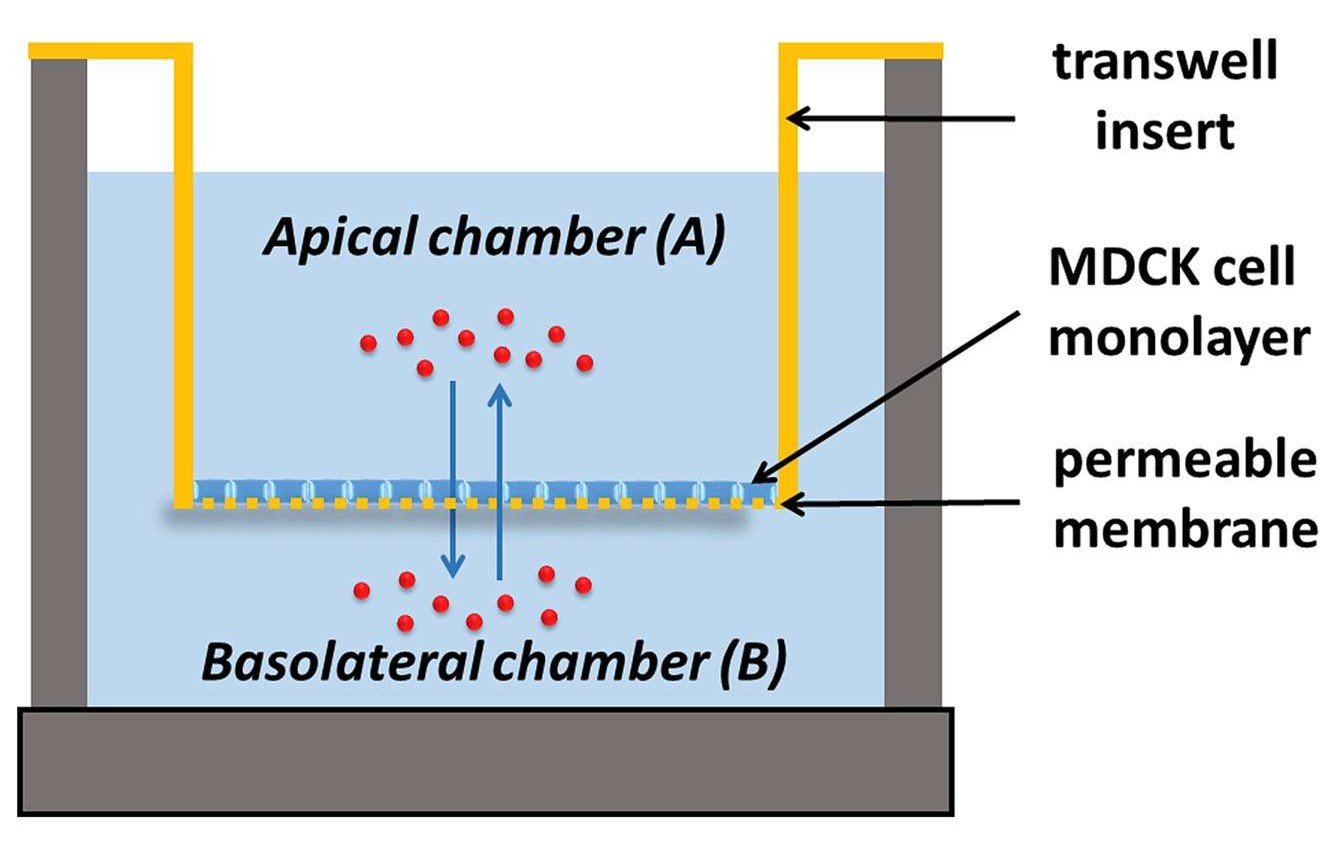
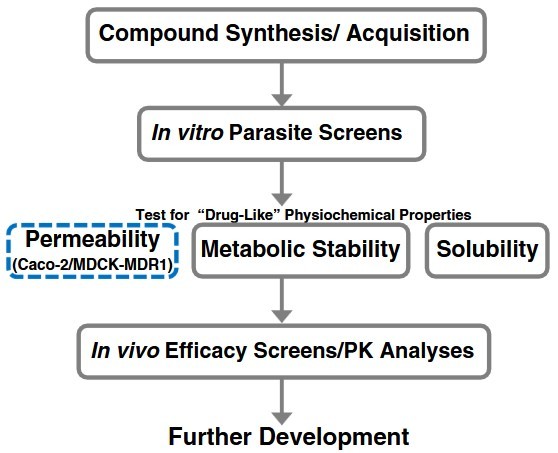 Figure 1. Implementation of cell-based permeability studies in drug development (Jin et al., 2014).