
Enzymes are biological catalysts that drive virtually every biochemical reaction in living organisms, from metabolic pathways and cellular signaling to DNA replication and immune defense. By accelerating the conversion of substrate molecules into products with extraordinary specificity and efficiency, enzymes maintain the delicate balance required for physiological homeostasis. Given their central role in disease mechanisms, enzymes represent one of the most extensively pursued target classes in drug discovery. Matrix metalloproteinases (MMPs) are critical mediators of tumor metastasis; protein kinase B (AKT/PKB) and protein kinase C (PKC) are major therapeutic targets for diabetes and oncology; viral proteases from HIV and HCV serve as essential targets for antiviral therapy; and cytochrome P450 enzymes govern drug metabolism with profound clinical implications. Profacgen provides comprehensive general enzyme activity assay services that support target validation, lead compound screening, and mechanism-of-action studies across a broad spectrum of enzyme classes. Our platform combines versatile detection methods with customized assay development to deliver accurate, reproducible data tailored to each project.
Profacgen offers a flexible, scalable enzyme activity assay platform designed to accommodate diverse research needs—from single-enzyme kinetic characterization to high-throughput screening of compound libraries. Our experienced scientific team works closely with clients to develop and optimize assays that faithfully reflect the biological activity of the target enzyme under physiologically relevant conditions.
Our portfolio encompasses well-characterized immunoassays, biochemical kits, and bespoke assay protocols that ensure accurate and reproducible results across enzyme classes and project scales.
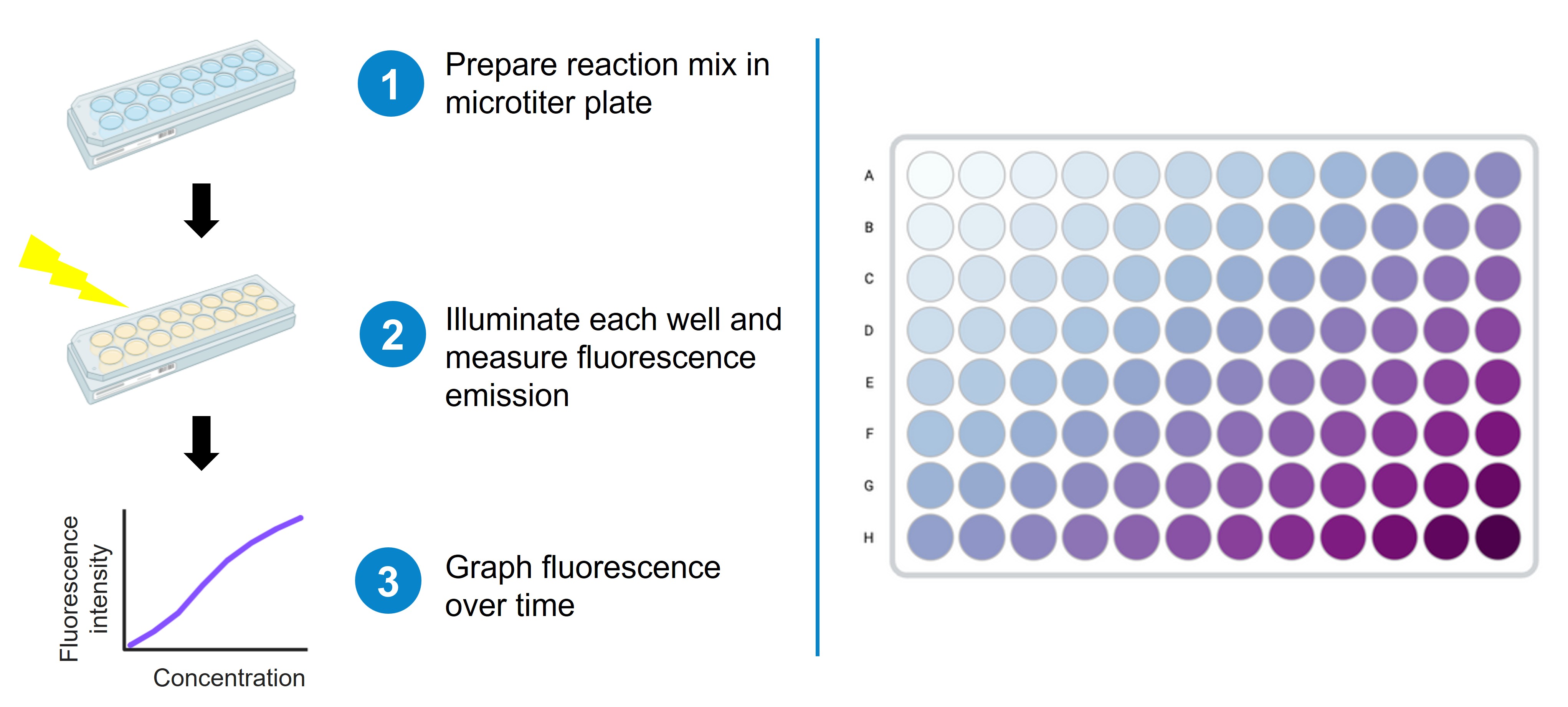
Profacgen maintains an extensive collection of validated assays covering major enzyme families implicated in human disease and therapeutic intervention:
Proteases
Proteases catalyze the hydrolysis of peptide bonds and are essential regulators of protein turnover, cell signaling, and pathogen invasion. Our protease assay portfolio includes matrix metalloproteinases (MMPs), cysteinyl aspartate–specific proteases (caspases), HIV and HCV viral proteases, thrombin, cathepsins, and the 20S proteasome. Detection formats range from fluorogenic peptide substrates to zymography for gelatinase activity.
Phosphatases
Phosphatases reverse the action of kinases by removing phosphate groups from proteins, lipids, and other substrates, thereby terminating or modulating signaling cascades. We support assays for protein tyrosine phosphatases (PTPs), dual-specificity phosphatases (DUSPs), vaccinia virus VH1-related phosphatase (VHR), phosphatase of regenerating liver 3 (PRL-3), and calcineurin (CaN), using p-nitrophenyl phosphate (pNPP) or fluorogenic phosphopeptide substrates.
Oxidases
Oxidases catalyze oxidation reactions that generate reactive oxygen species or convert substrates using molecular oxygen as the electron acceptor. Our oxidase assays include monoamine oxidase (MAO) for neurotransmitter metabolism, cyclooxygenase-2 (COX-2) for inflammatory signaling, and cytochrome P450 (CYP450) for drug metabolism and xenobiotic detoxification.
Hydrolases
Hydrolases cleave chemical bonds through the addition of water, participating in digestion, metabolism, and cellular maintenance. We offer assays for histone deacetylases (HDACs), angiotensin-converting enzyme (ACE), acetylcholinesterase, butyrylcholinesterase, β-secretase (BACE1), dipeptidyl peptidases (DPPs), and FTO demethylase, utilizing chromogenic, fluorogenic, or chemiluminescent substrates.
Kinases
As one of the largest and most therapeutically relevant enzyme families, kinases are comprehensively covered in our dedicated kinase assay services. For general enzyme activity inquiries, we support assays for protein tyrosine kinase (PTK), Aurora kinase (AURK), Janus kinase (JAK), cyclin-dependent kinase (CDK), polo-like kinase (PLK), pyruvate dehydrogenase kinase (PDK1), protein kinase D (PKD), Ca2+/calmodulin-dependent protein kinase (CAMK), cAMP-dependent protein kinase A (PRKACA), cGMP-dependent protein kinase (PRKG), glycogen synthase kinase (GSK), and stress-activated protein kinases (p38/SAPK, JNK).
Profacgen employs multiple detection modalities to match the catalytic properties of each enzyme and the sensitivity requirements of the project:
| Platform | Principle | Best Suited For | Key Advantages |
|---|---|---|---|
| Colorimetric Assays | Chromogenic substrate conversion produces a colored product absorbable at a specific wavelength (e.g., pNPP for phosphatases, Ellman’s reagent for esterases). | High-throughput screening, routine kinetic assays, enzymes with simple substrate–product pairs | Low cost, no specialized equipment, direct quantification |
| Fluorometric Assays | Fluorogenic substrates release a fluorescent moiety upon enzymatic cleavage; signal intensity is proportional to product formation. | High-sensitivity detection, real-time kinetics, proteases and phosphatases | High sensitivity and dynamic range, homogeneous format, multiplexing capability |
| Luminescence Assays | Coupled enzyme reactions (e.g., luciferase) convert the product of the target enzyme into light; signal is inversely proportional to inhibitor potency for ATP-consuming enzymes. | Kinases, ATPases, high-throughput screening in 384- or 1536-well formats | Extremely low background, wide dynamic range, ideal for miniaturization |
| Mass Spectrometry (LC-MS/MS) | Direct quantification of substrate and product masses enables label-free detection with high specificity and accuracy. | Complex substrates, non-peptide molecules, metabolite identification, regulatory studies | Label-free, definitive structural confirmation, multiplexed detection |
| Zymography | Substrate-embedded SDS-PAGE gels allow in-gel detection of proteolytic activity following electrophoresis and renaturation. | MMPs, gelatinases, collagenases, native enzyme visualization | Preserves enzyme molecular weight information, detects active vs. latent forms |
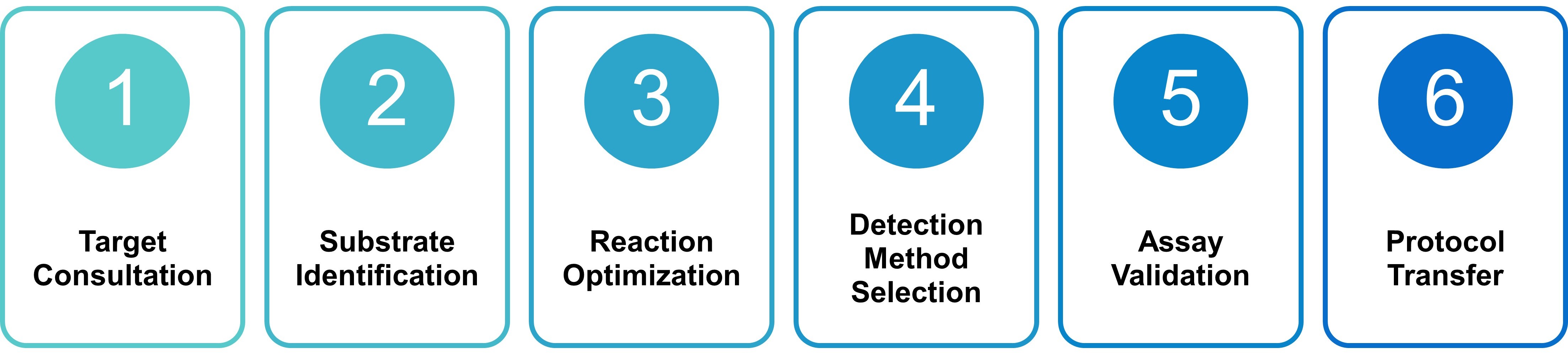
Not all enzymes are amenable to off-the-shelf assay kits. Profacgen specializes in the development and validation of bespoke enzyme assays for novel targets, atypical substrates, or specialized research questions. Our custom assay development workflow includes:
Background:
A pharmaceutical company required a robust, high-throughput assay to screen inhibitors of a novel matrix metalloproteinase (MMP) implicated in tumor invasion. Commercially available kits lacked the specificity and dynamic range needed for their compound library.
Our Solution:
Profacgen developed a fluorogenic peptide substrate assay optimized for the target MMP. We screened multiple peptide sequences to identify a substrate with high affinity (low Km) and rapid turnover, then optimized buffer conditions and zinc cofactor concentration. The assay was miniaturized to a 384-well format with automated liquid handling.
Final Results:
The custom assay achieved a Z′ factor > 0.8, enabling reliable single-shot screening of over 5,000 compounds. Confirmed hits were progressed to full IC50 determination, yielding a lead series with sub-micromolar potency and selectivity over related MMP family members.
Background:
A biotechnology startup needed to evaluate the isoform selectivity of a series of histone deacetylase (HDAC) inhibitors, requiring parallel assays for HDAC1, HDAC2, HDAC3, and HDAC6 to guide medicinal chemistry optimization.
Our Solution:
Profacgen established a panel of fluorogenic substrate assays using recombinant HDAC isoforms and a universal acetylated lysine substrate. Reaction conditions were standardized across all four isoforms to ensure comparability. Compounds were screened in 10-point dose–response curves with trichostatin A as the reference inhibitor.
Final Results:
The assay panel revealed potent, selective inhibition of HDAC6 (IC50 = 12 nM) with >100-fold selectivity over class I HDACs. These data directly informed the prioritization of a development candidate now in preclinical evaluation for neurodegenerative disease.
Fill out this form and one of our experts will respond to you within one business day.