
At Profacgen, we provide comprehensive protein and peptide crosslinking services that covalently bind biomolecules to create conjugates with enhanced stability, functionality, and therapeutic potential. Crosslinking is a fundamental technique in protein chemistry that enables the study of molecular interactions, construction of novel protein architectures, stabilization of protein complexes, and development of advanced biotherapeutics including antibody-drug conjugates, targeted protein degraders, and vaccine immunogens.
Our crosslinking platform encompasses three complementary strategies: enzymatic crosslinking for high-specificity bioconjugation under physiological conditions; photocrosslinking for spatiotemporal control and capture of transient interactions in living systems; and reagent-based crosslinking using bifunctional reagents with diverse chemoselectivities and customizable spacer characteristics. This integrated approach allows us to tailor solutions for each research program, from exploratory interaction mapping to process-scale manufacturing of clinical-grade conjugates.
With extensive experience in bioconjugation chemistry, our interdisciplinary team of biochemists and organic chemists guides every project from initial strategy selection through reaction optimization, purification, and analytical characterization to ensure consistent, high-quality results that meet your scientific and regulatory requirements.
Protein crosslinking is the formation of covalent bridges between amino acid residues, functional groups, or distinct molecules to create stable conjugates with new or enhanced properties. The technology addresses fundamental challenges in protein science: proteins are dynamic macromolecules whose non-covalent interactions are often transient and difficult to capture, and their functional properties frequently benefit from structural stabilization or modular combination with other biomolecules.
Crosslinking reagents are classified into three mechanistic categories, each with distinct reaction chemistries and optimal application profiles:
Reagent-Based Crosslinking employs bifunctional small molecules containing two reactive groups that form covalent bonds with specific protein functional groups. The reactivity of chemical crosslinkers is determined by their electrophilic groups, which target nucleophilic amino acid side chains. NHS esters react with primary amines (lysine, N-terminus) under mildly basic conditions; maleimides react with thiols (cysteine) near neutral pH; and imidoesters, aldehydes, and carbonyl-diimidazole provide alternative amine-reactive chemistries. Heterobifunctional crosslinkers combine two different reactive groups, enabling controlled conjugation between distinct functional classes.
Enzymatic Crosslinking exploits the catalytic activity of specialized enzymes to promote bond formation between specific amino acid residues. Transglutaminase catalyzes the Ca2+-dependent formation of isopeptide bonds between the γ-carboxamide group of glutamine and the ε-amino group of lysine, creating protease-resistant linkages with high specificity. Laccases and peroxidases generate tyrosyl radicals that undergo oxidative coupling to form dityrosine crosslinks. The substrate specificity of enzymes minimizes off-target modifications and preserves protein activity under mild, physiological conditions.
Photocrosslinking utilizes photoactivatable chemical groups that generate reactive intermediates upon UV irradiation. Diazirines undergo nitrogen extrusion to form short-lived carbenes that insert indiscriminately into proximal C–H, N–H, and O–H bonds. Benzophenones form longer-lived triplet diradicals that preferentially abstract hydrogen from carbon-hydrogen bonds and can undergo multiple excitation cycles. The key advantage of photocrosslinking is that activation is temporally and spatially controllable: reagents are chemically inert until irradiation, enabling capture of transient interactions and restricting crosslinking to defined cellular compartments or tissue regions.
The selection of crosslinking strategy depends on multiple parameters: the identity and accessibility of reactive groups on the target proteins; the required specificity (site-specific versus global); compatibility with protein stability and biological activity; the need for temporal or spatial control; scalability requirements; and the tolerance for residual reagents in the final application.
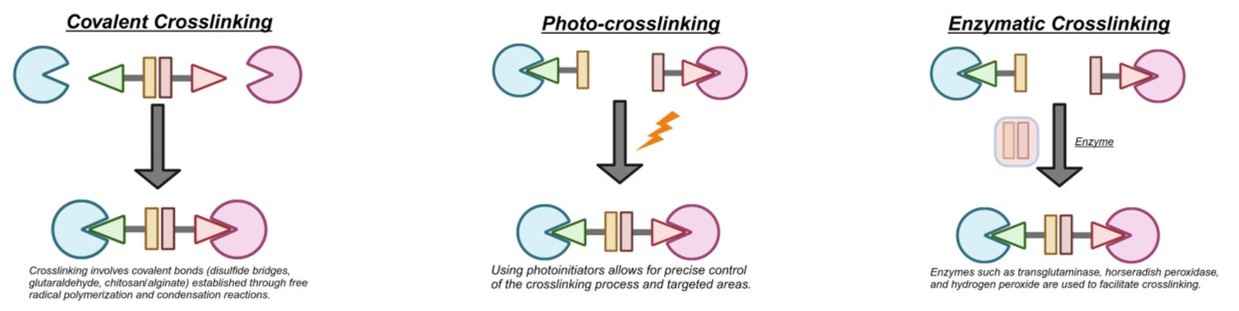 Figure 1. Overview of protein crosslinking strategies. (Gan et al., 2024)
Profacgen offers three specialized crosslinking platforms, each supported by dedicated expertise and established protocols:
High-specificity bioconjugation catalyzed by enzymes under physiological conditions. Ideal for applications where chemical residuals cannot be tolerated.
Light-activated crosslinking for applications requiring precise spatiotemporal control of bioconjugation.
Versatile bioconjugation with the broadest selection of reagents and chemistries for diverse applications.
Our crosslinking services support diverse research and development programs across multiple disciplines:
Background:
An infectious disease research group sought to identify the complete set of host proteins that interact with a viral replication complex during infection. Traditional affinity purification failed to capture transient interactions that dissociate during cell lysis, resulting in an incomplete interaction map.
Approach:
Profacgen implemented a live-cell photocrosslinking strategy using a diazirine-tagged viral protein expressed in infected cells. UV irradiation at 350 nm was applied at multiple time points post-infection to crosslink transient interactors in situ. Crosslinked complexes were affinity-purified and analyzed by LC-MS/MS. For validated interactions, we complemented the photocrosslinking data with chemical crosslinking using DSS followed by XL-MS analysis to map residue-level contact interfaces.
Outcome:
The photocrosslinking approach identified 47 host proteins in proximity to the viral replication complex, including 18 novel interactors not detected by standard affinity purification. Chemical crosslinking coupled with mass spectrometry provided distance constraints that guided structural modeling of three binary complexes, two of which were subsequently validated by cryo-EM. These findings revealed new druggable interfaces for antiviral therapeutic development.
Background:
An oncology biotech company required a homogeneous antibody-drug conjugate with a defined drug-to-antibody ratio (DAR = 2) and a glutathione-cleavable linker for controlled intracellular payload release. Lysine-based conjugation produced heterogeneous mixtures with variable DAR (0–8), while cysteine-based approaches compromised interchain disulfide stability.
Approach:
Profacgen engineered a non-natural amino acid (p-acetylphenylalanine) into the antibody constant region at a site distal to the antigen-binding domain, providing a unique ketone handle for oxime ligation with an aminooxy-functionalized PEGylated linker-payload. The conjugation proceeded with high efficiency at pH 4.5, yielding a single major product with DAR = 2. The linker incorporated a disulfide motif cleavable by intracellular glutathione but stable in circulation.
Outcome:
The resulting ADC demonstrated >95% homogeneity by hydrophobic interaction chromatography, retained full antigen-binding affinity, and showed potent cytotoxicity against target-positive cell lines (IC50 = 0.3 nM). In vivo studies in tumor-bearing mice confirmed tumor regression at 3 mg/kg dosing with no significant weight loss. The site-specific conjugation strategy eliminated the need for extensive DAR fractionation and accelerated preclinical development by approximately six months.
Discuss Your Crosslinking Project
References:
Fill out this form and one of our experts will respond to you within one business day.