
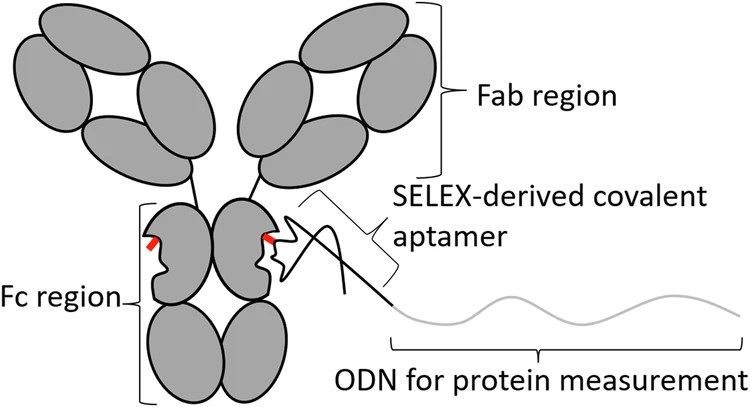
 Figure 1. Proposed antibody-DNA conjugates mediated by covalent aptamers. (Soxpollard et al., 2024)
Aptamers are single-stranded oligonucleotides, typically 20–100 nucleotides in length, that fold into defined three-dimensional structures capable of binding target molecules with high affinity and specificity. Often described as "chemical antibodies" aptamers recognize their targets through shape complementarity and molecular interactions analogous to antigen-antibody binding. Unlike antibodies, however, aptamers are generated entirely in vitro, enabling selection against toxic, non-immunogenic, or small-molecule targets that are inaccessible to traditional immunization strategies.
Since their discovery in 1990, aptamers have found widespread application as diagnostic reagents, therapeutic agents, biosensor recognition elements, and affinity purification ligands. The FDA-approved anti-VEGF aptamer pegaptanib validated the therapeutic potential of this molecular class, and dozens more are in clinical development. Profacgen offers end-to-end aptamer development services using three complementary SELEX (Systematic Evolution of Ligands by EXponential enrichment) technologies, ensuring optimal selection conditions for any target class.
The SELEX method was independently developed by Larry Gold at the University of Colorado and Craig Tuerk at Yale in 1990. The concept is elegant in its simplicity: a vast combinatorial library of random-sequence oligonucleotides (typically 1014–1015 unique sequences) is incubated with the target molecule; sequences that bind are partitioned from non-binders, amplified by PCR, and subjected to iterative rounds of selection and enrichment. Over 4–15 cycles, the library converges on a small set of high-affinity sequences.
Modern SELEX has evolved far beyond the original protocol. Variants including Capture-SELEX, CE-SELEX, Cell-SELEX, and Next-Gen SELEX have expanded the range of accessible targets and improved selection efficiency. These advances have transformed aptamers from academic curiosities into practical tools rivaling antibodies in many applications—with key advantages in production consistency, shelf stability, and chemical modifiability.
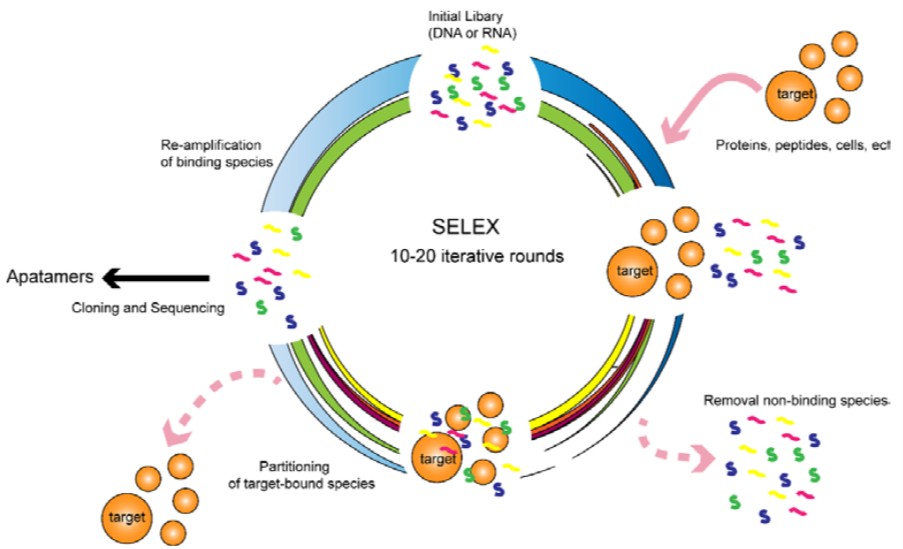 Figure 2. The SELEX cycle. (Zhuo et al., 2017)
| Property | Aptamer | Antibody |
|---|---|---|
| Composition | Nucleic acid (DNA or RNA) | Protein (immunoglobulin) |
| Target range | Proteins, peptides, small molecules, ions, viruses, whole cells, drug-resistant bacteria | Primarily immunogenic proteins and peptides |
| Production | In vitro chemical synthesis; no animals required | In vivo immunization or cell culture |
| Batch consistency | High; chemical synthesis with precise quality control | Variable; biological production introduces heterogeneity |
| Modifications | Fluorophores, biotin, PEG, nanoparticles, drugs, any chemical group | Limited; conjugation to surfaces or labels |
| Storage stability | Excellent; stable at room temperature; reversible denaturation | Poor; requires cold chain; irreversible denaturation |
| Immunogenicity | Low; non-immunogenic nucleic acids | Can elicit anti-drug antibodies (ADA) |
| Cost | Low; synthesis cost scales modestly with batch size | High; mammalian cell production is expensive |
| Development timeline | 2–6 months | 6–12 months |
Conventional SELEX
Target is immobilized on a solid support; binders are enriched through repeated binding-washing cycles.
Capture-SELEX
Target remains free in solution; a capture probe immobilizes the aptamer-target complex.
CE-SELEX (Capillary Electrophoresis SELEX)
Capillary electrophoresis separates aptamer-target complexes from unbound library based on mobility differences.
| Comparison Item | Conventional SELEX | Capture-SELEX | CE-SELEX |
|---|---|---|---|
| Immobilized entity | Target molecule | Capture probe (hybridized aptamer library) | None |
| Core principle | Physical washing isolates sequences bound to immobilized targets | Target binding induces conformational change or competitive displacement, releasing selected sequences | Electrophoretic separation of free nucleic acids and target-bound complexes |
| Screening rounds | Many (8–15) | Moderate (5–10) | Very few (1–4) |
| Screening time | Lengthy | Moderate | Rapid |
| Sample purity requirement | High purity recommended | Moderate to high purity | Very high purity required |
| Sample volume & concentration | Relatively large | Flexible | Minimal |
| Key advantages | Mature, versatile, compatible with Cell-SELEX | Excellent for small molecules and difficult-to-immobilize targets | Rapid, efficient, homogeneous selection without immobilization |
| Main limitations | Long selection cycle; nonspecific adsorption; possible target inactivation | Depends on target-induced release mechanism; careful library design required | Limited library input; specialized equipment required; separation depends on mobility differences |
| Typical applications | Proteins, cells, pathogens | Small molecules, metabolites, toxins, ions | High-affinity aptamer selection for proteins, peptides, biomarkers |
Background:
During the COVID-19 pandemic, a diagnostic company required a stable, high-affinity aptamer against the SARS-CoV-2 spike protein receptor-binding domain (RBD) for incorporation into a lateral flow antigen test. Antibody supply chains were unreliable, and the company needed a reagent that could be synthesized chemically at scale.
Our Solution:
Profacgen performed Capture-SELEX against recombinant SARS-CoV-2 RBD (Wuhan and Delta variants), starting with a 2'-F-modified RNA library to enhance nuclease stability. After 8 rounds of selection, 12 candidate sequences were cloned, sequenced, and characterized by SPR for binding affinity and specificity.
Final Results:
Two DNA aptamers bound RBD with KD = 3.2 nM and 7.8 nM, respectively, with no cross-reactivity to SARS-CoV, MERS-CoV, or influenza hemagglutinin. The truncated minimal aptamer (32 nt) was conjugated to gold nanoparticles and successfully integrated into a lateral flow assay detecting viral antigen at 104 copies/mL in nasopharyngeal swabs. The product received EUA approval and has been deployed in over 2 million tests.
Background:
A food safety testing company needed an aptamer against aflatoxin B1 (AFB1), a potent mycotoxin carcinogen, for integration into an on-site electrochemical biosensor. AFB1 is a small molecule (MW = 312 Da) with few immunogenic features, making antibody generation challenging and antibody performance inconsistent.
Our Solution:
Profacgen employed CE-SELEX, which is particularly well-suited for small-molecule targets. AFB1 was incubated with a DNA library in free solution, and aptamer-toxin complexes were separated from unbound oligonucleotides by capillary electrophoresis. After 5 rounds of selection and enrichment, candidates were screened for AFB1 binding by fluorescence polarization and for cross-reactivity to related mycotoxins (AFB2, AFG1, ochratoxin A).
Final Results:
A DNA aptamer (AFB1-Apt#7) was identified with KD = 18 nM for AFB1—one of the highest affinities reported for a small-molecule aptamer. Cross-reactivity with AFB2 and AFG1 was <5%, and no binding to ochratoxin A was detected. When integrated into the client's electrochemical biosensor, the aptamer enabled AFB1 quantification in corn and peanut samples at the regulatory limit (20 ppb) within 15 minutes, with >95% correlation to LC-MS/MS reference values.
References:
Fill out this form and one of our experts will respond to you within one business day.