
Biopharmaceutical products synthesized in living expression systems inherently carry a risk of impurities and contaminants introduced from the host cell, the manufacturing process, or the product itself. Regulatory agencies require comprehensive characterization and control of these impurities throughout development and commercial production to ensure patient safety, product consistency, and compliance with ICH Q6B, Q5A, and Q5D guidelines. Failure to adequately profile and control impurities can lead to regulatory delays, clinical holds, and compromised product quality.
At Profacgen, we provide integrated Impurity & Contaminant Profiling services designed to identify, quantify, and monitor product-related variants, process-related residuals, and microbiological contaminants across the biologics development lifecycle. Our analytical programs support IND-enabling studies, process validation, comparability assessments, and regulatory submission packages with documented methods and defensible data.
Our impurity and contaminant profiling capabilities are organized into three integrated analytical modules. Each platform targets a distinct category of impurities and can be engaged individually or combined for comprehensive product quality assessment.
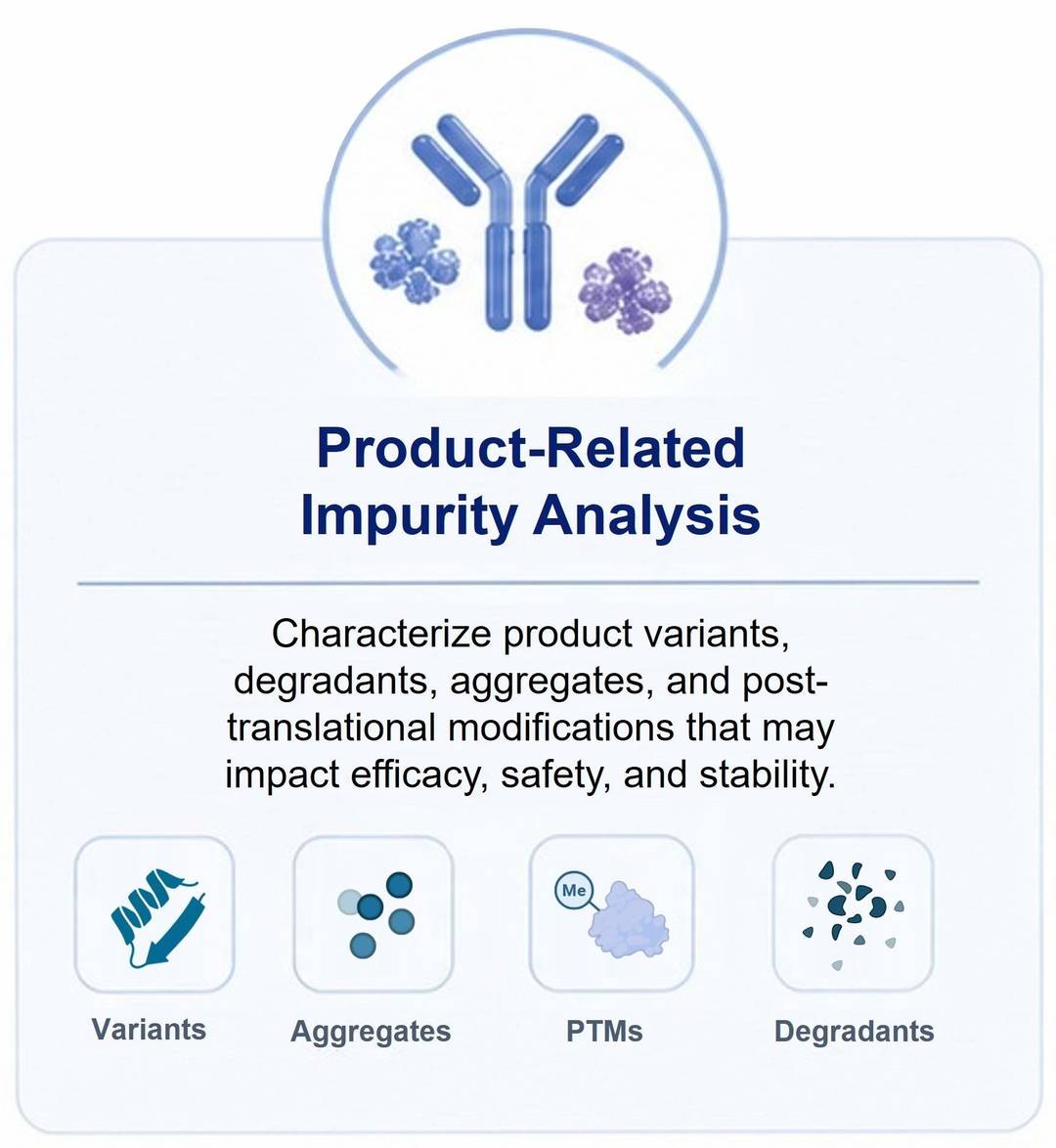
Identification and quantification of molecular variants that arise from the product itself during expression, purification, or storage
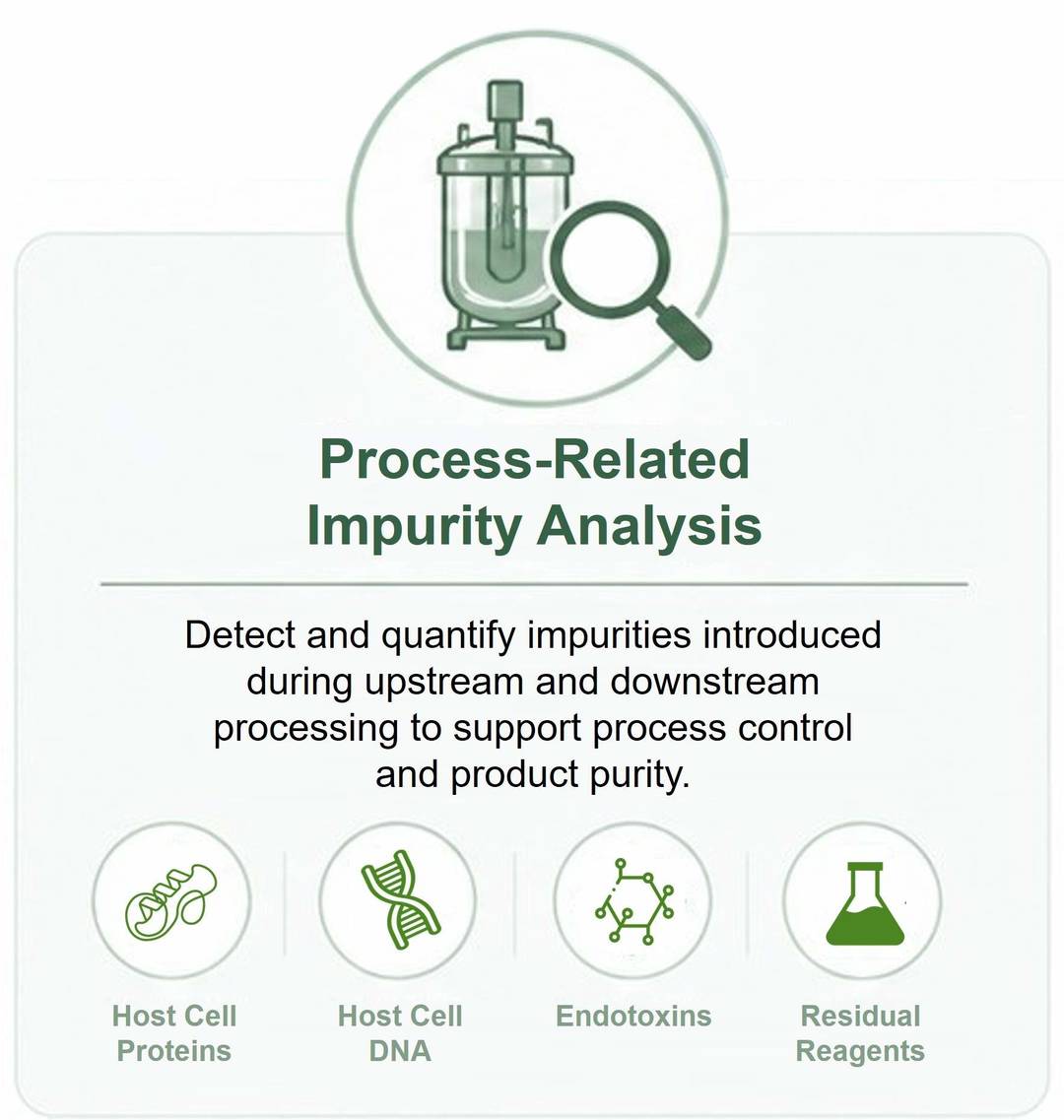
Detection and quantification of residual host cell components, process reagents, and manufacturing-derived materials
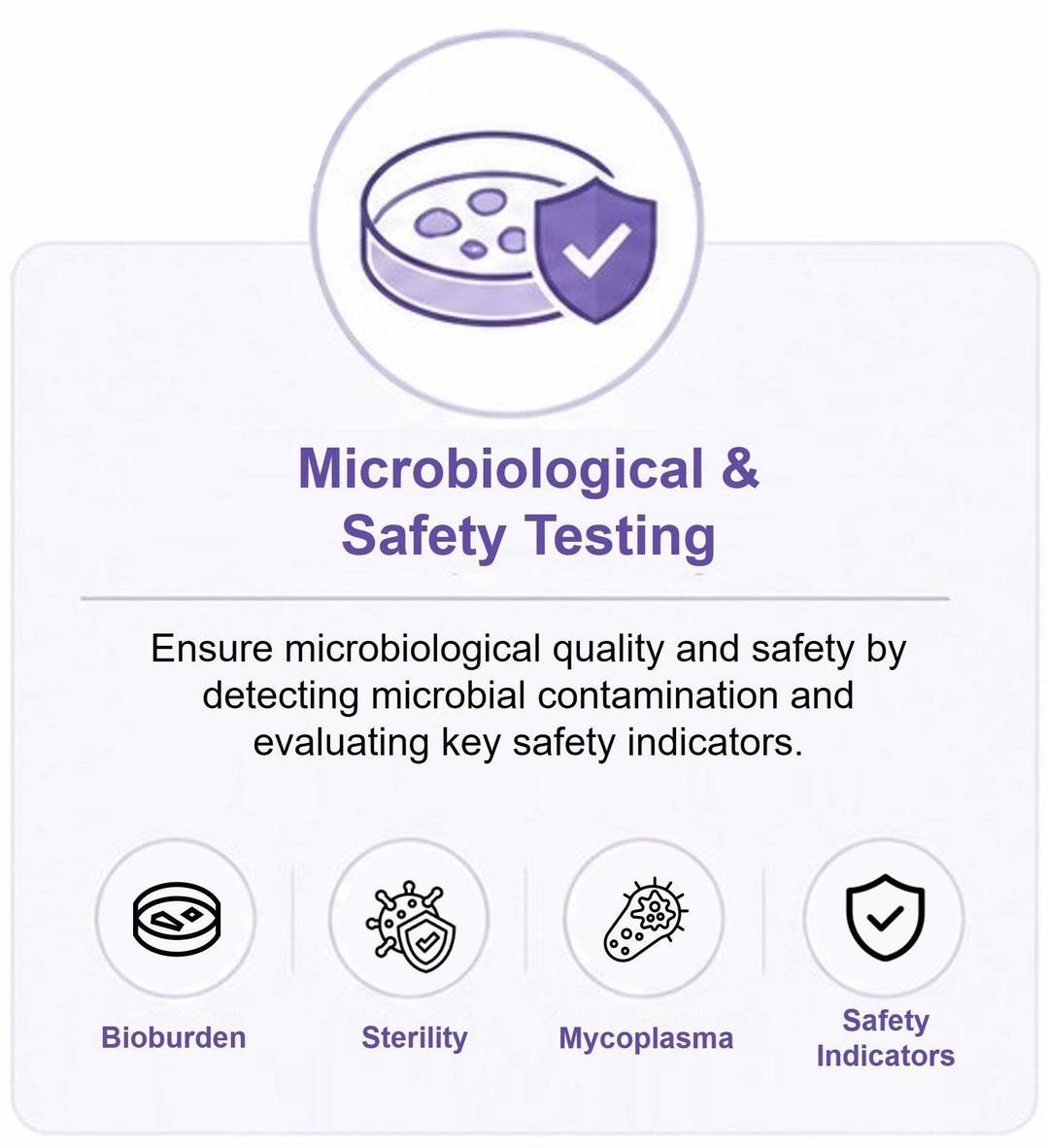
Comprehensive microbiological and safety assessment to ensure product sterility, endotoxin control, and viral safety
The following tables summarize the principal analytical approaches employed across our three impurity profiling platforms. Method selection is guided by regulatory expectations, sensitivity requirements, and the physicochemical properties of the impurity.
| Impurity Type | Analytical Method | Typical Sensitivity / Output |
|---|---|---|
| Aggregation (soluble and insoluble) | SEC-HPLC, SEC-MALS, AUC, DLS | Monomer, dimer, oligomer, and high-molecular-weight species quantification |
| Fragments and truncations | CE-SDS (reducing/non-reducing), SEC, peptide mapping LC-MS/MS | Percent fragment by peak area; N-terminal truncation mapping |
| Charge variants (acidic/basic) | Ion-exchange HPLC (CEX/AEX), cIEF, icIEF | Percent acidic, main, and basic peaks; isoform distribution |
| Oxidation and deamidation | Peptide mapping LC-MS/MS, RP-HPLC | Site-specific PTM quantification at susceptible residues |
| Glycosylation heterogeneity | HILIC-UPLC, CE-LIF, MS-based glycan profiling | Glycoform distribution; site occupancy; sialic acid content |
| Disulfide scrambling / free thiols | Peptide mapping LC-MS/MS (non-reduced), Ellman's assay, fluorescence | Correct/incorrect disulfide pairing; free sulfhydryl quantification |
| Higher-order structure variants | CD, FTIR, DSC, intrinsic fluorescence | Conformational similarity; thermal transition profiles |
| Impurity Type | Analytical Method | Typical Sensitivity / Output |
|---|---|---|
| Host cell proteins (HCP) | ELISA (commercial or custom), LC-MS/MS (AEX/RP-HPLC fractionation) | ppm to ppb level; coverage analysis by 2D-PAGE/Western blot |
| Residual host cell DNA | qPCR (species-specific), PicoGreen/Quant-iT fluorescence | pg/dose level; picogram sensitivity |
| Protein A leachates | ELISA (sandwich or competitive format) | ng/mL to pg/mL; clearance validation through purification steps |
| Antibiotics (e.g., kanamycin, penicillin) | HPLC-UV/Vis, LC-MS/MS | ppm level; species-specific method validation |
| Growth factors (e.g., insulin, IGF-1) | ELISA, LC-MS/MS | ng/mL; process clearance demonstration |
| Surfactants (Tween 20/80, Triton X-100) | HPLC-ELSD/CAD, LC-MS | ppm level; degradation product monitoring |
| Process solvents and buffer components (acetic acid, imidazole, Tris) | HPLC-UV, IC (ion chromatography), GC | ppm to ppb; clearance through purification |
| Anti-foam agents | HPLC-ELSD/CAD, GC-MS | ppm level; upstream process residual control |
| PEG, PEI, Pluronic, Zwittergent | HPLC-ELSD/CAD, fluorescence, LC-MS | Method-dependent; clearance validation |
| Test Category | Analytical Method | Regulatory Reference |
|---|---|---|
| Bacterial endotoxins | LAL gel-clot, kinetic chromogenic LAL, recombinant Factor C (rFC) | USP <85>, EP 2.6.14, ICH Q6B |
| Sterility | Direct inoculation, membrane filtration (bacteriostasis/fungistasis validation) | USP <71>, EP 2.6.1 |
| Mycoplasma | 28-day culture (broth/agar), indicator cell assay, NAT/qPCR | EP 2.6.7, USP <63>, ICH Q5D |
| Bioburden / microbial limits | Membrane filtration, pour plate, spread plate (TAMC/TYMC) | USP <61>/<62>, EP 2.6.12/2.6.13 |
| Viral safety (adventitious agents) | In vitro and in vivo assays, PCR, NGS-based adventitious virus detection | ICH Q5A(R1), EP 2.6.16 |
| Particulate matter | Light obscuration (subvisible), visual inspection (visible), microscopy | USP <788>/<789>, EP 2.9.19/2.9.20 |
Our Impurity & Contaminant Profiling platform supports a broad range of biologic products and development objectives:
Whether you require targeted analysis of a specific residual impurity or a comprehensive profiling package covering product variants, process residuals, and microbiological safety, our Impurity & Contaminant Profiling platform provides the analytical rigor and documentation quality required to advance your biologic program.
Explore our analytical modules above or contact us to discuss a tailored impurity profiling strategy for your molecule.
Fill out this form and one of our experts will respond to you within one business day.