
Amplified Luminescent Proximity Homogeneous Assay (ALPHA) is a bead-based proximity assay that detects molecular interactions through amplified chemiluminescence. Profacgen provides comprehensive ALPHA assay services for protein-protein interaction quantification, enzyme activity measurement, and small molecule binding analysis. The homogeneous, no-wash format delivers robust results with femtogram-level sensitivity, a 4-5 log dynamic range, and compatibility with diverse sample types including serum, tissue extracts, and cell lysates.
The ALPHA technology operates on the principle of proximity-dependent singlet oxygen transfer between two bead populations. Donor beads are coated with a phthalocyanine photosensitizer that converts ambient oxygen to singlet oxygen (1O2) upon excitation at 680 nm. Acceptor beads contain a thioxene derivative and a fluorophore (europium chelate) that respond to singlet oxygen by emitting light at 615 nm.
When a molecular interaction brings donor and acceptor beads into close proximity (within approximately 200 nm), the singlet oxygen generated by the donor bead diffuses to the acceptor bead before decaying, triggering a cascade of chemical reactions that produce an amplified luminescent signal. If the beads are not in proximity, the singlet oxygen decays before reaching the acceptor, and no signal is generated. This proximity-dependent mechanism ensures that only specific binding events produce measurable luminescence.
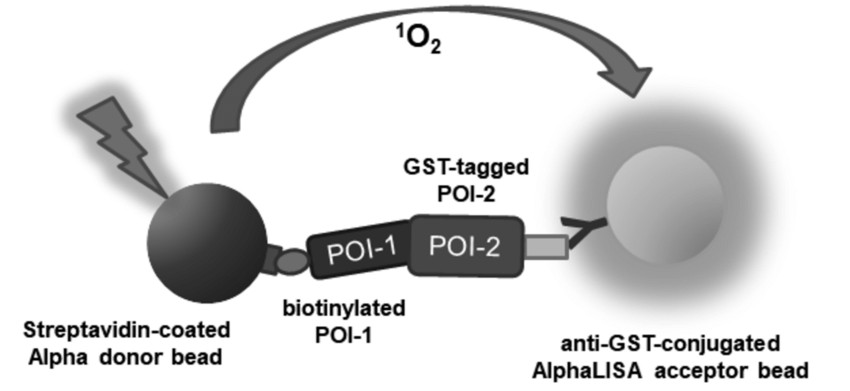 Figure 1. Amplified Luminescent Proximity Homogeneous Assay (Alpha screen). (Schiedel et al., 2018)
The assay is performed entirely in solution without washing, filtration, or separation steps. This homogeneous format minimizes handling, reduces assay variability, and enables automation for high-throughput screening. The 680 nm excitation wavelength minimizes interference from compound autofluorescence, making ALPHA particularly suitable for screening complex biological matrices and compound libraries.
Profacgen provides comprehensive ALPHA assay services for research and drug discovery applications. Our offerings include:
| Service Component | Description |
|---|---|
| Protein-Protein Interaction Assay | Quantitative detection of binary protein interactions by ALPHA. Binding affinity ranking and kinetic analysis supported. Deliverables: binding curve, affinity estimate, assay report. |
| Enzyme Activity Assay | Measure enzymatic activity using substrate-product conversion readouts. IC50 determination and inhibitor screening. Deliverables: activity data, IC50 values, dose-response curves. |
| Small Molecule Binding Assay | Screen compound libraries for target binding and displacement. High-throughput compatible with low false-positive rate. Deliverables: hit list, binding rankings, confirmation data. |
| Custom ALPHA Assay Development | Design and optimize ALPHA assays for novel targets and applications. Bead conjugation optimization and buffer screening included. Deliverables: validated assay protocol, performance characterization. |

To complement your protein interaction analysis, explore our comprehensive portfolio of related screening and profiling services.
Background:
A drug discovery program required rapid identification of inhibitors against a viral main protease (Mpro) essential for replication. The target was validated biochemically but no screening assay existed in a format compatible with the client's high-throughput infrastructure.
Our Solution:
Using our ALPHA-based enzyme activity assay, we developed a substrate cleavage readout with optimal signal-to-background ratio. The FRET-based substrate was adapted to the ALPHA format by coupling product detection to acceptor beads. We screened a library of 25,000 small molecules in 384-well format.
Final Results:
The primary screen was completed in 5 working days, identifying 312 primary hits (hit rate 1.2%). After dose-response confirmation, 28 compounds showed IC50 values below 10 uM. The top 10 inhibitors were further validated by orthogonal SPR binding assays, with 9 confirmed as direct Mpro binders. Two compounds progressed to crystal structure determination and medicinal chemistry optimization.
Background:
An immunology research team needed to measure the binding interaction between an inflammatory cytokine and its cell surface receptor in native cell membrane preparations. Traditional SPR required detergent-solubilized receptor, which often compromises binding activity.
Our Solution:
Using our ALPHA assay with bead-coupled cytokine and anti-receptor detection, we achieved specific quantification of receptor binding directly in crude cell lysates from stimulated and unstimulated cells. The assay was optimized for the complex matrix to minimize non-specific binding.
Final Results:
The assay detected receptor upregulation upon inflammatory stimulation with a 5-fold signal increase, matching Western blot data but with 100-fold higher throughput. The assay achieved a Z' factor of 0.82, indicating excellent suitability for high-throughput applications. The data directly supported the client's publication on cytokine signaling regulation.
Get a Quote for your ALPHA project
References:
Fill out this form and one of our experts will respond to you within one business day.