We use cookies to understand how you use our site and to improve the overall user experience. This includes personalizing content and advertising. Read our
Privacy Policy
Transporters are specialized membrane proteins that power the translocation of essential nutrients, ions, neurotransmitters, cellular waste, and xenobiotics across cellular membranes. They represent one of the most important yet underappreciated classes of drug targets and modulators of pharmacokinetics. Transporter-mediated drug-drug interactions (DDIs) and off-target transporter inhibition have been responsible for clinical adverse events and regulatory delays, making transporter screening a critical component of modern drug development.
Profacgen provides specialized transporter panels and customized screening services enabling you to identify novel transporter-targeted compounds and assess DDI liability early in development. Our transporter panels include the FDA-recommended transporter screening panel, monoamine transporter models, and an expanding collection of solute carrier (SLC) and ATP-binding cassette (ABC) family members. We employ robust uptake and inhibition assays to perform rapid, cost-effective screening of new molecular entities (NMEs) for their interactions with transporters, delivering results with excellent signal-to-background ratios and Z′ scores.
Background: Transporters as Drug Targets and Modulators
Membrane transporters are classified into two major superfamilies that together govern the absorption, distribution, and excretion of virtually all drugs:
ATP-binding cassette (ABC) transporters function as primary active transporters, coupling ATP hydrolysis to substrate efflux against concentration gradients. P-glycoprotein (P-gp/MDR1), BCRP, and MRP2 are the most clinically relevant members, mediating hepatobiliary and renal excretion, limiting intestinal absorption, and restricting blood-brain barrier penetration. Inhibition of these efflux pumps can dramatically alter drug exposure and tissue distribution.
Solute carrier (SLC) transporters regulate drug influx and efflux through facilitated diffusion or secondary active transport, utilizing electrochemical gradients of ions and solutes as driving forces. Key members include OATP1B1 (hepatic uptake), OAT1/3 (renal uptake), OCT2 (renal secretion), and the neurotransmitter transporters SERT, DAT, and NET—themselves important therapeutic targets for depression, ADHD, and Parkinson's disease.
Figure 1. A schematic diagram of the ABC and SLC transporters. (Peters et al., 2025)
Regulatory agencies (FDA, EMA, PMDA) now require in vitro transporter interaction studies for P-gp, BCRP, OATP1B1, OATP1B3, OAT1, OAT3, OCT2, MATE1, and MATE2-K as part of standard DDI evaluation. Profacgen's screening services provide the data necessary to satisfy these regulatory requirements and inform clinical DDI study design.
Scintillation proximity detection for rapid readout
Fluorescent Substrate Uptake
Non-radioactive alternative for high-throughput formats.
Fluorescent probe substrates for OATP, OAT, OCT families
Compatible with plate reader and imaging systems
Reduced waste disposal burden vs. radiometric
Electrophysiology
Direct measurement of ion-coupled transporter currents.
TEVC on Xenopus oocytes for electrogenic transporters
Patch-clamp for high-resolution kinetic analysis
Action potential modulation in excitable cells
LC-MS/MS Quantification
Mass spectrometry-based endpoint for transporter assays.
Direct measurement of substrate accumulation
No reliance on fluorescent or radiometric reporters
Applicable to any transportable molecule
Applications
Drug-drug interaction (DDI) liability assessment: Evaluate whether your compound inhibits or is a substrate for key regulatory transporters to predict clinical DDI risk
CNS drug discovery: Screen compounds against monoamine transporters (SERT, DAT, NET) for antidepressant, antipsychotic, and ADHD indications
ADMET optimization: Predict hepatic uptake, renal clearance, and brain penetration based on transporter interaction profiles
Transporter-targeted therapeutics: Identify compounds that selectively modulate transporter activity for diseases including depression, epilepsy, diabetes, and cancer
Regulatory submission support: Generate the in vitro transporter interaction data required for IND and NDA filings
Why Choose Profacgen?
Cell-Based Functional Assays: All screens use validated cell lines expressing human transporters at physiologically relevant levels.
Key Transporter Coverage: Panels include all FDA-recommended and clinically significant transporters.
Flexible Panel Configuration: Choose from standard panels or design a custom screen targeting specific transporters.
Short Turnaround: Standard panel results delivered in 2–3 weeks; custom assays in 4–6 weeks.
Comprehensive Reporting: IC50/Km values, kinetic parameters, and full statistical analysis provided for every assay.
Representative Case Studies
Case 1: DDI Liability Assessment for an Oncology Drug Candidate
Background:
A biopharmaceutical company advancing a kinase inhibitor to Phase I trials required a complete transporter interaction profile to support their IND submission and predict clinical DDI risk.
Our Solution:
Profacgen screened the candidate against the full FDA-recommended DDI panel (9 transporters) in both inhibition and substrate assays. The compound was tested at concentrations spanning the expected clinical plasma Cmax, with positive and negative controls for every assay.
Final Results:
The kinase inhibitor showed potent inhibition of OATP1B1 (IC50 = 2.1 μM) and was identified as a P-gp substrate (efflux ratio = 6.8). No significant interactions were detected with the remaining 7 transporters. These results triggered a clinical DDI study with statins (OATP1B1 substrates) and informed dose adjustment recommendations. The data package was accepted without query by FDA during IND review.
Case 2: Triple Reuptake Inhibitor Profiling for Treatment-Resistant Depression
Background:
A CNS-focused drug discovery team was developing a novel triple reuptake inhibitor targeting SERT, DAT, and NET simultaneously for treatment-resistant depression. They required precise potency ratios across all three transporters to optimize the pharmacological profile.
Our Solution:
Profacgen performed radiometric uptake inhibition assays for SERT, DAT, and NET using [3H] 5-HT, [3H] dopamine, and [3H] norepinephrine substrates, respectively. Eight structurally related analogs were tested in 10-point dose-response format, with reference compounds (fluoxetine, bupropion, desipramine) as controls.
Final Results:
Compound 6 exhibited the desired balanced profile: SERT IC50 = 12 nM, DAT IC50 = 18 nM, NET IC50 = 9 nM—a 1.3:1:0.8 selectivity ratio. This balanced inhibition was distinct from existing dual-reuptake inhibitors and predicted superior efficacy in treatment-resistant populations. The compound advanced to preclinical development, with transporter profiling data supporting patent claims on the optimized selectivity profile.
Q: Which transporters are required for regulatory DDI assessment?
A: The FDA, EMA, and PMDA recommend in vitro evaluation of P-gp, BCRP, OATP1B1, OATP1B3, OAT1, OAT3, OCT2, MATE1, and MATE2-K. Profacgen offers validated assays for all nine regulatory transporters, with both inhibition and substrate assays available. Additional transporters can be included based on compound structure and anticipated route of disposition.
Q: What is the difference between uptake and efflux transporter assays?
A: Uptake transporters (OATP, OAT, OCT families) mediate the cellular entry of drugs and are typically assessed by measuring substrate accumulation into transporter-expressing cells. Efflux transporters (P-gp, BCRP, MRP family) pump substrates out of cells and are assessed by bidirectional permeability assays (efflux ratio) or direct ATPase activity measurements. Profacgen offers both assay types and can recommend the optimal approach for your target transporter.
Q: Can you assess time-dependent or irreversible inhibition?
A: Yes. We offer pre-incubation studies to detect time-dependent inhibition (TDI), which is increasingly recognized as a clinically relevant mechanism of transporter-mediated DDIs. For suspected mechanism-based inactivators, we can design progressive inhibition assays with extended pre-incubation periods and dilution steps to distinguish reversible from irreversible inhibition.
Q: How do transporter data inform clinical DDI study design?
A: Transporter inhibition data are used to calculate the R-value ([I]/IC50), which predicts the magnitude of clinical interaction. R ≥ 0.1 typically triggers a dedicated clinical DDI study. For substrates, Km and uptake clearance values inform physiologically-based pharmacokinetic (PBPK) modeling. Profacgen provides both the raw data and regulatory-compliant interpretation to support your clinical pharmacology strategy.
Q: What is the typical timeline for a transporter screen?
A: Standard panel screens (FDA 9-transporter panel) are typically completed in 2–3 weeks from compound receipt. Custom assay development for novel transporters requires 4–6 weeks for cell line validation and protocol optimization. Expedited timelines are available for time-critical regulatory submissions.
For more information on our customized transporter screening service, please feel free to contact us. Profacgen offers a broad range of therapeutically relevant transporter targets, including ATP-binding cassette transporters (e.g., P-gp), neurotransmitter transporters (SERT, DAT, NET), and solute carrier family transporters (e.g., SLC13). Our validated assay formats cover radio‑isotopic, fluorescence-based, and ion-flux detection methods. For detailed service instructions, available target lists, and corresponding assay formats, please click here to download the Service Instruction.
References:
1. Diallinas G. Understanding transporter specificity and the discrete appearance of channel-like gating domains in transporters. Front Pharmacol. 2014;5. doi:10.3389/fphar.2014.00207
Peters JJ, Teng C, Peng K, Li X. Deciphering the blood–brain barrier paradox in brain metastasis development and therapy. Cancers. 2025;17(2):298. doi:10.3390/cancers17020298
Online Inquiry
Fill out this form and one of our experts will respond to you within one business day.

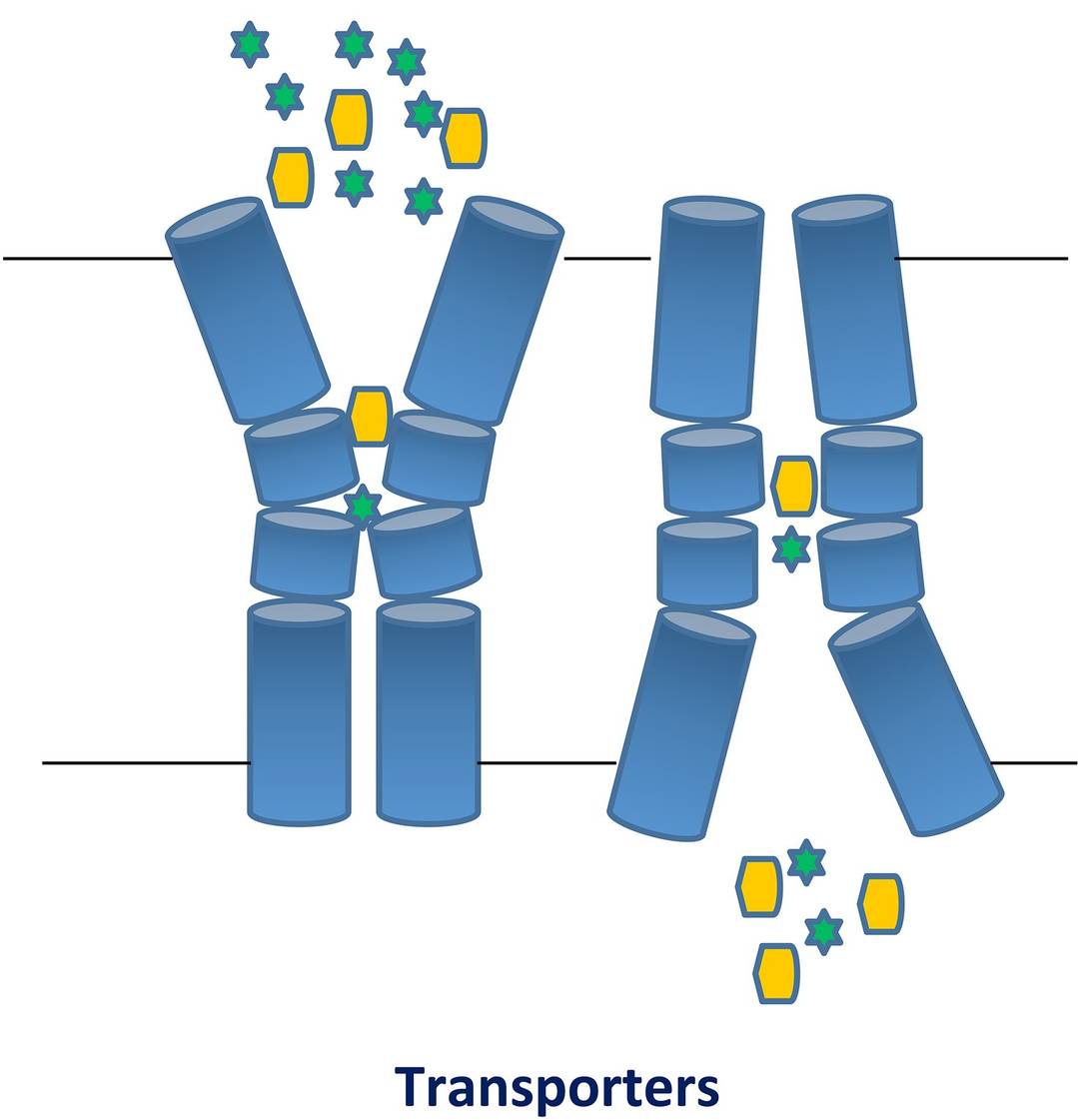
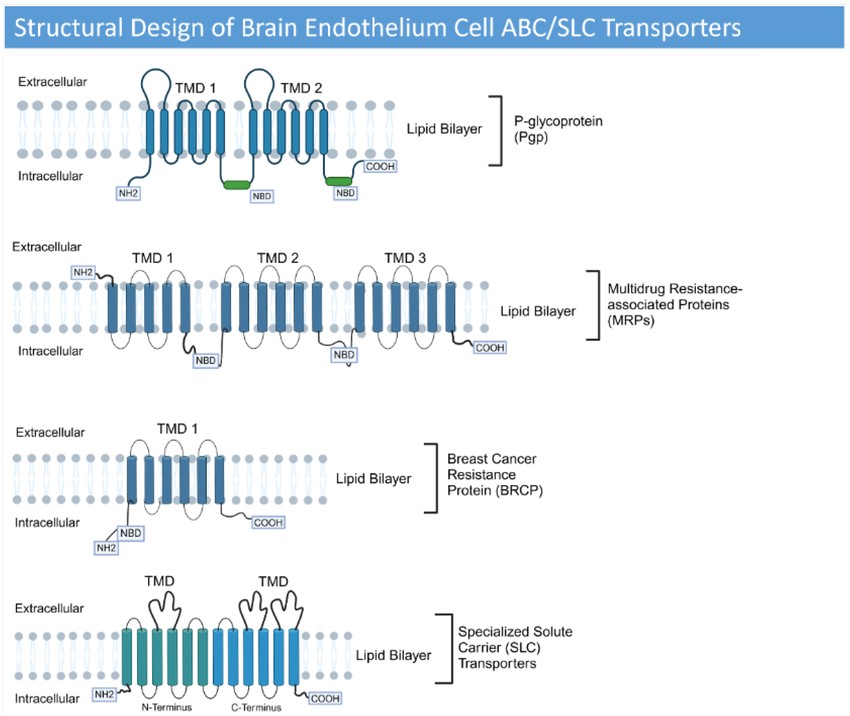 Figure 1. A schematic diagram of the ABC and SLC transporters. (Peters et al., 2025)