
Protein co-expression in mammalian cells is a powerful and widely adopted strategy for producing complex, biologically active multi-protein assemblies under physiologically relevant conditions. Unlike prokaryotic or lower eukaryotic systems, mammalian expression platforms provide native folding environments, appropriate post-translational modifications, and accurate protein-protein interaction contexts. These features make mammalian cells the preferred host for expressing human and other higher eukaryotic protein complexes.
At Profacgen, we offer a comprehensive protein co-expression service in mammalian systems, integrating advanced vector design, multiple co-expression strategies, and optimized production workflows. Our platform supports transient, viral-mediated, and stable expression approaches in widely used cell lines such as HEK293 and CHO. With extensive experience in complex protein production, we deliver high-quality, functional protein assemblies suitable for structural biology, functional studies, and therapeutic development.
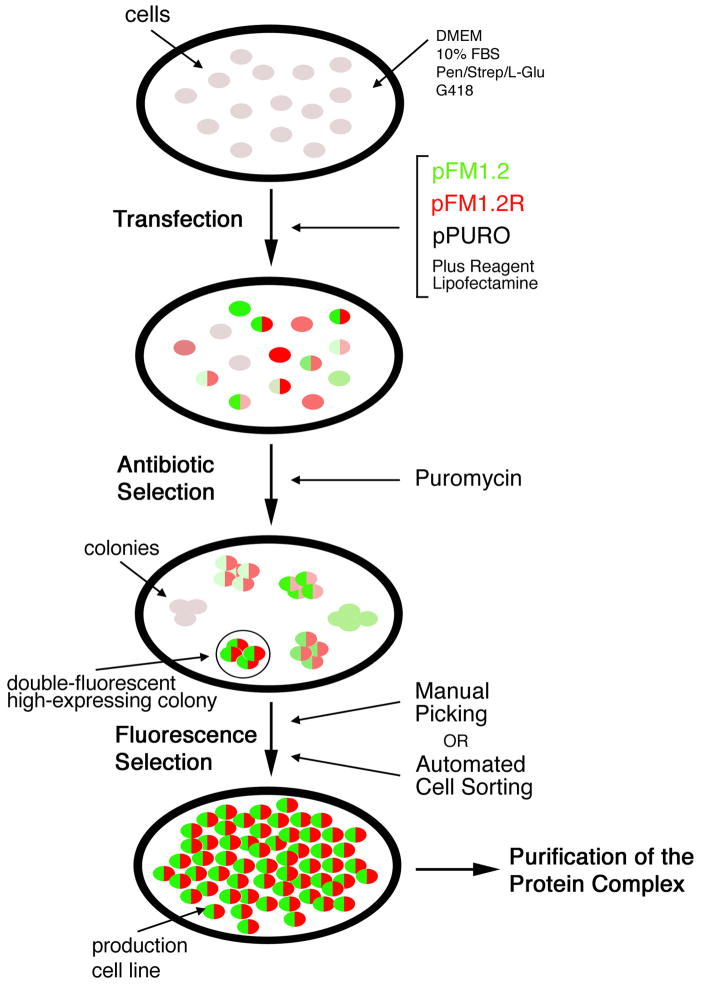 Figure 1. Flow chart of co-expressing multiple proteins in mammalian cells. (Assur et al., 2012)
Multi-protein assemblies are involved in a wide range of biological processes, including transcription, translation, RNA splicing, signaling cascades, protein transport, trafficking, and degradation. These complexes form the functional backbone of cellular systems, enabling precise regulation and coordination of biological activities.
Over the past decades, it has become increasingly evident that proteins rarely function in isolation. Instead, they interact extensively with one another, forming stable or transient complexes that determine their biological roles. As a result, life science research has shifted from studying individual proteins to investigating multi-protein complexes in order to better understand cellular mechanisms at the molecular level.
Protein complex development is also critically important in the biotechnology industry, metabolic engineering, and biopharmaceutical fields. For example:
Reconstruction of multi-protein complexes through co-expression has been proven to be a powerful and efficient strategy. It allows researchers to produce protein complexes in soluble form directly within host cells, avoiding the inefficiencies associated with in vitro assembly.
As most protein complexes under investigation originate from mammalian systems, mammalian cells provide the most suitable environment for their expression. Compared with prokaryotic and insect systems, mammalian cells offer several critical advantages:
Due to these advantages, mammalian cell-based co-expression has become the preferred approach for producing complex, high-value protein assemblies for advanced research and industrial applications.
Profacgen provides a comprehensive and advanced mammalian protein co-expression platform, designed to deliver high-quality protein complexes with native-like properties. Our services are benchmarked against leading protein expression providers and offer flexible, scalable solutions tailored to diverse project requirements.

Profacgen offers multiple co-expression approaches to accommodate different experimental needs:
Transient Co-Transfection
Transient co-transfection of multiple plasmids is the most widely used method for protein co-expression in mammalian cells.
Advantages:
Viral-Mediated Co-Expression
Advantages:
Stable Cell Line Generation
Advantages:
Multi-Gene Vector Systems
We support widely used mammalian expression systems, including:
HEK293 (Human Embryonic Kidney 293) Cells
CHO (Chinese Hamster Ovary) Cells
Protein co-expression in mammalian cells has been widely applied in:
Client Requirements:
A research group required a multi-protein signaling complex for functional analysis, with correct post-translational modifications essential for biological relevance. Bacterial systems were unsuitable due to their inability to perform mammalian-specific modifications.
Our Solution:
Profacgen employed transient co-transfection in HEK293 cells, carefully optimizing plasmid ratios and expression conditions to ensure balanced production of all subunits. Culture parameters including cell density, transfection reagent ratios, and harvest timing were systematically fine-tuned to maximize complex yield while maintaining integrity.
Final Results:
Successfully obtained a fully assembled and functional signaling complex with native-like activity confirmed by phosphorylation assays and binding studies. The purified material enabled comprehensive downstream pathway analysis and generated publication-ready results that supported the client's manuscript submission.
Client Requirements:
A biotech company needed consistent, large-scale production of a multi-subunit therapeutic protein complex for preclinical studies, requiring reproducible quality across multiple batches.
Our Solution:
We developed a stable CHO cell line with integrated multi-gene constructs using targeted integration technology. Rigorous clone selection identified high-producers with maintained complex integrity, followed by optimization of media and feeding strategies for scalable suspension culture.
Final Results:
Achieved high-yield, reproducible expression of the protein complex with consistent quality across production runs. Purified material met all quality requirements including purity, activity, and stability specifications for preclinical evaluation, supporting the client's regulatory submission timeline.
Consult Our Experts on Your Project
Profacgen's mammalian co-expression platform is designed to support the production of complex, biologically relevant protein assemblies with high fidelity and functionality. From transient expression to stable cell line development, we provide flexible solutions aligned with your research or development goals.
Contact us to explore your project needs and develop a tailored co-expression strategy for high-quality protein complex production.
If your project involves the expression of a single complex protein rather than multiple interacting components, mammalian expression systems can provide optimized folding and post-translational modifications. Our platform supports high-quality expression tailored to sensitive biologics.
References:
Fill out this form and one of our experts will respond to you within one business day.