Biomarker Discovery Service
Profacgen supports your drug development needs by providing a comprehensive suite of biomarker discovery, development, assay verification, and validation services, as well as large- and small-scale biomarker testing across the entire drug development continuum—from early proof-of-concept studies to commercial laboratory testing. With over 25 years of experience in developing and performing immunoassays on human and animal specimens, our biomarker analysis platform is designed to accelerate your discovery, verification, and validation programs while maintaining the highest standards of quality and regulatory compliance.
Biomarkers, also called biological markers, are measurable biochemical indicators that reflect changes—or the potential for changes—in the function or structure of biological systems, organs, tissues, cells, and subcellular components. They play pivotal roles in disease diagnosis, disease staging, patient stratification, and the evaluation of new drugs and therapies for efficacy and safety in target populations. In an era of precision medicine, biomarkers are essential for matching the right treatment to the right patient at the right time.
Background: The Evolution of Biomarker Science
The concept of biomarkers dates back to ancient medicine, when physicians observed that changes in pulse, urine color, and body temperature correlated with disease states. The modern era of biomarker discovery began in the mid-20th century with the identification of serum enzymes such as creatine kinase and lactate dehydrogenase as indicators of tissue damage. The development of immunoassay technology by Rosalyn Yalow and Solomon Berson in the 1950s—work that earned Yalow the Nobel Prize in Physiology or Medicine in 1977—enabled the sensitive detection of peptides and proteins in biological fluids, laying the groundwork for modern biomarker science.
The Human Genome Project (completed in 2003) catalyzed a paradigm shift from single-analyte biomarkers to comprehensive, multi-omic biomarker discovery. Advances in mass spectrometry, next-generation sequencing, protein microarrays, and multiplex immunoassays now enable the simultaneous measurement of thousands of analytes in a single experiment. This technological convergence has driven the identification of groundbreaking biomarkers such as prostate-specific antigen (PSA), HER2, PD-L1, circulating tumor DNA (ctDNA), and neurofilament light chain (NfL)—each transforming clinical practice in its respective therapeutic area.
Today, biomarker-guided drug development is the industry standard. Regulatory agencies (FDA, EMA, PMDA) actively encourage the co-development of companion diagnostics alongside therapeutic agents, and the FDA's Biomarkers, EndpointS, and other Tools (BEST) resource has established standardized definitions and qualification pathways to accelerate biomarker adoption. Profacgen's integrated platform reflects this evolution, combining classical immunoassay expertise with cutting-edge omics technologies to deliver biomarker solutions at every stage of the development pipeline.
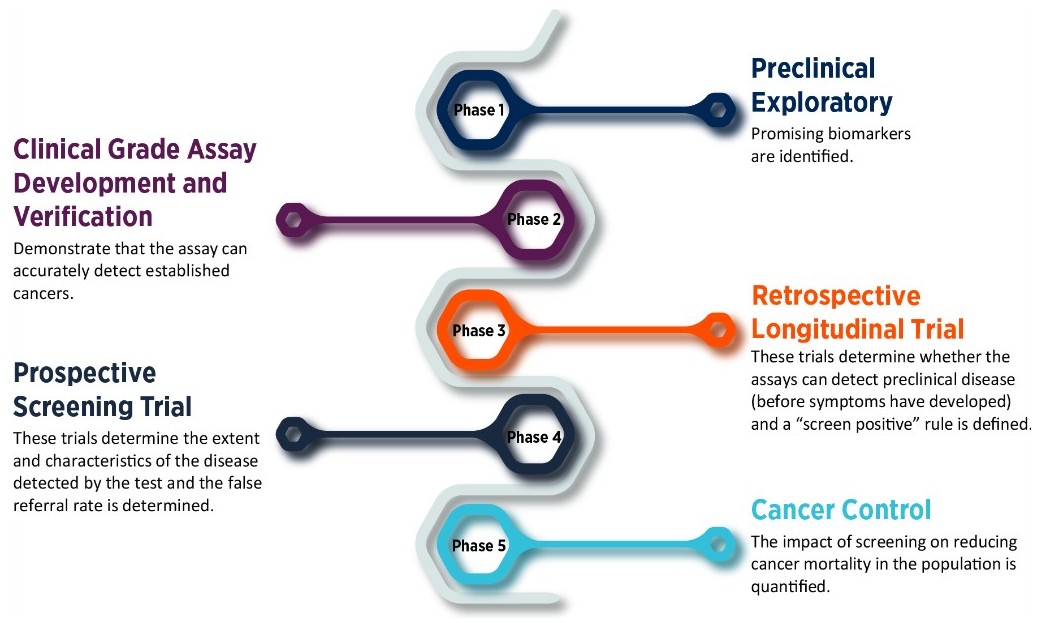 Figure 1. The biomarker development pipeline encompasses discovery, verification, and validation stages, each requiring distinct analytical platforms and study designs. (Srivastava and Wagner, 2020)
Our Biomarker Service Platform
Profacgen delivers a complete, end-to-end biomarker development workflow that guides candidates from initial discovery through clinical validation:
Stage 1: Biomarker Discovery
Biomarker discovery is the process of identifying novel protein biomarkers associated with a specific biological state, disease condition, or therapeutic response. Our discovery workflow integrates multiple high-throughput technologies:
- Biological sample collection and processing: Systematic collection of well-annotated clinical specimens (serum, plasma, tissue, urine, CSF) with standardized handling protocols to minimize pre-analytical variability
- Omics profiling: Large-scale analysis using proteomics (LC-MS/MS, protein microarrays), genomics (NGS, SNP arrays), and metabolomics platforms to generate comprehensive molecular profiles
- Data preprocessing and quality control: Rigorous normalization, batch correction, missing value imputation, and outlier detection to ensure data integrity
- Statistical analysis and machine learning: Differential expression analysis, pathway enrichment, and AI-driven biomarker signature discovery using Random Forest, Support Vector Machines, and deep learning algorithms
- Candidate prioritization: Ranking of potential biomarkers based on fold-change, statistical significance, biological relevance, and assay feasibility to identify the highest-confidence candidates for verification
Stage 2: Biomarker Verification
Verification serves as a critical filtering step between discovery and costly validation studies. Because the discovery phase typically yields too many candidates for full validation, verification employs targeted, high-throughput techniques on larger sample cohorts to identify the most robust candidates:
- Multiple Reaction Monitoring (MRM) mass spectrometry: Targeted, quantitative MS analysis providing high specificity and sensitivity for protein and peptide verification without antibody dependence
- Multiplex immunoassays: Simultaneous quantification of 10–100 candidate biomarkers per sample using Luminex, Meso Scale Discovery (MSD), or multiplex ELISA platforms
- Cohort expansion: Analysis of 50–200 samples spanning diverse patient populations to confirm biomarker consistency and detect population-specific effects
- Analytical performance assessment: Preliminary evaluation of dynamic range, linearity, precision, and lower limit of quantification (LLOQ) for each candidate
Stage 3: Biomarker Validation
Validation represents the final stage of biomarker development, establishing analytical and clinical performance in large, well-characterized cohorts to support regulatory submission and clinical adoption:
- Assay development and optimization: Rigorous optimization of ELISA, MSD, or LC-MS/MS assays for the verified candidates, including antibody pair screening, calibrator preparation, and protocol standardization
- Analytical validation: Comprehensive assessment of accuracy, precision (intra- and inter-assay CV), specificity, selectivity, stability (bench-top, freeze-thaw, long-term), dilutional linearity, and hook effect evaluation
- Clinical validation: Large-scale testing (hundreds to thousands of samples) to establish clinical sensitivity, specificity, positive and negative predictive values, and receiver operating characteristic (ROC) curves
- Clinical cut-point determination: Statistical determination of optimal diagnostic or prognostic thresholds using Youden index or predefined clinical requirements
- Regulatory documentation: Preparation of assay validation reports compliant with FDA Bioanalytical Method Validation, CLSI EP, and ICH guidelines for IND/NDA/BLA submission
Verification and Validation Platforms
LC-MRM-MS
Targeted mass spectrometry for label-free protein quantification with exceptional specificity.
- No antibody requirement; ideal for novel biomarkers
- High multiplexing capacity (100+ peptides per run)
- Wide dynamic range (4–6 orders of magnitude)
- GLP-compliant assay development and validation
ELISA
Gold-standard immunoassay for sensitive, specific protein quantification.
- Sandwich, competitive, and indirect formats
- Colorimetric, chemiluminescent, and fluorescent detection
- Custom assay development for novel targets
- Single- and multiplex configurations
Meso Scale Discovery (MSD)
Electrochemiluminescence (ECL) technology for ultra-sensitive multiplex detection.
- 10-plex per well with minimal cross-reactivity
- Sub-pg/mL sensitivity with broad dynamic range
- Reduced matrix effects vs. conventional ELISA
- Ideal for cytokine panels and PK/PD studies
Western Blot
Semi-quantitative protein detection with molecular weight confirmation.
- Phospho-specific and total protein antibody panels
- Normalization to housekeeping proteins
- Densitometric quantification
- Complementary to quantitative platforms
Applications
- Oncology: Discovery and validation of circulating tumor markers (CTCs, ctDNA, exosomal proteins), immune checkpoint biomarkers (PD-L1, TMB, MSI), and predictive biomarkers for targeted therapy response
- Cardiovascular disease: Quantification of troponins, natriuretic peptides (BNP, NT-proBNP), and novel cardiac biomarkers for risk stratification and acute coronary syndrome diagnosis
- Neurodegenerative diseases: Ultra-sensitive detection of NfL, p-Tau, Aβ42, and GFAP in blood and CSF for Alzheimer's and Parkinson's disease diagnosis and progression monitoring
- Inflammatory and autoimmune diseases: Cytokine profiling (IL-6, TNF-α, IL-17, IL-23), CRP, and calprotectin for disease activity monitoring and treatment response assessment
- Drug safety and toxicity: Liver injury markers (ALT, AST, ALP, bilirubin), kidney injury markers (NGAL, KIM-1, cystatin C), and cardiac safety biomarkers (hs-cTnI) for preclinical and clinical safety assessment
- Companion diagnostics: Co-development of biomarker assays with therapeutic agents to support regulatory approval and enable precision prescribing
Why Choose Profacgen?
- Expertise: Full access to Profacgen's comprehensive product portfolio and assay development capabilities, backed by decades of collective scientific experience.
- Quality: Stringent quality assurance programs encompassing performance monitoring, control result review, standard operating procedures, equipment qualification, and personnel training.
- Reliability: Full compliance with contracted study requirements, regulatory guidelines (FDA, EMA, ICH), and industry best practices.
- Speed: Rapid turnaround times and responsive customer service to meet aggressive development timelines.
- Flexibility: Sponsor-directed study designs with customized protocols to fulfill specific assay and reporting requirements.
- Proven Track Record: Successful partnerships with contract research organizations, academic institutions, government agencies, and pharmaceutical companies worldwide.
Representative Case Studies
Case 1: Discovery of a Serum Protein Signature for Early-Stage Pancreatic Cancer
Background:
An oncology diagnostics company sought to identify a blood-based protein signature capable of detecting stage I–II pancreatic cancer with >90% sensitivity and >95% specificity. Existing biomarker CA19-9 lacked the sensitivity for early detection (typically ~50% at stage I), and no validated blood test for early pancreatic cancer was available.
Our Solution:
Profacgen designed a three-phase biomarker development program. Phase 1 (Discovery): LC-MS/MS proteomic profiling of serum from 40 early-stage pancreatic cancer patients and 40 matched healthy controls, identifying 187 differentially expressed proteins. Phase 2 (Verification): MRM-MS targeted analysis of the top 30 candidates in an expanded cohort of 120 patients and 120 controls, narrowing the panel to 6 proteins. Phase 3 (Validation): Development and analytical validation of a multiplex MSD assay for the 6-protein panel, followed by clinical validation in 400 samples.
Final Results:
The 6-protein signature (CA19-9, C5a, TIMP1, LRG1, TTR, APOA2) achieved 92% sensitivity and 96% specificity for early-stage pancreatic cancer in the validation cohort—representing a near-doubling of sensitivity compared to CA19-9 alone (49%). The signature is now in prospective clinical trials for high-risk population screening.
Case 2: Companion Diagnostic Development for an Anti-IL-23 Biologic
Background:
A pharmaceutical company developing a novel anti-IL-23 antibody for Crohn's disease needed a companion diagnostic to identify patients most likely to respond, based on baseline inflammatory biomarker profiles.
Our Solution:
Profacgen performed multiplex cytokine profiling (42 analytes) on baseline serum samples from 156 Phase II trial participants using the MSD platform. Machine learning (Random Forest with recursive feature elimination) identified a 4-biomarker predictive signature. We then developed and analytically validated a custom 4-plex MSD assay, followed by clinical validation in the full trial dataset.
Final Results:
The 4-biomarker panel (IL-22, IL-17A, CRP, fecal calprotectin) predicted clinical remission at week 52 with an AUC of 0.84. Patients classified as "high-responder" by the panel showed a 68% remission rate vs. 22% in the "low-responder" group. The companion diagnostic received FDA breakthrough device designation and is being co-developed with the therapeutic for simultaneous approval.
Discuss Your Biomarker Project
Frequently Asked Questions (FAQs)
Q: What is the difference between biomarker discovery, verification, and validation?
A: Discovery is the exploratory phase where candidate biomarkers are identified using high-throughput, untargeted methods (proteomics, genomics) on relatively small sample sets. Verification is the intermediate filtering step where promising candidates are tested in larger cohorts using targeted assays to confirm their association with the biological endpoint and prioritize the most robust candidates. Validation is the definitive phase where analytical and clinical performance of the final biomarker assay is rigorously established in large, well-characterized cohorts to support regulatory approval and clinical adoption. Each stage requires different technologies, sample sizes, and quality standards.
Q: How many samples are typically required for each stage?
A: Discovery studies typically require 20–100 samples per group (case vs. control). Verification studies expand to 50–200 samples to confirm biomarker robustness across diverse populations. Clinical validation requires hundreds to thousands of samples, depending on the intended use, prevalence of the condition, and performance targets. We work with you to design appropriately powered studies at each stage.
Q: What sample types can you analyze?
A: We routinely analyze serum, plasma (EDTA, heparin, citrate), whole blood, urine, cerebrospinal fluid (CSF), saliva, tissue homogenates, cell culture supernatants, and exosome preparations. For rare or unconventional sample types, we can develop customized processing and assay protocols. All samples are handled under stringent chain-of-custody and temperature-controlled protocols.
Q: How long does a complete biomarker development program take?
A: A complete discovery-to-validation program typically requires 18–36 months, depending on the number of candidates, sample availability, and regulatory requirements. Discovery alone takes 3–6 months; verification adds 4–8 months; and full analytical and clinical validation requires 12–24 months. We offer modular engagement, allowing you to proceed stage-by-stage with go/no-go decision points at each transition.
Q: Do you provide GLP-compliant assay validation for regulatory submissions?
A: Yes. Our GLP-compliant validation services follow FDA Bioanalytical Method Validation guidance, CLSI EP series standards, and ICH Q2(R1) guidelines. Validation packages include full documentation of accuracy, precision, selectivity, sensitivity, stability, and dilutional linearity studies, suitable for IND, NDA, BLA, and CE-IVD submissions.
Q: Can you develop companion diagnostics alongside our therapeutic program?
A: Absolutely. Profacgen has extensive experience in companion diagnostic (CDx) co-development programs. We work with your clinical and regulatory teams to align biomarker assay development with therapeutic clinical trials, ensuring that the CDx is analytically validated and clinically qualified in time for regulatory submission. Our team has supported multiple FDA-approved companion diagnostics across oncology and immunology indications.
Q: What bioinformatic support do you provide for discovery-phase data analysis?
A: Our bioinformatics team provides comprehensive support including data preprocessing and normalization, differential expression analysis, pathway and gene ontology enrichment, machine learning-based biomarker signature discovery, ROC curve analysis, and survival analysis. All analyses are performed using validated, open-source pipelines with full documentation suitable for publication or regulatory submission.
References:
- Srivastava S, Wagner PD. The early detection research network: a national infrastructure to support the discovery, development, and validation of cancer biomarkers. Cancer Epidemiology, Biomarkers & Prevention. 2020;29(12):2401-2410. doi:10.1158/1055-9965.EPI-20-0237