
Yeast One-Hybrid (Y1H) screening is a powerful genetic method for identifying and cloning transcription factor cDNAs that specifically bind to a target DNA sequence of interest. Originally developed from yeast two-hybrid technology by Li and colleagues in 1993, Y1H exploits the modular nature of eukaryotic transcriptional activators—which consist of physically and functionally separable DNA-binding domains (BDs) and transcriptional activation domains (ADs)—to construct a simple but elegant genetic selection system. Because it detects interactions in the native environment of a living eukaryotic cell, Y1H captures post-translational modifications, proper protein folding, and cooperative binding events that in vitro methods may miss.
The exceptional sensitivity and reliability of the yeast one-hybrid system in detecting specific interactions between transcription factors and cis-acting elements has made it the method of choice for cloning transcription factors that are present at low abundance or are difficult to purify and characterize by conventional biochemical approaches. Profacgen has established a transcription-factor-centered Y1H platform that accurately, rapidly, and efficiently identifies the proteins recognizing your DNA elements of interest, with broad application in the study of protein-DNA element interactions across plant, animal, and microbial systems.
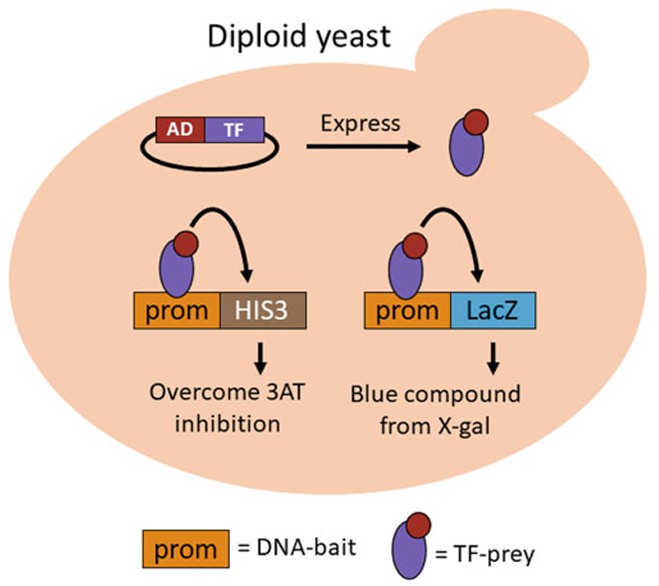 Figure 1. Overview of eY1H assays. (Berenson and Fuxman Bass, 2023)
The yeast one-hybrid system is built on the modular nature of transcription factors, where DNA-binding and activation functions are separable and independently functional. Fusing a transcriptional activation domain to any DNA-binding protein creates a chimeric activator capable of driving reporter gene expression from a linked cognate DNA site.
This principle was applied to develop the one-hybrid assay: a target DNA element (bait) is placed upstream of a minimal promoter driving a selectable reporter gene (e.g., HIS3 or LacZ) in the yeast genome. A cDNA library encoding proteins fused to a strong activation domain is then transformed into the bait-containing yeast strain. When a library-encoded protein binds the bait element, the activation domain recruits the transcription machinery and triggers reporter expression, enabling growth under selective conditions or producing a detectable signal.
Since its inception, Y1H has been instrumental in cloning transcription factors for numerous biological processes, including developmental signaling, stress responses, metabolic regulation, and circadian rhythms. The method has been continuously refined through the development of improved yeast strains, higher-complexity cDNA libraries, multiple reporter systems to reduce false positives, and automated screening protocols. Profacgen's Y1H platform incorporates these advances to deliver robust, reproducible results for any DNA element of interest.
Profacgen provides comprehensive yeast one-hybrid screening services for transcription factor discovery and DNA-protein interaction analysis. Our offerings include:
Standard Y1H Library Screening
Screen pre-made normalized cDNA libraries (human, mouse, plant, or yeast) against your DNA bait element. Dual reporter system (HIS3 and LacZ) for stringent selection. Deliverables: positive clone sequences, identified transcription factor list, interaction report.
Custom Y1H Library Construction
Construct tissue- or condition-specific cDNA libraries from your source material. Normalized libraries with complexity exceeding 106 independent clones. Deliverables: library titer, diversity assessment, QC report.
Bait Construction & Validation
Clone your target DNA element upstream of reporter genes and validate for self-activation and toxicity. Multiple copy configurations available. Deliverables: sequence-verified bait plasmids, self-activation assessment report.
Interaction Verification
Confirm primary Y1H hits by reciprocal assays, EMSA, or ChIP-qPCR using full-length proteins. Orthogonal validation eliminates false positives. Deliverables: validation report with confirmation data.

| Step | Description | Deliverables |
|---|---|---|
| 1. Bait Construction & Validation | The target DNA element is cloned upstream of the HIS3 and/or LacZ reporter genes. Bait constructs are tested for self-activation and toxicity in yeast. | Sequence-verified bait plasmids; Self-activation and toxicity assessment report |
| 2. Library Construction | Option A: Screen a pre-made normalized cDNA library (human, mouse, plant, or yeast). Option B: Construct a custom tissue- or condition-specific library. | Library complexity assessment (>106 independent clones); Quality control by insert size analysis |
| 3. Transformation & Screening | The cDNA library is transformed into bait-containing yeast. Transformants are plated on selective medium lacking histidine (with 3-AT to suppress weak self-activation). | Primary positive colonies; Transformation efficiency report |
| 4. Secondary Confirmation | Primary positives are re-streaked on selective medium and tested for LacZ expression (β-galactosidase assay) to eliminate false positives. | Confirmed double-positive colonies (>90% specificity) |
| 5. Plasmid Isolation & Sequencing | Yeast plasmids from confirmed positives are extracted, transformed into E. coli, and sequenced to identify the interacting transcription factors. | Sequence data; BLAST annotation; Identified transcription factor list |
| 6. Interaction Verification | Confirmed interactions are validated by reciprocal Y1H assays, EMSA, or ChIP-qPCR using full-length proteins. | Validation report with orthogonal confirmation data |
Background:
An agricultural biotechnology company identified a dehydration-responsive element (DRE: 5′-TACCGACAT-3′) in the promoter of a stress-inducible rice gene but could not identify the transcription factor responsible for its activation using biochemical purification approaches.
Our Solution:
Profacgen constructed a Y1H bait strain containing three tandem copies of the DRE element upstream of the HIS3 reporter. A normalized rice seedling cDNA library (2.5 × 10⁶ clones) fused to the GAL4 AD was screened on selective medium. From 45 primary positives, 8 were confirmed by LacZ assay. Plasmid sequencing identified a novel AP2/ERF family transcription factor, designated OsDREB2C.
Final Results:
EMSA confirmed that recombinant OsDREB2C bound the DRE element with a KD of 42 nM. ChIP-qPCR demonstrated in vivo binding to the DRE-containing promoter in drought-stressed rice seedlings. Overexpression of OsDREB2C in transgenic rice conferred a 35% improvement in survival under severe drought conditions. The gene was subsequently used as a molecular marker in marker-assisted breeding programs.
Background:
A virology research group studying Epstein-Barr virus (EBV) latency needed to identify all human transcription factors that bound to the viral Cp enhancer—a complex regulatory element controlling the switch between viral latency and lytic replication.
Our Solution:
Profacgen divided the 1.2 kb Cp enhancer into 12 overlapping 100-bp fragments and screened each as a separate Y1H bait against a normalized human B-cell cDNA library. A total of 156 primary positives were obtained across all 12 baits, yielding 34 unique transcription factors after de-duplication and confirmation.
Final Results:
The screen identified 12 previously known Cp-binding factors and 22 novel interactors, including 5 factors not previously associated with EBV biology. Network analysis revealed a hierarchical regulatory architecture: constitutive factors (CTCF, SP1) maintained basal enhancer structure, while signal-responsive factors (NF-κB, AP-1) mediated the latency-lytic switch. CRISPR knockout of one novel factor (ZNF350) in EBV-positive B cells abolished Cp-driven transcription and blocked lytic reactivation, establishing it as a potential therapeutic target for EBV-associated lymphomas.
Start Your Y1H Screening Project
References:
Fill out this form and one of our experts will respond to you within one business day.