
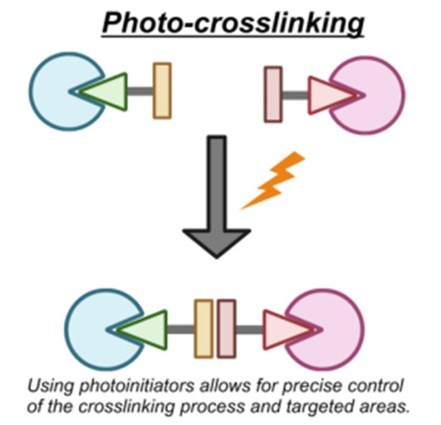
At Profacgen, our photocrosslinking services harness the power of light-activated chemistry to achieve precise, spatiotemporally controlled bioconjugation. Photocrosslinking represents one of the most advanced methodologies in the bioconjugation field, offering exceptional orthogonality with biological systems and enabling applications that conventional crosslinking strategies cannot address, including the capture of transient protein-protein interactions within living cells and the mapping of protein interaction networks with residue-level precision.
By coupling state-of-the-art photocrosslinking reagents with advanced analytical capabilities, Profacgen enables researchers to map intracellular interaction networks, capture transient protein associations that dissociate during conventional purification procedures, and construct precisely defined conjugates under conditions of exquisite temporal and spatial control. Our experienced scientific team provides custom reaction designs for both early-stage research and application development, including the design, synthesis, and delivery of non-commercially available reagents tailored to your experimental requirements.
Photocrosslinking exploits photoactivatable chemical groups (photophores) that undergo reactive transformations upon absorption of UV photons at specific wavelengths. The fundamental principle underlying all photocrosslinking strategies is the generation of highly reactive intermediates—carbenes, nitrenes, or diradicals—that insert covalently into proximal chemical bonds without requiring pre-existing chemical affinity between the crosslinking partners. This non-selective insertion chemistry is the key strength of photocrosslinking: it captures all molecules within the reactive radius of the photoactivated group, regardless of interaction affinity or duration, making it uniquely powerful for discovering unknown interaction partners and mapping interaction topologies.
Aryl diazirines are the most widely adopted photophores for biological applications. Upon UV irradiation at 350–360 nm, the three-membered diazirine ring undergoes facile N2 extrusion to generate a singlet carbene that rapidly intersystem crosses to the triplet state. Both singlet and triplet carbenes insert indiscriminately into C–H, N–H, and O–H bonds within their immediate vicinity (<1 nm effective radius due to the extremely short excited-state lifetime of <1 ns). The small size of the diazirine group (comparable to a methyl substituent) minimizes structural perturbation of the parent molecule, and the 350 nm activation wavelength is optimally suited for biological applications as it is absorbed poorly by cellular components, minimizing phototoxicity.
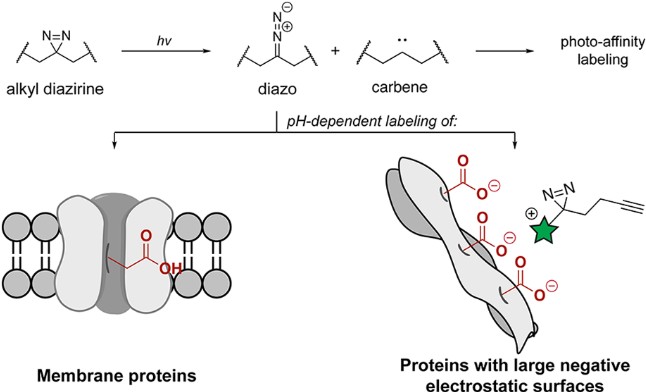 Figure 1. Photocrosslinking via aryl diazirines. (West et al., 2021)
Benzophenone derivatives operate through a distinct mechanism. Upon UV irradiation at 340–360 nm, the benzophenone carbonyl undergoes n→π* excitation to a triplet diradical state. The triplet abstracts a hydrogen atom from a proximal C–H bond (preferentially from methylene or methine carbons) to generate a benzhydrol radical and a substrate-derived radical. These radical pair subsequently recombine to form a new C–C bond. A key advantage of this mechanism is its reversibility: if no suitable C–H bond is available within the excited-state lifetime, the benzophenone can release the abstracted hydrogen and return to the ground state for repeated excitation cycles, significantly enhancing overall crosslinking yield compared to single-shot carbenes.
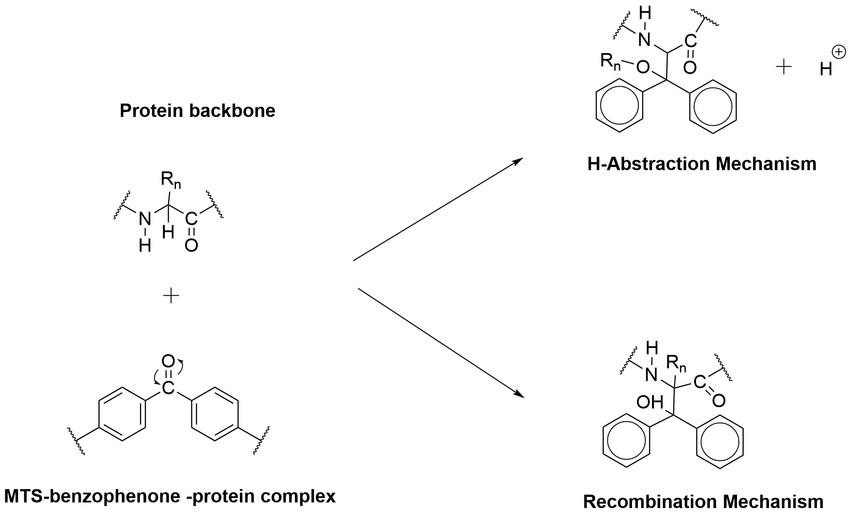 Figure 2. Proposed benzophenone photocrosslinking mechanisms. (Veeramachaneni et al., 2020)
Photocrosslinking offers several advantages over conventional approaches: the reaction is completely inert until irradiation, eliminating non-specific background reactivity during incubation; activation can be restricted in time (milliseconds of irradiation) and space (diffraction-limited illumination), enabling subcellular resolution; and the non-selective insertion chemistry captures transient interactions that dissociate during standard affinity purification workflows.
Profacgen offers a comprehensive selection of photocrosslinking chemistries, each optimized for specific applications:
Diazirine-Based Photocrosslinking
Substituted aryl diazirines undergo UV-induced N2 loss to generate highly reactive carbene intermediates that insert into C–H, N–H, and O–H bonds indiscriminately. This universal reactivity makes diazirines exceptionally powerful for comprehensive interaction mapping.
Benzophenone-Based Photocrosslinking
Benzophenone derivatives generate reactive triplet diradicals upon UV irradiation that preferentially insert into C–H bonds of proximal amino acid side chains. The reversibility of hydrogen abstraction enables multiple excitation cycles, enhancing crosslinking efficiency.
Our photocrosslinking services enable cutting-edge research across diverse fields:
Background:
A pharmaceutical research team studying a G protein-coupled receptor (GPCR) of therapeutic interest needed to identify the complete set of proteins in the receptor's membrane microenvironment, including low-abundance scaffolding and regulatory proteins that evaded detection by standard co-immunoprecipitation methods.
Approach:
Profacgen designed a benzophenone-photoaffinity derivative of the receptor's endogenous ligand, incorporating the photophore at a position that preserved binding affinity (Kd = 8 nM vs. 5 nM for unmodified ligand). The photoaffinity probe was incubated with live HEK293 cells stably expressing the target GPCR. Following equilibrium binding at 4°C to synchronize the receptor population, cells were irradiated at 350 nm for 2 minutes to activate crosslinking. Crosslinked complexes were solubilized, enriched by affinity chromatography, and analyzed by quantitative LC-MS/MS with SILAC labeling.
Outcome:
Photoaffinity labeling identified 31 proteins in proximity to the activated receptor, including 12 proteins not previously associated with this GPCR. Among the novel interactors, two were validated as functionally significant regulators of receptor desensitization using gene knockdown followed by signaling assays. The proximity network provided new mechanistic insights into receptor trafficking and identified a previously unknown protein interaction interface that is now being targeted for small-molecule therapeutic development.
Background:
A systems biology group studying a sequentially acting three-enzyme metabolic pathway was unable to detect the predicted transient complex between the first and second enzymes using conventional methods, as the intermediate is unstable and the enzymes dissociate rapidly (<100 ms half-life) following catalytic turnover.
Approach:
Profacgen engineered the first enzyme with a genetically encoded photo-crosslinker: the non-canonical amino acid p-benzoyl-L-phenylalanine (Bpa) was site-specifically incorporated at a surface position predicted to face the binding interface with the second enzyme based on AlphaFold structural models. The Bpa-containing enzyme was expressed in E. coli, purified, and confirmed to retain wild-type catalytic activity. In vitro reconstitution of the two-enzyme system was performed with substrate present to populate the productive complex, followed by UV irradiation (365 nm, 30 seconds) to activate benzophenone crosslinking.
Outcome:
Crosslinking captured a covalent heterodimer between the two enzymes with >40% yield, enabling enrichment and structural characterization by crosslinking mass spectrometry (XL-MS). The XL-MS data provided 28 inter-protein distance constraints that, combined with AlphaFold models, generated a high-confidence structural model of the transient complex. This model revealed an unexpected allosteric communication pathway between the two active sites that rationalizes the observed substrate channeling behavior and suggests strategies for engineering improved metabolic flux.
Discuss Your Photocrosslinking Project
References:
Fill out this form and one of our experts will respond to you within one business day.