
Structure-based virtual screening (SBVS) exploits three-dimensional structural information of biological targets—typically derived from X-ray crystallography, cryo-electron microscopy, or homology modeling—to computationally evaluate and rank large compound libraries according to predicted binding affinity and complementarity. By explicitly modeling protein-ligand interactions including hydrogen bonds, hydrophobic contacts, van der Waals forces, and electrostatic complementarity, SBVS provides mechanistic insights into binding modes that purely ligand-based approaches cannot offer. Profacgen's SBVS platform integrates state-of-the-art docking algorithms, ensemble-based strategies, and advanced scoring functions to identify high-quality hit compounds across diverse target classes from kinases and proteases to GPCRs and protein-protein interactions.
Our structure-based virtual screening services encompass the complete workflow from target preparation and binding site analysis through compound library screening, hit ranking, and post-processing refinement. We specialize in challenging scenarios including targets with flexible binding pockets, metalloproteins requiring explicit coordination geometry treatment, and membrane proteins where lipophilic environments influence ligand binding. Our computational infrastructure supports screening campaigns ranging from focused libraries of thousands to ultra-large databases exceeding billions of compounds, with hierarchical filtering strategies that balance computational efficiency against prediction accuracy.
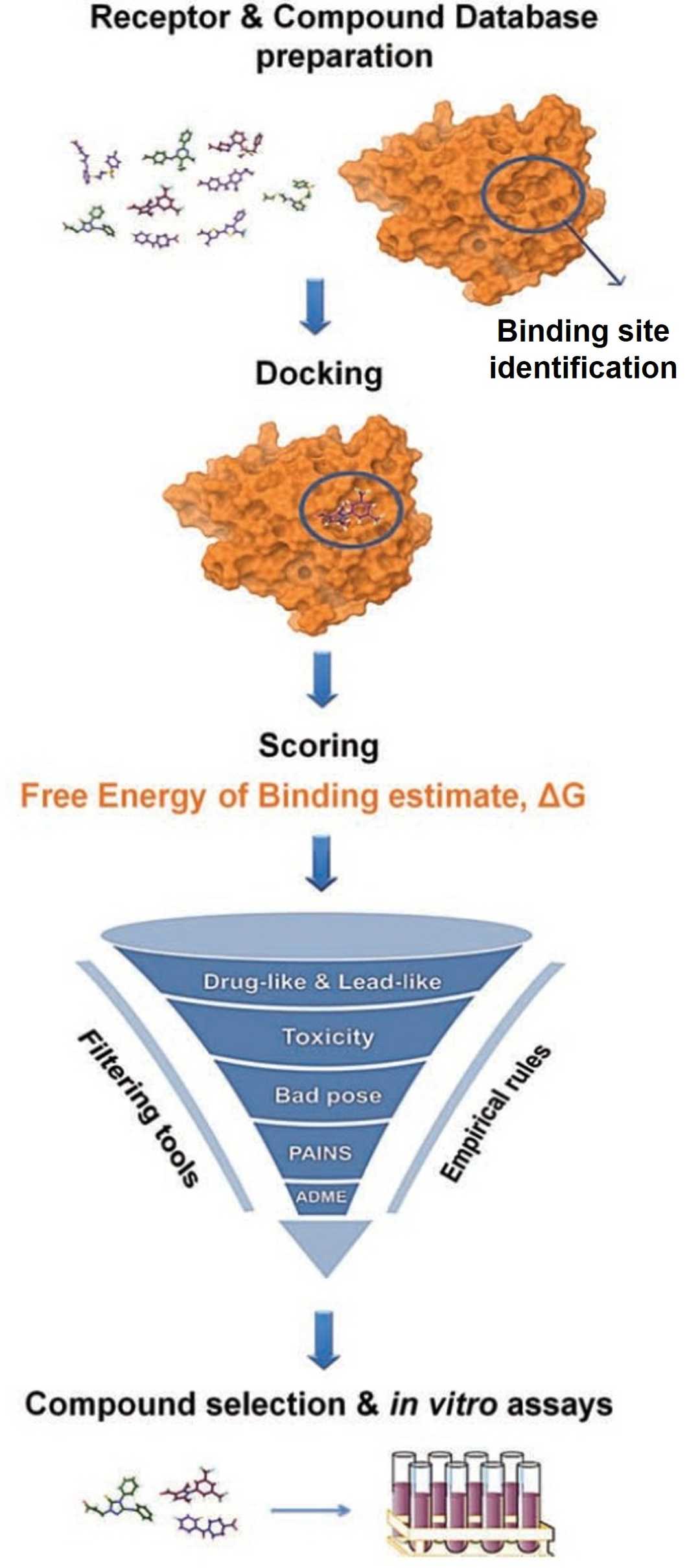 Figure 1. Structure-Based Virtual Screening work-flow. (Lionta et al., 2014)
SBVS is rooted in Fischer’s lock-and-key model, later refined to include induced-fit, conformational selection, and allosteric modulation. The core premise—that ligand activity correlates with binding free energy—underpins all structure-based approaches. Docking algorithms approximate ΔGbind by evaluating enthalpic terms (van der Waals, H-bonds, electrostatics) and simplified entropy contributions (conformational strain, desolvation, rotational/translational costs).
Search strategies include deterministic, stochastic (Monte Carlo, genetic algorithms), or hybrid methods. Scoring functions fall into force-field-based, empirical, knowledge-based, and machine-learning categories. Profacgen employs multi-scoring consensus protocols to improve hit identification beyond any single function.
High-Throughput Molecular Docking
Large-scale virtual screening using Glide SP/XP, AutoDock Vina, GOLD, or LeDock with optimized protocol parameters. Library filtering by physicochemical properties, pharmacophore constraints, and shape matching prior to docking. Parallel computing on GPU clusters enables screening of billion-compound libraries within feasible timelines.
Induced-Fit Docking (IFD)
Iterative docking protocols that refine binding site side chains and backbone segments during ligand placement. Glide IFD and Schrodinger workflows model protein conformational changes upon ligand binding. Critical for targets known to undergo significant pocket rearrangements including kinases and nuclear receptors.
Ensemble Docking and Conformational Sampling
Docking against multiple crystallographic or MD-generated receptor conformations captures binding site dynamics. Consensus scoring across ensemble members identifies compounds robustly predicted to bind across conformational states. Essential for flexible targets including GPCRs, kinases with DFG-loop mobility, and protein-protein interaction sites.
Molecular Dynamics (MD) Refinement and Free Energy Calculations
Post-docking refinement using explicit-solvent MD simulations to validate binding pose stability. MM-GBSA/PBSA rescoring provides improved affinity ranking for top hits. Free energy perturbation (FEP) calculations offer quantitative relative binding affinity predictions for lead optimization, achieving <1 kcal/mol accuracy in favorable cases.
Machine Learning Scoring and Rescoring
Neural network scoring functions (NNScore, RF-Score, DeepDock) trained on protein-ligand structural data improve discrimination between true binders and decoys. OnionNet, IGN, and GraphBar architectures process atomic environments and interaction graphs for affinity prediction. Consensus schemes combining physics-based and ML scores optimize enrichment factors.
Covalent Docking and Metalloprotein Screening
Specialized protocols for covalent inhibitors including warhead placement, reaction mechanism modeling, and reversible/irreversible binding treatment. Metalloprotein docking with explicit metal coordination constraints and customized force fields for zinc, iron, copper, and magnesium centers. Supports cysteine, serine, lysine, and tyrosine-targeting covalent ligands.
Program Context:
A pharmaceutical company sought novel ATP-competitive inhibitors for a therapeutically relevant kinase target where existing patents created crowded IP space around known chemotypes. The available X-ray co-crystal structure offered a well-defined binding pocket but limited opportunities for scaffold-hopping within the known chemical series.
Objective:
To identify structurally novel, synthetically accessible kinase inhibitor candidates occupying the same ATP-binding site as reference ligands, with predicted nanomolar affinity and favorable selectivity profiles against off-target kinases.
Approach:
We executed an SBVS campaign against a curated library of ~3 million commercially available compounds. The workflow included multi-conformer docking with induced-fit sampling, consensus scoring across four independent functions, MM-GBSA rescoring of the top 5,000 hits, and selectivity filtering against a panel of 50 off-target kinases using rapid cross-docking.
Outcome:
The screen delivered 42 high-confidence hits representing six distinct chemotype families absent from the patent landscape. Twenty compounds were procured and tested; 8 confirmed activity with IC50 values below 1 μM, including two sub-100 nM leads that advanced to hit-to-lead optimization.
Program Context:
A research program targeted a protein–protein interaction (PPI) interface with no known small-molecule modulators. The interface was large, flat, and featureless by conventional standards—a notoriously difficult class for small-molecule intervention. Traditional HTS had yielded no tractable hits.
Objective:
To identify low-molecular-weight fragments binding to cryptic or transient pockets on the PPI surface that could serve as starting points for fragment-growing or linking strategies.
Approach:
We employed fragment-optimized SBVS protocols using dedicated fragment scoring functions and enhanced sampling of surface-exposed sub-pockets. Ensemble docking was performed across 20 MD-derived receptor conformations to capture binding site plasticity. Top-ranked fragments underwent water-map analysis and hotspot residue identification.
Outcome:
The campaign identified 18 validated fragment hits with confirmed binding by NMR or SPR. Three fragments bound to adjacent subsites suitable for structure-guided fragment linking, providing a viable path forward for a target previously considered "undruggable."
References:
Fill out this form and one of our experts will respond to you within one business day.