We use cookies to understand how you use our site and to improve the overall user experience. This includes personalizing content and advertising. Read our
Privacy Policy
Computational Docking for Protein Interaction Analysis and Drug Discovery
Interactions between proteins and their binding partners—small molecules, peptides, nucleic acids, antibodies, carbohydrates, and lipids—govern virtually every biological process, from gene expression and signal transduction to metabolism and immune recognition. Understanding the structural details of these interactions at atomic resolution is fundamental to modern drug discovery and development. However, experimental determination of complex structures by X-ray crystallography, NMR spectroscopy, or cryo-electron microscopy remains technically challenging, time-consuming, and costly.
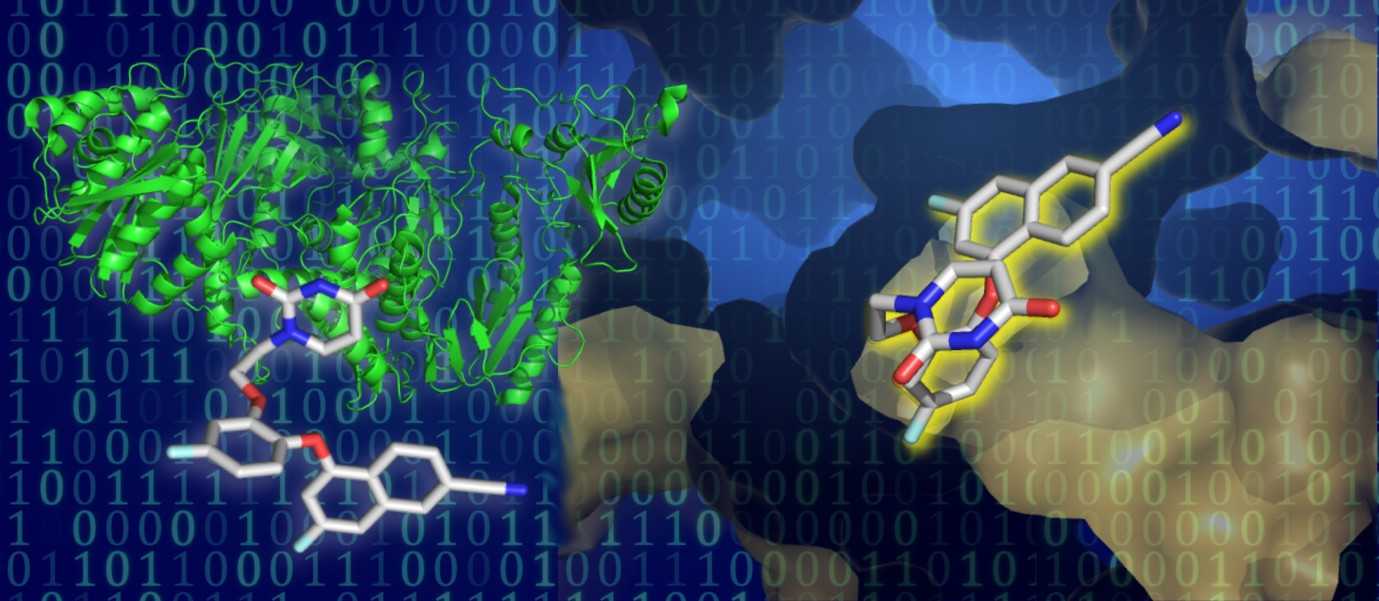
Profacgen's Molecular Docking platform addresses this bottleneck through state-of-the-art computational modeling, predicting the preferred orientation and conformation of binding partners with high accuracy. Our docking services span single docking experiments for mechanistic studies, virtual screening of large compound libraries for hit identification, and seamless integration with upstream and downstream computational workflows—delivering a comprehensive solution for structure-based drug design.
Our Molecular Docking Services
Profacgen offers a complete suite of computational docking protocols tailored to diverse biomolecular interaction types. Each service is powered by specialized algorithms, scoring functions, and refinement strategies optimized for the specific physicochemical characteristics of the interaction partners:
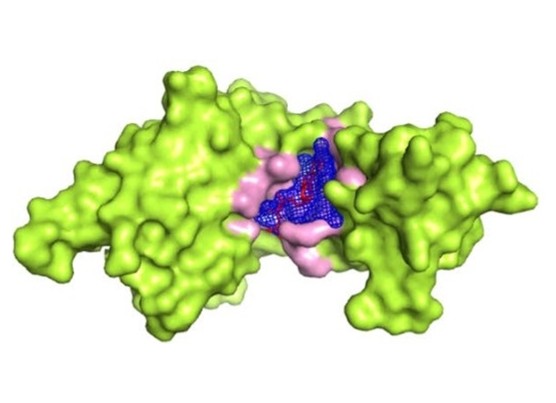
Predict the binding pose and affinity of small-molecule ligands within protein binding sites using advanced search algorithms and scoring functions. Supports induced-fit docking with receptor flexibility, multi-ligand docking with cofactors and metal ions, and large-scale virtual screening for lead discovery and optimization.
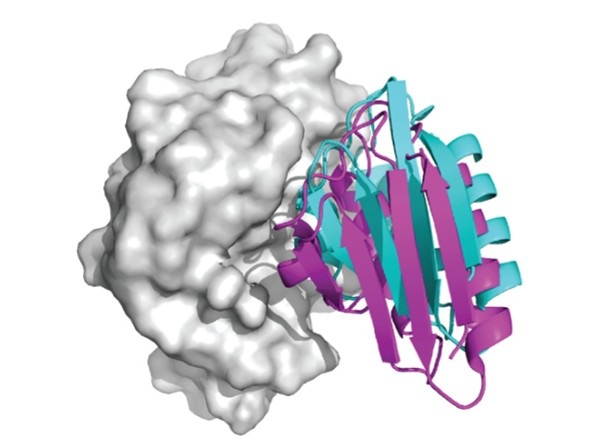
Predict the binding pose and interaction interface of protein–protein complexes using advanced docking algorithms and scoring functions. Supports rigid-body docking with shape complementarity and electrostatic matching, flexible docking with backbone and side-chain conformational sampling, and large-scale cross-docking for interaction network mapping and therapeutic target validation.
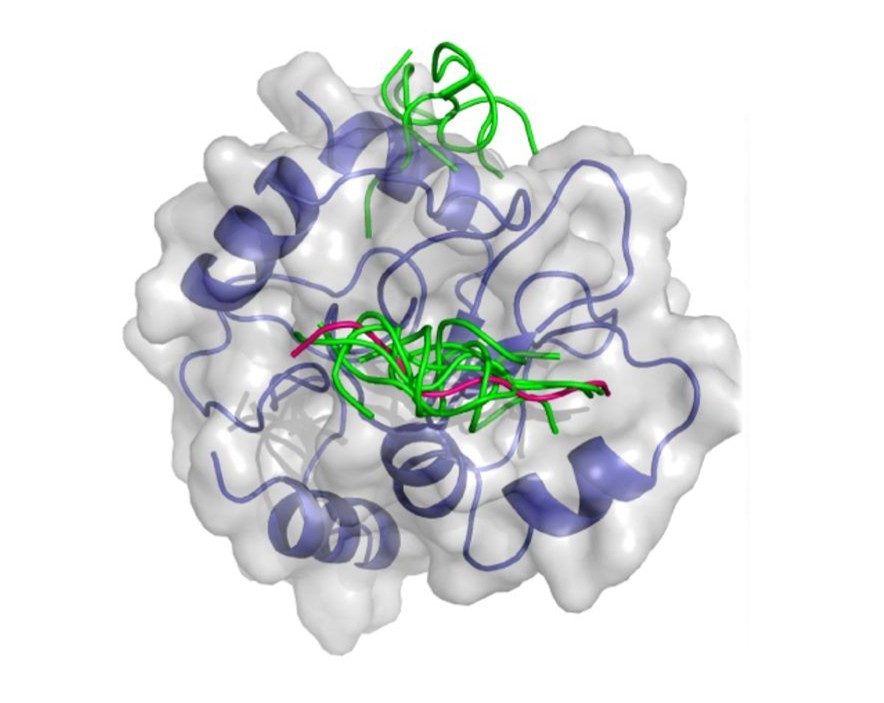
Model protein–peptide interactions with full peptide flexibility through a two-stage global-local docking protocol. Captures conformational changes upon binding, identifies hot-spot residues, and supports modified amino acids—ideal for therapeutic peptide design and signaling pathway studies.
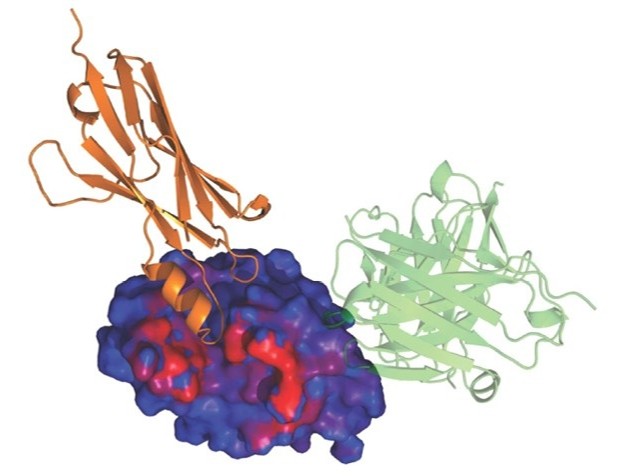
Predict antibody–antigen complex structures with specialized scoring functions and CDR loop refinement. Supports Fv, Fab, and full antibody models, epitope mapping, and compatibility with all major numbering schemes (Chothia, Kabat, IMGT, Aho)—accelerating antibody engineering and therapeutic development.
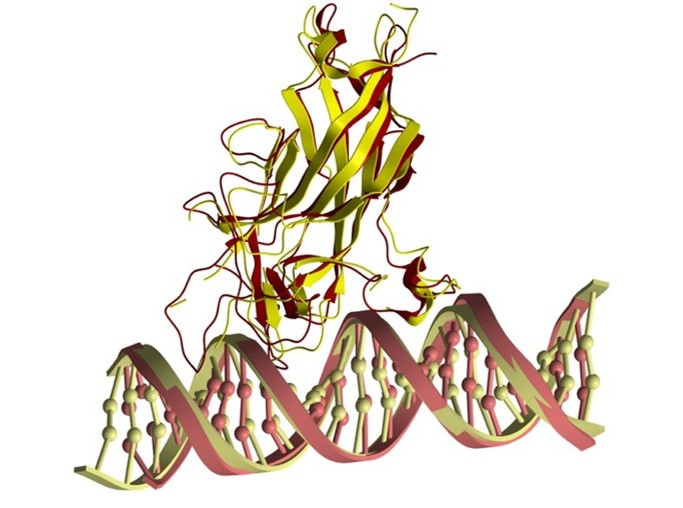
Model protein–DNA, protein–RNA, and protein–hybrid nucleic acid complexes using statistical potentials specifically parameterized for nucleic acid interactions. Supports user-defined restraints, local flexible refinement, and modified nucleotides—critical for transcription factor and nuclease studies.
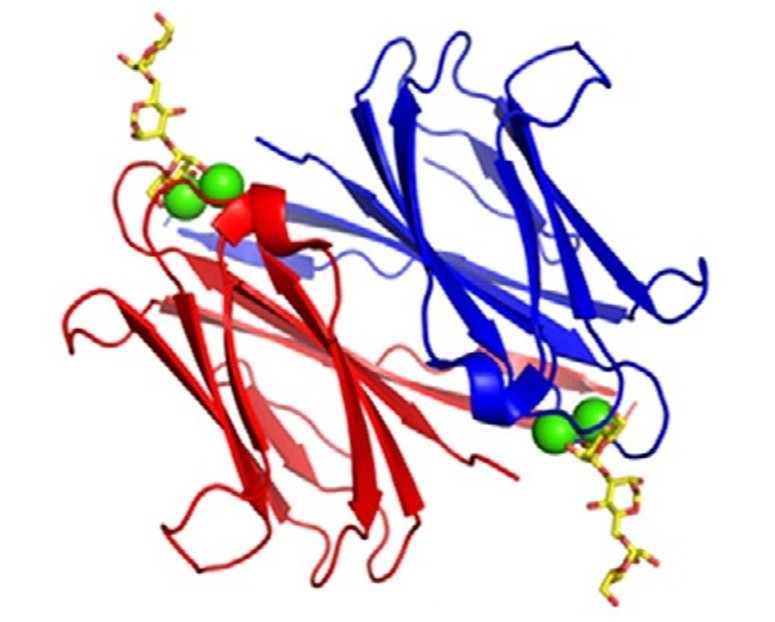
Characterize glycan–protein recognition using empirically derived carbohydrate-specific free energy functions and genetic conformational search. Capable of docking single sugars, oligosaccharides, and complex glycans, with support for in silico glycosylation and short MD refinement.
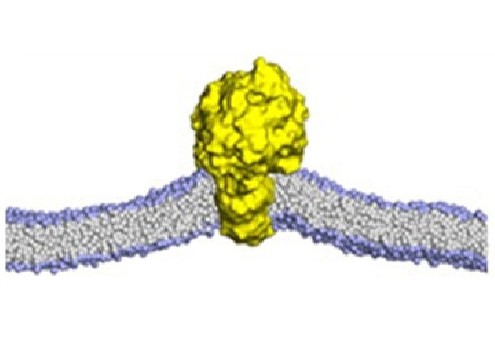
Predict protein–lipid interactions with specialized scoring functions that account for lipid distortion and membrane effects. Supports multiple lipid types (up to 32), various membrane-binding mechanisms, and seamless integration with downstream MD simulations—essential for membrane protein research.
Integrated Computational Platform
Molecular docking at Profacgen does not operate in isolation. Our docking workflows integrate seamlessly with upstream and downstream computational services, creating a complete structure-based drug discovery pipeline:
Upstream: Homology modeling, binding site prediction, molecular dynamics-based conformational sampling, and structure refinement prepare high-quality input structures for docking
Core docking: Rigid-body global search, flexible local docking, scoring, and clustering deliver ranked complex models
Downstream: MD simulation-based stability assessment, binding free energy calculations (MM/PBSA, MM/GBSA), pharmacophore modeling, and structure-based lead optimization translate docking results into actionable drug design hypotheses
Please feel free to contact us with your molecular docking projects. Profacgen is here to offer you professional and thoughtful service.
References:
Kozakov D, Hall DR, Xia B, et al. The ClusPro web server for protein–protein docking. Nat Protoc. 2017;12(2):255-278. doi:10.1038/nprot.2016.169
Zhang W, Bell EW, Yin M, Zhang Y. EDock: blind protein–ligand docking by replica-exchange monte carlo simulation. J Cheminform. 2020;12(1):37. doi:10.1186/s13321-020-00440-9
Johansson-Åkhe I, Mirabello C, Wallner B. Interpep2: global peptide-protein docking with structural templates. Preprint posted online October 21, 2019. doi:10.1101/813238
Desta IT, Kotelnikov S, Jones G, et al. The ClusPro AbEMap web server for the prediction of antibody epitopes. Nat Protoc. 2023;18(6):1814-1840. doi:10.1038/s41596-023-00826-7
Rodríguez-Lumbreras LA, Jiménez-García B, Giménez-Santamarina S, Fernández-Recio J. Pydockdna: a new web server for energy-based protein-DNA docking and scoring. Front Mol Biosci. 2022;9:988996. doi:10.3389/fmolb.2022.988996
Pérez S, Tvaroška I. Carbohydrate–protein interactions. In: Advances in Carbohydrate Chemistry and Biochemistry. Vol 71. Elsevier; 2014:9-136. doi:10.1016/B978-0-12-800128-8.00001-7
Corradi V, Sejdiu BI, Mesa-Galloso H, et al. Emerging diversity in lipid–protein interactions. Chem Rev. 2019;119(9):5775-5848. doi:10.1021/acs.chemrev.8b00451
Online Inquiry
Fill out this form and one of our experts will respond to you within one business day.