
The Nicotiana tabacum expression system is a robust, scalable, and animal-free platform for recombinant protein production, offering a compelling alternative to microbial fermentation and mammalian cell culture. Leveraging the biological advantages of plant hosts, this system enables cost-effective, rapid, and high-yield expression of complex proteins with appropriate post-translational modifications. As a non-food, non-feed crop with well-established genetic engineering protocols, Nicotiana tabacum minimizes regulatory risk while maximizing production flexibility. Profacgen has developed a specialized tobacco expression platform that supports high-purity protein production, low endotoxin levels, and scalable downstream processing, making it suitable for research, diagnostic, and preclinical applications.
Traditional recombinant protein expression systems—including bacterial fermentation, yeast platforms, insect cells, and mammalian cell cultures—have driven decades of progress in biotechnology. However, each of these systems presents inherent limitations. Microbial hosts often lack complex post-translational modification machinery; mammalian systems are expensive, slow to scale, and carry risks associated with human pathogens; and insect cell systems can be resource-intensive for large-scale production.
Plant expression systems have emerged as a powerful alternative. Compared with conventional platforms, plant-based production is inherently safe, cost-effective, and highly scalable. Plants do not harbor human pathogens, significantly reducing biosafety concerns, and large biomass can be generated using relatively simple infrastructure. In some cases, plant-derived proteins even offer the potential for direct oral administration, opening new possibilities in vaccine and therapeutic development.
Among plant hosts, tobacco (Nicotiana spp.) has the longest and most successful history in recombinant protein production. It is readily amenable to genetic engineering, grows rapidly, and produces substantial leaf biomass. Importantly, tobacco-based expression relies on leaf tissue, eliminating the need for flowering and thereby reducing the risk of gene leakage via pollen or seeds. As a non-food, non-feed crop, tobacco further minimizes regulatory hurdles by preventing plant-made recombinant proteins from entering the human or animal food chain.
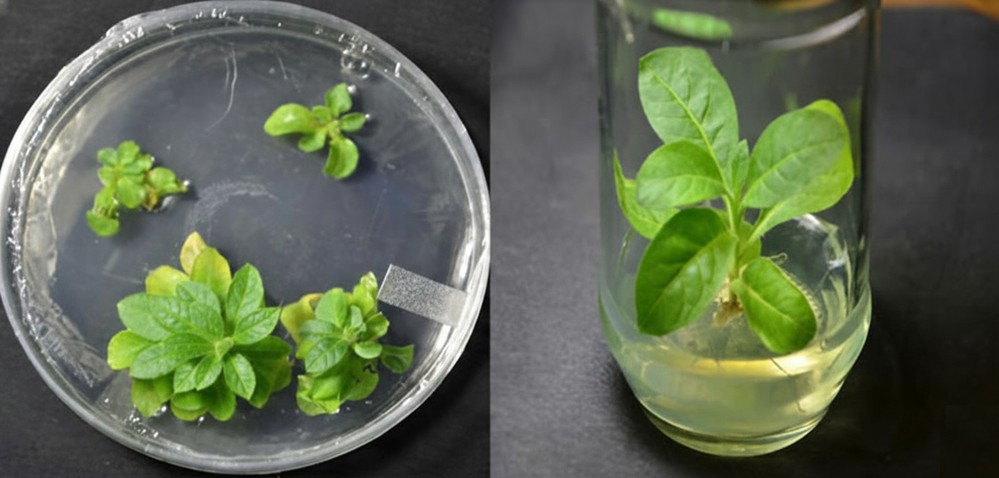
Within the Nicotiana genus, Nicotiana tabacum stands out as the most effective host for transient recombinant protein expression. Comparative studies have shown that N. tabacum achieves higher transient expression levels than other Nicotiana species, while also generating large quantities of biomass and relatively low levels of alkaloids. This balance is particularly advantageous for downstream purification and product quality.
Proteins expressed in N. tabacum typically undergo eukaryotic post-translational modifications, including disulfide bond formation and glycosylation, which are critical for protein stability, biological activity, and favorable pharmacokinetic profiles. These features make the platform especially attractive for the production of antibodies, vaccines, enzymes, cytokines, and other therapeutically relevant proteins.
Building on these biological advantages, Profacgen has developed a Nicotiana tabacum-specific expression platform optimized for high purity, reproducibility, and economic feasibility.
Profacgen provides end-to-end recombinant protein production services using the Nicotiana tabacum expression system. Our offerings are designed to meet diverse project requirements, from early-stage research to scalable preclinical production.
| Services | Details |
|---|---|
| Gene Design and Vector Optimization | We begin each project with rational gene design tailored to tobacco expression. This includes codon optimization for N. tabacum, promoter selection, signal peptide engineering, and optional fusion tags to enhance expression, solubility, or purification efficiency. Our vector systems are compatible with transient expression strategies, enabling rapid protein production without generating stable transgenic plants. |
| Agrobacterium-Mediated Transient Expression | Recombinant gene delivery is achieved through Agrobacterium-mediated infiltration of tobacco leaves. This transient approach enables high-level protein expression within days, significantly shortening development timelines compared with stable plant transformation or mammalian cell line generation. Expression conditions are carefully optimized to maximize yield while maintaining protein integrity.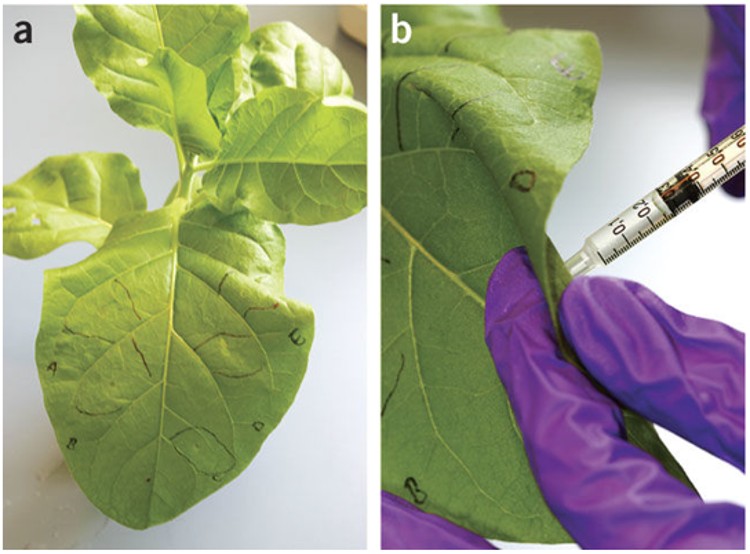 |
| High-Biomass Cultivation and Contained Production | Profacgen operates controlled plant growth facilities designed to support large-scale tobacco cultivation. Environmental parameters such as light, temperature, and humidity are tightly regulated to ensure reproducible expression outcomes. Because production occurs in a contained, non-food plant system, biosafety and environmental concerns are effectively mitigated. |
| Protein Extraction and Purification | Following expression, leaf tissues are harvested and processed using optimized extraction protocols that minimize proteolysis and alkaloid interference. We offer a variety of purification strategies, including affinity chromatography, ion exchange, and size-exclusion chromatography, to achieve the desired purity level. The resulting proteins are characterized for identity, purity, and functionality. |
| Post-Translational Modification and Quality Control | Plant-expressed recombinant proteins generally exhibit eukaryotic post-translational modifications that enhance stability and bioactivity. Our quality control workflow includes analytical assays to assess purity, endotoxin levels, and structural integrity. These data support downstream applications such as functional studies, formulation development, or preclinical evaluation. |
At Profacgen, our proprietary optimizations enhance the economic feasibility of tobacco-based expression. We consistently achieve fast growth rates, high soluble protein levels, and reduced alkaloid content, ensuring both efficiency and product quality.
Background
A biotech company required rapid production of a glycosylated human enzyme for preclinical evaluation. The protein required eukaryotic post-translational modifications but needed to be produced in an animal-free system to avoid regulatory complexity and high manufacturing costs associated with mammalian cells.
Our Solution
Profacgen employed its Nicotiana tabacum transient expression platform with codon optimization and leaf-specific expression vectors. Agroinfiltration conditions were optimized to maximize soluble expression while minimizing proteolytic degradation.
Final Results
Milligram-level yields were achieved within two weeks. The purified enzyme showed correct glycosylation patterns, high purity, and retained full catalytic activity, enabling timely advancement into downstream functional studies.
Background
An academic research group sought scalable production of a viral surface antigen for vaccine research. The antigen was unstable in microbial systems and required rapid turnaround for immunogenicity testing.
Our Solution
Using the Nicotiana tabacum expression system, Profacgen designed a transient leaf-based expression strategy incorporating secretion signals to enhance protein accumulation and simplify downstream purification. Expression parameters were optimized to balance yield and protein integrity.
Final Results
The target antigen was successfully produced at high levels within 10 days post-infiltration. Purified protein demonstrated correct folding and strong antigenicity in ELISA assays, supporting its suitability for vaccine formulation and animal immunization studies.
Consult Our Experts on Your Project
Profacgen provides an integrated, animal-free solution for recombinant protein production using the Nicotiana tabacum Expression System. With proven expertise, competitive pricing, and flexible service options, we help accelerate your research and development goals. Contact us to discuss how our tobacco expression platform can support your next project.
Reference:
Fill out this form and one of our experts will respond to you within one business day.