We use cookies to understand how you use our site and to improve the overall user experience. This includes personalizing content and advertising. Read our
Privacy Policy
Profacgen's NMR services deliver atomic-resolution structural, dynamic, and interaction analysis for proteins, antibodies, and biomolecular complexes, supporting drug discovery, protein engineering, and therapeutic development.
Cellular function relies on signaling networks mediated by biomolecular interactions; disruptions in these pathways underlie diseases such as cancer, chronic inflammation, and diabetes. Atomic-level understanding of protein-protein interactions is therefore essential for therapeutic strategy development.
NMR spectroscopy is a premier technique for studying these interactions, providing detailed information on binding interfaces, affinity, and conformational changes upon binding. Advances in solution and solid-state NMR have solidified its role as a key tool for accelerating research into signal transduction and disease mechanisms.
Overview of NMR Technology
Nuclear Magnetic Resonance (NMR) spectroscopy is a non-destructive analytical technique that exploits the magnetic properties of atomic nuclei to provide detailed structural and dynamic information about molecules in solution:
Non-destructive analytical technique: NMR analysis preserves sample integrity, enabling repeated measurements, time-course studies, and recovery of precious biomaterials for downstream applications
Atomic-level characterization: Chemical shifts, coupling constants, and nuclear Overhauser effects (NOEs) provide distance and angular constraints at atomic resolution, enabling precise three-dimensional structure determination
Structural and dynamic information: NMR captures both static structures and time-dependent motions—backbone flexibility, side-chain dynamics, and conformational exchange processes—essential for understanding function
Biomolecules in solution state: Unlike crystallography, NMR studies proteins, nucleic acids, and complexes under native, physiologically relevant conditions without crystallization constraints
Figure 1. Schematic representation of the steps involved in traditional structure determination by NMR spectroscopy. (Kawale and Burmann, 2023)
Profacgen provides high-quality NMR spectroscopy services, including 300 MHz, 400 MHz and 500 MHz NMR instruments. Our comprehensive platform supports quantitative NMR (qNMR), solid-state NMR, and solution-state NMR analysis with variable temperature experiments, multi-nuclear capabilities, and multidimensional techniques.
What Can NMR Measure?
Profacgen's NMR platform delivers comprehensive atomic-resolution information across the critical structural and dynamic attributes of biomolecular samples:
Molecular Structure: Complete three-dimensional structure determination through distance and dihedral angle constraints, secondary structure identification, and tertiary fold validation for proteins, peptides, and nucleic acids
Conformational Analysis: Detection of folding states, structural transitions, and conformational flexibility through chemical shift perturbation mapping, hydrogen-deuterium exchange, and relaxation dispersion experiments
Molecular Dynamics: Quantification of backbone and side-chain motions across multiple timescales (picoseconds to milliseconds), domain motion characterization, and protein flexibility assessment through relaxation measurements
Molecular Interactions: Mapping of protein-ligand binding interfaces, protein-protein interaction sites, and allosteric networks through chemical shift perturbation, saturation transfer difference (STD), and transferred NOE experiments
Sample Quality Assessment: Purity evaluation, sample homogeneity verification, and aggregation monitoring through one-dimensional proton spectra and diffusion-ordered spectroscopy (DOSY)
Our NMR Service Portfolio
Profacgen provides specialized NMR analysis services tailored to diverse sample types and analytical objectives. Each service module is optimized for the specific structural information required and the physicochemical properties of the target biomolecule.
Protein Structural Characterization
Atomic-resolution structure determination and validation for diverse protein classes.
Recombinant proteins: Complete 3D structure determination, secondary structure validation, and folding state assessment
Enzymes: Active-site architecture, cofactor binding geometry, and catalytic mechanism support
Antibodies: CDR conformation, epitope-paratope mapping, and Fc domain structural integrity
Protein domains: Isolated domain structure, linker flexibility, and domain-domain orientation in multi-domain proteins
Protein-Ligand Interaction Analysis
Quantitative binding characterization and interface mapping for drug discovery.
Lead discovery: Fragment screening by ligand-observed NMR (STD, WaterLOGSY), binding epitope mapping, and affinity ranking
Fragment screening: Sensitive detection of weak interactions (mM to µM) with low material consumption
Hit validation: Confirmatory binding assessment, stoichiometry determination, and competitive displacement analysis
Protein-Protein Interaction Studies
Comprehensive characterization of biomolecular complex formation and architecture.
Complex formation analysis: Binding stoichiometry, affinity determination, and complex stability assessment by titration and exchange dynamics
Interaction mapping: Residue-level identification of binding interfaces through chemical shift perturbation and cross-saturation experiments
Conformational Change Analysis
Detection and quantification of environmentally or genetically induced structural transitions.
Mutant comparison: Structural impact assessment of amino acid substitutions on folding, stability, and dynamics
Ligand-induced changes: Allosteric pathway mapping and induced-fit versus conformational selection mechanism discrimination
Formulation studies: Buffer, pH, and excipient effects on conformational integrity and stability
Biomolecular Dynamics Studies
Quantitative characterization of molecular motions and flexibility.
Flexibility analysis: Order parameter determination, loop dynamics, and entropy-enthalpy compensation evaluation
Functional mechanism investigation: Correlation of dynamic motions with catalytic activity, allostery, and signal transduction
Applications
Our NMR services support a broad spectrum of applications across biopharmaceutical development, drug discovery, and fundamental research:
Drug Discovery: Fragment-based lead discovery, hit validation, binding mode determination, and structure-activity relationship elucidation for small-molecule and peptide drug candidates
Protein Engineering: Structure-guided mutation design, stability optimization, and activity enhancement through atomic-resolution understanding of structure-function relationships
Antibody Characterization: CDR conformational analysis, epitope mapping, Fc engineering structural validation, and developability assessment
Biosimilar Development: Higher-order structure comparability, glycan structure verification, and conformational equivalence demonstration through spectral fingerprint comparison
Structure–Function Relationship Studies: Correlation of atomic-resolution structures and dynamic properties with biological activity, binding affinity, and mechanism of action
Mechanism of Action Investigation: Elucidation of enzymatic catalysis, allosteric regulation, and signal transduction pathways through time-resolved and dynamic NMR methods
Key Advantages of NMR Analysis
Atomic-Level Information: Provides sub-Angstrom distance constraints, dihedral angles, and site-specific chemical environment data beyond lower-resolution methods.
Solution-State Characterization: Studies proteins and complexes under native, physiologically relevant conditions, capturing dynamic ensembles and transient states inaccessible to crystallography.
Label-Free Analysis Options: Supports both ligand- and protein-observed experiments for interaction mapping without isotopic labeling, reducing cost and sample preparation.
Non-Destructive Measurements: Samples remain intact for sequential assays, time-course studies, or downstream functional tests.
Comprehensive Structural Insights: Combines static structure, dynamics, interactions, and quality assessment in one platform, minimizing the need for multiple orthogonal techniques.
Deliverables
Profacgen provides structured, decision-ready documentation aligned with your structural, dynamic, and interaction analysis requirements:
Parameter
Description
Spectral Data
Raw and processed one-dimensional (1H, 13C, 15N, 19F, 31P) and multidimensional (HSQC, HMQC, NOESY, TOCSY, COSY) spectra with acquisition parameters and processing details
Structural Interpretation
Chemical shift assignments, secondary structure content, distance and dihedral constraints, structural ensembles, and quality metrics (RMSD, Ramachandran analysis)
Experienced NMR Scientists: Our team combines deep expertise in biomolecular NMR spectroscopy, protein biochemistry, and pharmaceutical development, ensuring that experimental design and data interpretation are aligned with your scientific and regulatory objectives.
Customized Experimental Design: We tailor NMR experiments—pulse sequences, isotopic labeling strategies, temperature programs, and acquisition parameters—to your specific molecule, analytical question, and sample constraints.
Advanced Data Processing: We employ state-of-the-art spectral processing, automated assignment algorithms, structure calculation protocols, and relaxation analysis methods to maximize information extraction and confidence.
End-to-End Technical Support: From sample preparation guidance and isotopic labeling consultation through data acquisition, analysis, and report delivery, we provide comprehensive support at every stage of your NMR project.
Representative Program Scenarios
Scenario 1: Fragment-Based Drug Discovery by Ligand-Detected NMR
Program Context:
A drug discovery program required identification and validation of small-molecule fragments binding to a challenging protein target with limited structural information and no high-resolution crystal structure available. Traditional biochemical screening had yielded few tractable hits, and the team sought an orthogonal biophysical approach to expand the chemical starting point landscape.
Objective:
To identify novel fragment hits through ligand-observed NMR screening, validate binding specificity and affinity, and map binding epitopes to guide fragment elaboration and lead optimization.
Approach:
Profacgen implemented a fragment-based NMR screening campaign using saturation transfer difference (STD) and WaterLOGSY experiments on a 500 MHz spectrometer. A library of 500 fragments (MW 150–300 Da, Rule of Three compliant) was screened at high concentration (1 mM) with minimal protein consumption. Confirmed hits were validated by competition experiments with a known ligand and by chemical shift perturbation mapping in 1H-15N HSQC spectra of isotopically labeled protein. Binding affinities were determined by NMR titration and corroborated by isothermal titration calorimetry.
Outcome:
The NMR screen identified 12 validated fragment hits with diverse chemotypes, including 3 novel binding sites distinct from the orthosteric pocket. Epitope mapping guided structure-based fragment merging, and two merged compounds progressed to lead optimization with sub-micromolar affinity. The NMR approach consumed less than 5 mg of protein and delivered actionable chemical matter within 8 weeks.
Scenario 2: Biosimilar Higher-Order Structure Comparability by NMR Fingerprinting
Program Context:
A biosimilar development program required rigorous demonstration of higher-order structure equivalence between a candidate monoclonal antibody and the reference innovator product. While lower-resolution biophysical techniques (CD, DLS) suggested similarity, regulatory agencies requested orthogonal, high-information-content evidence of conformational equivalence at the residue level.
Objective:
To execute a comprehensive 1H-13C methyl NMR fingerprinting study demonstrating equivalent higher-order structure, glycan composition, and dynamic behavior between the biosimilar candidate and reference product, supported by statistical analysis and system suitability documentation.
Approach:
Profacgen performed 1H-13C correlation spectroscopy (SOFAST-HMQC) on perdeuterated, methyl-protonated samples of candidate and reference antibodies at natural isotopic abundance. Spectral fingerprints encompassing ~150 resolved methyl resonances from Fab and Fc domains were compared using spectral correlation coefficients and peak-by-peak chemical shift deviation analysis. Temperature-dependent line width and relaxation measurements assessed dynamic equivalence. Glycan structural equivalence was verified through 1H-13C correlation of N-acetylglucosamine and fucose methyl groups.
Outcome:
The biosimilar candidate demonstrated a spectral correlation coefficient of 0.99 with the reference product, with 98% of methyl resonances showing chemical shift deviations below 0.03 ppm. Dynamic parameters (T2 relaxation, line widths) were statistically indistinguishable, and glycan methyl fingerprints were identical. The NMR fingerprinting data provided high-confidence, orthogonal evidence of higher-order structure equivalence that supported regulatory submission and accelerated clinical development.
Q: What is the difference between solution-state and solid-state NMR?
A: Solution-state NMR studies molecules in liquid environments, capturing rapid tumbling motions and providing high-resolution spectra for proteins, nucleic acids, and small molecules in native conditions. Solid-state NMR studies molecules in frozen, crystalline, or membrane-embedded states, enabling characterization of insoluble proteins, amyloid fibrils, and membrane complexes that are inaccessible to solution methods. Profacgen offers both solution-state and solid-state NMR services.
Q: Is isotopic labeling required for protein NMR?
A: For detailed structural studies of proteins >10 kDa, uniform 15N and/or 13C labeling is typically required to resolve overlapping resonances and enable multidimensional experiments. For smaller proteins or ligand-observed interaction studies, natural abundance may suffice. Profacgen provides guidance on optimal labeling strategies (uniform, selective, methyl-specific) and can assist with expression in labeled media.
Q: What is the molecular weight limit for protein NMR?
A: Conventional solution NMR is practical for proteins up to ~30–50 kDa with standard methods. For larger proteins (50–100 kDa), perdeuteration with selective protonation of methyl groups is required. Solid-state NMR can characterize proteins and complexes of any size, including membrane proteins and amyloid assemblies. Profacgen advises on the optimal approach based on your target's size, solubility, and dynamic properties.
Q: How does NMR compare to X-ray crystallography for structure determination?
A: NMR determines structures in solution under native conditions, captures dynamic ensembles, and requires no crystallization. It is ideal for studying flexible proteins, transient complexes, and conformational equilibria. X-ray crystallography provides higher resolution and is preferred for large, rigid proteins and detailed active-site analysis. The techniques are complementary: NMR excels for dynamics and solution behavior, crystallography for static high-resolution structures. Profacgen integrates both approaches for comprehensive characterization.
Q: What sample requirements are needed for NMR analysis?
A: For 1D proton NMR, 0.5–1 mM concentration in 500 µL is typically sufficient. For 2D protein NMR, 0.2–1 mM of uniformly 15N/13C-labeled protein in 300–500 µL is recommended. Samples must be in deuterated buffer, highly pure (>95%), and stable for the acquisition duration (hours to days). Profacgen provides detailed sample preparation guidelines and can advise on buffer optimization, concentration, and labeling strategies.
Q: Can NMR support regulatory submissions and biosimilar comparability?
A: Yes. NMR fingerprinting—particularly 1H-13C methyl correlation spectroscopy—has been accepted by regulatory agencies as orthogonal evidence of higher-order structure equivalence for biosimilar development. Profacgen executes NMR comparability studies with qualified methods, system suitability criteria, and statistical analysis aligned with regulatory expectations for higher-order structure assessment.
References:
Kawale AA, Burmann BM. Advanced NMR spectroscopy methods to study protein structure and dynamics. In: Advanced Spectroscopic Methods to Study Biomolecular Structure and Dynamics. Elsevier; 2023:125-152. doi:10.1016/B978-0-323-99127-8.00010-6
Online Inquiry
Fill out this form and one of our experts will respond to you within one business day.

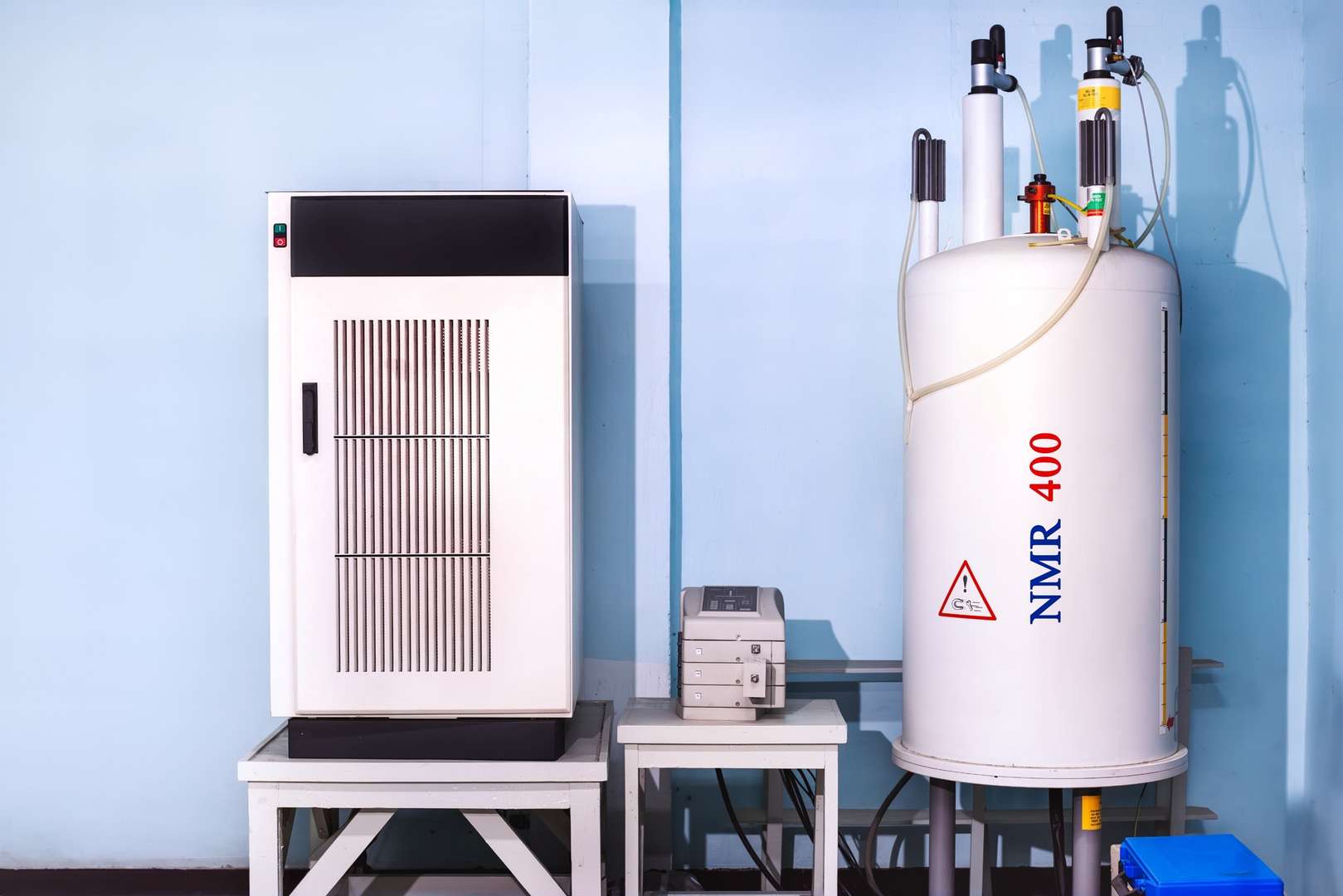
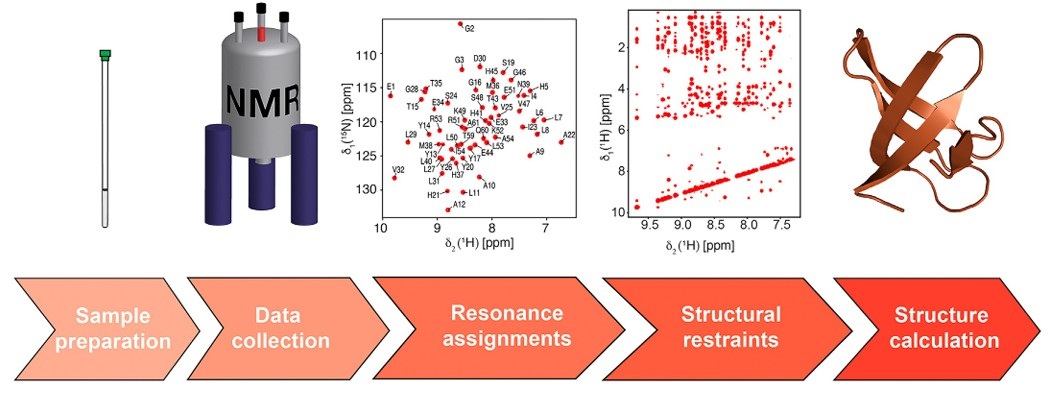 Figure 1. Schematic representation of the steps involved in traditional structure determination by NMR spectroscopy. (Kawale and Burmann, 2023)