
The Lettuce Transient Expression System is an advanced, animal-free recombinant protein production platform that enables rapid, scalable, and cost-effective expression of complex biologics, including therapeutic proteins, antibodies, vaccines, and enzymes. Leveraging Agrobacterium-mediated transient gene delivery, target proteins can be produced in lettuce tissues within days rather than weeks or months required by stable expression systems. Compared with conventional bacterial, yeast, insect, and mammalian cell expression platforms, lettuce-based transient expression offers superior biosafety, reduced production costs, shortened timelines, and strong capacity for expressing structurally complex and bioactive proteins. Profacgen provides end-to-end lettuce transient expression services, from construct design and agroinfiltration to protein purification and analytical validation, supporting both research-grade and preclinical applications.
Recombinant protein production is foundational to modern biotechnology, biopharmaceutical development, diagnostics, and industrial biotechnology. Traditionally, proteins have been expressed using microbial systems (such as E. coli and yeast), insect cell systems, or mammalian cell cultures. While these platforms are well established, they often face inherent limitations including high production costs, long development timelines, safety concerns related to animal-derived components, and challenges in expressing complex or sensitive proteins.
With advances in plant molecular biology and genetic engineering, plant-based expression systems have emerged as powerful alternatives. Plants offer a naturally scalable, pathogen-free, and animal-component-free production environment, making them particularly attractive for applications requiring high biosafety standards. Both stable transgenic expression and transient expression approaches have been developed in plant systems; however, transient expression has gained increasing attention due to its speed and flexibility.

Transient expression relies on the temporary introduction of recombinant genes into plant tissues—most commonly through Agrobacterium tumefaciens-mediated infiltration—without integration into the plant genome. This approach enables rapid protein expression within days, bypassing the lengthy process of generating stable transgenic lines.
Among plant hosts, lettuce (Lactuca sativa) has emerged as one of the most promising platforms for transient expression. Its biological characteristics, ease of cultivation, and compatibility with contained indoor growth systems make lettuce particularly well suited for controlled, large-scale recombinant protein production.
Lettuce is a self-fertile, diploid plant species with a relatively simple genome and robust growth characteristics. It can be cultivated rapidly under controlled environmental conditions, including indoor plant factories and vertical farming systems. These features provide significant advantages for recombinant protein expression:
To date, a broad range of biologically active recombinant proteins have been successfully expressed in lettuce, including human insulin, interferons, thymosin, thioredoxin-1, intestinal trefoil factor, cytokines, vaccine antigens, and monoclonal antibodies. These successes demonstrate lettuce's versatility and reliability as a transient expression host.
Profacgen provides comprehensive lettuce transient expression services tailored to diverse research and development needs. Drawing on best practices from leading plant-based expression platforms worldwide, our services cover the entire project lifecycle.
Gene Design and Vector Construction
We design plant-optimized expression constructs to maximize transcription, translation, and protein stability. Services include:
Agrobacterium Preparation and Infiltration
Our team prepares high-quality Agrobacterium cultures and performs optimized agroinfiltration using leaf or stem tissues. Parameters such as bacterial density, infiltration method, and incubation conditions are systematically optimized for each project.
Transient Protein Expression and Monitoring
Protein expression is monitored over time to identify optimal harvest points. Expression kinetics can be adjusted to balance yield, protein integrity, and biological activity.
Protein Extraction and Purification
We offer flexible purification strategies depending on protein properties and downstream use:
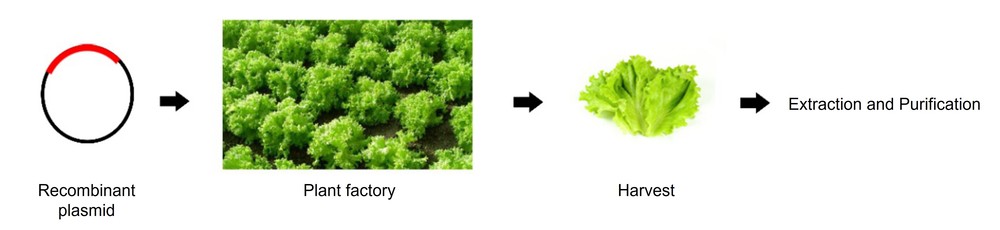
In a typical lettuce transient expression workflow, the gene of interest is cloned into a plant expression vector under the control of a strong promoter. The construct is introduced into Agrobacterium tumefaciens, which serves as a delivery vehicle. Lettuce tissues—most commonly leaves—are infiltrated with the engineered bacteria using vacuum or pressure-assisted methods.
Following infiltration, recombinant protein expression begins rapidly, often reaching peak levels within 2–3 days. The infiltrated tissues are then harvested, and the target protein is extracted and purified using standard or customized downstream processes.
Compared with stable plant expression, transient expression offers significantly higher protein yields per unit time, greater flexibility, and reduced regulatory complexity.
Background
A biotechnology company required milligram quantities of a human cytokine for preclinical efficacy and safety studies. Strict animal-free regulations prohibited the use of mammalian cell reagents, and their aggressive development timeline made stable cell line generation impractical.
Our Solution
We deployed our lettuce transient expression platform, delivering gene constructs via agroinfiltration into mature leaf tissue. A plant-optimized secretion signal was selected to direct the cytokine to the apoplast, simplifying recovery and minimizing proteolytic degradation. Expression kinetics were monitored daily to pinpoint peak accumulation, enabling precise harvest timing.
Final Results
Within one week of vector receipt, functional cytokine was purified to homogeneity. ELISA and cell-based proliferation assays confirmed correct folding and full biological activity. Yields were sufficient for multiple in vivo dosing studies, allowing the client to initiate animal trials without delay. By replacing fermented bioreactors with greenhouse-grown biomass, we delivered an animal-free, rapidly scalable solution that aligned with both regulatory requirements and aggressive program milestones.
Background
An academic research group investigating viral entry mechanisms required a recombinant envelope antigen for immunization studies. Mammalian expression systems posed cost constraints and required BSL-2 containment; bacterial systems failed to preserve conformational epitopes essential for immunogenicity.
Our Solution
We designed a plant-optimized synthetic gene and introduced it into lettuce leaves via vacuum-assisted agroinfiltration. Plants were maintained under controlled LED lighting and hydroponic nutrition, ensuring reproducible biomass quality year-round. A mild, detergent-free extraction buffer was developed to preserve labile epitopes during purification.
Final Results
High-level antigen accumulation was achieved within four days post-infiltration. The purified protein demonstrated strong, conformation-specific reactivity with a panel of neutralizing monoclonal antibodies. The client successfully immunized multiple animal cohorts and iterated construct designs within weeks rather than months. This work established lettuce as a cost-effective, biosafe alternative to conventional platforms, enabling agile vaccine research without infrastructure investment or biosafety overhead.
Consult Our Experts on Your Project
Fill out this form and one of our experts will respond to you within one business day.