
Site-directed mutagenesis, also known as oligonucleotide-directed mutagenesis, is a foundational molecular technique that advances life science research by generating precise DNA mutations—including deletions, insertions, and point mutations—to study gene function, DNA-protein interactions, protein structure and activity, enzyme catalytic mechanisms, and to create novel proteins with tailored properties.
Because experimental design and result validation demand substantial time and specialized expertise, many research teams find it more efficient to outsource mutagenesis workflows. Profacgen provides fast, one-stop mutagenesis, cloning, and sequencing services with 100% sequence accuracy guaranteed by Sanger sequencing verification. You no longer need to purchase multiple commercial kits or dedicate laboratory personnel to routine PCR mutagenesis and clone validation.
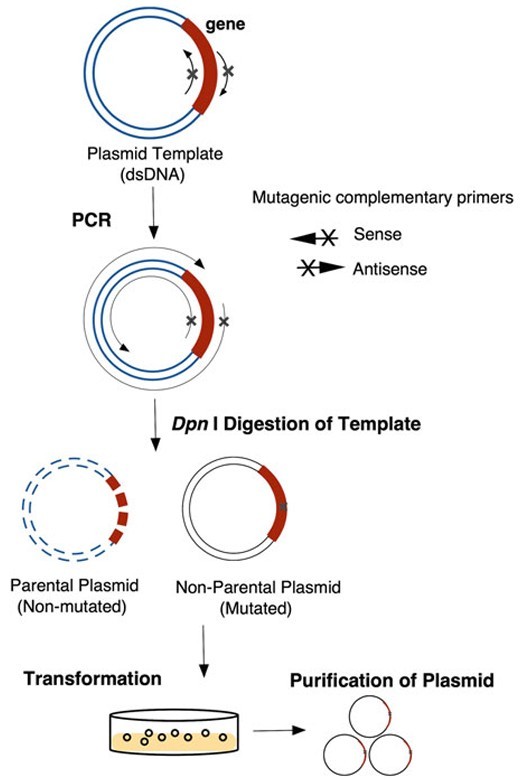 Figure 1. Site-directed mutagenesis workflow. (Al-Raawi and Kanhere, 2023)
The origins of site-directed mutagenesis trace back to 1978, when Clyde Hutchison, Michael Smith, and colleagues at the University of British Columbia demonstrated that synthetic oligonucleotides carrying mismatched bases could be used to introduce specific changes into bacteriophage φX174 DNA. This groundbreaking work earned Smith the Nobel Prize in Chemistry in 1993 and established the conceptual framework for all modern precision genome editing.
Early implementations relied on single-stranded M13 bacteriophage DNA as template and were labor-intensive, requiring multiple enzymatic steps and yielding relatively low efficiency. The field was transformed in the 1990s by the advent of PCR-based methods, most notably the overlap extension technique developed by Higuchi and the whole-plasmid approach using high-fidelity polymerases. These innovations eliminated the need for single-stranded templates and restriction site considerations, democratizing access to precision mutagenesis.
Contemporary site-directed mutagenesis encompasses a diverse toolkit of methodologies, each optimized for specific applications. PCR-based approaches dominate small-to-medium construct editing, while cassette mutagenesis excels at domain-level engineering. Whole-plasmid methods handle large vectors that resist conventional amplification, and emerging in vivo techniques leverage cellular recombination machinery for complex genomic edits. Profacgen's platform integrates all of these established methodologies, enabling us to match the optimal technology to each project's unique requirements.
Drawing on extensive experience in DNA engineering, Profacgen employs multiple complementary methodologies to introduce mutations with high precision and efficiency on any gene template, regardless of size or complexity:
| Technology | Principle | Best Suited For |
|---|---|---|
| PCR-Based Site-Directed Mutagenesis | High-fidelity PCR amplification using mutagenic primers containing the desired base changes, followed by template removal and ligation | Single and multiple point mutations, small insertions/deletions on plasmids up to 10 kb |
| Cassette Mutagenesis | Replacement of a defined DNA restriction fragment with a synthetic double-stranded oligonucleotide cassette encoding the desired mutation | Clustered mutations, domain swapping, and introduction of novel restriction sites |
| Whole-Plasmid Mutagenesis | PCR amplification of the entire plasmid using phosphorylated primers, followed by ligation to recircularize | Large DNA constructs, vectors with limited unique restriction sites, mutations in recalcitrant regions |
| In Vivo Site-Directed Mutagenesis | Utilization of host-cell repair and recombination machinery to introduce targeted changes directly within the cellular environment | Complex genomic edits, integration into expression hosts, validation of function in native context |
Profacgen offers a modular service architecture that allows you to select exactly the level of support your project requires:
Mutational Design & Primer Synthesis
Clone Construction & Verification
Expression Vector Integration
Downstream Protein Services (Optional)
For researchers seeking comprehensive, position-by-position analysis of protein function, Profacgen offers advanced scanning mutagenesis services. This specialized form of site-directed mutagenesis systematically replaces each target residue with all 20 natural amino acids, providing a complete map of how every position contributes to protein stability, activity, and molecular recognition.
Our scanning mutagenesis platform extends beyond traditional alanine/cysteine scanning to deliver deeper insights into structure-function relationships, making it an excellent alternative to time-consuming or expensive protein mapping approaches. The technology is particularly powerful for epitope mapping, enzyme active site characterization, and protein interface analysis.
Learn More About Scanning Mutagenesis

Background:
A genomics research institute was investigating the molecular basis of a rare developmental disorder caused by mutations in a homeodomain transcription factor. They needed to systematically evaluate which DNA-contacting residues were essential for target gene recognition versus those that tolerated substitution, to distinguish pathogenic variants from benign polymorphisms.
Our Solution:
Profacgen designed a comprehensive site-directed mutagenesis campaign targeting all 60 residues of the homeodomain. Each residue was individually substituted with alanine (to eliminate side-chain contributions) and, for positions predicted to contact DNA, with all 19 alternative amino acids. The 240-variant library was expressed in E. coli as GST fusions, purified by affinity chromatography, and subjected to electrophoretic mobility shift assays (EMSA) using the cognate DNA response element.
Final Results:
The analysis identified a core of 8 essential DNA-contacting residues where any substitution abolished binding, and 4 positions where specific alternative amino acids altered DNA-binding specificity. Critically, two patient-derived missense mutations mapped to positions that tolerated substitution without functional consequence, ruling them out as disease-causing variants. The remaining four mapped to essential positions, establishing a direct genotype-phenotype correlation that informed genetic counseling for affected families.
Background:
A diagnostics company developing a next-generation immunoassay platform required a streptavidin variant with reduced non-specific binding to complex biological matrices while maintaining picomolar biotin affinity. Wild-type streptavidin's high isoelectric point and surface charge distribution caused unacceptable background in clinical serum samples.
Our Solution:
Profacgen executed a strategic site-directed mutagenesis program targeting 12 surface-exposed lysine and arginine residues for charge-neutralizing substitutions. Each position was mutated to glutamine, asparagine, or alanine, generating 36 distinct variants. All mutants were expressed in E. coli, purified to homogeneity, and characterized for biotin-binding affinity (SPR), surface plasmon resonance blocking assays, and non-specific binding in human serum matrices.
Final Results:
A triple mutant (K82Q, R84N, K121Q) emerged as the optimal candidate, retaining wild-type biotin affinity (KD = 4.2 × 10⁻¹⁴ M) while reducing non-specific serum binding by 87%. The variant also exhibited improved performance in the client's immunoassay format, lowering the limit of detection by 3-fold compared to wild-type streptavidin. The engineered binder was subsequently licensed for incorporation into the company's commercial diagnostic platform.
Consult Our Experts on Your Project
References:
Fill out this form and one of our experts will respond to you within one business day.