
Protein mutant libraries containing diverse sequence variants have become indispensable tools for identifying critical residues governing physiological activities, dissecting pathological mechanisms, and discovering novel components of signaling pathways and receptor systems. Screening comprehensively designed variant collections accelerates the pace of protein engineering and functional genomics research.
Profacgen leverages integrated high-throughput gene synthesis, mutagenesis, and protein production platforms to deliver thousands of distinct protein variants with exceptional efficiency. Our end-to-end service encompasses gene synthesis, targeted or random mutagenesis, sub-cloning, pilot-scale expression in E. coli, and final protein purification—all executed under stringent quality standards to ensure consistency across every clone in your library.
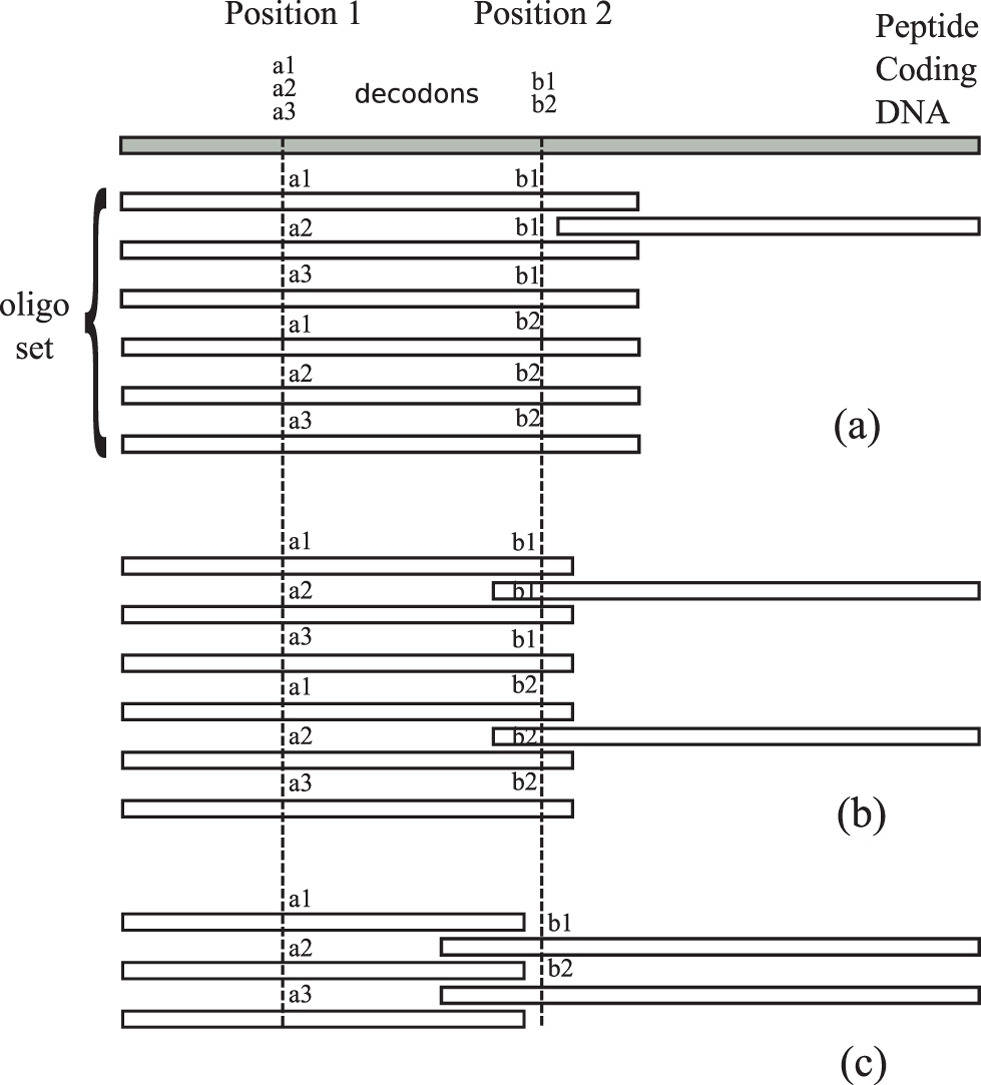
The systematic exploration of protein sequence space began in the early 1990s with random mutagenesis methods—error-prone PCR and chemical mutagenesis—which introduced stochastic mutations across entire genes. While accessible and unbiased, these approaches offered limited control over mutation position and identity.
Site-directed mutagenesis enabled precise substitutions at defined residues, and saturation mutagenesis (NNK, NNS degeneracy) extended this to replace every position of interest with all 20 amino acids, generating comprehensive structure-function maps. For recombination-based diversity, DNA shuffling and staggered extension process (StEP) recombined homologous sequences, mimicking natural evolution in vitro.
Modern library construction integrates automated gene synthesis (custom degenerate primers, synthetic oligonucleotide pools), high-throughput cloning (Gibson, Golden Gate, ligation-independent cloning), and transformation into optimized host strains. Computational library design tools (e.g., PSSM, structure-guided focusing) further reduce library size by targeting beneficial residues while maintaining diversity coverage.
Profacgen's platform combines these established methodologies with state-of-the-art automation to deliver tailored mutant libraries—whether random, focused, or recombination-based—with high quality and functional diversity for directed evolution and protein engineering campaigns.
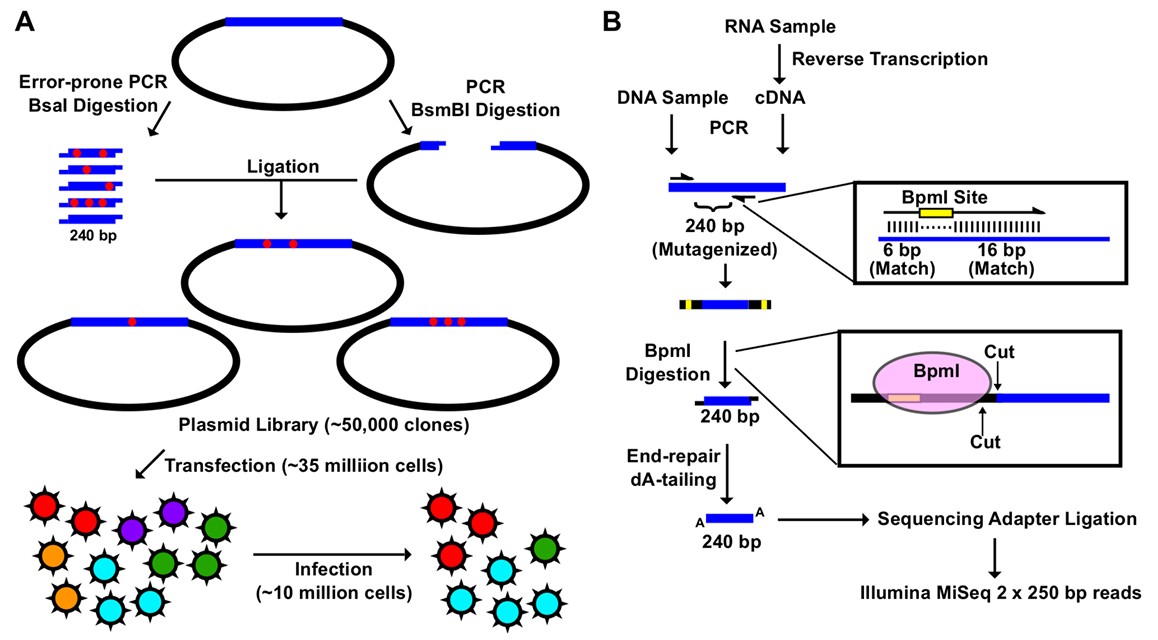 Figure 1. Construction of the mutant libraries. (Wu et al., 2015)
Profacgen offers three complementary approaches to gene variant library construction, each optimized for different experimental objectives and screening workflows:
Site-Directed Mutagenesis Library
Precise substitution of any specified residue with any of the 19 other natural amino acids.
Scanning Point Mutation Library
Comprehensive analysis substituting each target amino acid with all 20 natural amino acids simultaneously.
Randomized or Degenerated Library
Controlled introduction of random mutations at defined positions or across entire genes.
Following library construction, all protein variants are expressed and purified using our automated high-throughput protein production system. Full-process automation spans plasmid construction, transformation, protein expression, purification, and characterization—ensuring that thousands of proteins are processed simultaneously with a high level of batch-to-batch consistency.
Our platform optimizes expression vectors, host strains (E. coli, yeast, insect, and mammalian systems), and culture conditions for each target to maximize soluble yield. Every purified variant undergoes strict quality assessment by SDS-PAGE and Western blot to confirm molecular weight, purity, and identity before delivery. Additional analytical characterization including mass spectrometry, size-exclusion chromatography, and activity assays is available upon request.

Background:
A clinical-stage biopharmaceutical company developing a monoclonal antibody for autoimmune disease required precise epitope mapping to support regulatory filings and defend intellectual property. Peptide-based mapping had identified a broad binding region but lacked the single-residue resolution needed for competitive differentiation.
Our Solution:
Profacgen designed a comprehensive shotgun scanning library targeting the 112-residue extracellular domain of the antibody's target protein. Each position was mutated to all 20 amino acids, generating 2,240 unique variants. The complete library was expressed in HEK293 cells and subjected to high-throughput ELISA-based binding analysis using the therapeutic antibody as probe.
Final Results:
The campaign identified a compact 9-residue epitope containing 2 positions where no substitution was tolerated (indicating essential contact residues) and 3 positions where specific alternative amino acids enhanced binding affinity by up to 3-fold. The high-resolution epitope map supported a strong patent claim and informed a subsequent affinity maturation program that improved the antibody's potency by 5-fold while maintaining excellent developability properties.
Background:
A specialty chemicals manufacturer required a biocatalyst capable of hydroxylating a bulky non-natural steroid intermediate that wild-type cytochrome P450 enzymes could not accommodate. Traditional rational design based on the crystal structure failed to identify effective active-site modifications, suggesting that unpredictable remote mutations might be necessary.
Our Solution:
Profacgen executed a three-pronged library strategy: (1) a site-directed library targeting 18 active-site residues for focused exploration; (2) a scanning point mutation library covering the substrate access channel; and (3) a randomized library introducing 3–5 mutations per gene across the entire coding sequence. All three libraries were expressed in E. coli and screened for activity on the target substrate using a colorimetric assay.
Final Results:
The combined screening effort identified a quadruple mutant (F87A, L188Q, A268G, T269A) that accepted the non-natural substrate with a kcat of 12 min-1 and 85% regioselectivity—compared to undetectable activity for the wild-type enzyme. Remarkably, three of the four beneficial mutations were located outside the active site, illustrating the power of comprehensive library approaches over rational design alone. The engineered biocatalyst was subsequently transferred to pilot-scale biotransformation, reducing the synthetic route by three chemical steps.
Consult Our Experts on Your Project
References:
Fill out this form and one of our experts will respond to you within one business day.