We use cookies to understand how you use our site and to improve the overall user experience. This includes personalizing content and advertising. Read our
Privacy Policy
At Profacgen, our AUTAC development services provide autophagy-targeting chimeras for selective degradation of intracellular proteins and organelles through K63-linked polyubiquitination and autophagy receptor recruitment, expanding the degradation target space beyond the reach of proteasome-dependent modalities.
While PROTACs and molecular glues have transformed intracellular protein degradation, their reliance on the ubiquitin-proteasome system (UPS) limits applicability to proteins with accessible ubiquitination sites and adequate proteasome engagement. Many cytosolic proteins, protein aggregates, and organelles resist proteasomal processing and require alternative clearance mechanisms.
AUTAC (autophagy-targeting chimera) technology addresses this gap by harnessing selective autophagy. These heterobifunctional compounds comprise a target-specific binder, a flexible linker, and a guanine derivative tag that triggers K63 polyubiquitination, recruiting autophagy receptors such as SQSTM1/p62 to deliver cargo to autophagosomes for lysosomal degradation. This mechanism enables degradation of a broader substrate range, including organelles and proteins resistant to conventional degraders.
What Is AUTAC?
Figure 1. The concept of AUTACs. (Takahashi et al., 2019)
AUTAC is a heterobifunctional compound that redirects intracellular proteins and organelles to the autophagy-lysosome pathway through K63-linked polyubiquitination tagging. The platform comprises three defining features:
Autophagy-targeting chimeras: AUTACs are small-molecule heterobifunctional compounds composed of a target-specific binder, a flexible linker, and a degradation tag (guanine derivatives). After penetrating cell membranes, the chimeric molecule delivers the degradation tag to the target protein of interest, initiating selective autophagic clearance
Selective autophagy: AUTACs trigger K63-linked polyubiquitination of target proteins, which is specifically recognized by autophagy receptors such as SQSTM1/p62. This receptor-mediated cargo recognition ensures selective delivery to forming autophagosomes, distinguishing AUTACs from bulk autophagy inducers
Intracellular degradation: AUTACs operate within the cytoplasm and nucleus, targeting soluble proteins, protein aggregates, and organelles—including damaged mitochondria—for autophagic degradation. The K63 ubiquitin tag serves as a universal autophagy signal, bypassing the requirement for proteasomal recognition
Mechanism of AUTAC-Mediated Degradation
AUTAC-mediated degradation proceeds through K63 polyubiquitination and selective autophagy receptor recruitment:
Target Recognition
The target-specific binder of the AUTAC engages the protein of interest—whether a soluble cytosolic protein, nuclear factor, or organelle-associated protein—with high affinity and selectivity.
K63 Polyubiquitination Tagging
The guanine derivative degradation tag on the AUTAC triggers K63-linked polyubiquitin chain assembly on the target protein. Unlike K48-linked chains that signal proteasomal degradation, K63-linked ubiquitination is specifically recognized by autophagy receptors as a selective autophagy signal.
Autophagy Receptor Recruitment and Autophagosome Formation
Autophagy receptors—principally SQSTM1/p62 and NDP52—recognize the K63 polyubiquitinated target through their ubiquitin-binding domains (UBA). The receptor-cargo complex is recruited to forming phagophores via LC3-interacting region (LIR) motifs, mediating selective engulfment into the autophagosome.
Lysosomal Degradation
The autophagosome fuses with a lysosome, forming an autolysosome. Lysosomal hydrolases degrade the sequestered target protein and the ubiquitin tag into amino acids. The AUTAC molecule is released and can catalyze additional rounds of target tagging and degradation.
Our AUTAC Development Services
Profacgen provides comprehensive AUTAC development from molecular design to mechanistic validation:
AUTAC Design
Rational design of heterobifunctional molecules optimized for target binding and K63 ubiquitination tagging.
Target warhead selection: small-molecule ligands, inhibitors, or peptide binders with validated target engagement
Guanine derivative tag optimization: S-cGMP and related analogs with optimal K63 ubiquitination triggering activity
Linker engineering: optimization of length, flexibility, and chemical composition to maximize ternary complex stability and cellular permeability
Ligand Development
Synthesis and analytical characterization of AUTAC components and full conjugates.
Guanine derivative tag synthesis and validation by NMR and LC-MS
Target warhead scale-up and purity confirmation by HPLC
Full AUTAC assembly via amide coupling, click chemistry, or bioorthogonal conjugation strategies
Activity Evaluation
Cellular assessment of target degradation efficiency and selectivity.
Western blot and quantitative mass spectrometry for target protein level quantification
DC50 and Dmax determination across dose-response and time-course experiments
K63 ubiquitination confirmation by immunoprecipitation with K63-specific antibodies
Mechanism Validation
Confirmation of autophagy-dependent, K63 ubiquitin-mediated degradation.
Autophagy inhibition rescue: chloroquine, bafilomycin A1, and ATG5/ATG7 knockout to confirm autophagy dependence
SQSTM1/p62 dependence: siRNA knockdown and gene knockout to validate receptor requirement
K63 ubiquitin specificity: K63R ubiquitin mutant expression and K48-specific antibody controls to rule out proteasome involvement
Applications
AUTAC technology addresses therapeutic and research challenges beyond the reach of proteasome-dependent modalities:
Protein Degradation: Elimination of soluble intracellular proteins, including cytosolic kinases, transcription factors, and scaffold proteins that are resistant to PROTAC-mediated degradation. AUTACs provide an orthogonal route through K63 ubiquitination and autophagy receptor recruitment, particularly effective for proteins with limited proteasome accessibility
Organelle Clearance: Selective removal of damaged mitochondria (mitophagy), dysfunctional endoplasmic reticulum (ER-phagy), and protein aggregates. AUTACs have been successfully applied to degrade damaged mitochondria, demonstrating the modality's capacity for organelle-level clearance beyond individual protein targets
Disease Modeling: Neurodegenerative diseases, metabolic disorders, and proteinopathies are characterized by accumulation of misfolded proteins and dysfunctional organelles. AUTAC-mediated clearance of aggregated proteins and damaged mitochondria provides a research tool for disease mechanism dissection and therapeutic proof-of-concept
Advantages of AUTAC
Broad Substrate Range: AUTACs degrade proteins and organelles resistant to proteasomal processing, including aggregates, long-lived proteins, and macromolecular assemblies, by leveraging the autophagy-lysosome pathway.
K63 Ubiquitin Tagging: The guanine derivative tag triggers K63-linked polyubiquitination, a selective autophagy signal distinct from K48-linked proteasomal degradation, enabling cargo-specific recognition by SQSTM1/p62.
Organelle Degradation Capability: Unlike PROTACs, which are limited to soluble proteins, AUTACs can degrade entire organelles such as damaged mitochondria, expanding the therapeutic target space to subcellular structures.
Autophagy Receptor Specificity: SQSTM1/p62 and NDP52-mediated cargo recognition ensures selective delivery to autophagosomes, minimizing non-specific bulk autophagy induction and preserving cellular homeostasis.
Catalytic Mechanism: The AUTAC molecule is released after autophagosome-lysosome fusion, enabling substoichiometric concentrations to achieve sustained target degradation.
Why Choose Profacgen
One-Stop AUTAC Platform: Profacgen integrates AUTAC design, synthesis, and validation within a single workflow, from guanine derivative tag optimization to K63 ubiquitination confirmation and autophagy receptor dependence assessment.
Autophagy Biology Expertise: Our team possesses deep knowledge of selective autophagy mechanisms, including K63 ubiquitin signaling, SQSTM1/p62 biology, and LC3 family dynamics, ensuring rigorous mechanistic validation.
Organelle Target Experience: Specialized capabilities for mitochondria, ER, and aggregate targeting, with validated assays for organelle-specific degradation and functional consequence assessment.
Mechanistic Rigor: Comprehensive pathway validation including K63 ubiquitin specificity, autophagy receptor dependence, and proteasome independence confirmation ensures unambiguous mechanism assignment.
Flexible Engagement: Services are available as standalone modules (design-only, synthesis-only, full validation) or integrated packages to match project stage and budget.
Scenario 1: Mitochondrial Protein Degradation by AUTAC
Program Context:
A metabolic disease research program required selective elimination of a mitochondrial outer membrane protein implicated in cellular stress responses. The protein was embedded in a lipid bilayer and poorly accessible to proteasomal degradation machinery. PROTAC development had failed due to limited ubiquitination and proteasome engagement.
Objective:
To design an AUTAC targeting the mitochondrial protein, validate K63 polyubiquitination and SQSTM1/p62-dependent autophagic degradation, and assess mitochondrial function and cellular stress marker consequences.
Approach:
Profacgen identified a small-molecule binder to the mitochondrial protein and conjugated it to an S-cGMP derivative via an optimized alkyl-PEG linker. The AUTAC was validated for target binding by SPR and for K63 ubiquitination induction by immunoprecipitation with K63-specific antibodies. Degradation was assessed in target-expressing cell lines by Western blot and immunofluorescence.
Outcome:
The AUTAC achieved >75% target degradation at 48 hours with DC50 of 85 nM. K63 ubiquitination was confirmed by immunoprecipitation, and SQSTM1/p62 colocalization with the target was visualized by confocal microscopy. Degradation was blocked by bafilomycin A1 and by SQSTM1 siRNA, confirming autophagy and receptor dependence. Mitochondrial membrane potential and cellular ATP levels remained stable, indicating selective protein clearance without generalized organelle damage.
Scenario 2: Cytosolic Kinase Degradation via K63 Ubiquitination
Program Context:
An oncology program required degradation of a cytosolic kinase that was poorly ubiquitinated under basal conditions and resistant to multiple PROTAC architectures. The kinase lacked accessible lysines for efficient K48 ubiquitination, and proteasome engagement was minimal.
Objective:
To develop an AUTAC targeting the kinase ATP-binding site, demonstrate K63 polyubiquitination and SQSTM1/p62-mediated autophagic degradation, and assess downstream signaling and proliferation consequences.
Approach:
Profacgen repurposed a known kinase inhibitor as the target warhead and conjugated it to a guanine derivative tag. The AUTAC was validated for dual target engagement and K63 ubiquitination induction. Cellular degradation was assessed by Western blot and quantitative proteomics across multiple cancer cell lines. K63 ubiquitin specificity was confirmed by K63R mutant expression and K48-specific antibody controls.
Outcome:
The AUTAC achieved >70% kinase degradation at 48 hours with DC50 of 150 nM. K63 ubiquitination was confirmed by immunoprecipitation, and degradation was blocked by SQSTM1 knockout and chloroquine, confirming autophagy receptor dependence. Downstream signaling (p-ERK, p-S6) was suppressed, and cell proliferation was inhibited. The study established AUTAC as a viable alternative for targets with limited K48 ubiquitination.
Q: What is the difference between AUTAC and PROTAC?
A: PROTACs recruit E3 ubiquitin ligases to induce K48-linked polyubiquitination and proteasomal degradation. AUTACs trigger K63-linked polyubiquitination, which is recognized by autophagy receptors (SQSTM1/p62, NDP52) and directs cargo to autophagosomes for lysosomal degradation. PROTACs are limited to soluble proteins with accessible lysines; AUTACs can degrade proteins and organelles resistant to proteasomal processing.
Q: What is the difference between AUTAC and ATTEC?
A: AUTACs trigger K63-linked polyubiquitination of target proteins, which recruits autophagy receptors (SQSTM1/p62) to mediate selective autophagy. ATTECs directly bind LC3 on autophagosomal membranes without ubiquitin involvement, acting as molecular bridges between targets and autophagosomes. AUTACs modify the target with a ubiquitin signal; ATTECs bypass ubiquitination entirely. Both modalities exploit autophagy but through distinct molecular mechanisms.
Q: What is the role of the guanine derivative tag in AUTAC?
A: The guanine derivative tag (S-cGMP or related analogs) is the degradation signal that triggers K63-linked polyubiquitination of the target protein. This tag mimics endogenous K63 ubiquitination signals recognized by autophagy receptors. Without the tag, the target binder alone would not induce autophagic degradation. The tag is essential for converting the target protein into selective autophagy cargo.
Q: What types of proteins and organelles can AUTAC degrade?
A: AUTACs can degrade soluble cytosolic proteins, nuclear proteins, protein aggregates, and entire organelles including damaged mitochondria. They are particularly effective for proteins resistant to proteasomal degradation, proteins with limited lysine accessibility, and subcellular structures. AUTACs are not suitable for extracellular or membrane proteins, which are better addressed by LYTACs.
Q: What sample requirements are needed for AUTAC development?
A: For design, a validated target ligand or structural information is required. For synthesis, no biological sample is needed. For validation, target-expressing cell lines are essential. Profacgen can assist with construct generation, stable cell line development, and organelle-specific model systems. For mechanism validation, access to autophagy inhibitors (chloroquine, bafilomycin A1), K63-specific antibodies, and SQSTM1 reporter systems is required.
Q: Can AUTAC degrade organelles as well as proteins?
A: Yes. AUTACs have demonstrated the ability to degrade damaged mitochondria and other organelles by targeting organelle-specific surface proteins. The K63 ubiquitination signal recruits autophagy receptors to the organelle membrane, initiating selective organelle engulfment by autophagosomes. This capability distinguishes AUTACs from PROTACs, which are limited to soluble protein substrates. Organelle degradation requires targeting of outer membrane proteins accessible to the AUTAC binder.
References:
Takahashi D, Moriyama J, Nakamura T, et al. AUTACs: Cargo-Specific Degraders Using Selective Autophagy. Mol Cell. 2019;76(5):797-810.e10. doi:10.1016/j.molcel.2019.09.009
Online Inquiry
Fill out this form and one of our experts will respond to you within one business day.

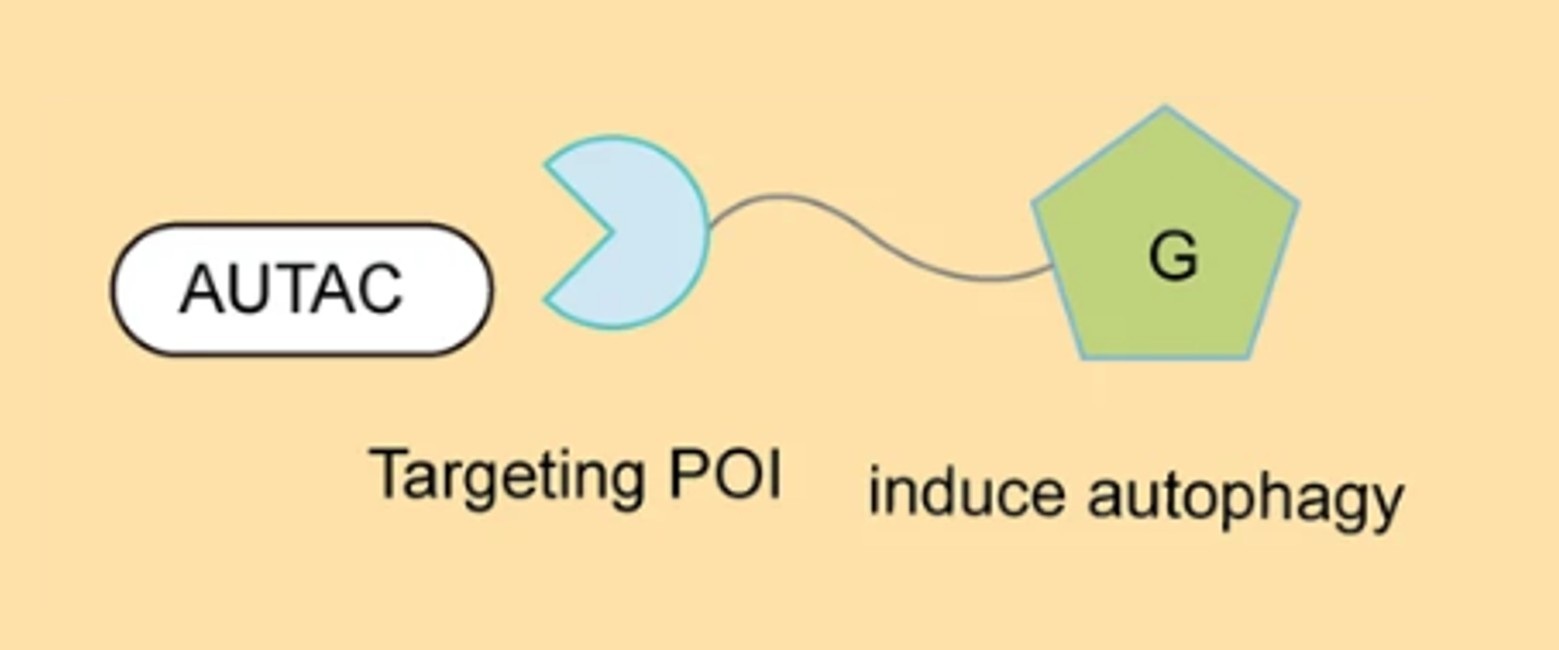
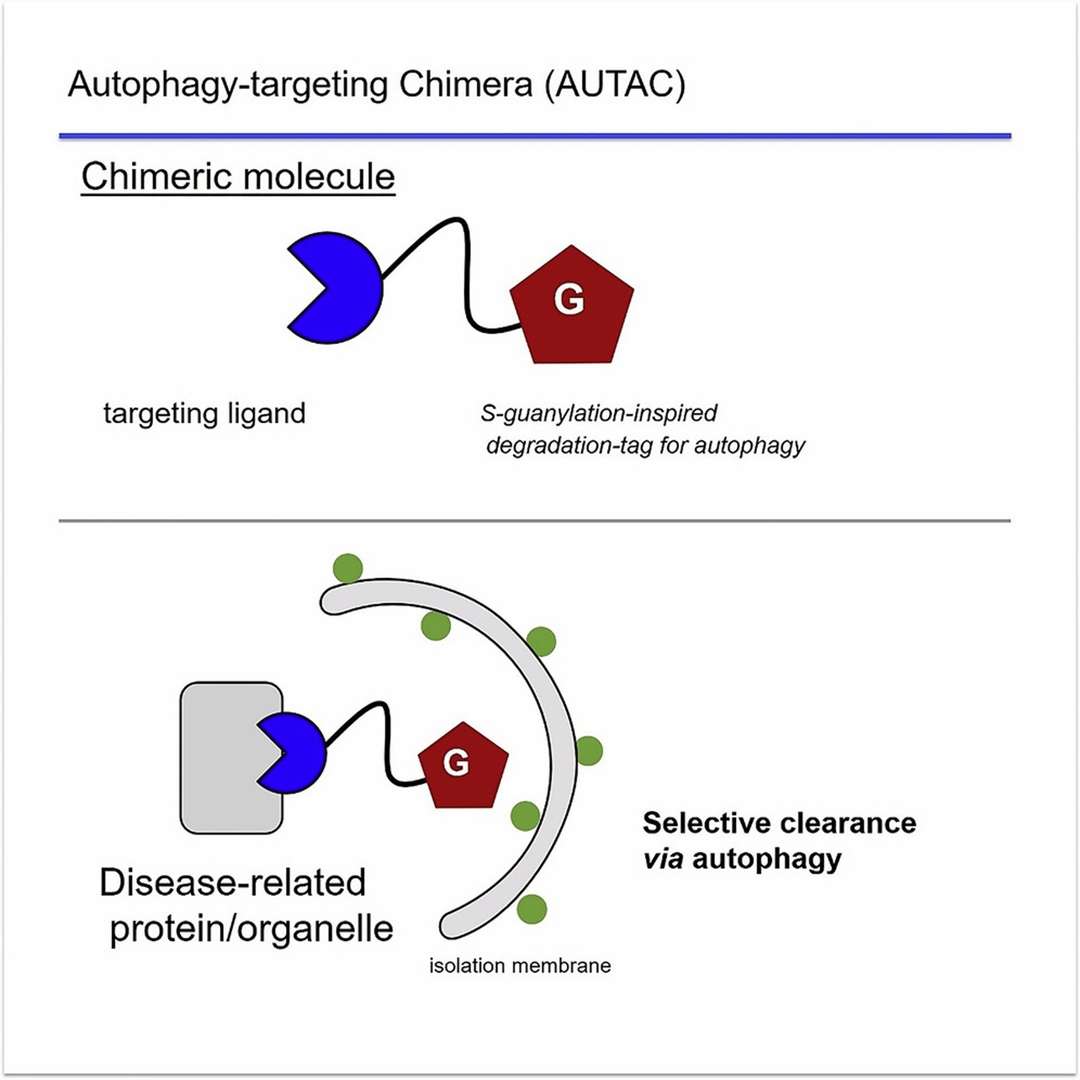 Figure 1. The concept of AUTACs. (Takahashi et al., 2019)