We use cookies to understand how you use our site and to improve the overall user experience. This includes personalizing content and advertising. Read our
Privacy Policy
Serum immunoglobulin (Ig) fusion proteins are engineered by linking therapeutic proteins or peptides to immunoglobulin domains, particularly IgG subclasses, to enhance pharmacokinetic performance and biological functionality. By leveraging the intrinsic stability, long half-life, and immune effector functions of immunoglobulins, Ig fusion proteins provide an effective strategy for improving drug bioavailability and in vivo efficacy.
At Profacgen, we offer a comprehensive Serum IgG fusion service platform, including rational design, gene synthesis, expression, purification, and functional validation. Our integrated approach supports applications ranging from basic research to preclinical therapeutic development, delivering high-quality fusion proteins with optimized stability, activity, and scalability.
Serum immunoglobulin (Ig) fusion proteins are recombinant proteins composed of two functional domains: a target protein or peptide and an immunoglobulin fragment. Through genetic engineering, these domains are fused to create a single molecule that combines the biological activity of the target protein with the advantageous properties of immunoglobulins.
Figure 1. Structure of serum IgG fusion proteins.
Among immunoglobulin classes, IgG-based fusion proteins are the most widely used due to their favorable pharmacokinetics and structural stability. The half-life of IgG subclasses (IgG1, IgG2, and IgG4) in vivo typically ranges from 2 to 3 weeks, making them ideal carriers for extending the duration of action of therapeutic proteins and peptides.
Figure 2. IgGBP fusion as a strategy to improve protein half-life by targeting serum IgG (Sockolosky et al., 2014).
Key Functional Features of Serum IgG Fusion Proteins
Extended Half-Life via FcRn Recycling: Similar to Fc fusion proteins, IgG fusion constructs interact with the neonatal Fc receptor (FcRn), enabling recycling and protection from lysosomal degradation. This significantly prolongs circulation time in vivo.
Improved Pharmacokinetics and Bioavailability: The increased molecular size reduces renal clearance, while the structural stability of Ig domains enhances protein integrity under physiological conditions.
Immune Effector Functions: IgG fusion proteins retain important antibody functions:
Binding to Fc receptors to mediate antibody-dependent cellular cytotoxicity (ADCC)
Activation of complement pathways for complement-dependent cytotoxicity (CDC)
Potential to cross the placenta (relevant in specific therapeutic contexts)
Enhanced Binding Avidity and Structural Versatility: Ig domains can form monomeric or polymeric structures, particularly in IgG, IgM, or IgA formats, increasing antigen-binding strength and functional potency.
Flexible Fusion Strategies: Fusion can be achieved through the heavy chain or light chain, enabling diverse molecular architectures tailored to specific applications.
Applications of Serum IgG Fusion Proteins
Therapeutic Development: Antibody-like biologics with extended half-life and immune effector functions
Immuno-oncology: Targeted killing via ADCC or CDC mechanisms
Protein Engineering: Enhanced binding and stability for difficult targets
In Vitro Research: Functional assays, receptor interaction studies, and immune profiling
Our Service Offerings
Profacgen provides a comprehensive, one-stop Serum IgG fusion protein development platform, designed to deliver high-quality, application-ready proteins and benchmarked against leading protein engineering providers.
Rational IgG Fusion Design
Fusion to IgG heavy chain, light chain, or Fc region depending on functional requirements
Design of monovalent, bivalent, or multivalent fusion constructs
Linker optimization to preserve structural integrity and biological activity
Subclass selection (IgG1, IgG2, IgG4) based on desired effector function and stability
Structural modeling and in silico prediction of expression and folding
Gene Synthesis and Cloning
Codon optimization for mammalian and alternative expression systems
Construction of expression vectors for IgG fusion formats
Multi-fragment assembly for complex or multi-domain fusion proteins
Optional inclusion of secretion signals or purification tags
Protein Expression
Expression in mammalian systems (CHO, HEK293) for proper folding and post-translational modifications
Alternative expression systems (yeast or insect cells) for cost-effective production
Pilot-scale expression screening to evaluate yield and solubility
Process optimization for expression level, stability, and reproducibility
Scale-up for research and preclinical production
Protein Purification
Affinity purification using Protein A/G or antigen-specific methods
Polishing via size-exclusion chromatography (SEC) and ion exchange chromatography (IEX)
Removal of aggregates and misfolded species
Endotoxin removal for sensitive applications
Quality Control and Functional Validation
Confirmation of full-length expression and correct assembly (SDS-PAGE, Western blot, MS)
Structural characterization to assess folding and polymerization state
Functional validation including antigen binding, receptor interaction, or cytotoxicity assays
Stability studies under various storage and formulation conditions
Batch consistency analysis
Optional Advanced Services
Engineering of Fc regions to enhance or reduce effector functions (ADCC, CDC)
Design of bispecific or multispecific IgG fusion proteins
Conjugation with drugs or imaging agents
Support for preclinical and GMP-ready production
Consultation on immunological assays and therapeutic development strategies
Comprehensive Platform: Full workflow from gene design to validated fusion protein
Advanced Engineering Capability: Supports complex IgG architectures and multi-domain constructs
Optimized Expression Systems: High yield and proper folding for functional proteins
Enhanced Functional Validation: Includes immune-related assays such as ADCC/CDC
Flexible Customization: Tailored solutions for research and therapeutic needs
Rapid Turnaround: Efficient workflows for timely delivery
Scalable Production: From small-scale research to preclinical development
Representative Case Studies
Case 1: IgG Fusion for Extended Half-Life Therapeutic Protein
Client Requirements:
A biopharmaceutical company had developed a promising peptide therapeutic, but its rapid renal clearance resulted in a short in vivo half-life that would limit clinical utility. The client required an engineered format to significantly extend circulation time while maintaining the peptide's biological activity.
Our Solution:
We designed an IgG1-based fusion construct incorporating the peptide into a heavy-chain format, preserving the antibody's natural long half-life mediated by FcRn recycling. An optimized flexible linker ensured proper independent folding. The construct was expressed in CHO cells and purified using Protein A affinity chromatography.
Final Results:
The purified IgG fusion protein demonstrated significantly improved stability and dramatically enhanced half-life compared to the native peptide, while receptor binding assays verified retained biological activity for continued preclinical development.
Case 2: IgG Fusion for Enhanced Immune Effector Function
Client Requirements:
A cancer research institute needed to develop a fusion protein capable of directing potent immune effector functions against tumor cells for immuno-oncology studies, specifically requiring antibody-dependent cellular cytotoxicity (ADCC) activity.
Our Solution:
We engineered an IgG1 fusion construct with an optimized hinge region to maintain natural antibody conformation and Fc receptor accessibility. The construct was transiently expressed in HEK293 cells and purified using Protein A affinity followed by size-exclusion chromatography to ensure aggregate-free material.
Final Results:
The purified fusion protein demonstrated strong Fc receptor binding and robust, dose-dependent ADCC activity in NK cell-based assays. The client received well-characterized, bioactive material suitable for advancing into preclinical efficacy studies.
Q: What types of Ig fusion proteins can you produce?
A: We support diverse IgG-based fusion proteins, including heavy-chain, light-chain, Fc-based, and multivalent constructs tailored to your specific therapeutic or research application requirements.
Q: Which IgG subclasses are available?
A: IgG1, IgG2, and IgG4 are commonly available. Selection depends on your desired half-life, effector function profile, and specific therapeutic context.
Q: Can you engineer immune effector functions such as ADCC or CDC?
A: Yes. We can optimize Fc regions through mutagenesis or glycoengineering to enhance, silence, or precisely modulate immune effector activities.
Q: Which expression systems are used?
A: Primarily mammalian systems (CHO, HEK293) ensure proper folding and glycosylation. Alternative systems are available when project needs require them.
Q: Do you provide functional validation?
A: Yes. We offer comprehensive binding assays, receptor interaction studies, and immune-related functional assays tailored to your specific construct.
Q: Can you support preclinical or therapeutic development?
A: Absolutely. Our platform supports scalable production and advanced characterization, including stability and purity analyses, for preclinical studies.
References:
Sockolosky JT, Kivimäe S, Szoka FC. Fusion of a short peptide that binds immunoglobulin g to a recombinant protein substantially increases its plasma half-life in mice. Hagemeyer CE, ed. PLoS ONE. 2014;9(7):e102566. doi:10.1371/journal.pone.0102566
Online Inquiry
Fill out this form and one of our experts will respond to you within one business day.

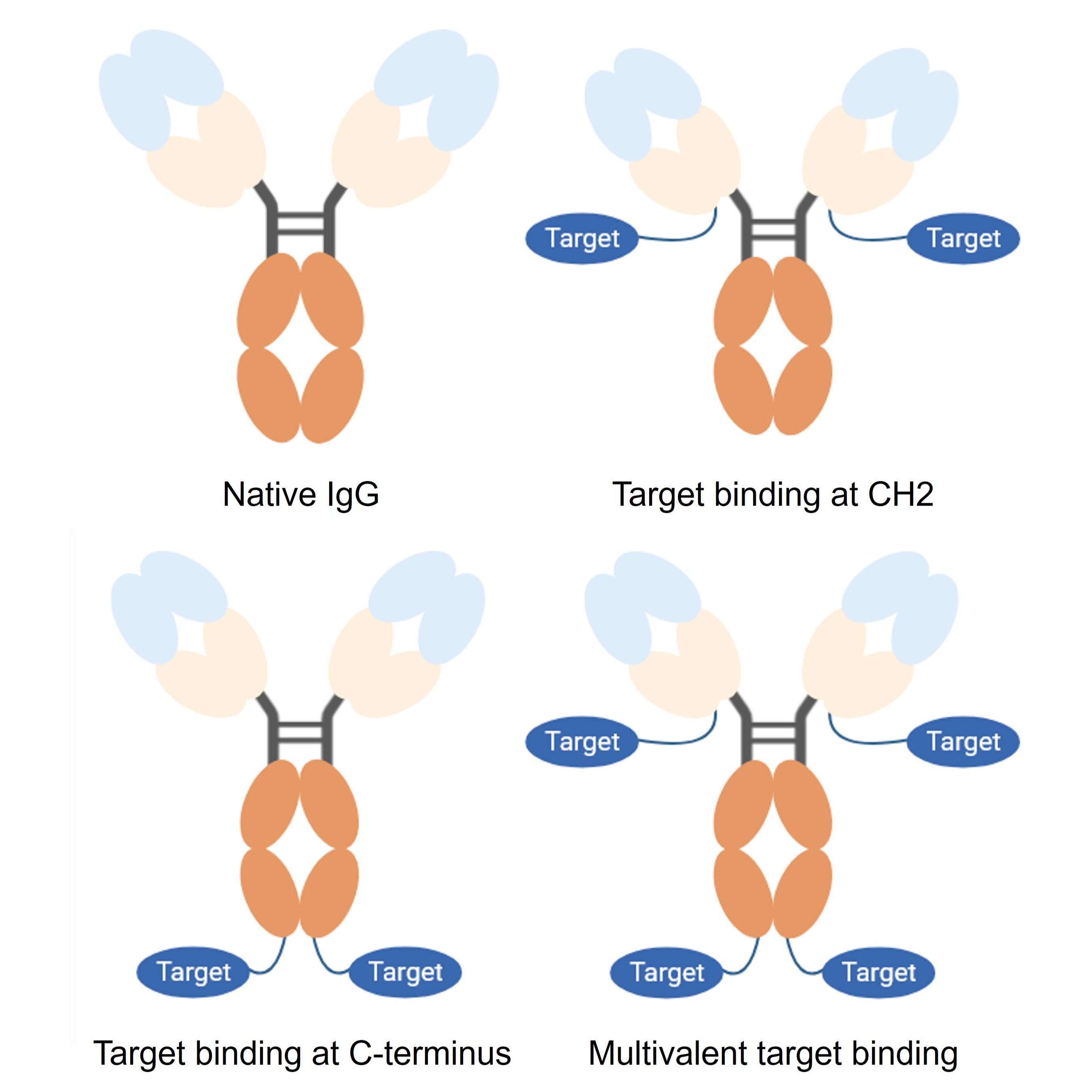 Figure 1. Structure of serum IgG fusion proteins.
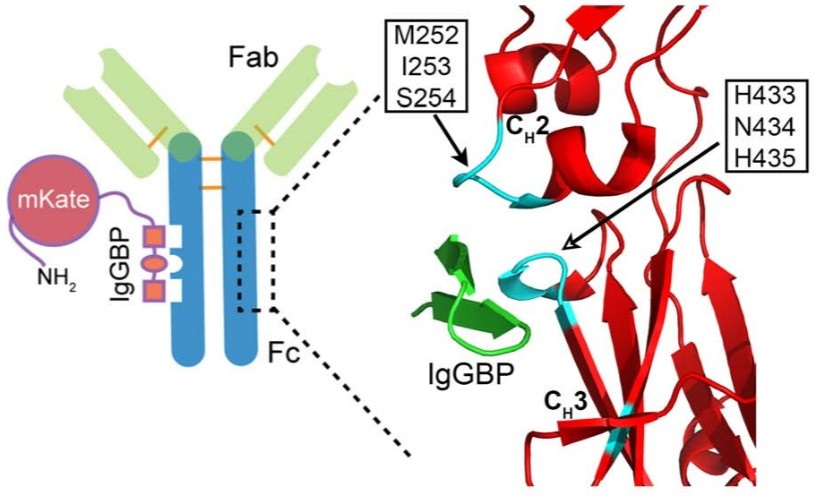 Figure 2. IgGBP fusion as a strategy to improve protein half-life by targeting serum IgG (Sockolosky et al., 2014).