We use cookies to understand how you use our site and to improve the overall user experience. This includes personalizing content and advertising. Read our
Privacy Policy
Profacgen offers Peptide Design Service, providing optimized peptide ligands for E3 ligases and target proteins, enabling highly specific, low-toxicity peptide-based degraders for targeted protein degradation programs.
Proteolysis Targeting Chimeras (PROTACs) are bifunctional molecules consisting of a target-binding ligand, an E3 ligase ligand, and a linker. E3 ligase ligands critically determine degradation specificity and efficiency. While small-molecule ligands are well-established for cIAP, CRBN, MDM2, and VHL, peptide-based ligands offer superior specificity, low toxicity, and access to protein-protein interaction surfaces beyond small-molecule reach.
Profacgen leverages crystal structures of endogenous complexes and protein-protein interaction motifs to design and synthesize peptides with enhanced stability, binding affinity, and cell permeability through sequence optimization and rational mutation.
Overview
Peptides serve multiple critical functions in targeted protein degradation, complementing and extending small molecule approaches:
Target binding: Peptide ligands can recognize extended protein surfaces, conformational epitopes, and protein-protein interaction interfaces that lack defined small molecule binding pockets, expanding the druggable target space
E3 recruitment: Peptide-based E3 ligase recruiters can achieve high affinity and selectivity through multivalent interactions, enabling degradation of targets resistant to small molecule approaches
Interaction modulation: Peptides can stabilize or induce specific protein conformations, allosterically regulate activity, and modulate ternary complex cooperativity through dynamic conformational adaptation
Mechanistic studies: Peptide probes enable precise mapping of binding interfaces, ubiquitination sites, and degradation kinetics, providing mechanistic insights that guide degrader optimization
Figure 1. The schematic diagram of peptide protein degrader. (Zhu et al., 2025)
Our Peptide Design Services
Profacgen offers specialized peptide design modules tailored to diverse degrader architectures and target classes:
Target Protein Binding Peptides
Design of high-affinity peptides that recognize target proteins through extended interaction surfaces.
Epitope mapping: Identification of optimal binding regions from structural data and interaction motifs
Affinity maturation: Sequence optimization to achieve nanomolar or sub-nanomolar binding affinity
Specificity engineering: Elimination of cross-reactivity with homologous proteins through selective residue modification
E3 Ligase Binding Peptides
Development of peptide recruiters for established and emerging E3 ubiquitin ligases.
VHL peptides: Optimization of Hypoxia-Inducible Factor-derived peptides with enhanced stability and affinity
CRBN and IAP peptides: Design of substrate-mimetic peptides for alternative E3 recruitment strategies
Novel ligase targeting: Custom peptide design for emerging E3 ligases based on substrate recognition motifs
Protein–Protein Interaction Peptides
Peptide ligands that modulate or mimic native protein-protein interactions for degrader applications.
Interface mimics: Peptide sequences derived from native interaction partners to competitively or allosterically engage targets
Stapled peptides: Conformationally constrained helical peptides that resist proteolysis and maintain binding affinity
Bifunctional peptides: Dual-targeting peptides that simultaneously engage target and E3 ligase without exogenous linkers
Cell-Penetrating Peptides
Engineering of delivery vectors and cell-permeable peptide degrader modalities.
CPP conjugation: Fusion of peptide ligands to cell-penetrating sequences for intracellular delivery
Cyclization strategies: Head-to-tail cyclization and disulfide bridging to enhance proteolytic stability and membrane permeability
Stapling and hydrocarbon constraints: All-hydrocarbon staples to enforce helical conformation and improve cellular uptake
Design Strategies
Our peptide design platform integrates multiple computational and experimental approaches:
Structure-based design: Utilization of crystal structures, cryo-EM reconstructions, and NMR data to guide rational peptide sequence selection, residue mutation, and conformational constraint placement
Sequence optimization: Alanine scanning, saturation mutagenesis, and combinatorial library screening to identify critical contact residues and optimize binding energetics
Computational modeling: Molecular dynamics simulations, peptide docking, and binding free energy calculations to predict peptide-target interactions and prioritize designs for synthesis
Stability engineering: Incorporation of non-natural amino acids, backbone modifications, and cyclization strategies to enhance proteolytic resistance, thermal stability, and shelf life
Figure 2. Design and conjugation strategies of the peptide-based PROTACs. (Lu et al., 2026)
Characterization and Validation
Profacgen provides comprehensive analytical characterization to ensure designed peptides meet performance specifications:
Binding assessment: Surface plasmon resonance (SPR), isothermal titration calorimetry (ITC), and fluorescence polarization to quantify affinity, kinetics, and thermodynamics
Functional evaluation: Cell-based degradation assays, ubiquitination profiling, and ternary complex formation assays to confirm biological activity in physiologically relevant contexts
Stability analysis: Proteolytic resistance in human plasma and cellular lysates, thermal denaturation profiles, and aggregation propensity assessment to predict developability
Applications
Our peptide design services support diverse targeted protein degradation applications:
Peptide-based degraders: Bifunctional peptides and peptide-PROTAC hybrids that achieve targeted degradation through high-affinity, selective engagement of disease-relevant proteins
Molecular glue research: Peptide probes that stabilize novel protein-protein interactions between target and E3 ligase, enabling discovery of glue-like mechanisms
Mechanistic studies: Peptide-based tools for mapping binding interfaces, determining ubiquitination sites, and dissecting degradation kinetics to inform rational degrader design
Target validation: Rapid generation of peptide degraders to validate target essentiality and establish proof-of-concept before investment in small molecule optimization
Structural Biology Integration: Deep expertise in protein structure analysis enables rational design from crystallographic and cryo-EM data, maximizing success rates.
Comprehensive Optimization: Simultaneous optimization of affinity, specificity, stability, and cell permeability through integrated computational and experimental workflows.
Advanced Conformational Control: Stapling, cyclization, and hydrocarbon constraint strategies to enforce bioactive conformations and improve drug-like properties.
End-to-End Synthesis and Validation: In-house solid-phase peptide synthesis, analytical characterization, and functional validation ensure rapid iteration and quality control.
Representative Program Scenarios
Scenario 1: Stapled Peptide Degrader for an Undruggable Transcription Factor
Program Context:
A transcription factor implicated in oncology lacked druggable pockets and had resisted all small molecule screening efforts. The program required an alternative modality to achieve functional target elimination.
Objective:
To design a cell-permeable stapled peptide that binds the transcription factor with high affinity, recruits VHL, and induces specific degradation in cellular models.
Approach:
Profacgen analyzed the crystal structure of the transcription factor in complex with its native DNA-binding partner to identify a helical interaction motif. We designed a panel of stapled peptides incorporating hydrocarbon constraints to enforce helical conformation and enhance proteolytic stability. Lead peptides were evaluated by SPR for target affinity, by cellular uptake assays for permeability, and by co-immunoprecipitation for VHL recruitment. The optimized stapled peptide was conjugated to a VHL-binding peptide through a flexible linker to generate a bifunctional degrader.
Outcome:
The stapled peptide degrader achieved nanomolar target affinity and induced potent, selective degradation in cancer cell lines. The compound demonstrated favorable plasma stability and suppressed downstream oncogenic gene expression, providing a first-in-class peptide-based approach for this previously undruggable target.
Scenario 2: Optimized VHL Peptide for Enhanced PROTAC Performance
Program Context:
An existing PROTAC program utilized a small molecule VHL ligand but encountered limitations in ternary complex cooperativity and cellular potency. The team sought a peptide-based alternative to improve degrader efficacy.
Objective:
To design a high-affinity VHL-binding peptide that enhances ternary complex stability and improves cellular degradation compared to the existing small molecule recruiter.
Approach:
Profacgen utilized the crystal structure of VHL in complex with its natural substrate HIF-1α to extract the optimal binding motif. Through alanine scanning and saturation mutagenesis, we identified residues critical for affinity and selectivity. The optimized sequence was further modified with a cell-penetrating peptide fusion and cyclization to enhance cellular delivery. The peptide recruiter was incorporated into a PROTAC architecture with the existing target warhead, and ternary complex formation was characterized by SPR and cellular degradation assays.
Outcome:
The optimized VHL peptide achieved 10-fold improved binding affinity over the small molecule ligand and significantly enhanced ternary complex cooperativity. The resulting PROTAC demonstrated improved cellular potency and a broader therapeutic window, supporting the peptide recruiter as a viable alternative for challenging degrader programs.
Q: What advantages do peptide ligands offer over small molecules?
A: Peptide ligands offer higher specificity, lower toxicity, and the ability to engage protein-protein interaction surfaces that lack defined small molecule pockets. They can recognize extended epitopes and conformational states inaccessible to traditional compounds. However, peptides typically require cell-penetration strategies and may have reduced metabolic stability compared to small molecules.
Q: How do you ensure peptide cell permeability?
A: We employ multiple strategies: conjugation to cell-penetrating peptides (CPPs), cyclization to reduce polarity, stapling to enforce helical conformation, and incorporation of non-natural amino acids. Each approach is selected based on peptide sequence, target localization, and intended application. Cellular uptake is validated experimentally before advancing to functional studies.
Q: Can peptides be used in molecular glue mechanisms?
A: Yes. Peptides can stabilize novel protein-protein interactions between target and E3 ligase, functioning as molecular glue mimics. This is particularly valuable for targets lacking druggable pockets, where peptide-induced interfaces can redirect E3 ligase specificity toward new substrates.
Q: What is the typical timeline for peptide design and synthesis?
A: Design and computational optimization typically require 2–4 weeks. Peptide synthesis and purification require 2–3 weeks. Binding validation and functional characterization add 2–4 weeks. A complete cycle from design to validated peptide typically spans 6–10 weeks, enabling rapid iteration.
Q: How do you handle peptide stability in biological fluids?
A: We enhance stability through cyclization, stapling, N-methylation, and incorporation of D-amino acids or non-natural residues. Plasma stability is assessed as a standard deliverable, with iterative optimization until half-life requirements are met.
Q: Can existing protein interaction motifs be repurposed for degrader design?
A: Yes. Natural protein-protein interaction motifs are excellent starting points for peptide ligand design. We extract binding sequences from crystal structures, optimize affinity through mutagenesis, and engineer stability features to transform transient interactions into potent degrader components.
References:
Zhu Y, Dai Y, Tian Y. The peptide PROTAC modality: a new strategy for drug discovery. MedComm. 2025;6(4):e70133. doi:10.1002/mco2.70133
Lu X, Hu Q. Peptide-based PROTACs: transitioning from static paradigm to a dynamic landscape within targeted protein degradation. Bioconjugate Chem. 2026;37(4):617-629. doi:10.1021/acs.bioconjchem.6c00029
Online Inquiry
Fill out this form and one of our experts will respond to you within one business day.

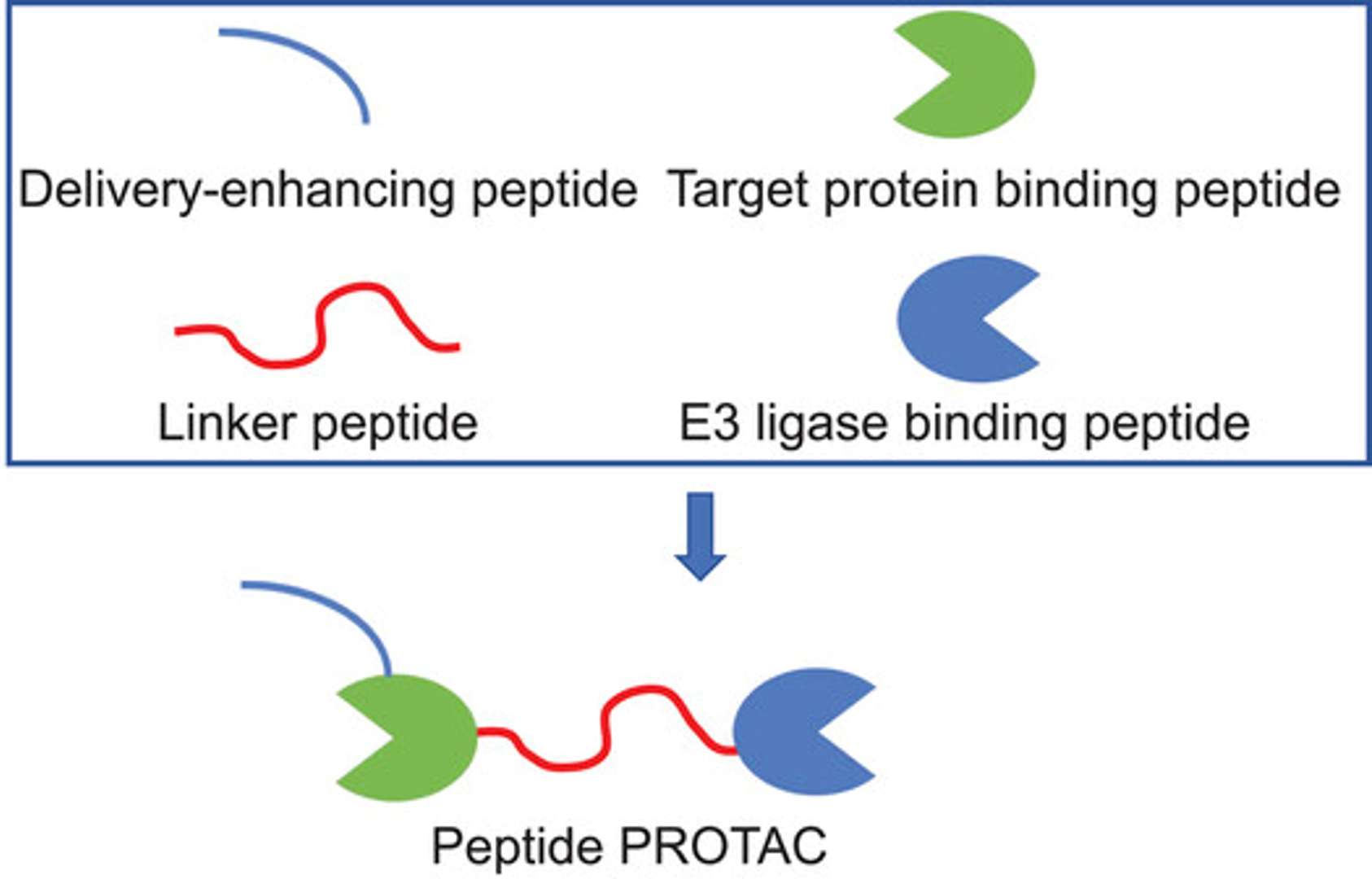 Figure 1. The schematic diagram of peptide protein degrader. (Zhu et al., 2025)
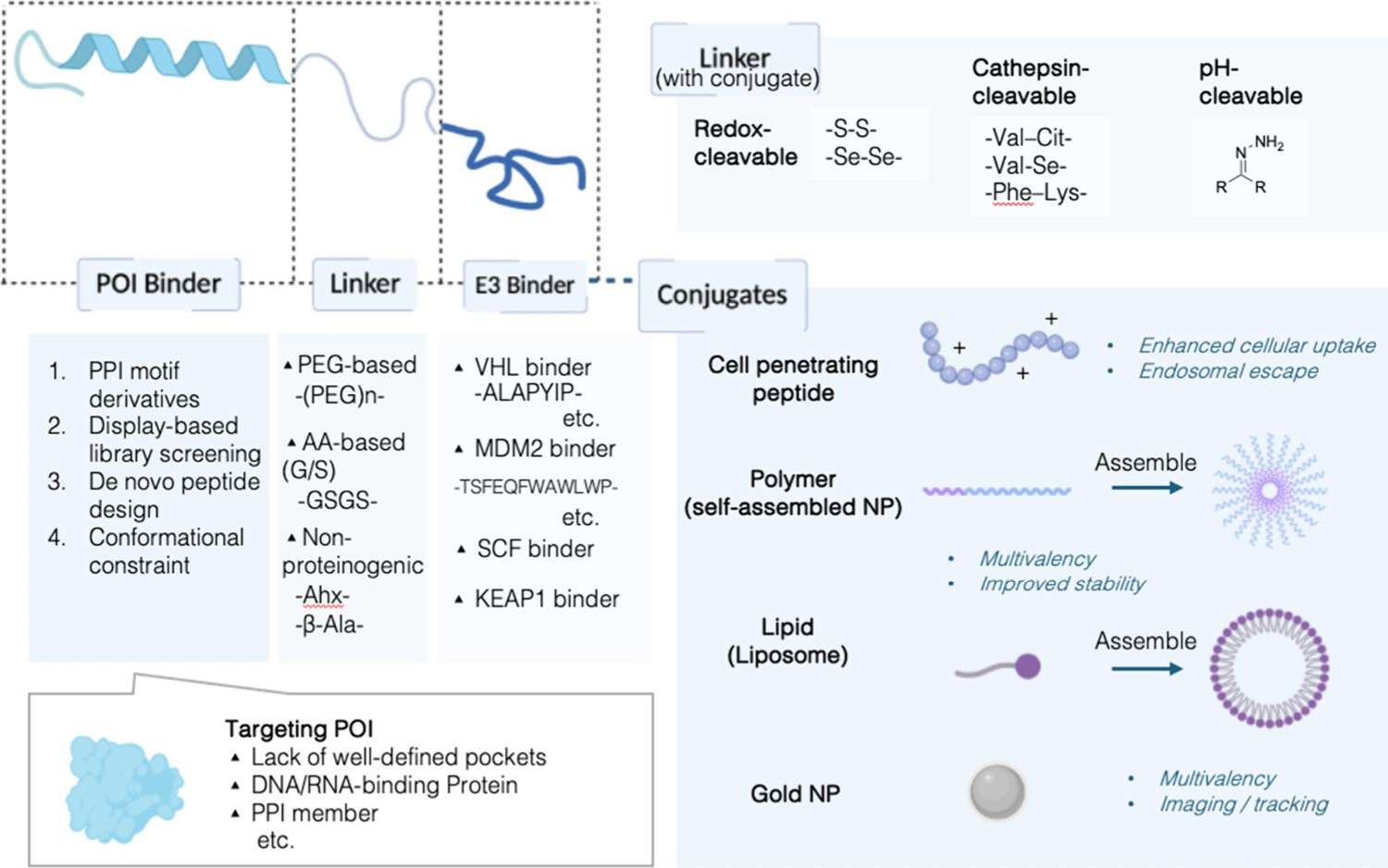 Figure 2. Design and conjugation strategies of the peptide-based PROTACs. (Lu et al., 2026)