
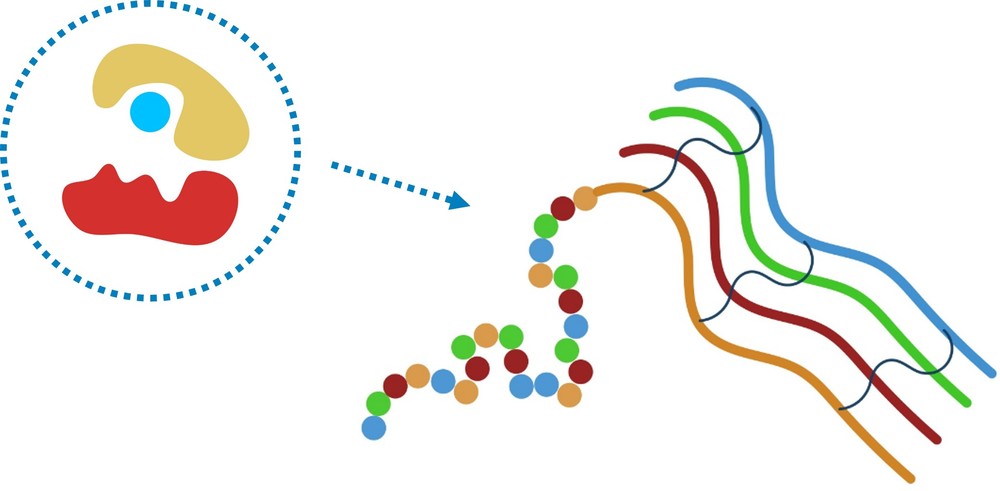
Enzyme-assisted protein synthesis refers to a class of in vitro, enzyme-mediated protein assembly and processing workflows designed to support applications where traditional cell-based expression systems may be limited or suboptimal. Rather than replacing biological expression platforms, enzyme-assisted approaches provide additional flexibility and molecular control by combining peptide preparation, enzymatic ligation, and controlled post-synthetic processing under defined conditions.
Profacgen offers customized enzyme-assisted protein synthesis and assembly services to support specialized protein engineering, feasibility evaluation, and downstream program planning, with a strong emphasis on material quality, documentation, and integration into broader development workflows.
Clients typically consider enzyme-assisted protein synthesis and assembly when:
These workflows are often used as specialized development tools, rather than primary manufacturing routes.
Step 1. Sequence Preparation and Design
Each project begins with a structured evaluation of the target protein and intended application.
Design decisions are guided by both molecular characteristics and program objectives.
Step 2. Controlled Assembly Execution
Protein assembly is conducted using validated enzymatic methods selected based on the properties of the target molecule.
The goal is not only to assemble the protein, but to do so in a way that supports meaningful downstream use.
Step 3. Purification and Material Quality Control
Following assembly, proteins undergo purification and analytical assessment to ensure suitability for intended applications.
Analytical checkpoints are integrated to ensure that assembled material meets defined quality expectations.
Step 4. Documentation and Program Integration
Comprehensive documentation is a core component of this service.
This ensures that enzyme-assisted synthesis efforts contribute value beyond isolated experimentation.
Enzyme-assisted protein synthesis services are frequently integrated with Profacgen's broader capabilities, including:
This integrated approach allows enzyme-assisted workflows to inform long-term development strategies rather than remain standalone exercises.
No single approach is universally optimal. The appropriate protein production strategy depends on molecular complexity, development stage, and long-term program objectives. Profacgen supports all three approaches—enzyme-assisted protein synthesis & assembly, cell-free protein synthesis, and cell-based protein expression—within an integrated development framework, enabling clients to select the most appropriate strategy at each stage of their program.
| Feature / Consideration | Enzyme-Assisted Protein Synthesis & Assembly | Cell-Free Protein Synthesis | Cell-Based Expression Systems (Bacterial expression, insect cell expression, yeast expression, mammalian cell expression) |
| Core Principle | Enzyme-mediated in vitro assembly, ligation, or processing of protein fragments | In vitro transcription and translation using ribosomes and cell lysates | Protein expression in living host cells |
| Ribosome-Dependent | No | Yes | Yes |
| Primary Building Blocks | Peptides or protein fragments prepared prior to assembly | Amino acids assembled during translation | Amino acids assembled during translation |
| Typical Protein Length | Short to moderate, depending on assembly strategy | Short to full-length proteins | Full-length proteins |
| Scalability | Limited; suited for specialized or exploratory applications | Moderate; suitable for research and screening | High; suitable for development and manufacturing |
| Speed to Material | Moderate | Fast | Slower due to cloning, expression, and culture |
| Control Over Assembly Sites | High (site-specific ligation or modification) | Limited | Limited |
| Post-Translational Modifications | Possible via targeted enzymatic steps | Limited and system-dependent | Host-dependent (e.g., mammalian, yeast) |
| Suitability for Toxic Proteins | High | High | Often challenging |
| Typical Use Cases | Modular protein construction, feasibility evaluation, site-specific assembly | Rapid screening, toxic proteins, isotope labeling | Large-scale production, regulated manufacturing |
| Role in Regulated Manufacturing | Supportive or exploratory | Supportive in early development | Primary route for clinical and commercial supply |
| Regulatory Familiarity | Case-specific | Moderate | High |
Evaluate Feasibility & Analytics
The following scenarios illustrate how enzyme-assisted protein synthesis and assembly services are typically used within broader development programs. These examples reflect common decision points where in vitro, enzyme-assisted approaches provide strategic value without replacing established expression or manufacturing platforms.
Program Context:
A client developing a multi-domain therapeutic protein needed to evaluate several structural variants to assess functional performance and feasibility. At this stage, committing to full cell-based expression for each design option would have significantly increased timelines and resource requirements.
The project team required:
Enzyme-Assisted Strategy:
Profacgen applied an enzyme-assisted protein assembly approach to support early-stage decision-making:
This strategy enabled parallel assessment of multiple constructs without premature commitment to a single expression system.
Program Outcome:
The client identified a preferred protein design supported by functional and analytical data. Based on these results, the program progressed into cell-based expression and downstream development with increased confidence and reduced risk of redesign.
Program Context:
A development program involving a structurally complex protein required targeted modification and controlled assembly to support feasibility studies. The client needed material that preserved defined molecular attributes while remaining compatible with future development planning.
Key considerations included:
Enzyme-Assisted Strategy:
Profacgen implemented a customized enzyme-assisted workflow:
The enzyme-assisted approach provided flexibility while maintaining alignment with downstream analytical and development needs.
Program Outcome:
The client obtained high-quality material suitable for feasibility evaluation and internal decision-making. The results informed subsequent selection of production and development strategies, minimizing rework and uncertainty during later stages.
Consult Our Experts on Your Project
Fill out this form and one of our experts will respond to you within one business day.