
Membrane proteins represent the largest and most pharmacologically important class of drug targets, with over 60% of FDA-approved antibody therapies directed against them. Profacgen provides a high-throughput, live cell-based membrane protein interaction screening platform featuring a library of over 4,000 unique human membrane proteins individually expressed in mammalian cells. Using fluorescence-activated flow cytometry, we detect binding interactions in the native membrane environment, preserving the structural integrity essential for physiologically relevant results.
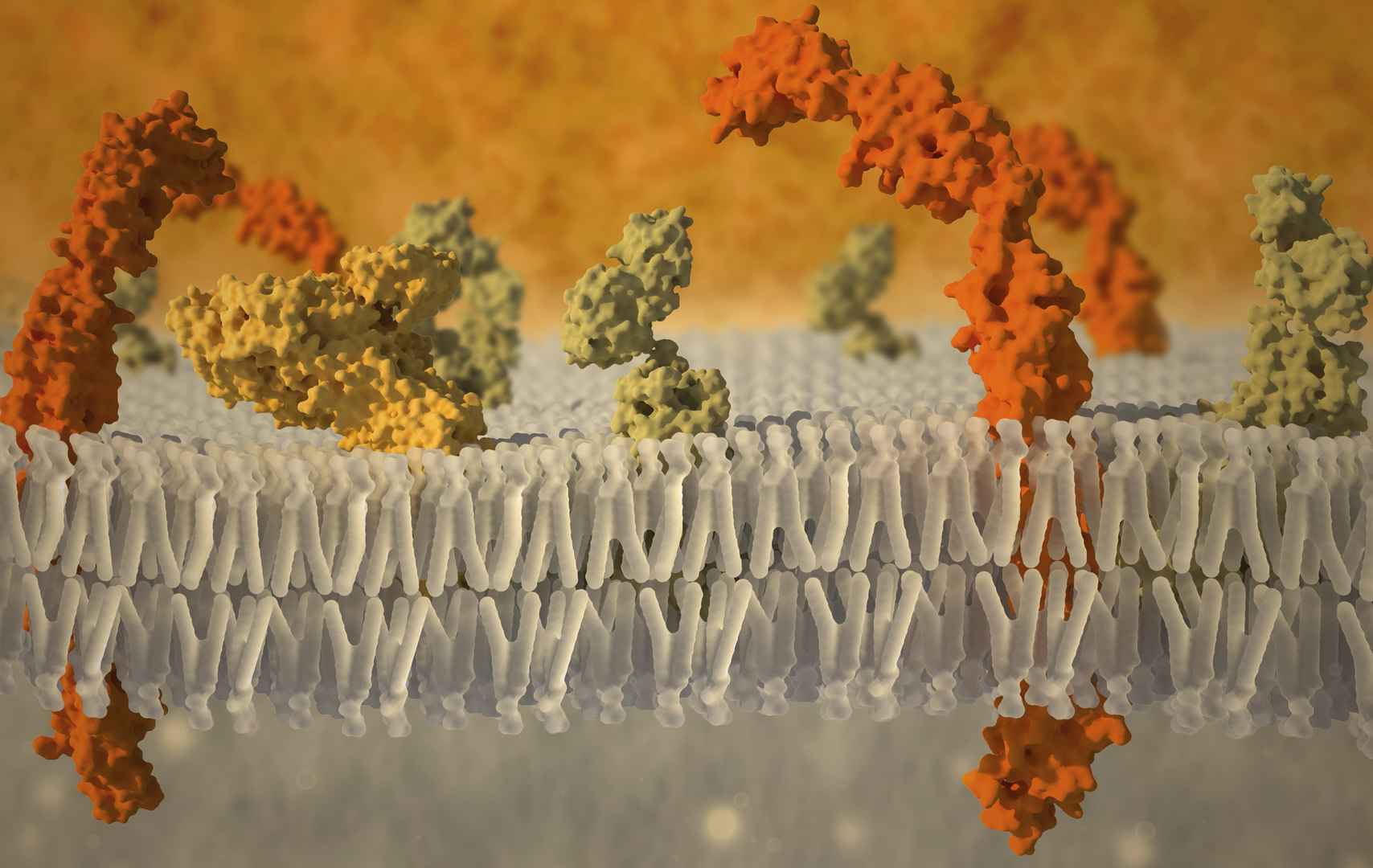
Membrane proteins function as ion channels, transporters, receptors, and adhesion molecules, mediating critical cellular processes including signal transduction, nutrient uptake, and cell-cell communication. Despite their therapeutic importance, membrane proteins are notoriously difficult to study due to their hydrophobic transmembrane domains, conformational complexity, and dependence on the lipid bilayer for proper folding and function.
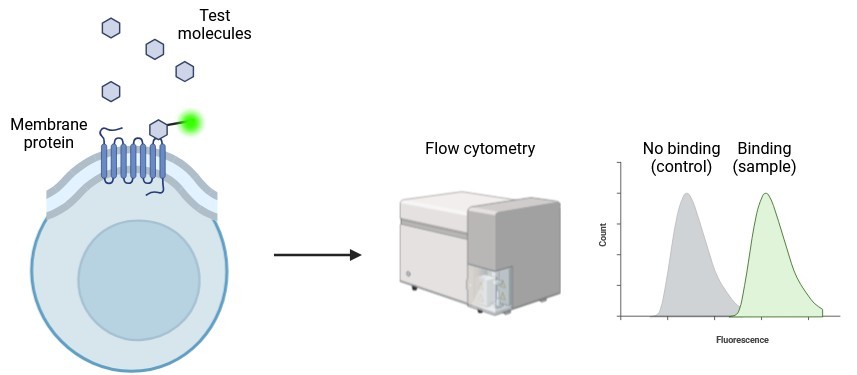
Profacgen's platform addresses these challenges by expressing full-length membrane proteins in their native human cellular environment. Each membrane protein is individually expressed in mammalian cells and used as a live-cell "bait" for binding assays. Because binding events are characterized in unfixed cells where membrane proteins retain their native conformation and post-translational modifications, the results reflect physiologically authentic protein-target interactions.
Flow cytometry provides a quantitative readout of binding by measuring fluorescence intensity on individual cells. The technology supports simultaneous detection of multiple fluorescent parameters, enabling multiplexed binding measurements and internal control normalization. Profacgen's expanding membrane protein library currently contains over 4,000 unique human membrane proteins covering all major classes.
Profacgen provides comprehensive membrane protein interaction screening services for pharmaceutical and research applications. Our offerings include:
| Service Component | Description |
|---|---|
| Membrane Protein Binding Screen | Screen your ligand against our membrane protein library (4,000+ proteins) by flow cytometry on live, unfixed cells. Deliverables: binding profile, hit list with quantified fluorescence data, full report. |
| Antibody Cross-Reactivity Profiling | Test therapeutic antibody binding across the membrane proteome to identify off-target interactions. Deliverables: cross-reactivity matrix, risk assessment, specificity ranking. |
| Small-Molecule Target Deconvolution | Identify membrane protein targets of bioactive small molecules from phenotypic screens. Deliverables: target protein hits, binding affinity estimates, selectivity analysis. |
| Custom Membrane Protein Expression | Express and validate specific membrane proteins not available in our standard library. Multiple expression systems available. Deliverables: validated cell line, expression QC, binding-ready cells. |

To complement your protein interaction analysis, explore our comprehensive portfolio of related screening and profiling services.
Background:
A pharmaceutical company developing a first-in-class antibody against a GPCR target for autoimmune disease needed to assess binding specificity across the membrane proteome. Regulatory submission required comprehensive off-target interaction data to support the antibody's safety profile.
Our Solution:
We screened the lead antibody against our full membrane protein library of 4,000+ proteins using fluorescently labeled antibody and flow cytometry. Each binding measurement included negative control cells and known positive controls to ensure assay reliability.
Final Results:
The screen confirmed high-specificity binding to the intended target with no significant off-target interactions detected above threshold. Two weak secondary hits identified at borderline levels were tested in functional assays and showed no biological activity, supporting the antibody's clean specificity profile and progression to IND-enabling studies.
Background:
An infectious disease research group needed to identify the human membrane protein receptor used by an emerging virus for cell entry. The viral surface glycoprotein was known to mediate attachment, but the host receptor remained unknown.
Our Solution:
Using our membrane protein library expressed in mammalian cells, we performed a systematic binding screen with a fluorescently labeled viral surface glycoprotein. All 4,000+ proteins were tested in duplicate with appropriate controls.
Final Results:
The screen identified a single high-confidence hit among the 4,000+ proteins tested. Validation experiments confirmed specific binding with an apparent affinity of 45 nM. Gene knockout in susceptible cells abolished viral entry, confirming the identified membrane protein as the functional receptor and enabling structure-based antiviral design.
Get a Quote for your membrane protein screening project
Fill out this form and one of our experts will respond to you within one business day.