We use cookies to understand how you use our site and to improve the overall user experience. This includes personalizing content and advertising. Read our
Privacy Policy
At Profacgen, our incorporation of unnatural sugars service employs metabolic glycoengineering to introduce bioorthogonal chemical reporters into the glycan chains of glycoproteins. Unlike genetic code expansion, which requires extensive engineering of the host cell's translation machinery, metabolic glycoengineering operates through the cell's endogenous biosynthetic pathways: cells are cultured in the presence of unnatural sugar analogs that are processed by glycan biosynthetic enzymes and incorporated into newly synthesized glycoproteins in place of their natural counterparts.
This approach provides unique advantages for specific applications. Because it targets native glycosylation sites without requiring genetic modification, metabolic glycoengineering is compatible with virtually any cell type, including primary cells and whole organisms. The technique is particularly powerful for studying membrane glycoprotein dynamics, labeling viral envelope glycoproteins, and developing glycan-targeted therapeutics. Profacgen provides comprehensive services spanning unnatural sugar feeding, glycoprotein labeling, analytical verification, and downstream bioorthogonal conjugation with fluorophores, affinity tags, or therapeutic payloads.
Background: Metabolic Glycoengineering
Metabolic glycoengineering exploits the remarkable substrate promiscuity of the mammalian salvage pathway—a biosynthetic route that converts simple monosaccharide precursors into activated nucleotide sugars (CMP-sialic acid, UDP-GalNAc, UDP-GlcNAc) for subsequent transfer onto glycoproteins and glycolipids by glycosyltransferases in the ER and Golgi. Key enzymes in this pathway, including N-acetylmannosamine kinase (MNK), N-acetylneuraminic acid phosphate synthase (NANS), and UDP-GlcNAc 2-epimerase/MNAc kinase (GNE), tolerate structural modifications to the N-acyl substituent of the sugar substrate.
Figure 1. Metabolic glycoengineering (MGE) technology. (Agatemor et al., 2019)
This substrate tolerance enables the use of unnatural sugar analogs bearing bioorthogonal functional groups on the N-acyl side chain. The most widely used analogs include: Ac4ManNAz (tetraacetyl N-azidoacetylmannosamine), which is metabolized to azido-sialic acid (SiaNAz) and incorporated into sialylated glycoproteins; Ac4GalNAz (tetraacetyl N-azidoacetylgalactosamine), which is processed to azido-GalNAc and incorporated into O-linked mucin-type glycans and glycosaminoglycans; and Ac4GlcNAz (tetraacetyl N-azidoacetylglucosamine), which labels O-GlcNAc modified cytoplasmic and nuclear proteins. The peracetylated form of these sugars (with acetyl groups masking the hydroxyls) is used to enhance cell membrane permeability; intracellular esterases remove the acetyl groups, releasing the free sugar for entry into the salvage pathway.
Figure 2. Bioorthogonal chemical reporters for glycosylation. (Zaro et al., 2013)
Once incorporated into glycoproteins, the azide handle enables subsequent bioorthogonal conjugation via SPAAC with DBCO-functionalized probes, or via CuAAC with alkyne-functionalized probes. The Staudinger ligation (azide with phosphine reagents) offers an alternative conjugation chemistry with distinct reaction characteristics. These conjugations proceed under physiological conditions with high chemoselectivity, enabling labeling, imaging, and functionalization of glycoproteins in living cells and tissues.
Our Metabolic Glycoengineering Services
Unnatural sugar analogs: Ac4ManNAz, Ac4GalNAz, Ac4GlcNAz for azide incorporation; Ac4ManNAl, Ac4GalNAl for alkyne incorporation; Ac4ManNCyc, Ac4ManNBCN for cyclooctyne/BCN handles enabling tetrazine ligation
Cell compatibility: Mammalian cell lines (CHO, HEK293, cancer lines), primary cells (T cells, neurons, stem cells), bacteria (for glycoprotein labeling), and whole organisms (zebrafish, C. elegans, mice via dietary administration)
Labeling strategies: Cell surface glycoprotein labeling (live-cell compatible); total glycoproteome labeling (cell lysis followed by conjugation); selective enrichment of azide-labeled glycoproteins via phosphine- or DBCO-biotin reagents
Conjugation chemistries: SPAAC with DBCO-fluorophores, DBCO-biotin, DBCO-cleavable linkers; CuAAC with alkyne probes (in vitro); Staudinger ligation with phosphine reagents
Analytical verification: Flow cytometry for cell surface labeling efficiency; fluorescence microscopy for subcellular localization; LC-MS/MS glycoproteomics for site-specific glycan profiling; Western blot with anti-biotin or anti-fluorophore antibodies
Applications
Live-cell imaging of glycoprotein trafficking: Track endocytosis, recycling, and degradation of membrane glycoproteins in real time without genetic modification
Virus labeling and tracking: Label viral envelope glycoproteins to study viral entry, trafficking, and budding in host cells
Glycoprotein enrichment and identification: Bioorthogonal capture of azide-labeled glycoproteins enables glycoproteome profiling and discovery of novel glycosylation sites
Tumor targeting: Exploit elevated sialylation on cancer cell surfaces for selective delivery of cytotoxic payloads via bioorthogonal click chemistry
Cell surface engineering: Install functional groups on living cell membranes for tissue engineering, cell therapy, and synthetic biology applications
Glycan biosynthesis studies: Use unnatural sugars as metabolic probes to trace glycan processing pathways and identify rate-limiting steps
Representative Case Studies
Case Study 1: Tracking EGFR Endocytosis Dynamics in Live Cancer Cells
Background:
A cancer biology group needed to visualize the endocytic trafficking of EGFR in response to ligand stimulation without genetic fusion to GFP, which is known to perturb receptor internalization kinetics due to its large size and dimerization propensity.
Approach:
Profacgen cultured A431 cells in the presence of 100 µM Ac4ManNAz for 48 hours to metabolically label sialoglycoproteins with azido-sialic acid. Cells were then treated with EGF to stimulate EGFR endocytosis, followed by reaction with a DBCO-Cy3 fluorophore for 15 minutes to label cell surface azides. Internalized receptors were protected from labeling, while surface receptors were fluorescent. Time-lapse imaging was performed over 2 hours.
Outcome:
Metabolic labeling enabled visualization of EGFR endocytosis with minimal perturbation—internalization kinetics matched literature values for unmodified receptor. Two distinct endocytic routes were identified: a rapid clathrin-mediated pathway (t1/2 = 3 min) and a slower caveolin-dependent pathway (t1/2 = 15 min). The relative flux through each pathway was quantified as a function of ligand concentration, revealing a switch from clathrin to caveolin dominance at high EGF doses. These insights guided the design of targeted delivery strategies exploiting specific endocytic routes.
Case Study 2: Glycoproteomic Profiling of Differentially Sialylated Proteins in Cancer
Background:
An oncology research program sought to identify the complete set of hypersialylated glycoproteins on metastatic breast cancer cells to discover new therapeutic targets and biomarkers.
Approach:
Profacgen metabolically labeled MDA-MB-231 cells and their non-metastatic MCF-7 counterparts with Ac4ManNAz. Azide-labeled sialoglycoproteins were enriched by reaction with a phosphine-biotin reagent followed by streptavidin pulldown. Enriched proteins were identified by LC-MS/MS, and sialylation site occupancy was quantified by comparison between the two cell lines.
Outcome:
The glycoproteomic analysis identified 142 sialoglycoproteins common to both cell lines and 37 uniquely hypersialylated in MDA-MB-231 cells. Of these, 12 were cell surface receptors with known roles in migration and invasion. Validation by flow cytometry confirmed 3-fold to 8-fold elevated sialylation on the metastatic cells. One hypersialylated protein, a novel lectin receptor, was selected for therapeutic antibody development based on its restricted expression pattern and functional role in metastasis.
Q: What is metabolic glycoengineering and how does it differ from genetic code expansion?
A: Metabolic glycoengineering introduces bioorthogonal handles by feeding cells unnatural sugar analogs that are processed by endogenous glycan biosynthetic enzymes and incorporated into glycoproteins. Unlike genetic code expansion, no genetic modification of the host cell is required. The method is compatible with primary cells, tissues, and whole organisms. However, it only targets glycosylated proteins (at their glycan chains), whereas genetic code expansion can introduce handles at any position in any protein. The two methods are complementary: glycoengineering is ideal for membrane glycoprotein studies and live-cell applications, while genetic code expansion provides the highest site specificity.
Q: Which unnatural sugars are available and what do they label?
A: Our catalog includes: Ac4ManNAz (labels sialic acid on N- and O-linked glycans, broadly applicable to most mammalian glycoproteins); Ac4GalNAz (labels O-linked GalNAc on mucin-type glycans); Ac4GlcNAz (labels O-GlcNAc on cytoplasmic/nuclear proteins); and alkyne-bearing analogs (Ac4ManNAl, Ac4GalNAl) for complementary click chemistry. The choice depends on which glycan class you wish to target. We provide guidance on sugar selection based on your target proteins and application.
Q: Does metabolic labeling affect cell viability or protein function?
A: At standard concentrations (50–200 µM), the unnatural sugar analogs have minimal impact on cell viability and proliferation. We routinely perform MTT or luminescent cell viability assays to confirm >90% viability under labeling conditions. The azido group on the sugar is small and generally does not perturb glycoprotein folding, trafficking, or function. However, at very high concentrations (>500 µM), some sugars may partially inhibit glycan biosynthesis. We optimize the feeding concentration for each cell type to maximize labeling efficiency while maintaining cell health.
Q: How efficient is the labeling and what detection methods are available?
A: Labeling efficiency varies by cell type and sugar analog. Under optimized conditions, we typically achieve 30–70% incorporation of the unnatural sugar into cell surface sialic acids (measured by flow cytometry after DBCO-fluorophore conjugation). Detection methods include: flow cytometry for cell surface labeling quantification; confocal fluorescence microscopy for subcellular localization; fluorescence gel imaging after SDS-PAGE; LC-MS/MS glycoproteomics for site-specific mapping; and streptavidin enrichment followed by Western blot or MS for glycoproteome profiling.
Q: Can this method be used in vivo (in animals)?
A: Yes. Metabolic glycoengineering has been successfully demonstrated in multiple animal models. Unnatural sugars can be administered via intraperitoneal injection, drinking water, or feed. In mice, Ac4ManNAz administration via drinking water (20 mM) achieves robust labeling of tissue glycoproteins within 7–10 days. The method has been used for in vivo tumor glycan targeting, viral glycoprotein labeling, and developmental glycobiology studies in zebrafish and C. elegans. We can advise on administration routes and dosing for your specific animal model.
References:
1. Nguyen SS, Prescher JA. Developing bioorthogonal probes to span a spectrum of reactivities. Nat Rev Chem. 2020;4(9):476-489. doi:10.1038/s41570-020-0205-0
Zaro BW, Hang HC, Pratt MR. Incorporation of unnatural sugars for the identification of glycoproteins. In: Kohler JJ, Patrie SM, eds. Mass Spectrometry of Glycoproteins. Vol 951. Humana Press; 2013:57-67. doi:10.1007/978-1-62703-146-2_5
Online Inquiry
Fill out this form and one of our experts will respond to you within one business day.

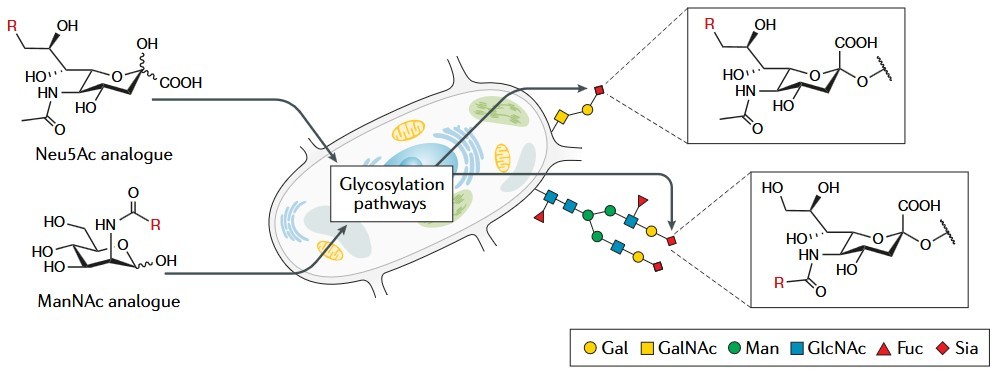 Figure 1. Metabolic glycoengineering (MGE) technology. (Agatemor et al., 2019)
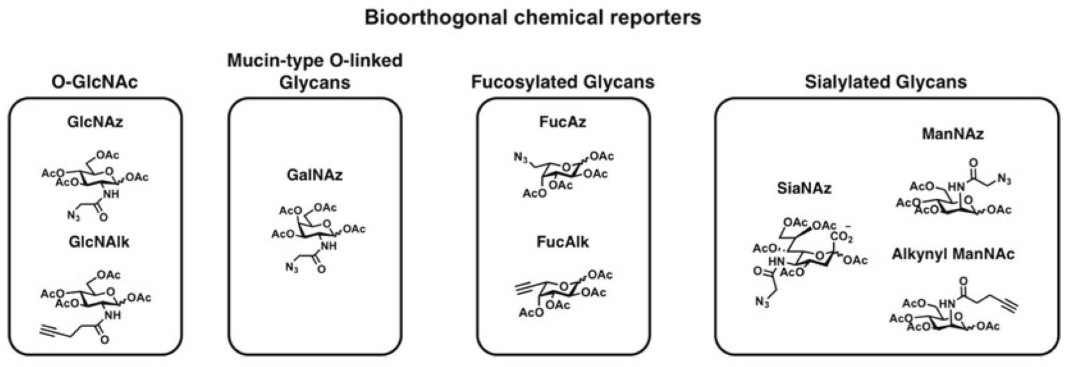 Figure 2. Bioorthogonal chemical reporters for glycosylation. (Zaro et al., 2013)