We use cookies to understand how you use our site and to improve the overall user experience. This includes personalizing content and advertising. Read our
Privacy Policy
Phage-Assisted Continuous Evolution (PACE) is a revolutionary technology for accelerating the evolution of gene-encoded molecules. By linking the desired molecular activity to phage propagation in Escherichia coli, PACE enables continuous, high-throughput directed evolution over multiple generations without manual intervention. This approach has transformed the landscape of protein engineering, allowing researchers to generate enzymes, binding proteins, and other biomolecules with enhanced stability, specificity, or catalytic efficiency.
At Profacgen, we provide a comprehensive PACE platform tailored to diverse client needs, from academic research to industrial biotechnology. Our platform integrates advanced phage engineering, customizable selection strategies, and rigorous analytical pipelines, enabling rapid evolution of target proteins under precisely controlled conditions.
Background
Directed Evolution and Its Importance
Directed evolution is a cornerstone of modern protein engineering. By mimicking natural selection in the laboratory, researchers can iteratively optimize biomolecules for improved properties such as:
Thermal stability
Substrate specificity
Catalytic efficiency
Resistance to inhibitors or denaturants
Enhanced expression levels
Traditional directed evolution requires iterative rounds of mutation, selection, and amplification, which can be labor-intensive and time-consuming.
PACE: Continuous Evolution at the Speed of Life
Phage-Assisted Continuous Evolution addresses these challenges by coupling the desired activity of a target gene to the life cycle of a bacteriophage. Key features include:
Continuous propagation: Target genes are transferred from host cell to host cell through a modified bacteriophage lifecycle.
Activity-dependent selection: Only phages carrying beneficial mutations replicate efficiently, automatically enriching for functional variants.
Rapid generation cycles: Multiple evolutionary cycles can be achieved per day, dramatically accelerating the pace of evolution.
The system was pioneered by David Liu and colleagues, who demonstrated its ability to evolve polymerases, proteases, and other enzymes in a continuous, automated manner.
Figure 1. Overview of the PACE system. (Esvelt et al., 2011)
Advantages of PACE Over Traditional Methods
Compared to classical in vitro evolution or iterative mutagenesis, PACE offers several distinct advantages:
Speed: Continuous evolution eliminates repeated manual intervention between rounds.
Efficiency: Large libraries can be screened simultaneously in a physiologically relevant environment.
Flexibility: Evolutionary pressure can be finely tuned for a range of selection criteria.
Versatility: Applicable to enzymes, binding proteins, transcription factors, and other gene-encoded molecules.
Our Service Offerings
Profacgen provides advanced, personalized PACE services for research institutions and biotechnology companies. Our offerings encompass the full spectrum of directed evolution, from experimental design to final validation.
PACE System Customization
Tailored selection strategies based on target molecule properties
Optimization of phage and host strain configurations
Design of multiple helper plasmids to support phage propagation
Engineering of mutation-inducing plasmids for controlled variability
Library Preparation and Screening
Generation of diverse protein libraries for continuous evolution
Screening in whole cells or cell lysates
Activity-dependent selection to enrich desired variants
High-throughput monitoring of phage replication and target function
Protein Variant Optimization
Directed evolution for thermal, chemical, or proteolytic stability
Selection for improved catalytic efficiency or substrate specificity
Enhanced expression and solubility of recombinant proteins
Phage and Host Engineering
Construction of modified bacteriophages carrying target genes
Strategic placement of helper plasmids in host bacteria to optimize phage proliferation
Minimization of interference between genetic elements for robust evolution
Analytical Validation
Sequencing of evolved variants to confirm desired mutations
Functional assays to quantify activity, stability, and specificity
Comparative analysis with starting libraries to assess evolutionary progress
Data Integration and Reporting
Comprehensive documentation of experimental parameters, selection pressures, and outcomes
Detailed reports of variant sequences, phenotypes, and functional metrics
Consultation for downstream applications or commercialization
Advanced, Optimized Platform: Profacgen has refined PACE methodologies to maximize efficiency and flexibility, integrating lessons from published protocols with proprietary optimizations.
Expertise Across Protein Classes: Our team has experience evolving polymerases, proteases, enzymes, binding proteins, and other challenging targets.
Personalized Guidance: Each project receives customized guidance on library design, selection strategies, and evolution parameters tailored to the client's goals.
High Throughput and Speed: Continuous evolution enables rapid generation of functional variants, reducing development timelines from months to weeks.
Robust Genetic Engineering: Strategic arrangement of phages, helper plasmids, and mutation-inducing plasmids ensures high evolutionary efficiency while minimizing interference between elements.
International Standard Confidentiality: Profacgen is committed to protecting client IP and ensuring confidentiality throughout the project lifecycle.
Comprehensive Data and Analysis: Clients receive detailed sequencing, functional, and analytical reports to support downstream applications or publication.
Representative Case Studies
Case 1: Thermostable Enzyme Evolution
Challenge:
A client required a polymerase capable of functioning at high temperatures for industrial applications. Existing variants exhibited insufficient thermal stability, limiting performance in demanding reaction conditions.
Approach:
Profacgen created a diversified polymerase library through targeted mutagenesis and recombination. Phage-Assisted Continuous Evolution (PACE) was applied with a temperature-dependent selection pressure that progressively increased over successive generations. The continuous evolution platform enabled iterative rounds of mutation, selection, and replication without manual intervention.
Outcome:
Identified polymerase variants with significantly enhanced thermal stability compared to the parental enzyme. Evolved candidates demonstrated improved activity at elevated temperatures while maintaining high fidelity, enabling robust performance under industrial processing conditions and providing a commercially viable enzyme for the client's application.
Case 2: Protease-Resistant Protein Development
Challenge:
A research group sought to evolve a therapeutic protein resistant to proteolytic degradation, which was compromising in vivo stability and limiting efficacy. Conventional rational design approaches had failed to identify stabilizing mutations.
Approach:
Profacgen introduced the target gene into phage vectors with controlled mutation rates to generate diverse variant libraries. During continuous evolution, a protease selection pressure was applied, allowing only variants with enhanced resistance to propagate. The PACE platform automatically enriched for sequences conferring improved proteolytic stability over multiple generations.
Outcome:
Evolved protein variants exhibited robust resistance to proteases and denaturants while preserving functional activity. Selected candidates also demonstrated improved expression yields. The evolved therapeutic protein offered enhanced stability for downstream formulation and in vivo applications, advancing the client's development program.
Case 3: Library Screening for Enhanced Catalytic Activity
Challenge:
An enzyme engineering company needed to rapidly identify highly active variants from a large combinatorial library. Traditional screening methods were time-consuming and limited in throughput, delaying the identification of optimal candidates.
Approach:
Profacgen utilized PACE to directly link enzyme activity to phage propagation efficiency. The continuous evolution system was configured such that only variants with enhanced catalytic activity supported robust phage replication. Activity-dependent enrichment was monitored in real time throughout the evolution campaign, enabling dynamic assessment of library performance.
Outcome:
Achieved rapid identification of high-activity variants from a complex combinatorial library, dramatically accelerating the discovery timeline. Top candidates were sequenced to map beneficial mutations, revealing key residues responsible for improved catalysis. The streamlined platform delivered validated enzyme variants with superior activity, enabling the client to advance lead candidates efficiently.
Q: What types of proteins can be evolved using PACE?
A: PACE is applicable to polymerases, proteases, binding proteins, enzymes, transcription factors, and other gene-encoded molecules where activity can be linked to phage propagation.
Q: How does PACE differ from traditional directed evolution?
A: PACE is continuous and automated, directly linking molecular activity to phage replication. It enables multiple evolutionary cycles per day without manual intervention, dramatically accelerating timelines.
Q: What is the typical library size that can be screened?
A: PACE can accommodate libraries ranging from 105 to 109 variants, depending on the selection design, host system, and specific functional requirements of the target.
Q: Can you evolve proteins for stability and activity simultaneously?
A: Yes, selection pressures can be carefully designed to target multiple functional attributes concurrently, enabling directed evolution toward complex, multi-parameter optimization goals.
Q: How are evolved variants validated?
A: Evolved variants are sequenced to identify beneficial mutations and subsequently subjected to functional, stability, and expression assays to confirm desired improvements.
Q: Is the PACE system adaptable for proprietary or sensitive targets?
A: Absolutely. We implement strict confidentiality protocols, including secure data handling and IP protection measures, to safeguard client proprietary information and commercial interests.
Q: What is the typical timeline for a PACE project?
A: Timelines vary with target complexity and library size, but initial evolution cycles and variant identification can often be completed within a few weeks.
References:
Esvelt KM, Carlson JC, Liu DR. A system for the continuous directed evolution of biomolecules. Nature. 2011;472(7344):499-503. doi:10.1038/nature09929
Online Inquiry
Fill out this form and one of our experts will respond to you within one business day.

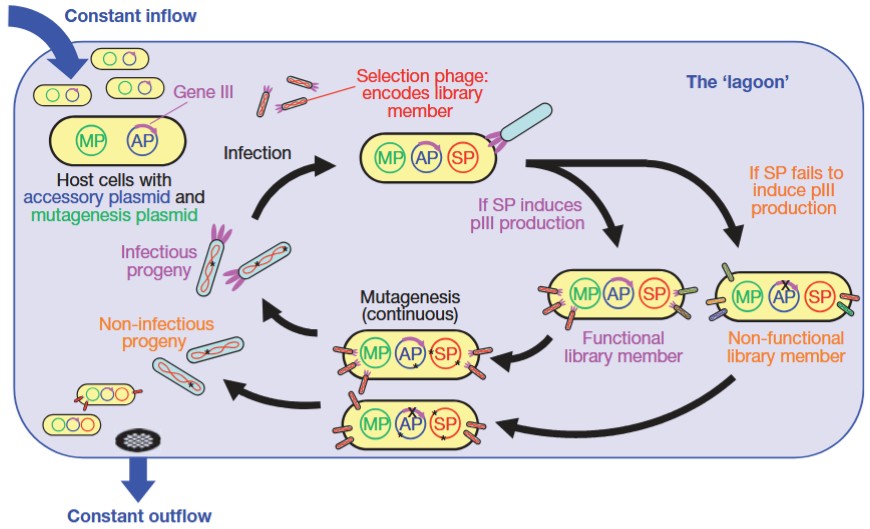 Figure 1. Overview of the PACE system. (Esvelt et al., 2011)