
Yeast two-hybrid (Y2H) screening is a powerful in vivo genetic assay for detecting protein-protein interactions (PPIs). Profacgen provides both nucleus-based and membrane-based Y2H screening services, enabling comprehensive discovery of binary protein interactions under native cellular conditions. Our platform is ideal for mapping interactomes, validating candidate binding partners, and screening cDNA libraries against your bait protein of interest.
The Y2H system exploits the modular nature of transcription factors, which typically consist of a DNA-binding domain (DBD) and a transcriptional activation domain (AD). In the GAL4-based system, bait proteins are fused to the DBD and prey proteins to the AD. When bait and prey physically interact, the DBD and AD are brought into proximity, reconstituting a functional transcription factor that drives expression of selectable reporter genes (HIS3, ADE2, LacZ).
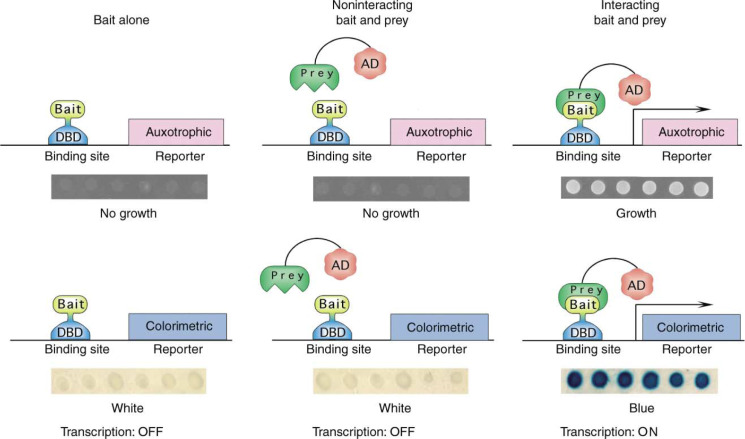 Figure 1. Schematic of yeast two-hybrid components, and profile of reporter activation. (Serebriiskii and Golemis, 2004)
Two major variants extend the utility of Y2H across different protein classes:
Profacgen's Y2H platform combines optimized yeast strains, multiple reporter configurations with varying stringency, and high-complexity cDNA libraries to maximize sensitivity while minimizing false positives.
Profacgen provides comprehensive Y2H screening services for research and drug discovery applications. Our offerings include:
| Service Component | Description |
|---|---|
| Nucleus-Based Y2H Screening | Screen cDNA library against soluble bait protein using GAL4 or LexA systems. Multiple reporter genes (HIS3, ADE2, LacZ) for stringent selection. Deliverables: positive clone sequences, interaction map, validation report. |
| Membrane-Based Y2H Screening | Split-ubiquitin system for membrane protein interaction discovery. Full-length membrane proteins screened in native cellular context. Deliverables: hit clones, sequencing results, binding analysis. |
| Pairwise Interaction Verification | Confirm candidate interactions by direct co-transformation of bait and prey plasmids. Quantitative reporter activation data for affinity ranking. Deliverables: verification matrix, reporter data. |
| Y2H Library Construction | Custom cDNA library preparation from your tissue or cell line source. Normalized libraries available for diverse species and tissues. Deliverables: library titer, complexity assessment, QC report. |

To complement your protein interaction analysis, explore our comprehensive portfolio of related screening and profiling services.
Background:
A pharmaceutical client sought to identify novel interaction partners of an oncogenic receptor tyrosine kinase to uncover new therapeutic targets. The kinase cytoplasmic domain was known to participate in multiple signaling cascades, but the complete interaction landscape remained undefined.
Our Solution:
Using our nucleus-based Y2H platform, we screened a normalized human fetal brain cDNA library against the kinase cytoplasmic domain fused to the GAL4 DBD. Bait auto-activation was rigorously tested before library screening. Three independent reporter genes (HIS3, ADE2, LacZ) were used to ensure stringent selection of true interactors.
Final Results:
The screen identified 47 unique interacting proteins, including 12 previously uncharacterized binders. Follow-up co-immunoprecipitation validated 89% of tested interactions. Two novel interactors were subsequently confirmed as regulators of kinase-mediated signaling and are now under evaluation as potential drug targets.
Background:
A biotechnology company needed to map the extracellular interaction landscape of a GPCR target to support therapeutic antibody development. The target was a Class B GPCR with a large N-terminal extracellular domain known to engage multiple ligands.
Our Solution:
We employed our membrane-based split-ubiquitin Y2H system, screening a human leukocyte cDNA library against the full-length GPCR bait. The full-length receptor was expressed in yeast with its native transmembrane domains intact, preserving conformational epitopes relevant to antibody binding.
Final Results:
The screen recovered 23 specific interactors, including known ligands and novel binding partners. Five extracellular interactions were validated by surface plasmon resonance, with affinities ranging from 20 nM to 4 uM. The data directly informed the client's antibody epitope selection strategy and accelerated their lead candidate identification timeline.
Get a Quote for your Y2H screening project
Please contact us for more details of yeast two-hybrid screening services or visit our resource center for detailed information on yeast two-hybrid screening principles, and protocols to support your experiments.
References:
Fill out this form and one of our experts will respond to you within one business day.