We use cookies to understand how you use our site and to improve the overall user experience. This includes personalizing content and advertising. Read our
Privacy Policy
Profacgen's Binding Affinity Measurement Services deliver precise, quantitative characterization of degrader-target and degrader-ligase interactions, supporting warhead optimization, E3 ligand evaluation, and structure-activity relationship development for protein degrader programs.
Binding affinity measurement is a key step in protein degrader design. Profacgen provides a variety of detection methods including SPR, BLI, ITC, MST, and fluorescence-based assays to determine the strength, kinetics, and thermodynamics of molecular interactions that drive degrader efficacy.
Figure 1. Characterization of degrader-induced ternary complex formation and binding parameters, including binding affinities and cooperativity. (Adapted from Wurz et al., 2024)
Overview
Binding affinity is foundational to protein degrader performance. Each binary interaction must be optimized within the context of the overall degrader mechanism:
Target engagement: High-affinity target binding ensures efficient recruitment and selective degradation. Warhead affinity directly influences cellular potency, but excessively tight binding may reduce catalytic turnover and narrow the therapeutic window
E3 recruitment: E3 ligase ligand affinity determines the efficiency of ubiquitin-proteasome system engagement. Ligand selection must balance affinity with tissue specificity, dynamic range, and compatibility with linker conjugation
Affinity balance: Optimal degrader design requires balanced affinities for target and E3 ligase to maximize ternary complex formation while minimizing hook effect and non-productive binary complex accumulation. Relative affinity ratios influence cooperativity and cellular efficacy
Structure–activity relationship: Systematic affinity measurement across compound series enables correlation of chemical structure with binding energetics, guiding rational optimization of potency, selectivity, and developability
Our Binding Assay Platforms
Profacgen integrates multiple biophysical technologies to match the diverse molecular properties and analytical requirements of degrader programs:
Gold-standard label-free technology for real-time kinetic and affinity analysis.
Principle: Resonance oscillation at the interface between dielectric materials excited by incident light, detecting refractive index changes upon biomolecular binding to gold sensor surfaces
Application: Real-time measurement of association and dissociation kinetics, equilibrium affinity determination, and ternary complex analysis by sequential or co-injection strategies
Advantage: Exceptional sensitivity for small molecules, broad dynamic range, and established regulatory acceptance for biophysical characterization
Label-free optical analysis with flexible sample handling.
Principle: Interference pattern of white light reflected from two surfaces; analyte binding to biosensor tip changes optical thickness, producing measurable wavelength shift (Δλ) in real time
Application: Kinetic profiling of degrader-target and degrader-ligase interactions, concentration determination, and crude sample compatibility for cellular lysate analysis
Advantage: Minimal sample preparation, rapid biosensor regeneration, and compatibility with complex matrices including serum and cell culture media
Solution-based interaction analysis without surface immobilization.
Principle: Detection of temperature-induced fluorescence changes as a function of ligand concentration, combining temperature-dependent intensity changes with thermophoresis—the directional movement of particles in a micro temperature gradient
Application: Binding affinity determination in solution for proteins, peptides, and small molecules with fluorescent labeling or intrinsic fluorescence
Advantage: No immobilization required, minimal sample consumption, and compatibility with detergent-containing buffers and membrane proteins
Fluorescence-Based Assays
Versatile, high-throughput methods for rapid affinity screening.
Fluorescence polarization (FP): Detection of rotational diffusion changes upon binding for homogeneous, mix-and-read affinity determination
TR-FRET: Time-resolved energy transfer with lanthanide chemistry for exceptional sensitivity and background elimination in complex matrices
AlphaScreen: Bead-based proximity assay for high-throughput screening of large compound libraries
Direct thermodynamic quantification of binding energetics.
Principle: Measurement of heat absorbed or released upon ligand binding in a sample cell relative to a reference cell, enclosed in an insulating jacket
Application: Determination of binding enthalpy (ΔH), entropy (ΔS), Gibbs free energy (ΔG), and stoichiometry (n) in a single experiment without labeling or immobilization
Advantage: Gold standard for thermodynamic characterization, mechanistic insight into driving forces, and cooperativity assessment for ternary complexes
Assay Readouts
Profacgen quantifies the essential parameters that define binding quality and predict degrader performance:
KD: Equilibrium dissociation constant reflecting binding affinity at steady state. Lower KD indicates tighter binding. For degraders, target and E3 ligand KD values are typically optimized in the low nanomolar to sub-nanomolar range
Association rate (kon): The rate constant for complex formation upon mixing. Fast association supports rapid cellular engagement and may correlate with rapid degradation onset
Dissociation rate (koff): The rate constant for complex dissociation. Slow dissociation (long residence time) may enhance degradation duration but can also reduce catalytic turnover and increase off-target liability
Binding selectivity: Relative affinity for intended target versus closely related homologs, off-target proteins, and counter-screening panels. Selectivity indices >100-fold are typically sought to minimize safety liabilities
Applications
Our binding affinity measurement platform supports diverse protein degrader discovery applications:
Warhead optimization: Structure-activity relationship development correlating chemical modifications with target affinity, selectivity, and kinetic profile to identify optimal binding scaffolds
E3 ligand evaluation: Comparative profiling of VHL, CRBN, MDM2, cIAP, and emerging ligase ligands to select recruiters with optimal affinity, specificity, and developability for the target biology
Candidate ranking: Multi-parameter scoring of degrader analogs integrating target affinity, E3 affinity, cooperativity, and selectivity to prioritize compounds for cellular and in vivo evaluation
Mechanistic studies: Dissection of binding thermodynamics, enthalpy-entropy compensation, and allosteric effects to guide rational design and predict resistance liabilities
Deliverables
Profacgen provides structured, decision-ready documentation for binding affinity analysis:
Parameter
Description
Binding Curves
Sensorgrams, dose-response plots, and saturation binding isotherms with global fitting and statistical confidence intervals
Affinity Parameters
KD, kon, koff, residence time, and thermodynamic parameters (ΔG, ΔH, ΔS, -TΔS) with experimental conditions and replicate statistics
Comparative Analysis
Ranked compound performance, selectivity matrices, structure-activity relationship summaries, and expert recommendations for optimization
Multiple Complementary Platforms: SPR, BLI, ITC, MST, and fluorescence assays within a single provider enable selection of optimal technology for each molecular interaction and program stage.
Label-Free and Immobilization-Free Options: ITC and MST require no surface attachment, preserving native binding behavior for proteins sensitive to immobilization or labeling artifacts.
Real-Time Kinetic Resolution: SPR and BLI provide association and dissociation rate constants essential for understanding residence time, catalytic turnover, and mechanism-based optimization.
TPD-Specific Expertise: Deep understanding of degrader pharmacology ensures that affinity measurements are interpreted in the context of ternary complex formation, cooperativity, and cellular efficacy.
A kinase degrader program possessed a micromolar-affinity fragment hit requiring optimization to nanomolar potency for viable PROTAC construction. The team needed rapid, quantitative feedback on synthetic analogs.
Objective:
To establish SPR as a primary screening tool for warhead affinity and kinetics, enabling iterative structure-based optimization with same-week turnaround.
Approach:
Profacgen immobilized the target kinase on CM5 sensor chips and screened analogs by single-cycle kinetics. Each compound was evaluated for KD, kon, and koff within 48 hours of synthesis. Structure-activity relationships were correlated with co-crystal structures to guide subsequent design cycles.
Outcome:
SPR screening of 45 analogs over 8 weeks identified a candidate with 500-fold improved affinity (KD = 2 nM) and optimized residence time. The warhead was successfully incorporated into a PROTAC demonstrating potent cellular degradation, with SPR data predicting cellular potency within 2-fold accuracy.
Scenario 2: ITC Thermodynamic Profiling for E3 Ligand Selection
Program Context:
A degrader program required selection between two VHL ligands with similar affinity but divergent cellular degradation performance. The team suspected thermodynamic differences influencing ternary complex cooperativity.
Objective:
To employ ITC to dissect the enthalpic and entropic contributions of each ligand's binding, identifying the thermodynamic driver of superior cellular performance.
Approach:
Profacgen performed ITC titrations of both ligands with VHL in parallel, measuring ΔH, ΔS, and ΔG. The data revealed that the superior cellular ligand was enthalpy-driven with favorable binding enthalpy compensating for unfavorable entropy, while the weaker cellular ligand was entropy-driven with less favorable enthalpy. Molecular dynamics simulations correlated the enthalpy-driven ligand with more ordered binding geometry conducive to ternary complex formation.
Outcome:
ITC-guided selection of the enthalpy-driven ligand improved ternary complex cooperativity by 3-fold and cellular DC50 by 5-fold. Thermodynamic profiling was incorporated as a standard selection criterion for subsequent E3 ligand evaluation campaigns.
Q: Which binding assay is best for my degrader program?
A: Selection depends on molecular properties and analytical needs. SPR and BLI provide real-time kinetics and are preferred for detailed mechanistic studies. ITC offers thermodynamic insight without labeling. MST suits proteins sensitive to immobilization. Fluorescence assays enable high-throughput screening. We recommend the optimal platform based on your specific requirements.
Q: Can you measure affinity for ternary complexes?
A: Yes. SPR and BLI support ternary complex analysis by sequential or co-injection strategies. ITC determines cooperativity parameters through global analysis of titrations in multiple orientations. These measurements complement binary affinity data to predict cellular degradation efficiency.
Q: What is the difference between affinity and residence time?
A: Affinity (KD) is the equilibrium dissociation constant reflecting binding strength at steady state. Residence time (1/koff) is the average duration of the bound state. For degraders, moderate residence time supports catalytic turnover while excessively long binding may reduce efficiency. We measure both parameters to guide optimization.
Q: How much protein and compound do you require?
A: SPR typically requires 50–200 µg protein and 1–10 µL compound at 10 mM stock. BLI requires similar protein amounts with lower compound consumption. ITC requires 200–500 µg protein and 5–20 µL compound. MST and fluorescence assays require minimal protein (5–50 µg) and compound. We provide detailed guidelines upon project initiation.
Q: Can you measure binding in the presence of serum or cell lysate?
A: Yes. BLI and MST are compatible with crude matrices including serum, plasma, and cell lysates. TR-FRET and AlphaScreen also perform well in complex biological fluids. SPR requires buffer exchange for optimal performance. We select the appropriate platform based on sample matrix and analytical requirements.
Q: What is the typical turnaround for binding affinity measurement?
A: Single compound determination by SPR or BLI requires 3–5 days. ITC thermodynamic profiling requires 5–7 days. High-throughput fluorescence screening of 50–100 compounds requires 1–2 weeks. Full kinetic and thermodynamic characterization campaigns typically deliver within 2–4 weeks.

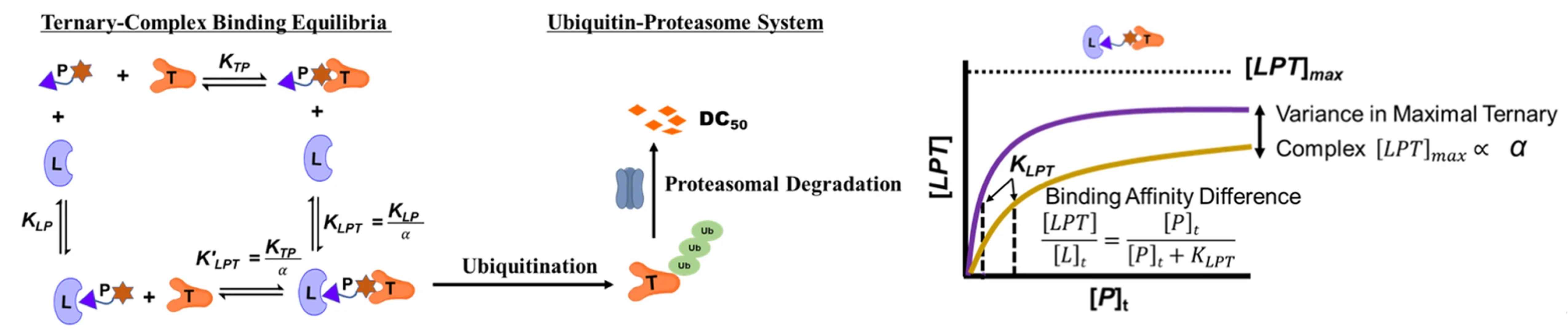 Figure 1. Characterization of degrader-induced ternary complex formation and binding parameters, including binding affinities and cooperativity. (Adapted from Wurz et al., 2024)