
Co-infection in insect cells using the Baculovirus Expression Vector System (BEVS) is a highly flexible and powerful strategy for producing multi-protein complexes through the simultaneous infection of host cells with multiple recombinant baculoviruses. Each virus carries a single gene of interest, allowing independent control of expression levels, timing, and stoichiometry.
At Profacgen, we provide advanced co-infection services in insect cells, leveraging deep expertise in baculovirus engineering, infection optimization, and multi-protein expression control. By precisely adjusting multiplicity of infection (MOI) and time of infection (TOI), we enable fine-tuned and dynamic expression of complex protein systems. Our platform is particularly well-suited for protein interaction studies, pathway reconstruction, and virus-like particle (VLP) production. With a strong foundation in both protein science and virology, we deliver high-quality, customizable solutions for demanding research and industrial applications.
Multi-protein complexes play an essential role in life activities, governing processes such as transcription, translation, signaling cascades, protein trafficking, and degradation. These complexes are often composed of multiple interacting subunits whose function depends on correct assembly, spatial organization, and temporal coordination.
Protein co-expression has become a widely used approach to generate biologically active complexes in sufficient quantities for biochemical, biophysical, and structural studies, as well as for high-throughput screening applications. However, achieving proper stoichiometry and functional assembly remains a key challenge, particularly for dynamic or multi-component systems.
Baculoviruses are enveloped double-stranded DNA viruses, primarily classified into nucleopolyhedroviruses (NPVs) and granuloviruses (GVs). BEVS has become one of the most widely used platforms for recombinant protein production in insect cells due to its unique advantages:
In BEVS, multi-protein expression is achieved through two main approaches:
While co-expression offers consistency, co-infection provides greater flexibility and dynamic control, making it especially valuable for complex systems where expression levels must be finely tuned.
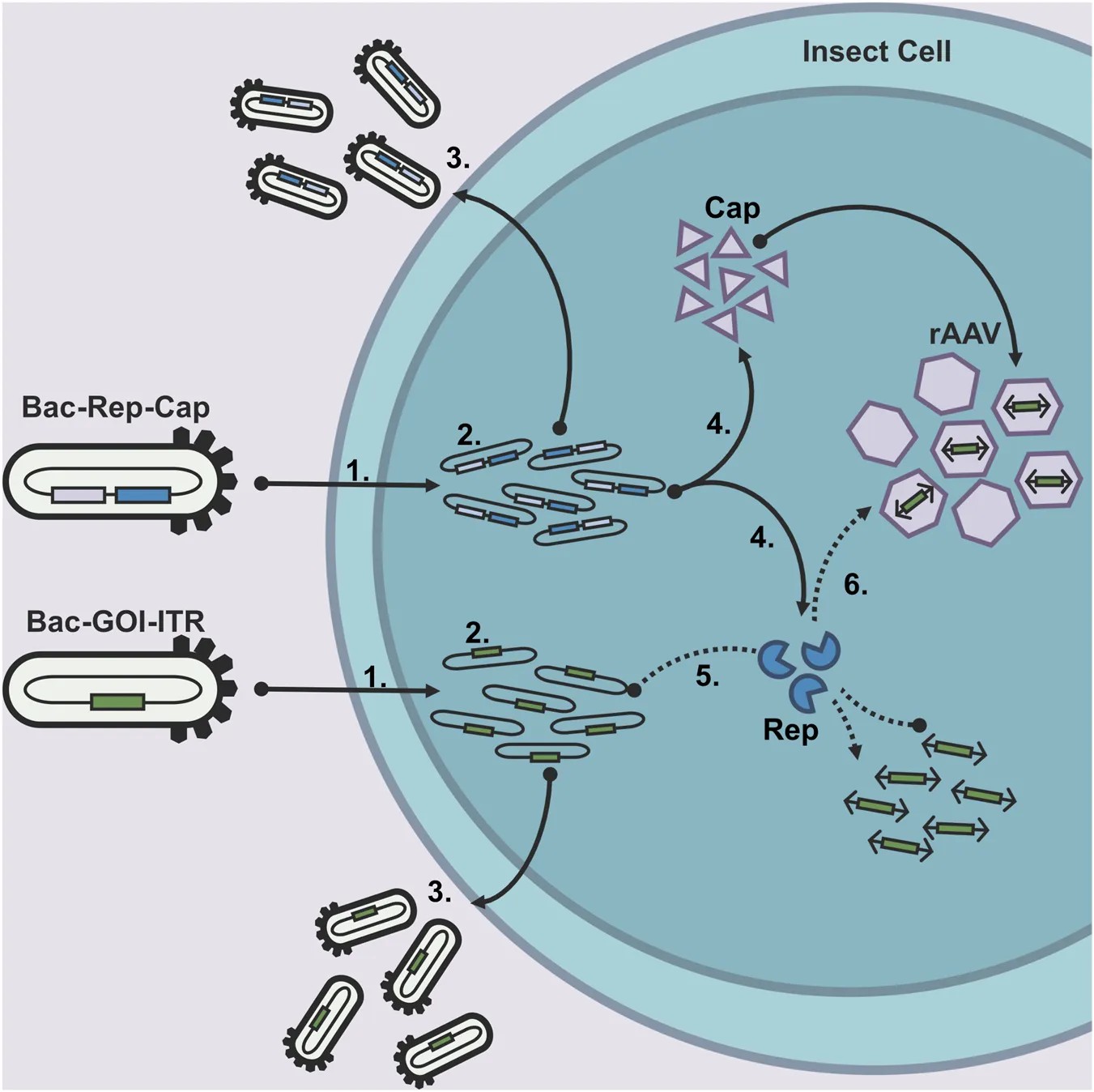 Figure 1. Baculovirus co-infection. (Schrama et al., 2025)
Co-infection is particularly advantageous when:
By enabling independent control over each gene, co-infection offers a level of experimental flexibility that cannot be achieved with single-vector systems.
Profacgen provides a comprehensive and advanced co-infection platform in insect cells, designed to deliver precise control over multi-protein expression and maximize the success of complex assembly projects.

The core strength of our service lies in precise control of the co-infection process, including:
Multiplicity of Infection (MOI) Optimization
Time of Infection (TOI) Control
Infection Workflow Engineering
Our virologists apply advanced expertise to ensure that even complex co-infection systems remain controlled, reproducible, and efficient.
BEVS co-infection has been widely used in:
Client Requirements:
A research team needed to produce a protein complex with variable stoichiometry to study its functional dynamics and understand how subunit ratios influence biological activity. Fixed-stoichiometry systems were insufficient for this investigation.
Our Solution:
Profacgen developed a co-infection strategy using multiple monocistronic baculoviruses, each carrying a single subunit gene. We systematically optimized MOI ratios and infection timing to achieve precise control over individual subunit expression levels, enabling production of complexes with varied compositions.
Final Results:
Successfully generated protein complexes with tunable stoichiometry across a range of subunit ratios. Biophysical characterization confirmed controlled composition, and functional assays revealed how stoichiometry directly impacted activity. The client published these findings in a high-impact journal, advancing the field's understanding of complex dynamics.
Client Requirements:
The client required controlled expression of protein subunits to improve folding and assembly efficiency for a challenging multi-protein complex prone to misfolding when all subunits were expressed simultaneously.
Our Solution:
We implemented a staggered infection strategy using precise time-of-infection (TOI) control, allowing sequential expression of individual proteins. Early-expressed subunits served as folding scaffolds for later-expressed components, reducing aggregation and promoting correct assembly.
Final Results:
Achieved significantly improved folding and assembly compared to simultaneous expression methods. The resulting stable, functional protein complex exhibited proper stoichiometry and activity. This material enabled successful downstream biophysical studies and supported the client's structure-function analysis of the complex.
Client Requirements:
A biotech company aimed to optimize virus-like particle (VLP) assembly for vaccine development by adjusting ratios of multiple structural proteins to enhance particle stability and immunogenicity.
Our Solution:
Profacgen used a co-infection approach with multiple monocistronic baculoviruses, each encoding a specific viral structural protein. Through precise MOI tuning for each virus, we achieved independent control over expression levels of individual proteins, enabling systematic optimization of subunit ratios.
Final Results:
Successfully identified optimal protein ratios that maximized VLP assembly efficiency and yield. Purified VLPs displayed correct morphology by electron microscopy and enhanced stability. The optimized particles advanced into immunogenicity studies, where they demonstrated robust immune responses supporting the client's vaccine development pipeline.
Consult Our Experts on Your Project
References:
Fill out this form and one of our experts will respond to you within one business day.