We use cookies to understand how you use our site and to improve the overall user experience. This includes personalizing content and advertising. Read our
Privacy Policy
At Profacgen, our Protein Degrader In Vivo Evaluation Services deliver comprehensive pharmacokinetic, pharmacodynamic, and efficacy assessment in animal models, bridging the gap between in vitro activity and clinical potential for targeted protein degradation programs.
In vitro assessment of candidate protein degraders identifies binding affinity, permeability, degradation potency, and cellular activity. However, in vivo evaluation is essential for conclusive insights into safety, systemic exposure, tissue distribution, and therapeutic efficacy that drive advancement to clinical trials. Profacgen offers various in vivo evaluation services with a professional scientific team, from study design and dose selection through PK/PD analysis and efficacy confirmation.
Overview
In vivo validation is critical for protein degrader development because living organisms present complexities absent from cell-based systems:
Translational relevance: In vivo models capture systemic distribution, metabolism, organ-specific exposure, and physiological feedback loops that determine clinical efficacy and safety. Translation from in vitro to in vivo is not always uniform due to transport barriers, tissue complexity, and species-specific biology
PK/PD relationships: Pharmacokinetic properties (absorption, distribution, metabolism, excretion) directly influence pharmacodynamic responses (target degradation, pathway modulation, phenotypic outcomes). Understanding this relationship enables rational dosing regimen design and predicts therapeutic windows
Target degradation confirmation: In vivo target engagement validates that observed cellular degradation translates to tissue-level protein reduction in relevant organs, with confirmation of mechanism by proteasome dependence and E3 ligase specificity
Efficacy assessment: Therapeutic benefit in disease-relevant animal models provides the ultimate validation of degrader mechanism and supports investigator-initiated trials and regulatory submissions
Figure 1. In vivo evaluation workflow: from study design through PK/PD analysis to efficacy assessment.
Our In Vivo Evaluation Services
Profacgen provides integrated in vivo capabilities spanning model development, dosing, sampling, and multi-modal analysis:
Species and model selection matched to target biology and therapeutic indication.
Mouse models: Xenografts, patient-derived xenografts (PDX), genetically engineered models, and syngeneic immunocompetent models for oncology and immunology
Rat models: Pharmacokinetic and toxicology studies with larger blood volumes enabling comprehensive PK sampling
Specialized models: Brain-penetrant degraders evaluated in orthotopic CNS tumor models; inflammation models in transgenic backgrounds
Pharmacokinetic Studies
Comprehensive ADME characterization to guide dosing and predict human exposure.
Plasma PK: Concentration-time profiles following intravenous, oral, or subcutaneous administration; bioavailability, clearance, volume of distribution, and half-life determination
Tissue distribution: Target organ, brain, and tumor exposure by LC-MS/MS to confirm tissue penetration and guide indication selection
Metabolite identification: In vitro and in vivo metabolite profiling to predict metabolic liabilities and drug-drug interaction potential
Pharmacodynamic Analysis
Quantitative target engagement and pathway modulation in vivo.
Target degradation: Western blot, ELISA, and mass spectrometry quantification of target protein levels in tumor, tissue, and plasma exosomes
Pathway biomarkers: Downstream signaling readouts (phosphorylation, transcription, proliferation markers) correlating target loss with functional consequence
Time-course profiling: Degradation kinetics, recovery, and rebound to establish optimal dosing intervals
Target Engagement Studies
Mechanistic confirmation that observed effects are degrader-mediated.
Proteasome dependence: Co-administration of proteasome inhibitors to confirm ubiquitin-proteasome pathway requirement
E3 ligase specificity: Gene editing-mediated ligase knockout or knockdown in tumor models to validate recruitment mechanism
Ternary complex detection: Co-immunoprecipitation and proximity ligation assays in tissue lysates
Efficacy Evaluation
Therapeutic benefit assessment in disease-relevant models.
Tumor models: Growth inhibition, regression, and survival endpoints in xenograft and PDX models with correlation to target degradation
Biomarker-driven efficacy: Circulating and tissue biomarkers as surrogate endpoints for mechanism-based benefit
Combination studies: Rational combination with chemotherapy, immunotherapy, or targeted agents based on degrader mechanism
Workflow
Profacgen implements a systematic, stage-gated workflow from study design to final reporting:
Applications
Our in vivo evaluation platform supports diverse therapeutic indications:
Oncology: Tumor growth inhibition, regression, and survival in xenograft, PDX, and genetically engineered models. Target degradation in tumor tissue correlated with pathway inhibition and anti-proliferative effects. Combination studies with standard-of-care agents to identify synergistic regimens
Inflammation: Assessment of anti-inflammatory efficacy in collagen-induced arthritis, DSS-induced colitis, and LPS challenge models. Target degradation in immune cells and affected tissues correlated with cytokine reduction and histopathological improvement
Neurodegenerative diseases: Brain-penetrant degrader evaluation in orthotopic glioma models, Alzheimer's disease transgenic models, and Parkinson's disease toxin models. CNS target engagement confirmed by CSF and brain tissue analysis
Deliverables
Profacgen provides comprehensive documentation aligned with regulatory expectations and publication standards:
Parameter
Description
PK Data
Plasma and tissue concentration-time profiles, PK parameters (Cmax, Tmax, AUC, CL, Vd, t1/2), bioavailability, and dose proportionality analysis
Tumor growth curves, survival analysis, biomarker endpoints, histopathology, and combination study outcomes with statistical analysis
Final Study Report
GLP-compliant documentation of study design, methods, raw data, statistical analysis, and expert interpretation suitable for regulatory submission and publication
One-Stop Platform and Experienced Technical Team: Integrated in vivo capabilities from model selection through PK/PD analysis and efficacy assessment, with scientists experienced in degrader pharmacology and translational research.
Meticulous Design and Transparent Operation Process: Rigorous study design with power analysis, ethical review, and IACUC oversight; regular progress updates and transparent data sharing throughout the study.
High Data Quality and Particularly Reliable Analysis: Validated bioanalytical methods, strict QC standards, and robust statistical frameworks ensure reproducible, decision-ready results.
Cost-Effective Pricing and Short Turnaround Times: Efficient workflows, established model platforms, and parallel processing deliver rapid, economical in vivo evaluation without compromising scientific rigor.
Representative Program Scenarios
Scenario 1: PK/PD-Guided Dose Optimization for an Oncology PROTAC
Program Context:
An oncology PROTAC demonstrated potent cellular degradation but required in vivo validation to establish the dose-exposure-response relationship and predict human efficacious dose.
Objective:
To characterize plasma and tumor PK, quantify target degradation at multiple doses, and model the PK/PD relationship to identify the minimum efficacious dose and optimal dosing regimen.
Approach:
Profacgen established a subcutaneous xenograft model with the target-expressing tumor cell line. Mice were dosed at 3, 10, and 30 mg/kg orally once daily. Plasma and tumor samples were collected at multiple time points for LC-MS/MS PK analysis and Western blot target quantification. A mechanistic PK/PD model was developed correlating tumor exposure with target degradation and tumor growth inhibition.
Outcome:
PK analysis revealed dose-proportional exposure with tumor-to-plasma ratio of 2.5. Target degradation was detectable at 3 mg/kg, maximal at 10 mg/kg, with no further benefit at 30 mg/kg. The PK/PD model predicted that 10 mg/kg once daily achieves sustained >80% target degradation, correlating with tumor stasis. The 3 mg/kg dose was selected for expansion efficacy studies, demonstrating 45% tumor growth inhibition and supporting advancement to toxicology.
Scenario 2: Brain-Penetrant Degrader Evaluation in CNS Tumor Model
Program Context:
A CNS-targeted degrader required proof-of-concept for brain tumor penetration, target engagement, and anti-tumor efficacy in a physiologically relevant model.
Objective:
To evaluate brain penetration, intratumoral target degradation, and survival benefit in an orthotopic glioma model, with mechanistic confirmation of proteasome-dependent degradation.
Approach:
Profacgen established an orthotopic luciferase-expressing glioma model by intracranial injection. Mice were treated with degrader or vehicle, and brain penetration was assessed by LC-MS/MS of brain homogenates and CSF. Intratumoral target degradation was quantified by Western blot and immunohistochemistry. Survival was monitored by bioluminescence imaging. Proteasome dependence was confirmed by co-administration of bortezomib.
Outcome:
The degrader achieved brain-to-plasma ratio of 0.35, with intratumoral concentrations exceeding the cellular DC50. Target degradation was confirmed by Western blot (85% reduction) and IHC. Median survival was extended by 28 days versus vehicle (p < 0.01). Bortezomib co-administration abrogated both target degradation and survival benefit, confirming proteasome-dependent mechanism. The data supported IND-enabling toxicology and first-in-human trial design.
Q: Why do in vivo results sometimes differ from in vitro data?
A: Living organisms present complexities absent from cell culture: systemic distribution, metabolism, plasma protein binding, tissue barriers (blood-brain, intestinal), and species-specific transporters. These factors alter effective exposure and can mask in vitro potency. Our PK/PD modeling identifies whether discrepancies arise from exposure, target engagement, or downstream biology.
Q: Which animal species do you use for degrader evaluation?
A: Mouse is the primary species for efficacy and PD studies due to established tumor models and genetic tools. Rat is preferred for PK and toxicology due to larger blood volumes. We select species based on target conservation, E3 ligase homology, and translational relevance. Humanized models are available when species differences are critical.
Q: How do you confirm target degradation in tissue?
A: We employ Western blot, ELISA, and mass spectrometry for quantitative target protein measurement in tissue homogenates. Immunohistochemistry provides spatial information on regional degradation. Proteasome inhibitor co-treatment and E3 ligase knockout confirm mechanism. Multiple time points establish degradation kinetics and duration.
Q: Can you evaluate brain-penetrant degraders?
A: Yes. We offer orthotopic glioma models, transgenic Alzheimer's and Parkinson's models, and CSF sampling for CNS exposure confirmation. Brain penetration is quantified by LC-MS/MS of brain tissue and CSF. Intratumoral or intraparenchymal target degradation is assessed by Western blot and IHC.
Q: What is the typical timeline for an in vivo efficacy study?
A: PK dose-ranging studies require 2–3 weeks. Efficacy studies with tumor growth endpoints typically span 3–6 weeks depending on model growth rate. Survival studies may extend to 3–4 months. Full integrated PK/PD/efficacy campaigns with mechanism validation typically deliver within 8–12 weeks.
Q: How do you address species differences in translation to human?
A: We prioritize target and E3 ligase sequence conservation between species. Humanized mouse models expressing human target and E3 ligase are employed when murine orthologs diverge. Allometric scaling and physiologically-based PK modeling bridge animal data to human dose prediction. We acknowledge translation risks and design studies to maximize predictive value.
Online Inquiry
Fill out this form and one of our experts will respond to you within one business day.

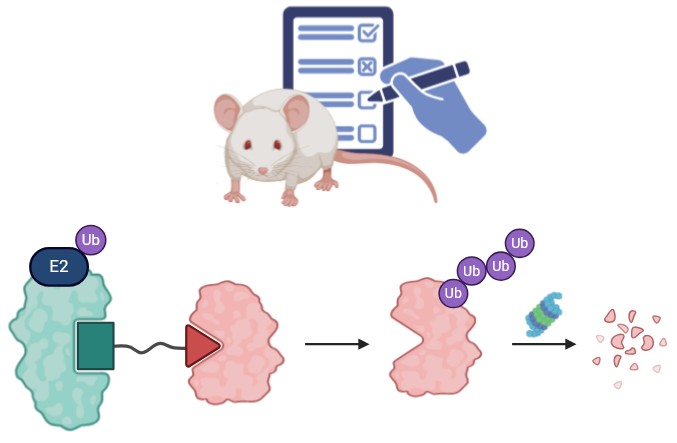
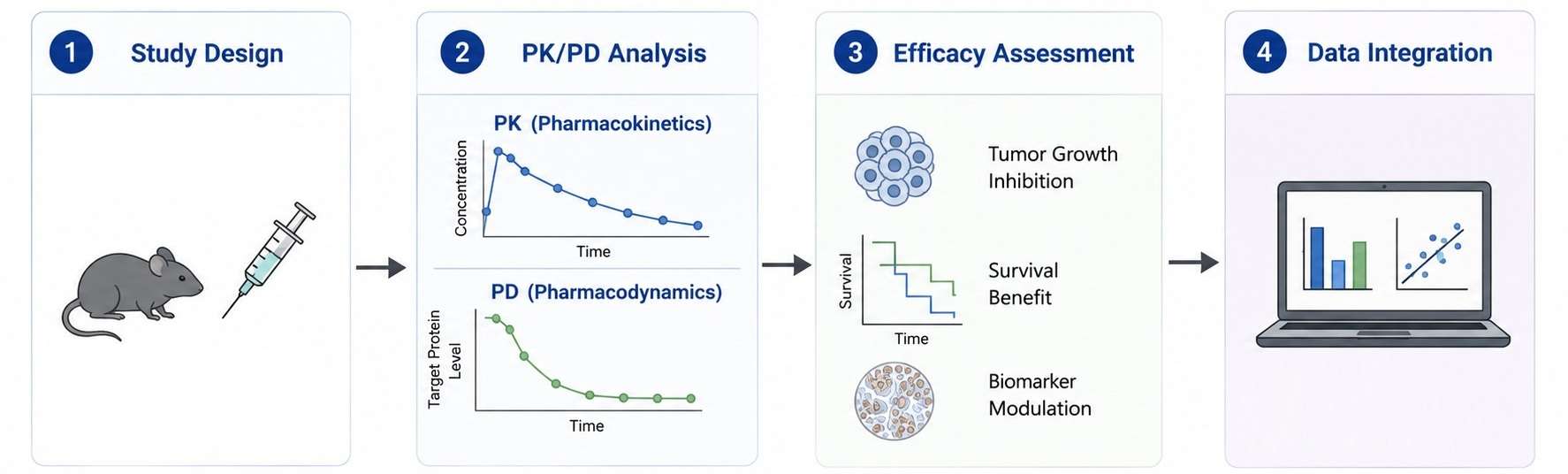 Figure 1. In vivo evaluation workflow: from study design through PK/PD analysis to efficacy assessment.