
Profacgen offers integrated Cell Line Development services that combine advanced screening technologies, optimized expression systems, and deep bioprocess expertise to deliver high-producing, stable, and regulatory-compliant cell lines.
Directed evolution is a powerful and widely adopted strategy in protein engineering that mimics natural selection to generate proteins with enhanced or novel functionalities. By iteratively introducing genetic diversity and applying selective pressure, directed evolution enables the rapid optimization of enzymes, binding proteins, and other biomolecules without requiring detailed structural knowledge.
At Profacgen, we provide comprehensive directed evolution services that integrate library design, high-throughput screening, and advanced selection technologies. Our platform supports both classical iterative evolution and cutting-edge continuous evolution systems, including phage-assisted continuous evolution (PACE). We deliver customized solutions for improving protein activity, stability, specificity, and expression, supporting applications across biotechnology, pharmaceuticals, and industrial processes.
Directed evolution replicates the principles of Darwinian evolution in a controlled laboratory environment. The process typically involves three key steps:
Unlike rational design, directed evolution does not rely heavily on prior structural knowledge, making it particularly useful for complex proteins or poorly understood systems.
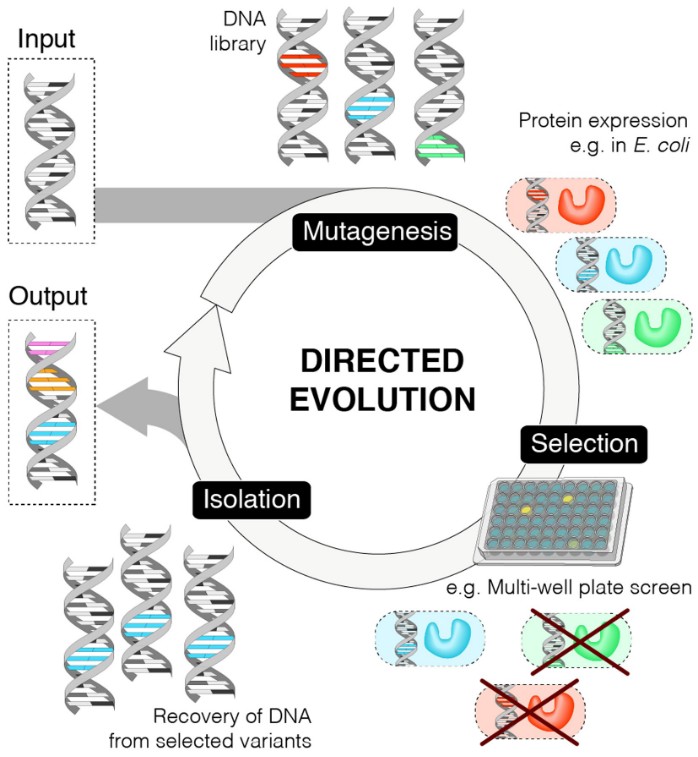 Figure 1. Directed Evolution. (Radley et al., 2023)
While rational design is effective when detailed structural data is available, directed evolution offers several unique advantages:
These features make directed evolution a preferred approach for many protein engineering challenges.
Recent technological advances have significantly enhanced the efficiency and scope of directed evolution:
Among these, continuous evolution methods represent a major breakthrough by enabling uninterrupted evolutionary cycles with minimal manual intervention.
Profacgen provides a comprehensive suite of directed evolution services, covering all stages from library generation to candidate optimization. Our platform is flexible and can be adapted to a wide range of targets and applications.
Library Design and Construction
We design and generate diverse protein libraries tailored to specific project goals:
High-Throughput Screening and Selection
Efficient screening is critical for successful directed evolution. We provide:
Iterative Evolution and Optimization
We perform multiple rounds of mutation and selection to refine protein performance:
Continuous Evolution Technologies
We offer advanced continuous evolution systems that significantly accelerate protein optimization:
Functional Characterization and Validation
Downstream Development Support

Challenge:
A client required an enzyme with enhanced catalytic activity for industrial use. The wild-type enzyme exhibited insufficient turnover rates under process conditions, limiting throughput and economic viability for large-scale manufacturing.
Approach:
Profacgen generated a diverse random mutagenesis library to explore sequence space surrounding the active site and key structural regions. High-throughput screening was employed to identify variants with increased catalytic activity. Iterative rounds of optimization were performed, combining beneficial mutations from successive generations to achieve cumulative performance gains.
Outcome:
Achieved significant improvement in catalytic efficiency compared to the wild-type enzyme, with enhanced turnover rates enabling more cost-effective industrial processing. Comprehensive mutational analysis identified key substitutions responsible for the enhanced performance, providing valuable insights for future engineering efforts and enabling successful scale-up.
Challenge:
A research group needed a protein capable of maintaining structural integrity and functional activity under high temperatures and extreme pH conditions encountered in their application.
Approach:
Profacgen applied directed evolution with environmental stress selection, exposing variant libraries to progressively increasing temperatures and challenging pH conditions. Only variants that maintained proper folding and activity under these harsh conditions were propagated. Iterative rounds enriched for mutations conferring enhanced resilience.
Outcome:
Identified variants with substantially improved thermal and chemical stability while preserving functional activity. The evolved proteins demonstrated robust performance under previously destabilizing conditions, enabling the research group to pursue applications requiring extreme environmental tolerance. Key stabilizing mutations were mapped, providing mechanistic insights into the structural basis of enhanced stability.
Consult Our Experts on Your Project
Profacgen is dedicated to delivering high-efficiency directed evolution solutions tailored to your research and development needs. Whether you aim to enhance enzyme performance, improve protein stability, or develop novel biomolecules, our platform provides the tools and expertise to accelerate your success.
Contact us today to discuss your project and explore how our directed evolution services can support your goals.
References:
Fill out this form and one of our experts will respond to you within one business day.