We use cookies to understand how you use our site and to improve the overall user experience. This includes personalizing content and advertising. Read our
Privacy Policy
Pichia pastoris is one of the most widely used yeast expression systems for recombinant protein production, bridging the gap between prokaryotic simplicity and eukaryotic protein processing. With its ability to grow to high cell densities, perform many eukaryotic post-translational modifications, and secrete properly folded proteins, P. pastoris has become a preferred host for producing enzymes, antigens, therapeutic proteins, and industrial biocatalysts. Profacgen offers a comprehensive Pichia pastoris recombinant protein expression service, covering gene design, strain engineering, expression optimization, secretion enhancement, and protein purification. Our platform delivers high-yield, scalable, and cost-effective protein production tailored to research, preclinical, and industrial needs.
Background: Why Pichia pastoris Is a Leading Yeast Expression Host
Overview of the Pichia pastoris System
Pichia pastoris (recently reclassified as Komagataella phaffii) is a methylotrophic yeast capable of utilizing methanol as a sole carbon source. This unique metabolic feature underlies one of its most powerful expression tools: the alcohol oxidase 1 (AOX1) promoter, one of the strongest and most tightly regulated promoters known in eukaryotic expression systems.
Key attributes of P. pastoris include:
High cell density fermentation, often exceeding 100 g/L dry cell weight
Eukaryotic protein folding and disulfide bond formation
Relatively simple glycosylation compared to mammalian cells
Low cost of cultivation and scalability to industrial volumes
These features make P. pastoris particularly suitable for proteins that require proper folding, secretion, and moderate post-translational processing, but do not strictly require mammalian-type glycosylation.
Figure 1. Pichia pastoris protein expression system. (Zha et al., 2023)
Applications Driving the Use of Pichia pastoris
P. pastoris has been successfully applied across a wide range of protein classes, including:
Cytokines, growth factors, and therapeutic enzymes
Antibody fragments (Fab, scFv, and single-domain antibodies)
Secreted and extracellular proteins
Difficult-to-express eukaryotic proteins
Compared with bacterial systems, P. pastoris reduces issues related to misfolding and inclusion bodies. Compared with mammalian systems, it offers significantly lower production cost and faster timelines.
Our Recombinant Protein Expression Services in Pichia pastoris
Profacgen provides an end-to-end P. pastoris expression platform, integrating molecular biology, strain engineering, fermentation optimization, and downstream processing.
Gene Design and Vector Construction
Codon optimization tailored specifically for P. pastoris
Selection of appropriate promoters (AOX1, GAP, or customized variants)
Signal peptide selection for efficient secretion (e.g., α-mating factor and engineered variants)
Fusion tag incorporation for purification or solubility enhancement
Custom vector design for intracellular or secreted expression
Strain Selection and Engineering
Use of well-characterized P. pastoris strains (e.g., Mut+, Muts, Mut- phenotypes)
Selection based on expression mode, induction strategy, and protein toxicity
Integration of expression cassettes into the genome for genetic stability
Optimization of gene copy number to balance yield and protein quality
Transformation and Clone Screening
Efficient transformation using electroporation
High-throughput screening of transformants for expression level and stability
Selection of top-producing clones using activity assays, SDS-PAGE, or immunodetection
Evaluation of secretion efficiency and product homogeneity
Expression Optimization and Fermentation Development
Optimization of induction strategy (methanol-based or constitutive expression)
Media formulation optimization to enhance growth and secretion
Control of temperature, pH, dissolved oxygen, and feeding profiles
Shake flask screening followed by scale-up to bioreactor systems
Protein Secretion and Folding Optimization
Signal peptide engineering to improve secretion efficiency
Reduction of proteolytic degradation through strain and process control
Assistance with disulfide bond formation and folding for complex proteins
Protein Purification and Characterization
Recovery of secreted proteins directly from culture supernatant
Purification using affinity, ion exchange, or size exclusion chromatography
Analysis of purity, molecular weight, aggregation, and activity
Confirmation of correct folding and functional performance
Comparison Positioning Within Yeast Expression Services
Its peer system, Hansenula polymorpha, may be preferred for alternative induction strategies or different metabolic profiles, while P. pastoris remains the most broadly adopted yeast host for recombinant protein production worldwide.
Advantages of Profacgen's Pichia pastoris Expression Platform
High Expression Yield: Strong promoters and high-density fermentation enable production levels often exceeding those of other yeast systems.
Cost-Effective Production: Lower media and operational costs compared to mammalian expression systems.
Efficient Protein Secretion: Secreted expression simplifies downstream purification and improves protein quality.
Eukaryotic Folding Capability: Supports disulfide bond formation and complex tertiary structures.
Scalable and Robust: Seamless transition from laboratory-scale to industrial-scale fermentation.
Flexible Expression Strategies: Inducible or constitutive expression tailored to protein toxicity and stability.
Proven Track Record: Widely used in both industrial enzyme manufacturing and pharmaceutical development.
Representative Case Studies
Case 1: Secreted Therapeutic Enzyme Production
Background
A biotech company approached us needing high-level secretion of a recombinant therapeutic enzyme. Critical requirements included correct protein folding and full preservation of enzymatic activity. Initial attempts using E. coli expression resulted in dense inclusion body formation; subsequent solubilization and refolding efforts led to poor recovery yields and inconsistent activity.
Our Solution
To address this, we transferred the target gene into Pichia pastoris. The sequence was codon-optimized and cloned under the control of the methanol-inducible AOX1 promoter. We designed an optimized secretion signal to route the protein directly into the culture medium, avoiding intracellular accumulation. A high-throughput screening pipeline was employed to identify top-performing clones. We then fine-tuned fermentation parameters—specifically pH, temperature, and dissolved oxygen—to boost secretion efficiency and minimize host-derived proteolytic degradation.
Final Results
The outcome was highly successful. The enzyme was secreted abundantly into the medium with exceptional purity and demonstrated full biological activity without requiring extensive refolding. Overall yields increased more than fivefold compared to the initial E. coli system. This material was immediately suitable for downstream functional studies, accelerating the client's therapeutic development timeline.
Case 2: Vaccine Antigen Expression
Background
A vaccine developer required a scalable, cost-efficient production system for a recombinant antigen. Consistency in quality and preservation of immunogenicity were non-negotiable, yet mammalian expression platforms proved too expensive for early-stage feasibility studies.
Our Solution
We proposed a Pichia pastoris solution using a constitutive GAP promoter, eliminating the need for methanol induction and simplifying downstream processing. The antigen gene was synthesized with Pichia-preferred codons and fused to an engineered secretion leader to facilitate purification. We established stable integrants via homologous recombination and conducted small-scale cultivation screens to select clones with robust expression profiles. Media composition and feeding strategies were then adjusted to maintain antigen structural integrity during fermentation.
Final Results
The result was a high-yielding, reproducible production process. The antigen was recovered with consistent batch-to-batch quality and retained strong immunogenicity in subsequent ELISA and T-cell activation assays. By leveraging Pichia's economy and scalability, the client successfully generated sufficient material for proof-of-concept studies without the financial burden of mammalian systems, de-risking their vaccine pipeline.
Q: Why choose Pichia pastoris over other yeast expression systems?
A: Pichia pastoris offers strong, tightly regulated promoters, supports high-cell-density fermentation, and enables efficient protein secretion. Compared with other yeast systems, it often delivers higher yields with lower production costs and simpler downstream purification, making it well suited for both research and large-scale manufacturing.
Q: Does P. pastoris perform post-translational modifications?
A: Yes. P. pastoris supports essential eukaryotic post-translational modifications, including proper folding, disulfide bond formation, and N-linked glycosylation. Although its glycosylation differs from mammalian cells, it is consistent and predictable, which is advantageous for many recombinant proteins.
Q: Is methanol induction always required for P. pastoris expression?
A: No. While the AOX1 promoter is commonly used for high-level methanol-induced expression, methanol-free systems are also available. Constitutive promoters such as GAP allow continuous expression using glucose or glycerol, improving safety and simplifying large-scale processes.
Q: What types of proteins are best suited for P. pastoris expression?
A: P. pastoris is ideal for secreted and extracellular proteins, including enzymes, vaccine antigens, cytokines, growth factors, and antibody fragments. Proteins requiring eukaryotic folding but not fully humanized glycosylation typically express very efficiently in this system.
Q: Can P. pastoris expression be easily scaled up?
A: Yes. P. pastoris is highly scalable, with expression processes transferring smoothly from small-scale screening to large bioreactors. Its robustness under high cell density conditions makes it a strong choice for industrial production.
Q: How long does a typical P. pastoris expression project take?
A: Timelines vary by protein complexity, but strain construction and initial expression screening are often completed within a few weeks. Additional optimization and scale-up may extend the project, but P. pastoris generally enables faster development than many eukaryotic systems.
Recombinant protein expression in Pichia pastoris offers a powerful balance of scalability, cost efficiency, and eukaryotic protein processing. With its strong promoters, robust secretion pathways, and proven industrial track record, P. pastoris remains a cornerstone of yeast-based expression platforms. Profacgen's comprehensive Pichia pastoris expression service provides tailored solutions for high-quality protein production, enabling clients to accelerate research, development, and commercialization. Contact us to discuss your project requirements.
Reference:
Zha J, Liu D, Ren J, Liu Z, Wu X. Advances in metabolic engineering of Pichia pastoris strains as powerful cell factories. JoF. 2023;9(10):1027. doi:10.3390/jof9101027
Online Inquiry
Fill out this form and one of our experts will respond to you within one business day.

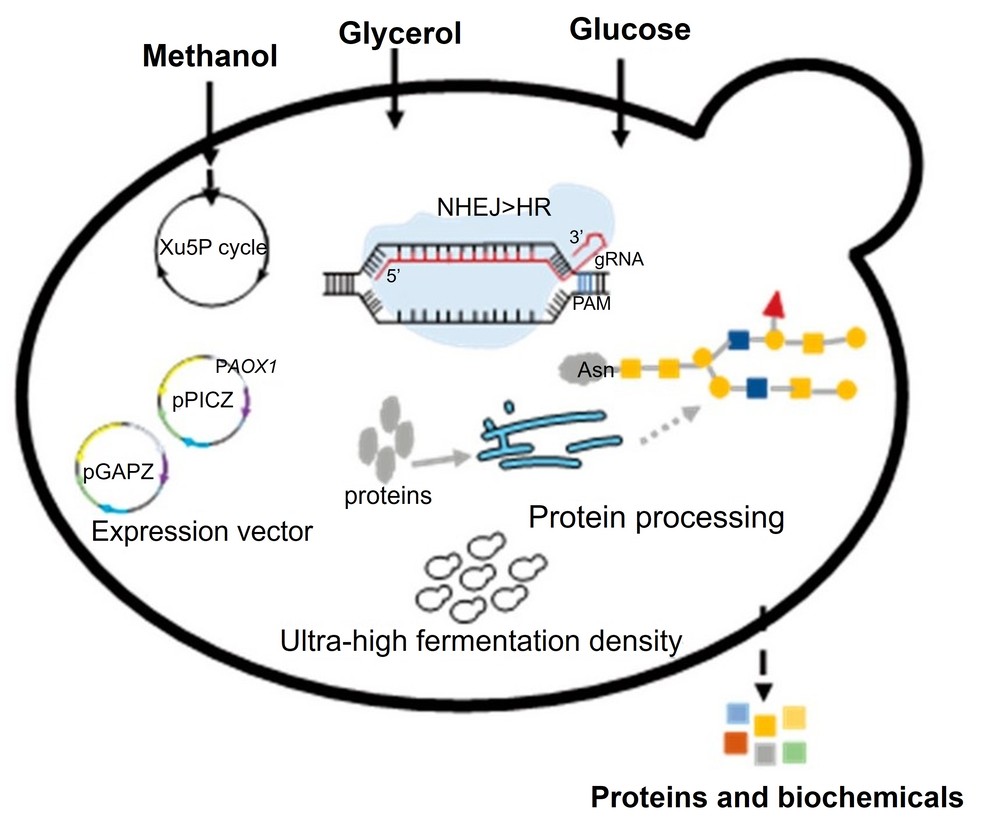 Figure 1. Pichia pastoris protein expression system. (Zha et al., 2023)