We use cookies to understand how you use our site and to improve the overall user experience. This includes personalizing content and advertising. Read our
Privacy Policy
Profacgen's Amino Acid Sequence & Composition service delivers definitive analytical verification of the primary amino acid sequence and quantitative amino acid composition of protein and peptide therapeutics, establishing the molecular identity and physicochemical foundation required for regulatory filings, process development, and quality control.
Amino acid sequence and composition represent the most fundamental level of protein characterization. Sequence verification confirms that the expressed product matches the intended construct, while quantitative amino acid analysis (AAA) provides the empirical basis for extinction coefficient determination, concentration calculations, and impurity assessments. Together, these analyses form the cornerstone of critical quality attribute (CQA) definition and support IND, BLA, and biosimilar comparability programs.
Background: Why Analyze Amino Acid Sequence and Composition?
Regulatory guidelines, including ICH Q6B and USP <1052>, mandate that biologics developers provide unambiguous evidence of primary structure. Sequence verification through peptide mapping and mass spectrometry confirms identity at the residue level, while amino acid composition analysis serves as an orthogonal check against theoretical predictions and enables accurate protein quantification.
Errors or uncertainties in sequence and composition propagate into downstream calculations—affecting potency assays, dosing accuracy, stability projections, and impurity thresholds. Profacgen's integrated approach eliminates these risks by combining high-resolution mass spectrometry with quantitative chromatographic amino acid analysis, delivering data packages that withstand regulatory scrutiny and inform robust CMC strategies.
Complete amino acid sequence coverage and verification by LC-MS/MS peptide mapping
Quantitative amino acid composition analysis for extinction coefficient determination
Intact and subunit molecular weight confirmation by high-resolution MS
Sequence variant, truncation, and modification detection with site-specific localization
Figure 1. Methods of determining amino acid sequences.
These analyses are essential for clone selection, process characterization, release testing, and demonstrating comparability across manufacturing changes or biosimilar programs.
What We Offer: Profacgen's Amino Acid Sequence & Composition Services
Our Amino Acid Sequence & Composition platform integrates orthogonal analytical methodologies to deliver comprehensive, stage-appropriate structural evidence. We tailor method selection, depth of analysis, and documentation to align with your regulatory milestones—from early candidate screening through formal release testing and comparability protocols.
Our platform offers four specialized analytical modules, each designed to interrogate a specific aspect of primary structure with maximum resolution and regulatory rigor.
Peptide Mapping & Sequence Verification
We confirm the complete amino acid sequence through comprehensive peptide mapping using high-resolution LC-MS/MS, achieving high sequence coverage with confident peptide identification and localization of any deviations.
Bottom-up and middle-down LC-MS/MS strategies with multiple protease digestions
Trypsin, chymotrypsin, Lys-C, and Asp-N digestion for overlapping coverage
Automated database searching with manual expert validation of spectral assignments
Detection and localization of sequence variants, point mutations, and truncations
Each analysis includes coverage maps, mass error statistics, and interpretive summaries suitable for regulatory submission and internal technical review.
Quantitative Amino Acid Analysis (AAA)
We determine the precise amino acid composition through acid hydrolysis followed by chromatographic separation and quantification, providing the empirical data required for extinction coefficient calculation and molecular integrity assessment.
Pre-column derivatization with HPLC-UV or UPLC detection for precise quantification
Hydrolysis optimization to preserve labile residues (Trp, Tyr, Met, Cys)
Extinction coefficient calculation based on Trp, Tyr, and Cys content
Orthogonal confirmation of theoretical composition and molecular formula
This analysis directly supports accurate protein concentration determination, dosing calculations, and purity assessments by UV spectrophotometry.
Analytical Methods Overview
Profacgen employs multiple complementary techniques to ensure unambiguous sequence and composition confirmation. Method selection is guided by molecule complexity, regulatory stage, and specific project objectives.
High-Resolution LC-MS/MS Peptide Mapping: The gold standard for sequence verification, combining enzymatic digestion with high-resolution mass spectrometry to achieve complete coverage, localize modifications, and confirm residue-level identity.
Amino Acid Analysis (AAA): Acid hydrolysis followed by chromatographic separation and UV or fluorescence detection provides quantitative composition data, enabling extinction coefficient determination and orthogonal sequence confirmation.
Intact Mass Spectrometry: Electrospray ionization (ESI) or matrix-assisted laser desorption/ionization (MALDI) mass spectrometry under native and denaturing conditions confirms global molecular integrity and detects mass shifts indicative of modifications or variants.
Multi-Protease Digestion Strategies: Sequential or parallel digestion with complementary proteases generates overlapping peptides, eliminates coverage gaps, and provides redundant evidence for challenging or modified regions.
Typical Analytical Workflow
When to Consider Amino Acid Sequence & Composition Analysis
IND-enabling and BLA submission packages requiring definitive identity evidence
Biosimilar development programs demanding analytical similarity and comparability
Clone selection and cell line development to confirm correct translational product
Post-process change comparability studies to demonstrate molecular equivalence
Regulatory-Compliant Methodologies: Our amino acid sequence and composition assays are designed and executed to meet ICH Q6B, FDA, and EMA expectations, ensuring your data package supports IND, BLA, and biosimilar submissions without regulatory gaps or queries.
Orthogonal Analytical Integration: We combine peptide mapping, amino acid analysis, and intact mass spectrometry into a unified program that eliminates single-method limitations and delivers unambiguous, mutually reinforcing structural conclusions.
Accurate Extinction Coefficient Determination: Our quantitative AAA provides the empirical basis for precise protein concentration measurement by UV spectrophotometry—a critical parameter for potency, dosing, and release testing that cannot be reliably estimated from sequence alone.
Stage-Appropriate Flexibility: From rapid sequence confirmation for early discovery candidates to comprehensive, GMP-ready characterization with full method validation, we tailor analytical scope, documentation depth, and turnaround to your program milestones.
Representative Case Studies
Case 1: Extinction Coefficient Determination for a Novel Therapeutic Antibody
Program Context:
A biopharmaceutical company developing a novel monoclonal antibody required an accurate extinction coefficient for clinical dosing calculations and release testing. The theoretical value based on sequence prediction differed significantly from preliminary experimental measurements, creating uncertainty for formulation development and regulatory filing.
Objective:
To determine the empirical extinction coefficient through quantitative amino acid analysis, resolving the discrepancy between theoretical and measured values and establishing a reliable basis for protein concentration determination across development and manufacturing.
Approach:
Profacgen performed quantitative amino acid analysis following optimized acid hydrolysis and pre-column derivatization with HPLC-UV detection. Tryptophan, tyrosine, and cysteine residues were carefully quantified under conditions preserving labile amino acids. The empirical extinction coefficient was calculated and compared against the theoretical prediction and independent UV-Vis measurements.
Outcome:
The empirical extinction coefficient differed from the theoretical value by approximately 8%, a deviation attributable to an unanticipated post-translational modification affecting chromophore content. The corrected value was incorporated into the CMC section of the IND, ensuring accurate dosing calculations and preventing downstream potency assay discrepancies.
Case 2: Sequence Verification for a Biosimilar Candidate
Program Context:
A biosimilar developer needed comprehensive primary sequence evidence to demonstrate analytical similarity between their candidate and the reference product. The program required 100% sequence coverage, quantitative amino acid composition matching, and detection of any subtle sequence variants that could impact immunogenicity or efficacy.
Objective:
To generate a definitive amino acid sequence and composition comparability package, including peptide mapping with complete coverage, quantitative AAA, and intact mass confirmation, suitable for regulatory submission and supporting the analytical similarity claim.
Approach:
We executed multi-enzyme peptide mapping (trypsin, chymotrypsin, Lys-C) with high-resolution LC-MS/MS, achieving 100% sequence coverage for both the biosimilar and reference product. Quantitative amino acid analysis was performed in parallel, and intact mass profiles were compared under native and denaturing conditions to assess global molecular equivalence.
Outcome:
The biosimilar demonstrated identical amino acid sequence, matching composition within specification limits, and equivalent intact mass profiles. No sequence variants or significant compositional differences were detected. The data package supported successful progression to the clinical comparability phase and satisfied regulatory expectations for primary structure similarity.
Q: What is amino acid sequence and composition analysis?
A: Amino acid sequence and composition analysis is a set of orthogonal analytical techniques used to confirm the primary structure of a protein. Sequence verification is typically achieved through peptide mapping and LC-MS/MS, while composition analysis quantifies the molar ratios of each amino acid through acid hydrolysis and chromatographic detection. Together, they establish molecular identity, support extinction coefficient calculation, and satisfy regulatory requirements for biologics characterization.
Q: Why is amino acid composition analysis important beyond sequence verification?
A: While sequence verification confirms the order of residues, quantitative amino acid composition analysis provides the empirical data required to calculate the extinction coefficient—a critical parameter for accurate protein concentration determination by UV spectrophotometry. Composition analysis also serves as an orthogonal check against the theoretical sequence and can reveal hydrolysis-resistant modifications or impurities that peptide mapping alone might not detect.
Q: How does peptide mapping achieve 100% sequence coverage?
A: We employ multiple complementary proteases—such as trypsin, chymotrypsin, Lys-C, and Asp-N—to generate overlapping peptide fragments across the entire protein sequence. Each digestion is analyzed by high-resolution LC-MS/MS, and the resulting datasets are combined to ensure that every amino acid residue is represented in at least one confidently identified peptide. Automated database searching and expert manual review validate coverage completeness.
Q: Can you detect sequence variants or mutations during analysis?
A: Yes. During LC-MS/MS peptide mapping, we compare observed peptide masses and fragmentation patterns against the theoretical sequence. Mass shifts, altered fragmentation, or missing peptides can indicate point mutations, insertions, deletions, or truncations. These variants are localized to specific residues and quantified relative to the correct sequence, enabling assessment of their potential impact on product quality and safety.
Q: What is the typical turnaround time for sequence and composition analysis?
A: A standard amino acid sequence and composition package, including peptide mapping and quantitative AAA, typically requires 3–4 weeks. Comprehensive programs incorporating intact mass analysis, multiple protease digestions, and detailed interpretive reporting may extend to 5–6 weeks. We provide project-specific timelines during initial consultation based on molecule complexity and regulatory requirements.
Q: Is this service suitable for biosimilar comparability programs?
A: Absolutely. Amino acid sequence and composition analysis is a cornerstone of biosimilar analytical similarity assessment. We perform side-by-side characterization of the biosimilar and reference product under identical conditions, comparing sequence coverage, peptide maps, amino acid composition, and intact mass profiles to demonstrate molecular equivalence at the primary structure level.
Reference:
International Council for Harmonisation of Technical Requirements for Pharmaceuticals for Human Use. ICH Q6B Specifications: Test Procedures and Acceptance Criteria for Biotechnological/Biological Products. 1999.
Online Inquiry
Fill out this form and one of our experts will respond to you within one business day.

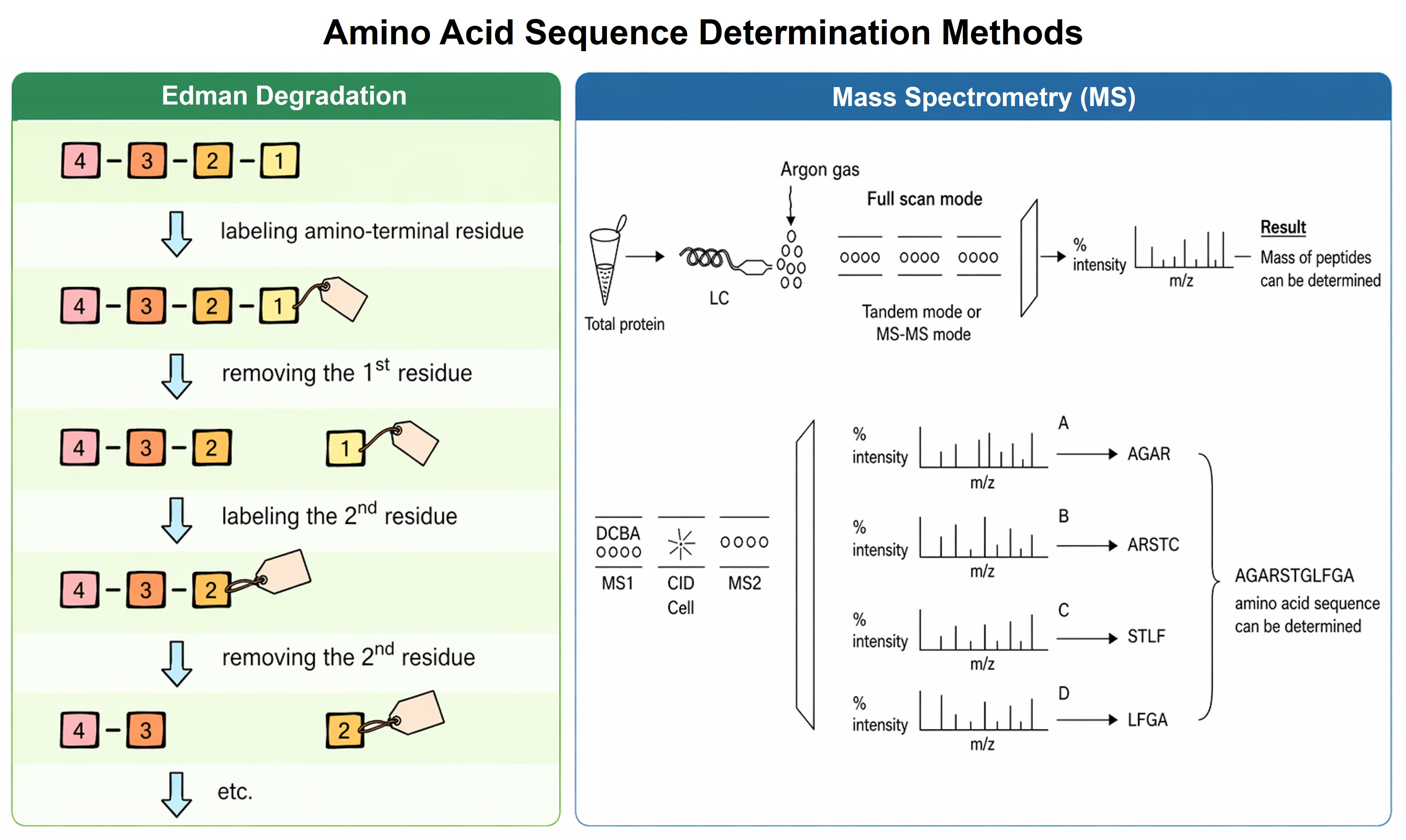 Figure 1. Methods of determining amino acid sequences.