We use cookies to understand how you use our site and to improve the overall user experience. This includes personalizing content and advertising. Read our
Privacy Policy
Profacgen's Primary Structure Characterization service provides comprehensive, regulatory-aligned analytical verification of the covalent structure of protein and peptide therapeutics, ensuring sequence identity, molecular integrity, and lot-to-lot consistency from early development through commercialization.
Primary structure defines the fundamental identity of a biologic—its amino acid sequence, molecular weight, terminal integrity, and covalent modifications. Rigorous characterization at this level is essential for establishing critical quality attributes (CQAs), demonstrating comparability, and satisfying regulatory expectations for IND, BLA, and biosimilar submissions.
Background: Protein Primary Structure Characterization
Figure 1. Protein primary structure.
Primary structure serves as the molecular fingerprint of any protein-based therapeutic. Regulatory agencies require definitive evidence that the expressed product matches the intended sequence and that manufacturing consistency is maintained across scales and batches. Incomplete or ambiguous primary structure data can trigger regulatory queries, delay approvals, and compromise patient safety.
Profacgen's platform addresses these requirements through orthogonal analytical techniques that interrogate the protein at multiple levels—intact mass, subunit composition, peptide fragments, and individual amino acid residues. This layered approach eliminates single-method blind spots and delivers unambiguous structural conclusions suitable for regulatory filing and internal decision-making.
Sequence confirmation and variant detection by high-resolution LC-MS/MS
Molecular weight verification under intact, reduced, and denatured conditions
N-terminal and C-terminal integrity assessment
Disulfide bond pairing, free thiol quantification, and covalent PTM profiling
Accurate primary structure data underpins every downstream decision, from clone selection and process development to release testing, stability monitoring, and biosimilar comparability.
What We Offer: Our Primary Structure Characterization Services
Our Primary Structure Characterization platform integrates orthogonal analytical techniques to deliver definitive, stage-appropriate structural evidence. We tailor method selection and reporting depth to your regulatory pathway, from early candidate screening through formal release testing and comparability protocols.
Our platform offers four specialized analytical modules, each designed to interrogate a specific aspect of primary structure with maximum resolution and regulatory rigor.
Complete verification of the amino acid sequence and quantitative composition of your biologic. This module combines peptide mapping with amino acid analysis to confirm theoretical sequence fidelity and calculate accurate extinction coefficients for concentration determination.
Peptide mapping by LC-MS/MS with 100% coverage targets
Amino acid analysis (AAA) for composition and extinction coefficient
Sequence variant detection and mutation confirmation
Definitive confirmation of terminal sequence integrity, critical for verifying correct translational processing, signal peptide removal, and absence of truncations or modifications that could alter potency, stability, or immunogenicity.
Edman degradation for up to 30 N-terminal residues
Lys-C and trypsin-based C-terminal sequencing by LC-MS/MS
Pyroglutamate formation and N-terminal blocking assessment
Truncation and proteolytic clip detection at either terminus
The gold standard for primary structure confirmation, delivering high-resolution sequence coverage, PTM localization, and comparability assessment through orthogonal enzymatic digestion and state-of-the-art mass spectrometry.
Multiple protease digestion strategies for comprehensive coverage
High-resolution LC-MS/MS with automated data processing
PTM site mapping including oxidation, deamidation, and glycation
Comprehensive elucidation of disulfide bond pairings, essential for confirming correct folding, maintaining biological activity, and ensuring product consistency. We detect mispairing, scrambling, and free cysteines that could compromise stability or safety.
Partial reduction and differential alkylation strategies
LC-MS/MS peptide mapping for direct bond assignment
Free thiol quantification by Ellman's assay or MS
Scrambling and shuffling assessment under stress conditions
When to Consider Primary Structure Characterization
IND-enabling and BLA submission packages requiring definitive sequence evidence
Biosimilar development programs demanding analytical similarity and comparability
Post-process change comparability studies to confirm molecular equivalence
Root-cause investigation of unexpected potency, stability, or immunogenicity signals
Regulatory-Aligned Methodologies: Our assays are designed and qualified to meet ICH Q6B, FDA, and EMA expectations for primary structure confirmation, ensuring your data package withstands regulatory scrutiny from IND through commercial approval.
Orthogonal Analytical Rigor: We deploy multiple complementary techniques—HRMS, LC-MS/MS, Edman degradation, and amino acid analysis—to eliminate single-method blind spots and deliver unambiguous structural conclusions.
Stage-Appropriate Flexibility: From rapid sequence confirmation for early candidates to comprehensive, GMP-ready characterization and release testing, we tailor analytical scope and documentation depth to your development milestones.
Integrated Structural Biology Expertise: As part of our broader Structural & Physicochemical Characterization platform, primary structure data seamlessly informs higher-order structure, PTM, and impurity investigations—eliminating handoff delays and interpretation gaps.
Representative Case Studies
Case 1: Biosimilar Analytical Similarity Assessment
Program Context:
A biosimilar development team required comprehensive primary structure comparability data to demonstrate analytical similarity between their candidate and the reference product. Regulatory expectations demanded high-resolution sequence coverage, PTM profiling, and quantitative assessment of minor structural variants.
Objective:
To generate a definitive primary structure comparability package, including intact mass, peptide mapping, N/C-terminal sequencing, and disulfide bond mapping, suitable for regulatory submission and supporting the analytical similarity claim.
Approach:
Profacgen executed an orthogonal characterization protocol combining intact mass analysis by HRMS, multi-enzyme peptide mapping with LC-MS/MS, Edman N-terminal sequencing, and partial reduction disulfide bond mapping. All methods were performed side-by-side on the biosimilar and reference product under identical conditions.
Outcome:
The resulting data demonstrated high analytical similarity at the primary structure level, with comparable sequence coverage, equivalent PTMs, and matching disulfide bond pairings. The package supported successful progression to clinical comparability studies.
Case 2: IND-Enabling Structure Verification for a Novel Biologic
Program Context:
An emerging biotech company advancing a novel fusion protein toward first-in-human studies needed definitive primary structure evidence for their IND submission. The molecule contained multiple domains, potential N-terminal heterogeneity, and complex disulfide bonding patterns.
Objective:
To confirm the complete covalent structure—including domain sequence integrity, correct disulfide pairings, and N-terminal processing—under conditions suitable for regulatory filing and inclusion in the CMC section of the IND.
Approach:
We designed a comprehensive primary structure program encompassing intact and subunit mass analysis, 100% sequence coverage peptide mapping by LC-MS/MS, N-terminal Edman sequencing, C-terminal MS-based sequencing, and disulfide bond mapping via partial reduction and differential alkylation.
Outcome:
The characterization package provided unambiguous confirmation of the intended primary structure, identified a minor N-terminal truncation variant, and established quantitative acceptance criteria. The data supported a successful IND submission and informed subsequent process optimization to minimize the truncation.
Q: What is primary structure characterization and why is it required?
A: Primary structure characterization defines the covalent structure of a protein—its amino acid sequence, molecular weight, terminal sequences, disulfide bonds, and post-translational modifications. Regulatory agencies require this data to confirm product identity, ensure lot-to-lot consistency, and establish critical quality attributes (CQAs) for IND, BLA, and biosimilar submissions.
Q: What techniques are used for primary structure confirmation?
A: We employ orthogonal techniques including high-resolution LC-MS/MS peptide mapping, intact and reduced molecular weight analysis by mass spectrometry, N-terminal Edman degradation, C-terminal sequencing by carboxypeptidase/LC-MS, amino acid analysis, and disulfide bond mapping via partial reduction strategies. Method selection is tailored to your molecule and regulatory stage.
Q: How does peptide mapping confirm the amino acid sequence?
A: Peptide mapping digests the protein into peptides using specific proteases, then analyzes these peptides by LC-MS/MS. By matching observed peptide masses and fragmentation patterns against the theoretical sequence, we confirm sequence identity, achieve coverage targets (typically 100%), and localize any variants, truncations, or post-translational modifications.
Q: What is the difference between intact mass and peptide mapping?
A: Intact mass analysis measures the total molecular weight of the whole protein or its subunits, providing a global check for correct expression, major glycoforms, and mass adducts. Peptide mapping interrogates the protein at the peptide level, delivering site-specific sequence confirmation and PTM localization. Together, they provide complementary, orthogonal evidence of primary structure integrity.
Q: Can you characterize disulfide bonds in complex proteins?
A: Yes. We use partial reduction with differential alkylation combined with LC-MS/MS peptide mapping to assign disulfide bond pairings directly. This approach is effective for proteins with multiple cysteine residues and complex bonding patterns, and can detect mispairing, scrambling, and free thiols that may impact stability or activity.
Q: How long does a comprehensive primary structure characterization program take?
A: Timeline depends on method complexity, molecule characteristics, and regulatory requirements. A standard peptide mapping and intact mass package typically requires 3–4 weeks, while comprehensive programs including N/C-terminal sequencing, disulfide mapping, and amino acid analysis may extend to 6–8 weeks. We provide detailed project timelines during consultation.
Online Inquiry
Fill out this form and one of our experts will respond to you within one business day.

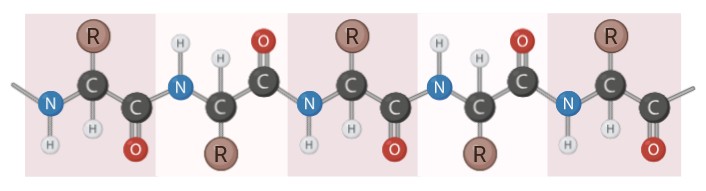
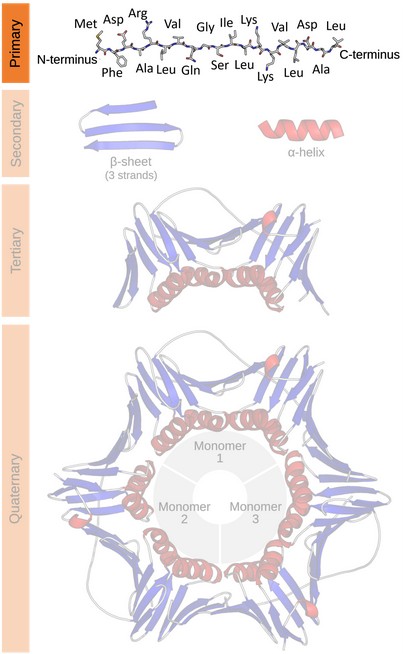 Figure 1. Protein primary structure.