We use cookies to understand how you use our site and to improve the overall user experience. This includes personalizing content and advertising. Read our
Privacy Policy
Profacgen's Analytical Method Lifecycle Management service provides comprehensive, structured support for the development, validation, transfer, and ongoing performance monitoring of analytical methods used in biopharmaceutical development and manufacturing. Our approach aligns with ICH Q2(R1), Q14, and emerging regulatory expectations for analytical procedure lifecycle management, ensuring that methods remain fit-for-purpose from early development through commercialization and post-approval phases.
Analytical methods are the foundation of quality decision-making in biopharmaceutical programs. The transition from exploratory research methods to validated, regulatory-compliant procedures—and the subsequent maintenance of method performance across changing manufacturing processes, formulations, and regulatory requirements—represents one of the most technically demanding and strategically critical activities in the product lifecycle. Profacgen's lifecycle management framework addresses this challenge through integrated expertise in method science, regulatory strategy, and quality systems.
The traditional paradigm of analytical method development—characterized by discrete phases of development, validation, and transfer followed by static execution—is increasingly recognized as inadequate for the complexity and dynamism of modern biopharmaceutical manufacturing. ICH Q14 (Analytical Procedure Development) and the revised ICH Q2(R2) guidelines introduce a lifecycle approach that emphasizes continuous method understanding, performance monitoring, and knowledge-driven improvement.
This paradigm shift reflects practical realities: manufacturing processes evolve, formulations are optimized, specifications are tightened, and regulatory expectations advance. Methods that were adequate at IND may require enhancement for BLA; methods validated at commercial launch may need adaptation for post-approval process changes or biosimilar development. Without a structured lifecycle management framework, these transitions introduce compliance risk, data integrity concerns, and program delays.
Figure 1. Life cycle management of analytical methods. (Parr and Schmidt, 2018)
Key value drivers include:
Proactive method design that anticipates regulatory and manufacturing evolution
Structured knowledge management capturing method understanding for transfer and troubleshooting
Performance monitoring systems that detect drift before it impacts release decisions
Regulatory-compliant documentation supporting submission, inspection, and post-approval change management
Reduced method-related deviations, out-of-specification events, and regulatory queries
These priorities ensure that analytical methods function not as static testing tools, but as dynamic, knowledge-based systems that evolve in alignment with product and program needs.
When to Consider Analytical Method Lifecycle Management
Analytical Method Lifecycle Management is most relevant when:
Your program is transitioning from research-grade methods to validated procedures suitable for regulatory submission and GMP release
Manufacturing process changes, formulation modifications, or specification revisions require method adaptation or revalidation
Method transfer between laboratories, CMOs, or geographic regions necessitates structured equivalence demonstration
Post-approval commitments or regulatory feedback require enhanced method understanding, control strategy refinement, or lifecycle documentation
This service is particularly effective for programs navigating the analytical complexity of biopharmaceutical products, where method performance is influenced by molecular heterogeneity, process variability, and the evolving analytical state-of-the-art.
Core Capabilities of Analytical Method Lifecycle Management
Profacgen provides a structured, quality-oriented Analytical Method Lifecycle Management service that aligns method development and maintenance with regulatory expectations, manufacturing realities, and program-specific analytical requirements.
Method Development and Design Space Definition
Systematic method development incorporating quality by design principles to establish robust analytical procedures with defined design spaces and control strategies. Capabilities include:
Analytical target profile (ATP) definition aligned with quality target product profile (QTPP) and critical quality attributes (CQAs)
Method parameter screening and optimization using design of experiments (DoE) approaches
Design space establishment with proven acceptable ranges for critical method parameters
Method risk assessment linking parameter variability to analytical performance
This phase ensures that methods are designed for robustness and regulatory defensibility from inception, rather than optimized retrospectively after validation failure.
Method Validation and Regulatory Compliance
Comprehensive method validation in accordance with ICH Q2(R1) and emerging Q2(R2) expectations, with documentation packages suitable for direct regulatory submission. Capabilities include:
Validation protocol design with predefined acceptance criteria for specificity, linearity, range, accuracy, precision, detection limit, quantitation limit, and robustness
Forced degradation and stability-indicating method qualification
Intermediate precision and reproducibility assessment across analysts, instruments, and days
Comprehensive validation reports with statistical analysis and regulatory-compliant documentation
Validation studies are executed with rigorous adherence to GMP documentation standards, ensuring that validation data withstand regulatory scrutiny and support post-approval compliance.
Method Transfer and Cross-Site Equivalence
Structured method transfer programs that demonstrate analytical equivalence between originating and receiving laboratories, supporting technology transfer, CMO qualification, and global manufacturing networks. Capabilities include:
Pre-transfer risk assessment and gap analysis based on method understanding and laboratory capability evaluation
Comparative testing with statistical equivalence evaluation (e.g., two one-sided t-tests, bias assessment, precision comparison)
Method adjustment and revalidation when receiving laboratory conditions necessitate procedural modifications
Transfer protocol and report documentation suitable for regulatory filing and quality system integration
Transfer programs are designed to minimize timeline risk while ensuring that method performance is maintained across geographic and organizational boundaries.
Performance Monitoring and Continuous Improvement
Ongoing method performance surveillance and knowledge-driven enhancement to maintain method fitness for purpose across the product lifecycle. Capabilities include:
Control chart implementation and trend analysis for system suitability, reference standard performance, and sample analytical results
Annual method review and performance re-evaluation against predefined alert and action limits
Root cause investigation for out-of-trend (OOT) and out-of-specification (OOS) events with method performance contribution assessment
Method enhancement and revalidation triggered by process changes, specification revisions, or performance drift
Performance monitoring transforms method management from reactive troubleshooting to proactive quality assurance, reducing the incidence of method-related supply disruptions and regulatory observations.
Analytical Platforms and Method Classes
Profacgen's lifecycle management capabilities span the full spectrum of biopharmaceutical analytical methods:
Chromatographic methods: SEC-HPLC, RP-HPLC, IEX-HPLC, HIC-HPLC, and icIEF for purity, charge heterogeneity, and size variant assessment, with method development emphasizing column chemistry selection, mobile phase optimization, and detection parameter tuning
Electrophoretic methods: CE-SDS, cIEF, and gel-based methods for molecular weight and charge variant profiling, with validation addressing sample preparation consistency and separation reproducibility
Mass spectrometry methods: intact mass, peptide mapping, and glycan profiling by LC-MS/MS and high-resolution MS, with lifecycle management focusing on instrument calibration, ionization reproducibility, and data processing standardization
Biological activity methods: cell-based assays, binding assays, and functional assays for potency determination, with development and validation addressing cell line stability, assay control strategies, and statistical model robustness
Physicochemical methods: DLS, AUC, DSC, CD, and FTIR for aggregation, thermal stability, and structural assessment, with performance monitoring tracking instrument drift and sample handling effects
General quality methods: appearance, pH, osmolality, particle counting, and container-closure integrity, with control strategies emphasizing environmental monitoring and operator training
Regulatory-Forward Design: Method development incorporates ICH Q14 quality by design principles and anticipated regulatory expectations, reducing the risk of validation failure, regulatory query, or post-approval remediation. Profacgen's approach ensures that methods are built for compliance from the outset rather than retrofitted to meet reviewer expectations.
Integrated Lifecycle Documentation: Comprehensive knowledge management capturing method design rationale, development data, validation results, transfer evidence, and performance history in structured formats that support regulatory submission, inspection readiness, and cross-functional decision-making.
Proactive Performance Surveillance: Statistical process control and trend monitoring systems that detect method drift, instrument degradation, or process-induced analytical changes before they compromise release decisions or trigger regulatory observations.
Cross-Platform Expertise: Deep capabilities across chromatographic, electrophoretic, mass spectrometric, biological, and physicochemical methods, enabling integrated lifecycle management for complex analytical portfolios without the fragmentation of multiple specialized vendors.
Change Management and Transfer Efficiency: Structured protocols for method adaptation, revalidation, and transfer that minimize timeline impact while maintaining regulatory defensibility, supporting manufacturing flexibility and global supply chain resilience.
Regulatory Inspection Readiness: Documentation and data integrity practices designed to withstand regulatory scrutiny, with method lifecycle files that tell a coherent story of method understanding, control, and continuous improvement from development through commercialization.
Representative Program Scenarios
Scenario 1: Method Development and Validation for BLA Submission
Program Context:
A biopharmaceutical company advancing a novel therapeutic antibody to BLA submission required comprehensive analytical method development and validation for a panel of methods that would support lot release, stability, and characterization. The program faced aggressive timelines and the need for regulatory-compliant documentation that would withstand FDA review without method-related queries.
Objective:
To develop, validate, and document a complete analytical method portfolio—including identity, purity, potency, and safety methods—with validation packages suitable for direct BLA inclusion and performance characteristics that would support post-approval commercial release.
Approach:
Profacgen implemented a structured method lifecycle program beginning with analytical target profile definition for each method, linking method requirements to critical quality attributes and regulatory expectations. Method development employed DoE-based parameter screening and robustness evaluation to establish design spaces with proven acceptable ranges. Validation protocols were designed with predefined acceptance criteria aligned with ICH Q2(R1) and FDA expectations, with forced degradation studies demonstrating stability-indicating capability for purity and potency methods. Comprehensive validation reports included statistical analysis, method performance summaries, and regulatory-compliant documentation. A method transfer protocol was developed concurrently to support post-approval CMO qualification.
Outcome:
The complete method portfolio was validated and documented within the program timeline, with all methods meeting acceptance criteria and demonstrating robust performance across precision, accuracy, and specificity evaluations. The BLA submission included comprehensive validation packages that received no FDA queries related to analytical methods. Post-approval, the methods were successfully transferred to a commercial CMO with demonstrated equivalence, supporting uninterrupted product launch and supply.
Scenario 2: Method Remediation and Lifecycle Enhancement Post-Inspection
Program Context:
A commercially approved biopharmaceutical product received FDA inspection observations related to analytical method performance, specifically concerning recurring out-of-trend results in a potency assay and inadequate method understanding documentation for a charge heterogeneity method. The company required rapid remediation to address the observations and prevent escalation to a warning letter.
Objective:
To investigate root causes of method performance issues, implement corrective and preventive actions, enhance method understanding and control documentation, and establish ongoing performance monitoring systems to prevent recurrence.
Approach:
Profacgen conducted a comprehensive method performance investigation for the potency assay, employing historical data trend analysis, reference standard stability evaluation, and cell line characterization to identify root causes. The investigation revealed that reference standard degradation and cell passage number drift were contributing to assay variability. Corrective actions included reference standard replacement with enhanced stability monitoring, cell line banking with defined passage limits, and assay control chart implementation with alert and action limits. For the charge heterogeneity method, Profacgen developed enhanced method understanding documentation including design space characterization, parameter risk assessment, and control strategy justification. A performance monitoring program was established with quarterly method performance reviews and annual method re-evaluation.
Outcome:
The remediation program successfully addressed all FDA inspection observations, with the enhanced method control strategies and documentation accepted during the FDA follow-up inspection. The performance monitoring system detected and prevented two potential OOT events in the first year of operation through early alert limit triggers. The program transitioned from reactive remediation to proactive lifecycle management, with method performance metrics improving measurably and regulatory confidence restored.
Q: What is the difference between traditional method validation and lifecycle management?
A: Traditional method validation treats analytical methods as static entities that are developed, validated, and then executed without systematic ongoing evaluation. Lifecycle management, as introduced in ICH Q14 and the revised Q2(R2), treats methods as dynamic systems that require continuous performance monitoring, knowledge accumulation, and proactive improvement. Lifecycle management emphasizes analytical target profiles, design spaces, control strategies, and performance trending to ensure that methods remain fit-for-purpose as products, processes, and regulatory expectations evolve.
Q: How does ICH Q14 influence analytical method development?
A: ICH Q14 introduces a quality by design approach to analytical procedure development, emphasizing the definition of an analytical target profile (ATP), systematic method parameter evaluation, establishment of a method design space with proven acceptable ranges, and comprehensive method understanding documentation. This approach shifts method development from empirical trial-and-error to a structured, knowledge-driven process that produces more robust methods with enhanced regulatory defensibility and reduced validation failure risk.
Q: When is method revalidation required versus method verification?
A: Method verification is appropriate when transferring a validated method to a receiving laboratory with identical or closely similar equipment, reagents, and conditions, demonstrating that the laboratory can execute the method as written. Method revalidation is required when method parameters are modified, when the method is applied to a different product or matrix, or when regulatory expectations have evolved since the original validation. Profacgen conducts risk-based assessments to determine the appropriate level of verification or revalidation for each transfer or change scenario.
Q: What constitutes a stability-indicating method?
A: A stability-indicating method is capable of detecting and quantifying degradation products that form during storage, stress, or handling without interference from the intact product or other degradants. Stability-indicating capability is demonstrated through forced degradation studies that generate authentic degradation products, followed by method evaluation to confirm that all significant degradation products are resolved, detected, and accurately quantified. This evaluation includes specificity assessment, peak purity verification, and mass balance demonstration where applicable.
Q: How are method performance monitoring and control charts implemented?
A: Method performance monitoring employs statistical process control tools, including Shewhart control charts, cumulative sum (CUSUM) charts, and trend analysis, to track method performance indicators such as system suitability results, reference standard assay values, control sample results, and precision metrics. Alert and action limits are established based on historical performance and method capability. When trends exceed alert limits, investigation is initiated to identify root causes before action limits are breached. This proactive approach prevents method-related OOS events and supports continuous method improvement.
Q: Can Profacgen manage methods developed by other laboratories or CMOs?
A: Yes. Profacgen routinely assumes lifecycle management responsibility for methods developed internally by clients, at CMOs, or by other analytical service providers. This includes method understanding documentation review, validation gap assessment, performance monitoring implementation, and ongoing method maintenance. Our lifecycle management framework is designed to accommodate methods with varying documentation quality and development history, with structured remediation programs to bring legacy methods into compliance with current regulatory expectations.
References:
ICH Q2(R1). Validation of Analytical Procedures: Text and Methodology. International Council for Harmonisation of Technical Requirements for Pharmaceuticals for Human Use; 2005.
ICH Q14. Analytical Procedure Development. International Council for Harmonisation of Technical Requirements for Pharmaceuticals for Human Use; 2023.
United States Pharmacopeia. USP General Chapter <1220>: Analytical Procedure Lifecycle Management. United States Pharmacopeial Convention; current edition.
European Pharmacopoeia. Ph. Eur. Chapter 5.26: Analytical Procedure Lifecycle Management. European Directorate for the Quality of Medicines; current edition.
Parr MK, Schmidt AH. Life cycle management of analytical methods. Journal of Pharmaceutical and Biomedical Analysis. 2018;147:506-517. doi:10.1016/j.jpba.2017.06.020
Online Inquiry
Fill out this form and one of our experts will respond to you within one business day.

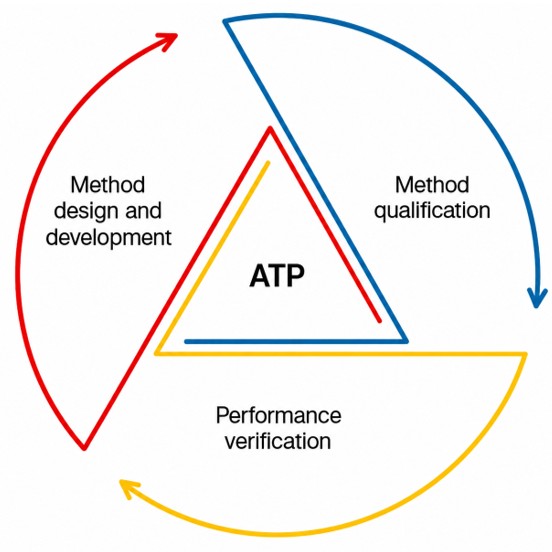
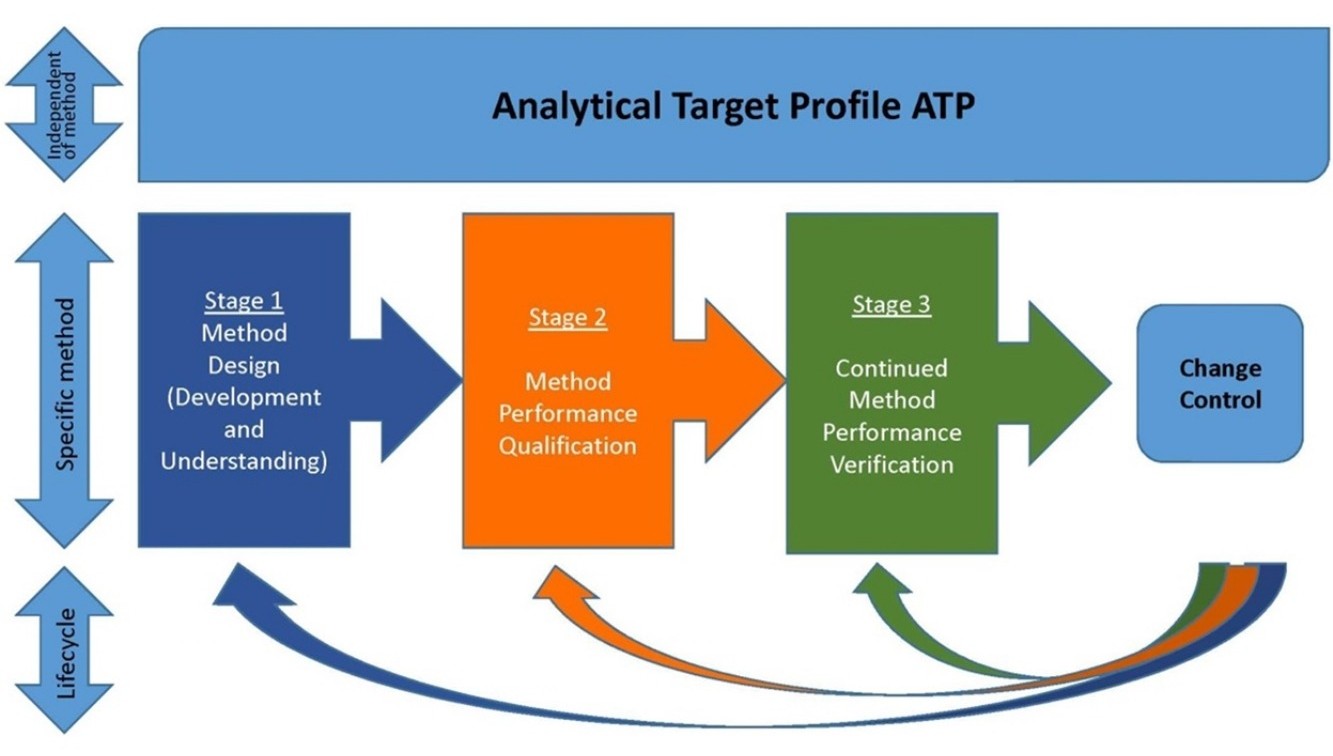 Figure 1. Life cycle management of analytical methods. (Parr and Schmidt, 2018)