We use cookies to understand how you use our site and to improve the overall user experience. This includes personalizing content and advertising. Read our
Privacy Policy
Profacgen's Analytical Method Transfer service provides structured, scientifically rigorous programs for transferring analytical methods between originating and receiving laboratories, ensuring that method performance is maintained across organizational, geographic, and operational boundaries. Our transfer programs are designed to demonstrate equivalence with regulatory defensibility while minimizing timeline risk and resource expenditure.
Method transfer is a critical but frequently underestimated activity in biopharmaceutical development. Whether transferring methods from a development laboratory to a CMO, from a CMO to an in-house quality control laboratory, or between global manufacturing sites, the receiving laboratory must demonstrate that it can execute the method with equivalent accuracy, precision, and reliability. Failure to achieve transfer acceptance can delay manufacturing campaigns, compromise release timelines, and trigger regulatory scrutiny.
Why Analytical Method Transfer Matters
Figure 1. Method transfer process flow. (Reid, 2020)
Analytical methods are developed and validated under specific laboratory conditions—instrument configurations, analyst expertise, environmental parameters, and reagent sources—that influence method performance. When methods are transferred to new laboratories, any of these conditions may differ, potentially affecting analytical results. The transfer process systematically evaluates these differences and demonstrates that they do not compromise method fitness for purpose.
Regulatory agencies expect method transfers to be documented with formal protocols, predefined acceptance criteria, and comprehensive reports. The FDA, EMA, and ICH guidelines emphasize that transfer is not merely a training exercise but a scientific demonstration of equivalence. This expectation is particularly stringent for methods supporting commercial release, where transfer failures can directly impact patient access and supply chain integrity.
Key value drivers include:
Pre-transfer risk assessment that identifies potential failure modes before experimentation begins
Structured comparative testing with statistical equivalence criteria rather than subjective similarity assessment
Efficient remediation protocols when initial transfer attempts do not meet acceptance criteria
Regulatory-compliant documentation supporting quality system integration and inspection readiness
Global network capability supporting transfers across North America, Europe, and Asia-Pacific regions
These priorities ensure that method transfer functions as a controlled, predictable process rather than an uncertain technical hurdle.
When to Consider Analytical Method Transfer
Analytical Method Transfer is most relevant when:
Manufacturing is being transferred to a new CMO or in-house facility requiring analytical capability at the receiving site
Global supply chain strategies necessitate testing at multiple geographic locations
Internal analytical capacity constraints require outsourcing of release or stability testing
Post-approval manufacturing network expansion requires method distribution to additional sites
Technology transfer from development to commercial quality control organizations is underway
This service is particularly effective for programs navigating the transition from single-site development to multi-site commercial manufacturing, where analytical consistency across the testing network is essential for regulatory compliance and supply reliability.
Core Capabilities of Analytical Method Transfer
Profacgen provides a structured, quality-oriented Analytical Method Transfer service that aligns transfer strategy with method complexity, regulatory requirements, and operational constraints.
Pre-Transfer Risk Assessment and Gap Analysis
Systematic evaluation of method requirements, receiving laboratory capabilities, and potential transfer risks before initiating comparative testing. This includes:
Method complexity assessment and critical parameter identification
Gap analysis identifying conditions where originating and receiving laboratories differ
Risk prioritization focusing transfer testing on parameters with highest failure probability
Risk assessment informs transfer protocol design, ensuring that experimental effort is directed where it provides maximum confidence.
Comparative Testing and Equivalence Demonstration
Side-by-side analysis of identical samples at originating and receiving laboratories with statistical evaluation of result equivalence. This includes:
Comparative accuracy assessment using sample sets spanning the method range
Precision comparison (repeatability and intermediate precision) between sites
Statistical equivalence testing using two one-sided t-tests (TOST) or confidence interval approaches
System suitability evaluation at receiving site to confirm method execution capability
Equivalence criteria are predefined in the transfer protocol, ensuring objective, defensible acceptance decisions.
Method Modification and Revalidation Support
When receiving laboratory conditions necessitate method adjustment, Profacgen provides structured modification and revalidation services. This includes:
Identification of method parameters requiring modification for receiving site compatibility
Modification impact assessment and risk evaluation
Targeted revalidation of affected performance characteristics
Bridging study design demonstrating equivalence between original and modified methods
Method modification is minimized to preserve regulatory continuity, with changes justified and documented comprehensively.
Transfer Documentation and Regulatory Support
Comprehensive documentation packages that support quality system integration, regulatory filing, and inspection readiness. This includes:
Transfer protocols with predefined acceptance criteria and statistical analysis plans
Raw data, chromatograms, and analytical reports from both laboratories
Statistical analysis and equivalence evaluation reports
Transfer summary reports suitable for regulatory submission and quality system archiving
Documentation is structured to tell a coherent story of method performance across sites, supporting reviewer understanding and inspection presentation.
Transfer Strategies and Acceptance Criteria
Profacgen employs multiple transfer strategies tailored to method type, risk level, and regulatory context:
Comparative testing (traditional transfer): side-by-side analysis of identical samples with statistical equivalence evaluation; appropriate for most chromatographic and electrophoretic methods with established performance history
Co-validation between laboratories: collaborative validation execution where both sites contribute validation data; appropriate for methods being validated concurrently with transfer, reducing total experimental effort
Transfer waiver with justification: scientific rationale supporting waiver of comparative testing based on method understanding, platform technology, or prior transfer experience; appropriate for low-risk methods with well-characterized robustness
Single-laboratory validation with receiving site verification: validation at one site with verification of critical parameters at receiving site; appropriate for methods with extensive robustness data and minimal site-specific risk
Risk-First Assessment: Pre-transfer risk evaluation identifies potential failure modes before experimental investment, enabling proactive mitigation and reducing the incidence of transfer failure and costly remediation.
Flexible Strategy Selection: Multiple transfer strategies (comparative testing, co-validation, waiver, verification) are evaluated and selected based on method risk, regulatory context, and operational constraints, optimizing efficiency without compromising compliance.
Modification Minimization: When method changes are unavoidable, modifications are scoped to the minimum necessary, with targeted revalidation and bridging data that preserve regulatory continuity and reduce timeline impact.
Global Execution Capability: Transfer programs executed across North America, Europe, and Asia-Pacific with consistent protocols, documentation standards, and project management, supporting multi-site manufacturing strategies.
Inspection-Ready Documentation: Transfer protocols, raw data, statistical analyses, and summary reports prepared in formats that withstand regulatory scrutiny and support direct inclusion in quality systems and submission packages.
Representative Program Scenarios
Scenario 1: CMO Method Transfer for Commercial Manufacturing
Program Context:
A biopharmaceutical company preparing for commercial launch of a monoclonal antibody needed to transfer release and stability testing methods from the development laboratory to a commercial CMO. The transfer needed to support BLA submission requirements and demonstrate that the CMO could execute methods with equivalent performance to the originating site.
Objective:
To complete a regulatory-compliant method transfer for identity, purity, potency, and safety methods, with documentation suitable for BLA inclusion and commercial release testing initiation.
Approach:
Profacgen conducted pre-transfer risk assessments for each method, identifying column chemistry compatibility and reference standard handling as moderate-risk parameters. Comparative testing protocols were designed with predefined equivalence criteria using TOST for accuracy comparison and F-test for precision evaluation. Sample sets included release batches, stability samples, and spiked samples spanning the method range. System suitability criteria were verified at the CMO with multiple analysts and instruments. Minor gradient modifications were required for one purity method; targeted revalidation demonstrated equivalent performance.
Outcome:
All methods met predefined equivalence criteria with statistical confidence. The transfer documentation package was included in the BLA submission without FDA queries. Commercial release testing commenced on schedule, supporting product launch within the planned timeline.
Scenario 2: Global Site Expansion with Method Distribution
Program Context:
A commercially approved therapeutic protein required method distribution to a new manufacturing site in Asia-Pacific to support regional supply and reduce logistics complexity. The transfer needed to accommodate differences in reagent sourcing, environmental conditions, and analyst training backgrounds.
Objective:
To transfer the complete analytical method portfolio to the new site with demonstrated equivalence, addressing site-specific conditions while maintaining regulatory compliance across the global manufacturing network.
Approach:
Profacgen performed comprehensive gap analysis identifying reagent qualification requirements, environmental control differences, and training needs. A phased transfer approach was implemented: high-risk methods (potency, purity) underwent full comparative testing, while lower-risk methods (appearance, pH) were transferred with verification protocols. Co-validation was employed for one new method being introduced concurrently. Reagent equivalency studies confirmed that locally sourced materials performed identically to original reagents. Environmental monitoring data supported method robustness under site-specific conditions.
Outcome:
The transfer was completed with all methods meeting acceptance criteria. The new site was qualified for commercial release testing within six months, supporting uninterrupted regional supply. The transfer package received no regulatory observations during the subsequent PAI, and the global method network was successfully expanded.
Q: What are the main strategies for analytical method transfer?
A: The primary transfer strategies include comparative testing (side-by-side analysis with statistical equivalence), co-validation (collaborative validation between sites), transfer waiver (scientific justification for bypassing testing), and single-laboratory validation with receiving site verification. Strategy selection depends on method risk, regulatory requirements, and prior knowledge of method robustness.
Q: What statistical approaches are used to demonstrate equivalence?
A: Equivalence is typically demonstrated using two one-sided t-tests (TOST) to evaluate whether the mean difference between laboratories falls within predefined equivalence margins. Precision comparison employs F-tests or confidence interval approaches for variance ratios. Acceptance criteria are established in the transfer protocol before testing begins to ensure objective evaluation.
Q: What happens if a method fails transfer acceptance criteria?
A: Transfer failure triggers structured investigation to identify root causes, which may include instrument differences, reagent variability, environmental conditions, or analyst technique. Remediation options include method modification with targeted revalidation, enhanced training, instrument adjustment, or protocol refinement. Profacgen designs transfer protocols with built-in investigation pathways to minimize delay.
Q: Can method modifications be made during transfer?
A: Method modifications are permissible when receiving site conditions necessitate adjustment, but changes must be justified, documented, and validated. Modifications are minimized to preserve regulatory continuity. Targeted revalidation of affected parameters is required, with bridging studies demonstrating equivalence between original and modified methods.
Q: What documentation is required for regulatory submission?
A: Regulatory documentation includes the transfer protocol with predefined acceptance criteria, raw data and chromatograms from both laboratories, statistical analysis reports, deviation investigations if applicable, and a transfer summary report. Documentation must demonstrate that the receiving laboratory can execute the method with equivalent performance to the originating site.
Q: How long does a typical method transfer take?
A: Transfer timelines depend on method complexity, number of methods, and transfer strategy. A single chromatographic method using comparative testing typically requires 4–8 weeks. Complex portfolios with multiple methods or requiring modifications may extend to 3–6 months. Profacgen provides detailed timeline estimates during project scoping based on method characteristics and site readiness.
References:
United States Pharmacopeia. USP General Chapter <1224>: Transfer of Analytical Procedures. United States Pharmacopeial Convention; current edition.
European Pharmacopoeia. Ph. Eur. Chapter 2.6.36: Microbiological Examination of Live Biotherapeutic Products. European Directorate for the Quality of Medicines; current edition.
FDA Guidance for Industry. Method Transfer for ANDAs. U.S. Food and Drug Administration; 2020.
Reid GL. Analytical method transfer. In: Specification of Drug Substances and Products. Elsevier; 2020:125-148. doi:10.1016/B978-0-08-102824-7.00006-3
Online Inquiry
Fill out this form and one of our experts will respond to you within one business day.

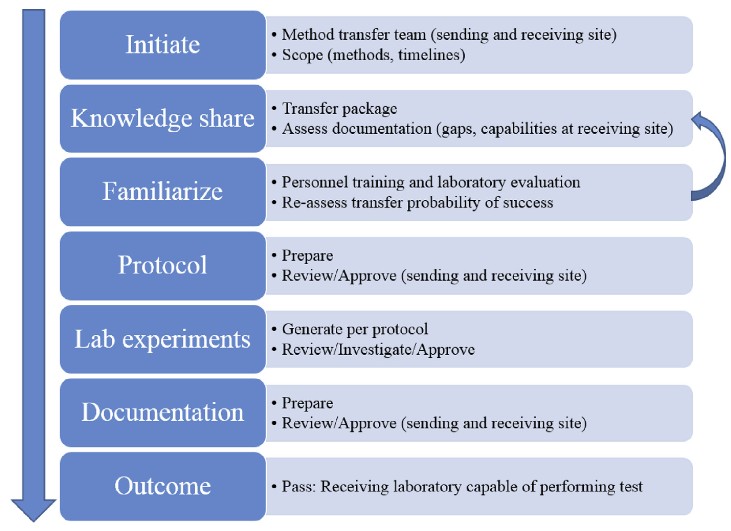 Figure 1. Method transfer process flow. (Reid, 2020)