Forced Degradation and Stress Testing
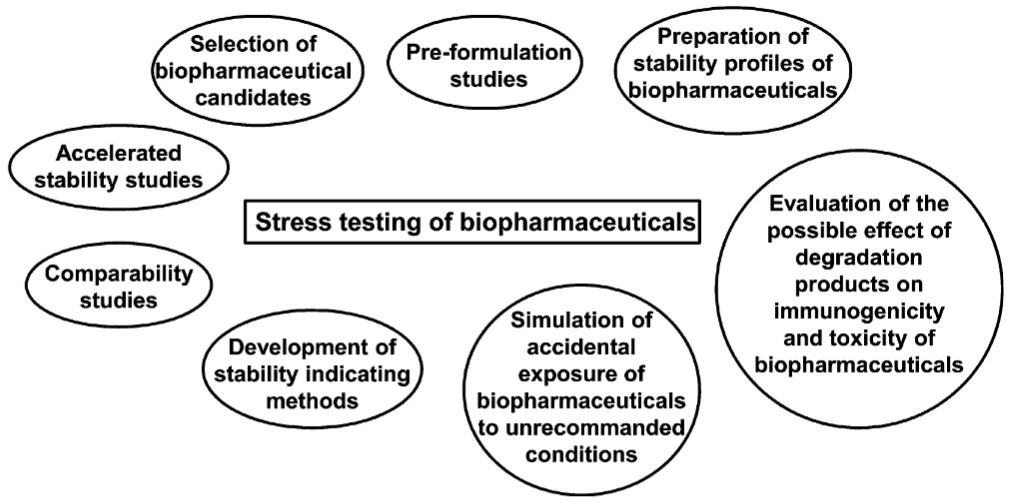
Understanding how biopharmaceutical proteins degrade under extreme conditions is essential for developing robust formulations, validating analytical methods, and establishing comprehensive control strategies. Forced degradation and stress testing provide critical insights into intrinsic molecular vulnerabilities, degradation pathways, and the structural boundaries of therapeutic proteins.
Profacgen offers systematic forced degradation and stress testing services designed to elucidate degradation mechanisms, validate stability-indicating analytical methods, and support regulatory filings. Our studies are structured to generate mechanistic understanding that informs formulation design, process development, and quality control strategy across the product lifecycle.
Scientific Background: Degradation Mechanisms and Stress Response
Biopharmaceutical proteins are susceptible to a spectrum of physical and chemical degradation pathways that can compromise safety, efficacy, and shelf life. Forced degradation studies intentionally subject proteins to exaggerated stress conditions to accelerate degradation, reveal latent instability, and characterize the molecular events that govern protein deterioration.
Major degradation pathways targeted in forced degradation studies include:
- Chemical degradation: oxidation of methionine, cysteine, and tryptophan residues; deamidation of asparagine and glutamine; isomerization of aspartic acid; glycation and Maillard reactions in the presence of reducing sugars
- Physical degradation: reversible and irreversible aggregation, particle formation, precipitation, adsorption to surfaces, and conformational unfolding leading to loss of native structure
- Fragmentation: peptide bond hydrolysis, disulfide bond scrambling, and enzymatic cleavage under acidic or basic conditions
Each degradation pathway exhibits distinct kinetics and stress dependencies. Oxidation, for example, is frequently induced by hydrogen peroxide, metal ions, or light exposure, while deamidation rates are strongly pH-dependent, accelerating under alkaline conditions. Aggregation can be triggered by thermal stress, mechanical agitation, freeze-thaw cycling, or exposure to hydrophobic interfaces.
Stress testing extends beyond single-factor challenges to evaluate synergistic effects. Combined thermal and oxidative stress, for instance, may reveal degradation sequences that neither stressor alone would elicit within practical timeframes. Understanding these interactions is essential for predicting real-world stability behavior and designing protective formulations.
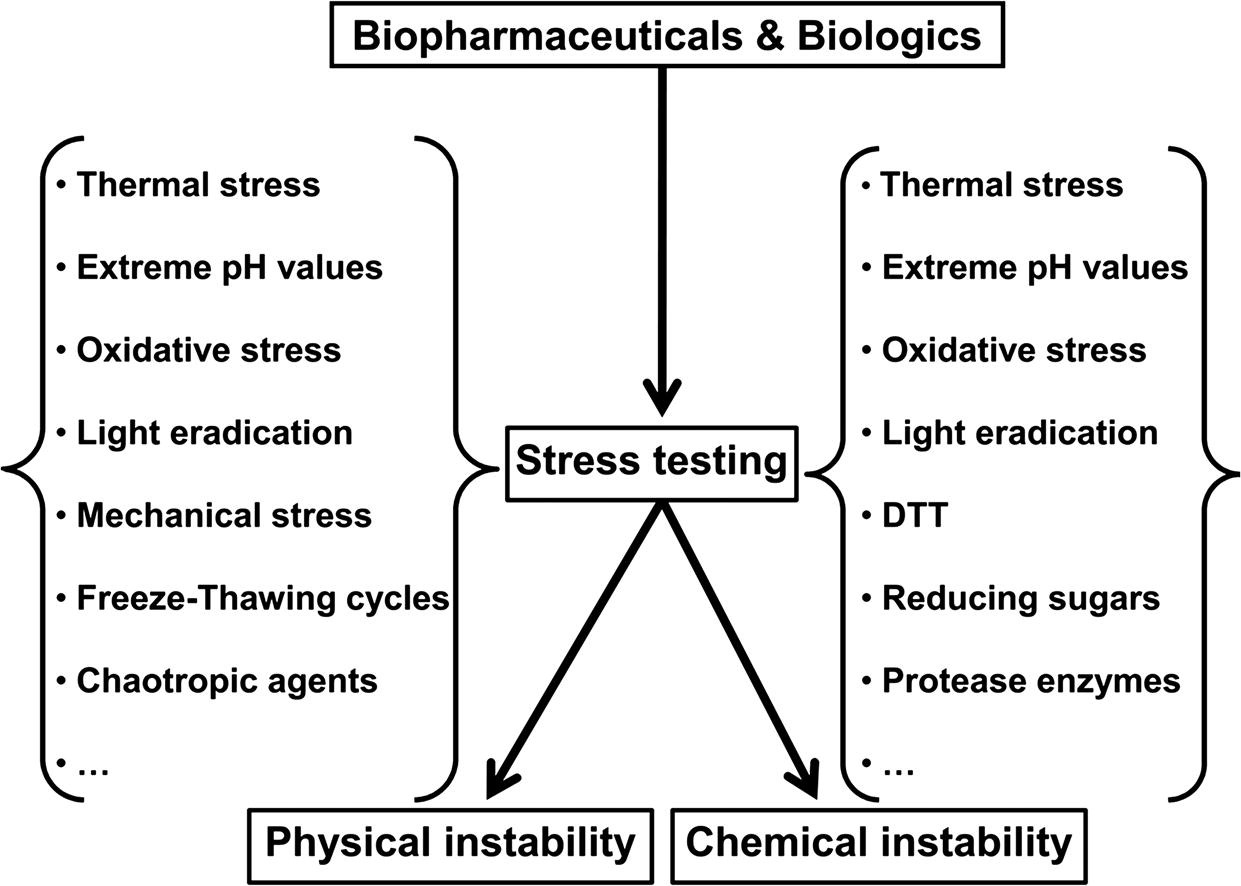 Figure 1. Forced degradation studies of biopharmaceuticals. (Tamizi and Jouyban, 2016)
Forced degradation data also serve a pivotal role in analytical method validation. Regulatory agencies require demonstration that analytical methods are "stability-indicating"—capable of detecting and quantifying degradation products that form during real-time and accelerated storage. By generating authentic degradation profiles under controlled stress, forced degradation studies provide the reference materials and challenged samples necessary for method qualification.
Regulatory Expectations and Strategic Value
Forced degradation and stress testing are explicitly required by ICH Q1A(R2), Q5C, and Q1B guidelines, as well as by FDA and EMA regulatory expectations for biologics. These studies support multiple strategic objectives:
- Validation that analytical methods can detect and resolve degradation products at relevant concentrations
- Identification of critical quality attributes (CQAs) affected by stress and establishment of appropriate acceptance criteria
- Elucidation of degradation pathways to guide formulation excipient selection and process parameter optimization
- Generation of stressed reference materials for use in method development, transfer, and troubleshooting
- Support for biocomparability assessments by demonstrating that process or formulation changes do not alter degradation behavior
- Justification of storage conditions, handling procedures, and in-use stability claims
Regulatory reviewers expect forced degradation studies to be scientifically justified, with stress conditions selected to achieve meaningful degradation (typically 5–20% degradation) without causing irrelevant or unrealistic molecular damage. Study design must balance the need for sufficient degradation against the risk of generating artifacts that do not represent authentic storage-related degradation.
Stress Testing Services Offered
Our forced degradation and stress testing services include, but are not limited to:
- Thermal stress testing at elevated temperatures (e.g., 40°C, 50°C, 60°C) to accelerate chemical degradation and evaluate conformational stability, with kinetic analysis of degradation rates
- pH stress testing under acidic and alkaline conditions to characterize hydrolysis, deamidation, and isomerization pathways, with identification of pH-sensitive degradation hotspots
- Oxidative stress testing using hydrogen peroxide, tert-butyl hydroperoxide, or metal-catalyzed oxidation systems to evaluate methionine, cysteine, and tryptophan oxidation susceptibility
- Photolytic stress testing under ICH Q1B-compliant visible and UV light exposure to assess photosensitivity and identify chromophoric degradation products
- Mechanical stress testing including agitation, shaking, and shear exposure to evaluate aggregation and particle formation induced by interfacial stress and air-liquid interfaces
- Freeze-thaw stress testing with controlled cycling between frozen and thawed states to assess cold-chain handling robustness and identify cryo-induced denaturation or aggregation
- Comprehensive analytical characterization of stressed samples using mass spectrometry, chromatography, spectroscopy, and particle analysis to map degradation products and quantify extent of modification
Each stress condition is selected based on the molecular characteristics of the protein, known vulnerabilities of the protein class, and regulatory requirements, rather than applied as a generic stress panel.
Study Design and Execution Framework
Profacgen employs a structured approach to forced degradation study design that ensures scientific rigor and regulatory defensibility:
- Pre-study molecular assessment: review of protein sequence, structure, and known degradation propensities to identify likely stress sensitivities and prioritize analytical focus
- Stress condition optimization: pilot studies to identify stress intensity and duration that achieve meaningful but representative degradation, avoiding excessive or artifactual damage
- Multi-factorial stress matrices: systematic evaluation of individual and combined stressors to characterize interaction effects and build mechanistic understanding
- Time-course degradation monitoring: sequential sampling during stress exposure to capture degradation kinetics, identify primary versus secondary degradation events, and support kinetic modeling
- Orthogonal analytical profiling: application of complementary techniques (peptide mapping with mass spectrometry, SEC-MALS, DLS, AUC, FTIR, DSC) to achieve comprehensive degradation characterization
- Data interpretation and reporting: mechanistic analysis of degradation pathways, correlation with structural features, and regulatory-compliant documentation
Study execution follows documented protocols with defined acceptance criteria, ensuring reproducibility, traceability, and audit readiness.
Analytical Characterization of Degradation Products
Comprehensive characterization of degradation products is essential for understanding degradation mechanisms and validating stability-indicating methods. Profacgen integrates multiple analytical platforms:
- Peptide mapping with LC-MS/MS for site-specific identification of chemical modifications, including oxidation, deamidation, glycation, and disulfide scrambling
- Intact mass analysis by high-resolution mass spectrometry to detect mass shifts indicative of chemical adducts, truncations, or modifications
- Size exclusion chromatography with multi-angle light scattering (SEC-MALS) for aggregation quantification and molecular weight determination of oligomeric species
- Dynamic light scattering (DLS) and analytical ultracentrifugation (AUC) for subvisible and soluble aggregate characterization
- Differential scanning calorimetry (DSC) and circular dichroism (CD) for evaluation of thermal unfolding transitions and secondary/tertiary structural perturbations
- Flow imaging microscopy and light obscuration for subvisible particle counting and morphological classification
Analytical data are integrated to construct degradation pathway maps that link stress conditions to specific molecular events, enabling rational formulation and process design.
Inquiry
Why Choose Profacgen for Stress Testing
- Deep mechanistic expertise in protein degradation chemistry and physical stability science.
- Experience designing forced degradation studies that satisfy global regulatory expectations (FDA, EMA, NMPA, PMDA).
- Access to advanced analytical platforms capable of site-specific degradation product identification and quantification.
- Systematic study design that balances degradation extent against artifact avoidance, ensuring regulatory defensibility.
- Integration with formulation development, analytical method validation, and GMP stability programs for seamless data continuity.
- Comprehensive documentation packages suitable for direct inclusion in regulatory submissions and quality systems.
Our objective extends beyond generating stressed samples to delivering mechanistic insights that enable proactive stability risk management throughout development and commercialization.
Representative Program Scenarios
Scenario 1: Forced Degradation for Analytical Method Validation
Program Context:
A biopharmaceutical company developing a novel therapeutic antibody required forced degradation studies to validate the stability-indicating capability of their release and stability analytical methods prior to IND submission. Regulatory reviewers had specifically requested evidence that the methods could detect and resolve all relevant degradation products.
Objective:
To generate authentic degradation products under controlled stress conditions and demonstrate that the analytical methods (SEC-HPLC, CE-SDS, icIEF, peptide mapping) could detect, resolve, and quantify these products with appropriate sensitivity and specificity.
Approach:
Profacgen designed a multi-stress forced degradation program encompassing thermal stress (50°C), oxidative stress (0.1% hydrogen peroxide), pH stress (pH 4.5 and pH 9.0), and photolytic stress (ICH Q1B conditions). Each stressor was applied for optimized durations to achieve 5–15% degradation. Stressed samples were analyzed using the client's full analytical panel, with peptide mapping and LC-MS/MS employed to identify specific modification sites. Method performance was evaluated against predefined acceptance criteria for peak resolution, sensitivity, and linearity in the presence of degradation products.
Outcome:
The forced degradation studies successfully generated representative degradation profiles, including oxidized variants, acidic species, and high-molecular-weight aggregates. All analytical methods demonstrated stability-indicating capability with appropriate resolution and sensitivity. The validation package was accepted by regulatory reviewers without comment, supporting a smooth IND submission and initiation of clinical studies.
Scenario 2: Mechanistic Degradation Study for Formulation Optimization
Program Context:
A development program for a therapeutic enzyme was experiencing unexpected aggregation during accelerated stability testing, threatening the viability of the liquid formulation. The team required mechanistic understanding of the aggregation pathway to guide excipient selection and formulation redesign.
Objective:
To identify the molecular triggers and sequence of events leading to aggregation, and to evaluate whether formulation modifications could mitigate the degradation pathway without compromising other quality attributes.
Approach:
Profacgen conducted a comprehensive forced degradation study combining thermal stress (40°C, 50°C), mechanical stress (orbital shaking at 200 rpm), and freeze-thaw cycling. Analytical characterization included SEC-MALS for aggregate molecular weight determination, DLS for hydrodynamic radius analysis, DSC for thermal transition monitoring, and peptide mapping with mass spectrometry for chemical modification identification. The study included a formulation matrix evaluating different buffer systems, surfactant concentrations, and stabilizing excipients.
Outcome:
The mechanistic study revealed that aggregation was initiated by interfacial denaturation at the air-liquid interface during agitation, followed by nucleation and growth of soluble oligomers that progressed to insoluble precipitates. A lead formulation incorporating an optimized surfactant concentration and a stabilizing osmolyte significantly reduced interfacial stress-induced aggregation and improved thermal stability. The optimized formulation advanced into long-term stability studies with a substantially improved stability profile.
Request a Consultation
Frequently Asked Questions (FAQs)
A: Forced degradation involves exposing proteins to extreme stress conditions (e.g., high temperature, strong oxidants, extreme pH, intense light) to rapidly induce degradation and elucidate degradation pathways. Accelerated stability testing uses moderately elevated conditions (e.g., 25°C/60% RH or 30°C/75% RH) to predict long-term stability behavior over shorter timeframes. Forced degradation focuses on mechanistic understanding and method validation, while accelerated testing supports shelf-life estimation and formulation ranking.
Q: How much degradation should forced degradation studies achieve?
A: Regulatory guidance recommends achieving approximately 5–20% degradation to ensure meaningful method validation and pathway characterization without generating excessive artifacts. The optimal degradation extent depends on the protein, stress type, and analytical sensitivity. Profacgen optimizes stress conditions through pilot studies to achieve degradation within this target range while preserving the relevance of degradation products to real-world storage conditions.
Q: Which stress conditions are typically included in a forced degradation program?
A: Standard forced degradation programs for biopharmaceutical proteins include thermal stress (elevated temperature), pH stress (acidic and alkaline conditions), oxidative stress (peroxides, metal ions), photolytic stress (ICH Q1B visible and UV light), mechanical stress (agitation, shear), and freeze-thaw cycling. The specific conditions and intensities are customized based on protein characteristics, known vulnerabilities, and regulatory requirements.
Q: How are forced degradation studies used in analytical method validation?
A: Forced degradation studies generate authentic degradation products that are used to demonstrate that analytical methods are "stability-indicating." This includes showing that methods can detect and resolve degradation products, that peak purity is maintained in the presence of degradants, and that quantification is accurate and precise. These data are typically required for method validation packages submitted with IND, BLA, and NDA applications.
Q: Can forced degradation studies predict actual storage degradation?
A: Forced degradation studies are designed to reveal potential degradation pathways and validate analytical methods, not to quantitatively predict long-term storage behavior. While some degradation products observed under forced conditions may also form during real-time storage, the kinetics and relative abundance often differ. Accelerated and long-term stability studies are required for shelf-life determination. However, forced degradation data provide valuable mechanistic context that informs formulation design and risk assessment.
Q: Are forced degradation studies conducted under GMP conditions?
A: Forced degradation studies for regulatory submissions are typically conducted under GMP-aligned or GLP frameworks, with documented protocols, validated equipment, trained personnel, and comprehensive data integrity controls. The specific quality framework depends on the intended use of the data. Profacgen can execute studies under research, GLP, or GMP conditions based on program requirements and regulatory strategy.
References:
- ICH Q1A(R2). Stability Testing of New Drug Substances and Products. International Council for Harmonisation of Technical Requirements for Pharmaceuticals for Human Use; 2003.
- ICH Q1B. Photostability Testing of New Drug Substances and Products. International Council for Harmonisation of Technical Requirements for Pharmaceuticals for Human Use; 1996.
- ICH Q5C. Stability Testing of Biotechnological/Biological Products. International Council for Harmonisation of Technical Requirements for Pharmaceuticals for Human Use; 1995.
- Tamizi E, Jouyban A. Forced degradation studies of biopharmaceuticals: Selection of stress conditions. European Journal of Pharmaceutics and Biopharmaceutics. 2016;98:26-46. doi:10.1016/j.ejpb.2015.10.016