
The stability and compatibility of biopharmaceutical products during clinical and commercial use represent a critical but often underappreciated dimension of drug development. Once a product leaves controlled storage conditions, it encounters a complex sequence of handling steps—reconstitution, dilution, transfer, administration, and dwell time in infusion sets—that can introduce physical, chemical, and biological stresses not captured by traditional long-term or accelerated stability studies.
Profacgen provides specialized in-use stability and compatibility study services designed to simulate real-world clinical and commercial handling conditions, evaluate product performance during administration, and generate regulatory-compliant data that support labeling claims, clinical protocols, and risk management strategies. Our studies bridge the gap between controlled storage stability and actual patient-facing product behavior.
In-use stability encompasses the period during which a drug product is prepared, held, and administered to a patient. For biopharmaceutical proteins, this phase introduces a unique constellation of stressors that can compromise product quality, potency, and safety:
These stressors are not merely additive; they interact synergistically. For example, dilution into a low-ionic-strength saline solution may reduce colloidal stability, while simultaneous exposure to hydrophobic tubing surfaces and mechanical shear can rapidly nucleate aggregates that would not form under either stressor alone. Understanding these interactions requires carefully designed simulation studies that replicate the sequence, intensity, and duration of clinical handling steps.
Compatibility studies extend beyond product-diluent interactions to encompass container-closure system compatibility, device compatibility (syringes, pumps, infusion sets), and co-administration compatibility. Each compatibility domain presents distinct scientific and regulatory considerations. Container-closure compatibility addresses extractables and leachables, adsorption, and particulate generation. Device compatibility evaluates shear sensitivity, filter compatibility, and dosing accuracy. Co-administration compatibility assesses chemical and physical interactions with other therapeutic agents in shared infusion lines or Y-site connections.
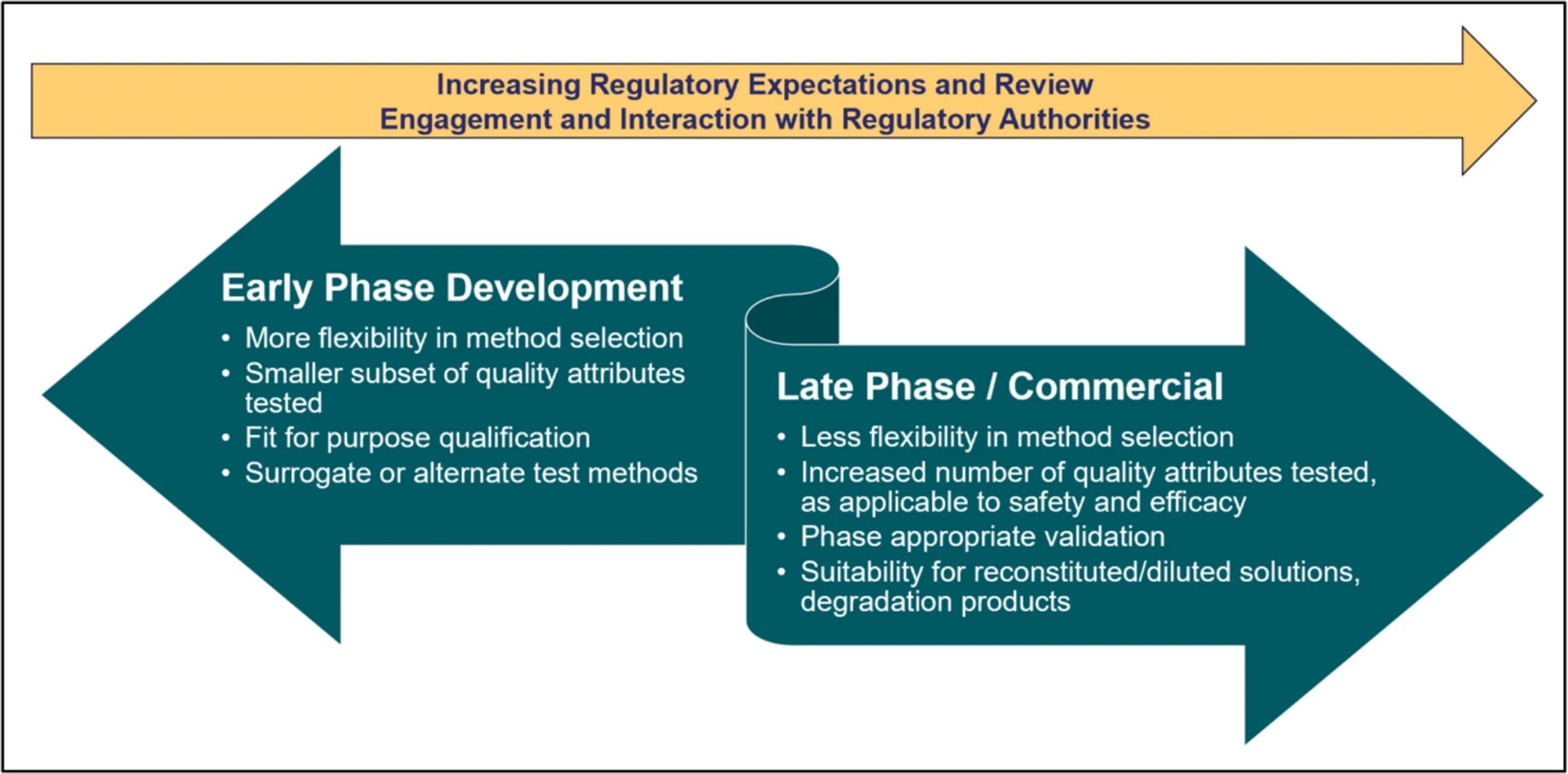 Figure 1. Analytical methods considerations for in-use stability studies. (Willingmyre et al., 2026)
In-use stability and compatibility data are required or strongly recommended across multiple regulatory and clinical contexts:
Regulatory agencies (FDA, EMA, PMDA, NMPA) expect in-use stability studies to be scientifically justified, clinically relevant, and analytically comprehensive. Studies that fail to simulate realistic handling conditions or that lack appropriate analytical endpoints risk regulatory queries, labeling restrictions, and compromised clinical utility.
Reconstitution and Dilution Stability Studies
Simulation of clinical reconstitution procedures for lyophilized products and dilution protocols for concentrated solutions, with evaluation of stability during specified hold times under defined temperature and light conditions. Studies assess aggregation, particle formation, potency retention, and structural integrity using stability-indicating analytical methods.
Container-Closure and Administration Device Compatibility
Evaluation of protein stability and compatibility across clinical container-closure systems (vials, syringes, infusion bags) and administration devices (pumps, infusion sets, filters, catheters). Studies quantify adsorption losses, particulate generation, shear-induced aggregation, and filter clogging to support device selection and clinical protocol design.
Co-Administration and Admixture Compatibility
Assessment of physical and chemical compatibility when products are combined with intravenous diluents, electrolyte solutions, parenteral nutrition, or other therapeutic agents in shared infusion lines or Y-site connections. Studies evaluate precipitation, pH shifts, osmotic changes, and particle formation using visual inspection, turbidity, and chromatographic methods.
Extended Dwell and Ambulatory Pump Studies
Simulation of prolonged residence in infusion sets, ambulatory pumps, and elastomeric devices under clinical temperature profiles (ambient, body temperature, controlled cooling). Studies monitor stability over clinically relevant dwell periods, assessing thermal degradation, interfacial aggregation, and microbial risk under simulated in-use conditions.
Extractables and Leachables Assessment
Identification and quantification of container-closure and device extractables under simulated in-use conditions, with evaluation of potential protein interactions, oxidation catalysis, and immunogenicity risk. Studies employ sensitive analytical techniques (LC-MS, GC-MS, ICP-MS) to characterize extractable profiles and assess impact on product quality.
In-Use Analytical Method Development and Validation
Development and validation of analytical methods specifically for in-use stability evaluation, including low-concentration potency assays, subvisible particle counting in complex matrices, and filter compatibility testing. Methods are validated for precision, accuracy, and robustness in the presence of diluents, container materials, and co-administered agents.
Profacgen employs a clinically grounded approach to in-use stability study design that ensures relevance to real-world administration scenarios:
Study protocols are developed in consultation with clinical operations, pharmacy, and regulatory teams to ensure that generated data directly support labeling, clinical protocols, and submission packages.
Our commitment extends beyond data generation to ensuring that in-use stability findings translate into actionable guidance for clinical practice, pharmacy operations, and patient safety.
Program Context:
A biopharmaceutical company developing a monoclonal antibody for intravenous infusion required in-use stability data to support prescribing information claims regarding post-dilution hold time, infusion duration, and compatibility with standard intravenous diluents. The product was formulated as a concentrated solution requiring dilution into saline or dextrose prior to administration via infusion pump.
Objective:
To determine the maximum permissible hold time after dilution, evaluate stability during prolonged infusion, and demonstrate compatibility with clinical diluents and infusion devices to support labeling and clinical protocol design.
Approach:
Profacgen designed a comprehensive in-use stability program simulating clinical preparation and administration workflows. The product was diluted into 0.9% saline and 5% dextrose at clinically relevant concentrations and held at room temperature and under refrigeration for 4, 8, and 24 hours. Samples were passed through standard infusion sets with varying pump flow rates and dwell times. Analytical testing included potency (cell-based assay), purity (SEC-HPLC, CE-SDS), subvisible particles (flow imaging microscopy, light obscuration), aggregation (SEC-MALS), and structural integrity (CD spectroscopy). Adsorption to infusion bag and tubing surfaces was quantified by mass balance analysis. Filter compatibility was evaluated by passage through 0.22 μm and 0.45 μm filters under clinical flow conditions.
Outcome:
The study demonstrated that the diluted product remained within all acceptance criteria for up to 24 hours at 2–8°C and up to 8 hours at room temperature. No significant adsorption losses or filter incompatibility were observed. Subvisible particle levels remained below pharmacopeial limits throughout the simulated infusion duration. The data supported a labeling claim of "Use within 8 hours at room temperature or 24 hours under refrigeration after dilution," enabling flexible clinical handling and reducing pharmacy waste. The study package was incorporated into the BLA submission without regulatory queries.
Program Context:
A therapeutic fusion protein intended for hospital-based administration was planned for co-infusion with standard electrolyte solutions and potentially with other biologics in shared infusion lines. The development team required data to evaluate device compatibility, co-administration physical compatibility, and the risk of precipitation or particle formation under clinical admixture conditions.
Objective:
To assess physical and chemical compatibility with prospective co-administered agents, evaluate performance across multiple infusion device configurations, and identify any clinical handling restrictions necessary to ensure product quality during administration.
Approach:
Profacgen conducted a multi-factorial compatibility study encompassing Y-site co-infusion simulation with saline, Ringer's lactate, and two prospective therapeutic agents at clinically relevant concentrations and flow ratios. Visual inspection, turbidity measurement, and pH monitoring were performed immediately and at 1, 2, and 4 hours post-admixture. Particle analysis by flow imaging microscopy and light obscuration quantified subvisible particle formation. Device compatibility was evaluated across three commercial infusion pump models and two infusion set materials, with assessment of adsorption, shear-induced aggregation, and dosing accuracy. Extractables profiling of device components was performed by LC-MS under simulated in-use conditions.
Outcome:
The study identified a physical incompatibility with one co-administered agent under specific pH and concentration conditions, manifesting as visible precipitation within 2 hours of Y-site mixing. This combination was excluded from clinical protocols and labeling. All other admixtures remained physically compatible with no significant particle formation. Device compatibility was confirmed across all tested configurations, with minimal adsorption losses (<2%) and no filter clogging. The data supported a comprehensive administration guidance section in the prescribing information and prevented a potential clinical safety issue that might have emerged post-launch.
Fill out this form and one of our experts will respond to you within one business day.