We use cookies to understand how you use our site and to improve the overall user experience. This includes personalizing content and advertising. Read our
Privacy Policy
At Profacgen, our Ternary Complex Formation Services deliver comprehensive biophysical and cellular characterization of target-degrader-ligase complex assembly, enabling rational optimization of cooperativity, stability, and kinetic properties for protein degrader development.
Proteolysis targeting chimeras (PROTACs) represent a new paradigm in therapeutics, capable of targeting any binding site and driven by ternary complex formation. In cells, the protein degrader undergoes binary engagement with either the E3 ligase or the target protein, which primes ternary complex formation. Profacgen offers a wide range of methods including SPR, BLI, Co-IP, and NMR to evaluate target-protein degrader-E3 ligase ternary formation for designed protein degraders.
Overview
Ternary complex formation is the central mechanistic event that distinguishes degraders from traditional inhibitors. Understanding and optimizing this process is essential for degrader efficacy:
Central mechanism of degrader action: The transient, three-body assembly of target protein, degrader, and E3 ligase is the prerequisite for ubiquitin transfer and subsequent proteasomal degradation. Without productive ternary complex formation, no degradation occurs regardless of binary binding affinity
Cooperativity: The degree to which degrader binding to one protein enhances affinity for the second. Positive cooperativity stabilizes the ternary complex and increases degradation efficiency; negative or absent cooperativity limits efficacy and narrows the therapeutic window
Stability: The thermodynamic and kinetic stability of the ternary complex determines its lifetime, ubiquitination efficiency, and susceptibility to cellular disruption. Stable complexes support sustained degradation; overly stable complexes may exhibit slow dissociation and prolonged off-target effects
Productive complex formation: Not all ternary complexes are catalytically competent. Optimal geometry must position the target lysine proximal to the E2-E3 catalytic center for efficient ubiquitin transfer, requiring precise spatial and orientational control
Figure 1. Ternary complex formation: the central mechanistic step in protein degrader action. (Adapted from Grigglestone and Yeung, 2021)
Our Ternary Complex Assay Platforms
Profacgen integrates multiple biophysical and cellular technologies to comprehensively characterize ternary complex behavior:
TR-FRET
Time-resolved fluorescence resonance energy transfer for robust, homogeneous ternary complex detection.
Principle: Lanthanide donor-acceptor pairs with time-resolved detection eliminate background fluorescence from buffers, proteins, and compounds
Application: Quantitative measurement of ternary complex formation by detecting proximity between target and E3 ligase in the presence of degrader
Advantage: High-throughput compatible, homogeneous format, and exceptional sensitivity for complex matrices
Profacgen offers specialized techniques for advanced ternary complex characterization:
Isothermal titration calorimetry (ITC): The most reliable technique to determine cooperativity for ternary complexes. We perform global analysis of titrations in different orientations to assess cooperativity parameters in theory and experiment. ITC provides direct thermodynamic quantification of binding enthalpy, entropy, and stoichiometry without labeling requirements
Dynamic light scattering (DLS): Investigation of average size and size distribution of ternary complexes, providing information about protein globule structure and particle homogeneity. DLS serves for quality control, sample homogeneity assessment, and evaluation of physical and chemical treatment effects
Fluorescence polarization (FP): Quantitative analysis of small soluble fluorescent molecule binding to proteins. In FP systems, protein interaction with fluorescent ligand changes effective molecular volume and alters polarization monitored by plane-polarized light. For ternary binding affinity or cooperativity testing, the degrader is saturated with one binding protein and titrated into the other
X-ray crystallography: Identification of atomic and molecular structure of ternary complexes. Compared to NMR and spectrometric methods, X-ray crystallography determines absolute configuration based on anomalous scattering effects of heavy atoms. We identify de novo protein-protein interactions to understand neo-substrate binding mode relative to E3 ligase
NMR spectroscopy: Solution-state characterization of ternary complex dynamics, conformational ensembles, and binding interfaces under native conditions
Key Readouts
Profacgen quantifies the essential parameters that define ternary complex quality and predict cellular degradation:
Complex formation: Binary and ternary equilibrium dissociation constants (Kd), association and dissociation rate constants (kon, koff), and relative ternary complex population under varied conditions
Cooperativity assessment: Quantitative cooperativity coefficients (α) derived from ITC, SPR, or FP data. Values >1 indicate positive cooperativity; values <1 indicate negative cooperativity; values near 1 indicate independent binding
Complex stability: Thermal stability by differential scanning fluorimetry, chemical denaturation profiles, and long-term storage behavior to guide formulation and handling
Kinetic characterization: Ternary complex assembly and dissociation rates, residence time, and lifetime distributions that influence ubiquitination efficiency and catalytic turnover
Applications
Our ternary complex formation services support diverse degrader discovery applications:
PROTAC optimization: Structure-guided linker design, warhead modification, and E3 ligase selection based on ternary complex geometry, cooperativity, and stability data
Molecular glue research: Confirmation of glue-induced neo-substrate recruitment, validation of novel protein-protein interactions, and mechanistic discrimination from direct inhibition
Mechanism validation: Rigorous demonstration that observed cellular degradation requires ternary complex formation, with controls for binary binding artifacts and non-specific effects
Experienced Scientist Team: Deep expertise in multi-protein interaction analysis, biophysics, and degrader pharmacology ensures rigorous experimental design and accurate data interpretation.
Multiple Stable Technology Platforms: Integrated SPR, BLI, ITC, TR-FRET, Alpha, BRET, FRET, DLS, FP, X-ray crystallography, and NMR capabilities within a single provider.
Accurate and Repeatable Data: Strict quality control, standardized protocols, and comprehensive controls ensure reproducible results suitable for structure-activity relationship decisions.
Quick Turnaround Time: Efficient workflows and parallel platform deployment deliver rapid answers to accelerate degrader optimization cycles.
Representative Program Scenarios
Scenario 1: ITC-Guided Cooperativity Optimization for a PROTAC
Program Context:
A PROTAC program observed cellular degradation but with a narrow therapeutic window. The team suspected weak ternary complex cooperativity and sought quantitative thermodynamic data to guide linker optimization.
Objective:
To determine the cooperativity coefficient by ITC and identify whether positive, negative, or absent cooperativity limited the therapeutic window.
Approach:
Profacgen performed global ITC analysis with titrations in both orientations: target protein into degrader-E3 complex, and E3 ligase into degrader-target complex. The data revealed weak negative cooperativity (α = 0.4), indicating that binary binding of one partner reduced affinity for the second. A panel of linker variants with altered length and flexibility was synthesized and evaluated by ITC and SPR.
Outcome:
A linker-extended analog achieved positive cooperativity (α = 2.3) with improved ternary complex stability. Cellular testing confirmed a 5-fold expansion of the therapeutic window and enhanced degradation potency, validating ITC-guided optimization.
Scenario 2: Alpha Assay Screening for Molecular Glue Ternary Complex
Program Context:
A phenotypic screen identified compounds inducing target protein loss, but whether the mechanism involved direct inhibition or glue-mediated ternary complex formation was unknown. Rapid mechanistic triage was required for 30 active compounds.
Objective:
To develop a high-throughput assay distinguishing true glue-induced ternary complexes from non-specific effects, with confirmation by orthogonal methods.
Approach:
Profacgen established an Alpha assay with target protein on donor beads and E3 ligase on acceptor beads. Compound titration produced bell-shaped curves for true glues, with curve height reflecting ternary complex population. Hits were validated by SPR for binary binding exclusion, ITC for thermodynamic confirmation, and cellular BRET for live-complex detection.
Outcome:
The Alpha screen identified 6 compounds with robust bell-shaped curves indicating ternary complex formation. Orthogonal validation confirmed 4 true molecular glues with no direct target binding. Two candidates progressed to structural studies, with the integrated workflow reducing false positives by 80% compared to cellular screening alone.
Q: What is cooperativity and why does it matter for degraders?
A: Cooperativity describes how binding of a degrader to one protein affects its affinity for the second. Positive cooperativity (α > 1) stabilizes the ternary complex and enhances degradation efficiency. Negative cooperativity (α < 1) destabilizes the complex and narrows the therapeutic window. ITC is the gold standard for quantitative cooperativity determination.
Q: How do SPR and BLI differ for ternary complex analysis?
A: SPR measures refractive index changes at a gold sensor surface with exceptional sensitivity for small molecules and kinetics. BLI measures interference patterns at biosensor tips with simpler sample handling and compatibility with crude lysates. Both provide real-time binding data; selection depends on sample purity, throughput needs, and analyte size.
Q: Can cell-based methods confirm ternary complex formation?
A: Yes. BRET and FRET detect proximity between target and E3 ligase in live cells, confirming physiological complex formation. Nano-BRET offers improved signal-to-noise and physical stability. Co-IP provides biochemical confirmation. These cellular methods complement biophysical reconstitution by validating complex formation in native environments.
Q: What is the hook effect in ternary complex assays?
A: The hook effect is a bell-shaped dose-response where high degrader concentrations inhibit ternary complex formation by saturating binary binding sites without bridging target and E3. Alpha assays and SPR detect this signature, revealing the optimal concentration window for productive complex assembly.
Q: Can you determine ternary complex structures?
A: Yes. We offer X-ray crystallography and cryo-EM for high-resolution ternary complex structures, and NMR for solution-state dynamics. Structural data guides rational linker design, identifies key contact residues, and reveals allosteric mechanisms that influence cooperativity.
Q: What is the typical timeline for ternary complex evaluation?
A: Alpha and TR-FRET screening of 10–50 compounds requires 2–3 weeks. SPR or BLI kinetic analysis of selected candidates adds 2–3 weeks. ITC cooperativity determination requires 1–2 weeks. Structural studies extend timelines by 4–8 weeks. Full integrated campaigns typically deliver within 6–10 weeks.
Grigglestone CE, Yeung KS. Degradation of protein kinases: ternary complex, cooperativity, and selectivity. ACS Med Chem Lett. 2021;12(11):1629-1632. doi:10.1021/acsmedchemlett.1c00543
Online Inquiry
Fill out this form and one of our experts will respond to you within one business day.

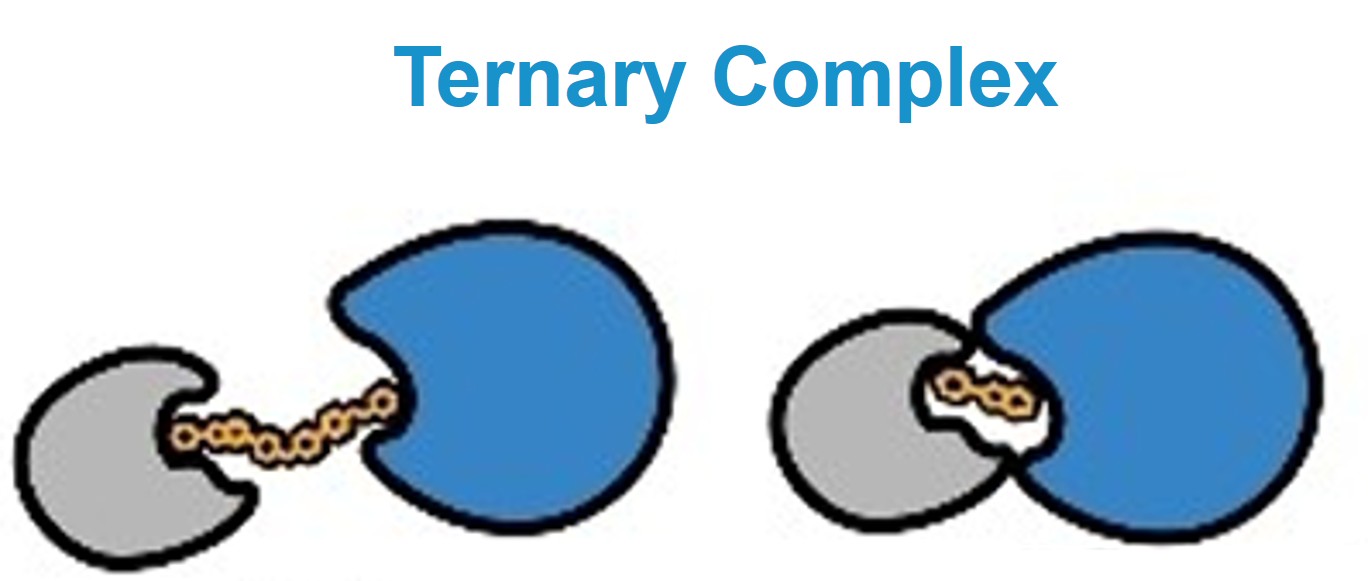
 Figure 1. Ternary complex formation: the central mechanistic step in protein degrader action. (Adapted from Grigglestone and Yeung, 2021)