
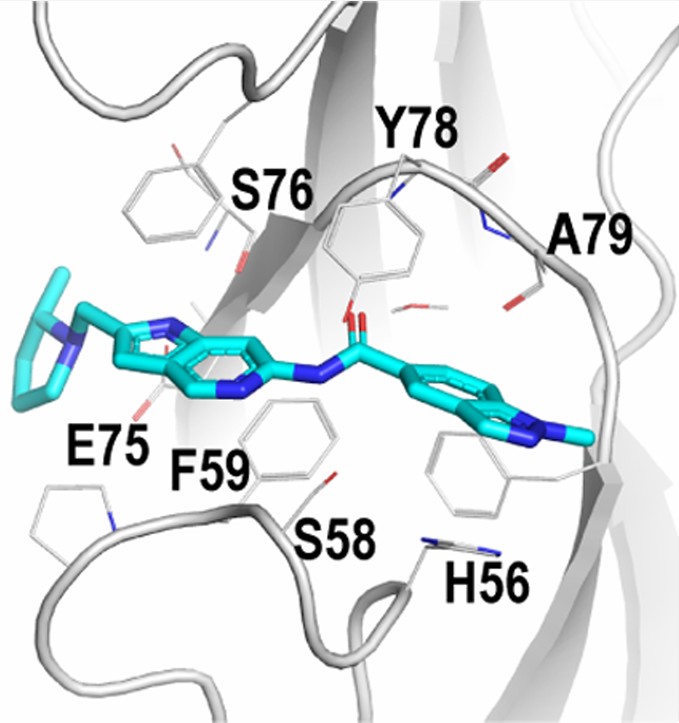
 Figure 1. Lead optimization of small molecule ENL YEATS inhibitors to enable in vivo studies. (Michino et al., 2024)
Profacgen offers Custom Small-Molecule Synthesis service, providing dedicated synthetic chemistry support for medicinal chemistry programs, from hit validation through lead optimization. In modern drug discovery, access to novel, pure, and well-characterized small molecules is essential for hit validation, structure–activity relationship (SAR) exploration, and lead optimization. Virtual screening and computational design routinely generate promising candidate structures, yet commercial availability is often limited for novel scaffolds, making custom synthesis the critical bridge between computational design and experimental testing.
Our synthetic chemistry team specializes in complex heterocyclic chemistry, natural product derivatives, and de novo scaffold construction, supporting pharmaceutical, biotechnology, and academic researchers with compounds that cannot be obtained from commercial catalogs. Every project is supported by full analytical characterization, including NMR (1H, 13C), LC-MS, HRMS, and HPLC purity assessment, ensuring that each delivered compound meets the rigorous standards required for biological screening and downstream development.
We offer flexible synthesis scales ranging from milligram quantities for initial screening to multi-gram amounts for in vivo pharmacology studies, allowing projects to progress seamlessly from early hit exploration to advanced lead optimization without the need to engage multiple vendors. By integrating synthetic chemistry with computational design and biological testing, Profacgen accelerates the discovery of novel small-molecule therapeutics.
Custom small-molecule synthesis is an indispensable capability for modern drug discovery programs. As medicinal chemistry campaigns become increasingly driven by structure-based design and virtual screening, the demand for rapid, reliable access to novel chemical matter has grown dramatically. Several factors make in-house custom synthesis essential rather than optional:
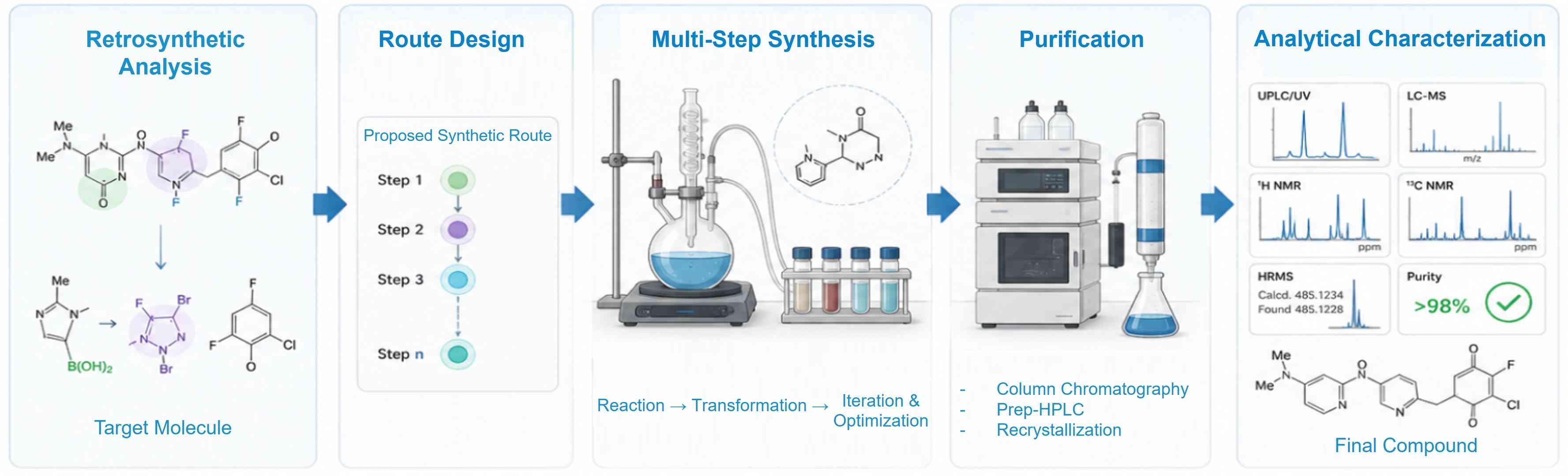 Figure 1. Representative workflow of Profacgen's custom small-molecule synthesis service, from retrosynthetic analysis and route design through multi-step synthesis, purification, and full analytical characterization.
| Service Component | Description |
| Retrosynthetic Analysis & Route Design | Comprehensive target molecule evaluation, retrosynthetic planning, route feasibility assessment, and building block sourcing. Our chemists analyze each target for synthetic accessibility, strategic bond disconnections, and available starting materials, providing a clear, executable route before any laboratory work begins. |
| Custom Synthesis Execution | Multi-step organic synthesis employing heterocyclic chemistry, transition metal catalysis (Suzuki, Buchwald, Sonogashira couplings), chiral synthesis, and protecting group strategies. Our team handles complex transformations including stereoselective constructions, macrocyclizations, and air- and moisture-sensitive reactions. |
| Purification & Analytical Characterization | Column chromatography and preparative HPLC purification, followed by full analytical characterization including 1H NMR, 13C NMR, LC-MS, HRMS, and HPLC purity assessment. Every compound is delivered with purity >95% and complete spectroscopic data, with chiral purity assessment provided when applicable. |
| Analog Library Preparation | Parallel synthesis, scaffold hopping, and focused library generation to support SAR tables and medicinal chemistry optimization. We design convergent routes that allow efficient preparation of structurally related analogs, enabling systematic exploration of substituent effects on potency and selectivity. |
| Scale-Up & Process Optimization | Scale-up from milligram to multi-gram quantities, reaction optimization, impurity profiling, and reproducibility documentation. We ensure that scale-up maintains the purity and yield established at small scale, providing the material quantities required for in vivo studies with full process documentation. |
Background:
A pharmaceutical company identified a novel pyrimidine-based scaffold as a promising kinase inhibitor hit through virtual screening and required a focused library of 30 analogs to explore structure–activity relationships around the core heterocycle. The scaffold contained multiple points of diversification, and the client needed all compounds delivered within a tight timeline to maintain alignment with an internal program milestone.
Our Solution:
Profacgen designed a convergent synthetic route featuring a late-stage Suzuki–Miyaura coupling as the key diversification step, allowing parallel preparation of analogs from a common advanced intermediate. The route was validated on a model substrate before being applied across the full library, and building blocks were pre-sourced to ensure uninterrupted parallel synthesis.
Final Results:
All 30 analogs were delivered within 6 weeks, each with purity >95% by HPLC and full NMR, LC-MS, and HRMS characterization. The resulting SAR table revealed key substituent effects at two positions, leading to a 5-fold potency improvement over the original hit and identification of a lead compound for further optimization.
Background:
An academic research group investigating a complex marine natural product required modified derivatives to probe the mechanism of action and identify the pharmacophore responsible for biological activity. The natural product possessed a densely functionalized polycyclic core with multiple stereocenters, and no synthetic route had been previously reported for the scaffold or its analogs.
Our Solution:
Profacgen designed and executed a 12-step synthesis of the core scaffold, incorporating three points of diversification that allowed systematic variation of peripheral functional groups while preserving the stereochemically defined core. Key transformations included a stereoselective aldol construction and a late-stage functionalization that enabled analog preparation without repeating the full synthetic sequence.
Final Results:
Eight derivatives were delivered with full stereochemical characterization, including NOESY and chiral HPLC analysis where applicable. Biological evaluation of the derivative set enabled the research group to identify the pharmacophore and publish the findings in a peer-reviewed journal, with the synthetic route featured as a key methodological contribution.
References:
Fill out this form and one of our experts will respond to you within one business day.