
Protein-protein interactions (PPIs) are fundamental to virtually all cellular processes, including signal transduction, metabolic regulation, and immune response. Understanding PPI networks is essential for elucidating disease mechanisms, identifying therapeutic targets, and optimizing drug candidates. At Profacgen, our computational PPI prediction platform leverages advanced bioinformatics algorithms, deep learning architectures, and structural biology data to deliver reliable qualitative and quantitative interaction forecasts that complement and enhance experimental approaches.
While experimental methods such as yeast two-hybrid screening, pull-down assays, and co-immunoprecipitation remain invaluable, they are often constrained by post-translational modification dynamics, transient interaction kinetics, intrinsically disordered regions, and physiological context. These limitations, combined with high cost, labor intensity, and susceptibility to false positives for transient complexes, make in silico prediction an indispensable component of modern interaction research. Our platform addresses these challenges through validated computational pipelines that deliver robust biological insights at reduced cost and accelerated timelines.
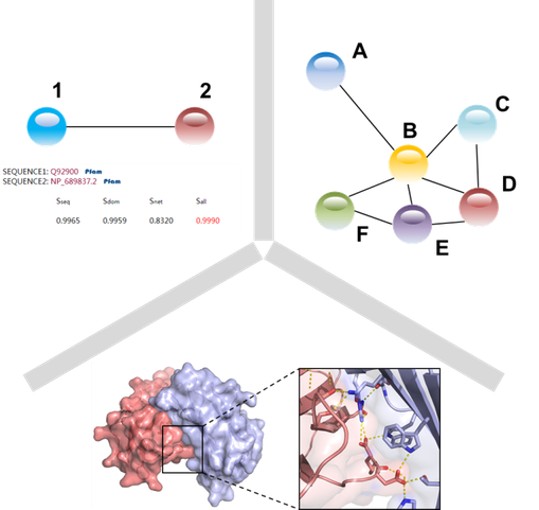
Profacgen provides comprehensive computational interaction analysis tailored to diverse research objectives:
In Silico Protein-Protein Interaction Prediction (ISPPIsP)
Binary interaction prediction between query proteins and candidate partners using sequence-based features, structural docking, and machine learning classifiers.
In Silico Protein-Protein Interaction Network Prediction (ISPPINsP)
Systematic reconstruction of interaction networks to reveal pathway topology, functional modules, and novel regulatory relationships.
In Silico Protein-Protein Interaction Site Prediction (ISPPIsSP)
High-resolution mapping of binding interfaces to guide mutational studies, peptide inhibitor design, and antibody engineering.
Experimental Validation Support
Computational predictions require experimental confirmation. We provide seamless integration with wet-lab validation services.
Our platform integrates multiple algorithmic approaches to maximize prediction accuracy:
Our in silico PPI prediction services support diverse research and drug discovery applications:
Background:
A cancer research group sought to identify novel signaling partners for a clinically relevant kinase implicated in treatment-resistant tumors, including non-small cell lung cancer and triple-negative breast cancer. Despite extensive experimental screening using conventional immunoprecipitation-mass spectrometry (IP-MS) and yeast two-hybrid approaches, the client had identified only a handful of confirmed interactors—leaving the majority of the signaling network unresolved and limiting their ability to understand resistance mechanisms or identify alternative therapeutic strategies. The lack of comprehensive interaction data represented a critical bottleneck in their translational research program.
Our Solution:
We deployed an integrative ISPPIsP (In Silico Protein-Protein Interaction Prediction Platform) pipeline combining multiple complementary computational approaches to maximize prediction coverage and confidence. The workflow integrated sequence homology-based transfer of known interactions from orthologous systems, structural template matching using experimentally resolved complex structures, and advanced network propagation algorithms that leverage global interactome topology to infer previously uncharacterized connections. To ensure biological relevance, predicted high-confidence interactions were systematically ranked by evolutionary conservation scores across species and domain co-occurrence patterns within the human proteome, filtering out predictions likely to represent spurious or non-physiological associations.
Final Results:
The integrative analysis identified 47 novel candidate interactors spanning diverse functional categories—including adaptor proteins, phosphatases, E3 ubiquitin ligases, and transcriptional regulators—substantially expanding the known interaction network of the target kinase. Of these, 18 high-priority candidates were subsequently validated by co-immunoprecipitation (Co-IP) and proximity ligation assays (PLA) in relevant cancer cell lines, representing a validation rate of 38%, well above typical in silico prediction benchmarks. Notably, three newly discovered interactions involved proteins with established druggability (two kinases and one E3 ligase), providing alternative therapeutic strategies for resistant patient populations where direct kinase inhibition has failed. These findings have since informed the client's drug combination and synthetic lethality screening initiatives.
Background:
A biotech company required precise mapping of the paratope-epitope interface for a murine therapeutic antibody prior to initiating humanization efforts. The antibody had demonstrated potent neutralization activity in preclinical models, but the client was concerned that framework substitutions and complementary-determining region (CDR) grafting during humanization could inadvertently disrupt critical antigen-contacting residues, compromising binding affinity and potentially derailing the entire development program. Accurate, residue-level interface characterization was essential to guide the engineering strategy and minimize experimental iteration.
Our Solution:
Using our ISPPIsSP platform, we performed comprehensive structural modeling of the antibody-antigen complex, beginning with homology modeling of the murine antibody variable domains against high-resolution template structures. The resulting complex model was subjected to explicit-solvent molecular dynamics (MD) simulations over multiple independent trajectories to capture conformational dynamics and assess interface stability under physiologically relevant conditions. Energy decomposition analysis using residue-based free energy calculations (MM-GBSA) was then applied to the equilibrated trajectories, enabling per-residue contribution profiling and systematic identification of hot-spot residues—those that contribute disproportionately to binding affinity through hydrogen bonding, hydrophobic packing, or electrostatic interactions.
Final Results:
Computational mapping identified 12 essential contact residues distributed across three CDR loops, including six critical hot-spots that together accounted for over 70% of the predicted binding free energy. Of these 12 residues, 8 were successfully preserved during the humanization process through careful CDR retention and strategic back-mutations in the framework regions. The resulting humanized antibody retained sub-nanomolar affinity (KD ≈ 0.8 nM) as confirmed by surface plasmon resonance (SPR), closely matching the parental murine antibody, and demonstrated favorable developability profiles—including high thermal stability (Tm > 70°C), low aggregation propensity, and acceptable manufacturability—in subsequent preclinical studies. The client advanced the humanized candidate into IND-enabling studies with substantially reduced development risk.
Consult Our Computational Biology Team
Fill out this form and one of our experts will respond to you within one business day.