We use cookies to understand how you use our site and to improve the overall user experience. This includes personalizing content and advertising. Read our
Privacy Policy
Random mutagenesis is a powerful protein engineering strategy that introduces unprogrammed genetic changes across a target sequence to explore vast regions of sequence space. By generating libraries containing diverse variant genotypes, researchers can discover beneficial mutations that would never be predicted by rational design alone—unlocking enhanced catalytic activity, improved thermostability, altered substrate specificity, or entirely novel protein functions.
As a core enabling technology for directed evolution, random mutagenesis mimics natural selection in an accelerated laboratory setting. Variant libraries are subjected to iterative rounds of diversification and screening, progressively enriching genotypes with the desired phenotype. Profacgen provides end-to-end random mutagenesis services using multiple complementary methodologies, each offering precise control over mutation frequency and distribution to match the requirements of your selection or screening platform.
Background: The Directed Evolution Revolution
Directed evolution—the laboratory mimicry of natural selection to engineer biomolecules—was pioneered in the early 1990s by Frances Arnold at Caltech, Willem Stemmer at Affymax, and Pim Stemmer, who independently developed the conceptual and methodological frameworks that transformed protein engineering from a rational design discipline into an empirical, Darwinian endeavor. Arnold's development of error-prone PCR for enzyme evolution and Stemmer's invention of DNA shuffling provided the foundational tools that enabled researchers to evolve proteins without detailed structural knowledge.
The impact of these technologies has been profound. Directed evolution has produced enzymes with non-natural catalytic activities, antibodies with femtomolar affinities, fluorescent proteins with novel spectral properties, and biocatalysts that operate in extreme environments of temperature, pH, and organic solvents. In 2018, Frances Arnold was awarded the Nobel Prize in Chemistry for her pioneering work on the directed evolution of enzymes, cementing the approach as one of the most powerful strategies in modern biotechnology.
The molecular basis of random mutagenesis lies in compromising the fidelity of DNA replication. Under normal conditions, DNA polymerases maintain extraordinarily high copying accuracy through proofreading 3'→5' exonuclease activity and post-replicative mismatch repair. By manipulating reaction conditions or host genetic backgrounds, these quality control mechanisms can be circumvented, allowing mutations to accumulate at tunable frequencies. The key challenge—and the art of the method—lies in balancing mutation rate against functional integrity: too few mutations limit diversity, while too many disrupt protein folding and function.
Figure 1. The directed evolution cycle. (Wang et al., 2021)
Overview of Random Mutagenesis Methods
Profacgen deploys three established random mutagenesis technologies, each suited to different project goals and library design strategies:
Error-prone PCR (epPCR): Low-fidelity DNA polymerases lacking proofreading activity introduce random point mutations during amplification. Mutation frequency is tunable from approximately 1 to 10 mutations per kilobase by adjusting reaction conditions (Mn2+ concentration, unbalanced dNTP ratios, polymerase choice). This method predominantly introduces transition mutations (A↔G, C↔T) with a bias toward AT→GC changes under standard conditions.
DNA shuffling: Related gene sequences are fragmented by DNase I and reassembled in vitro using primerless PCR, creating hybrid genes that combine beneficial mutations from different parental variants. The recombination frequency correlates with sequence identity between parental genes. This technique is particularly effective for second-generation optimization following an initial round of random mutagenesis.
Mutator strain-mediated mutagenesis: Target genes are propagated in E. coli strains deficient in DNA repair pathways (mutD5, which inactivates the proofreading subunit of DNA polymerase III; or mutS, which disrupts mismatch repair), allowing random mutations to accumulate during chromosomal replication. Mutation rates of 10-5 to 10-6 per base per generation can be achieved, with diversity accumulating through serial passage.
Our Random Mutagenesis Services
Error-Prone PCR Library
Tunable random point mutation introduction across your target gene.
Adjustable mutation frequency: 1–10 mutations/kb
Targeted randomization of specific gene regions or full-length sequences
Compatible with all standard expression vectors and host systems
Ideal for directed evolution campaigns requiring controlled diversity
Library sizes from 106 to 108 independent transformants
DNA Shuffling & Staggered Extension (StEP)
Recombination of related sequences to create hybrid gene libraries.
In vitro recombination of homologous genes or evolved variant pools
StEP recombination for genes with lower sequence identity
Combines beneficial mutations while removing deleterious changes
Powerful second-generation optimization following initial epPCR
Family shuffling of naturally occurring homologs for expanded diversity
Mutator Strain Library
In vivo random mutation accumulation through defective DNA repair.
Propagation in mutD or mutSE. coli strains
Whole-gene randomization without PCR bias
Controlled mutation accumulation through serial passage
Suitable for large genes and operons
Minimal hands-on manipulation after initial cloning
Combined Random & Site-Directed Library
Hybrid strategies merging random diversity with rational design constraints.
Random mutagenesis restricted to regions of interest
Site-directed conservation of catalytic or binding residues
Codon-optimized randomization to minimize stop codons
Maximizes functional diversity while preserving essential structure
Best of both worlds: exploration + rational control
Mutation Frequency Control
Selecting the appropriate mutation rate is critical for directed evolution success. Too few mutations limit diversity; too many disrupt protein folding and function. Profacgen helps you optimize this parameter based on your gene length, screening capacity, and evolutionary objective:
Mutation Rate
Frequency (mutations/kb)
Typical Outcome
Recommended For
Low
1–2
Fine-tuning of activity or stability with minimal disruption
Late-stage optimization; proteins with limited tolerance to change
Medium
3–5
Balanced exploration of sequence space
General directed evolution; enzyme engineering campaigns
High
6–10
Maximum diversity; greater likelihood of discovering major improvements
Early-stage exploration; proteins with robust folding landscapes
Custom
User-defined
Tailored to specific project requirements
Specialized applications; biased or region-specific randomization
Directed evolution of enzymes: Enhance catalytic rate, broaden substrate scope, improve stereoselectivity, or adapt enzymes to non-natural reaction conditions
Antibody affinity maturation: Introduce somatic hypermutation-like diversity in complementarity-determining regions to increase binding affinity and reduce off-target reactivity
Protein stability engineering: Identify mutations that increase thermal stability, pH tolerance, or resistance to chemical denaturants and proteolysis
Novel protein discovery: Evolve proteins with new binding specificities, catalytic activities, or signaling properties not present in nature
Metabolic pathway engineering: Optimize enzyme cascades for improved flux, reduced byproduct formation, or production of non-natural metabolites
Industrial strain improvement: Enhance production titers, tolerance to process conditions, or growth characteristics of microbial cell factories
Biosensor development: Engineer recognition elements with improved sensitivity, selectivity, or response kinetics for diagnostic and environmental monitoring applications
Why Choose Profacgen?
Multiple Methodologies: Access error-prone PCR, DNA shuffling, and mutator strain approaches from a single provider, with expert guidance on the optimal strategy for your project.
Tunable Mutation Rates: Precise control over mutation frequency ensures your library diversity matches your screening capacity and project goals.
High Library Diversity: Our optimized protocols routinely achieve >106 independent transformants, ensuring comprehensive sequence space coverage.
No Structural Information Required: Random mutagenesis is the ideal starting point when crystal structures or homology models are unavailable.
Integrated Evolution Platform: Combine library construction with our high-throughput screening and protein characterization services for end-to-end directed evolution campaigns.
Representative Case Studies
Case 1: Directed Evolution of an Esterase for Asymmetric Synthesis of a Chiral Pharmaceutical Intermediate
Background:
A pharmaceutical company required an enantioselective biocatalyst for the kinetic resolution of a racemic ester precursor to an anticoagulant drug. Wild-type pig liver esterase showed promising activity but exhibited only modest enantioselectivity (E = 12, where E > 100 is typically required for industrial application), and operated at suboptimal temperature (25 °C).
Our Solution:
Profacgen executed a four-round directed evolution campaign. Round 1 generated an error-prone PCR library with a medium mutation rate (~4 mutations/kb) and screened 50,000 clones for improved enantioselectivity at 37 °C. Beneficial mutations were combined by DNA shuffling in Round 2. Rounds 3 and 4 applied focused epPCR to positions surrounding the active site and oxyanion hole. Throughout the campaign, we employed a high-throughput chiral HPLC screening assay developed in collaboration with the client.
Final Results:
The final evolved variant contained 7 mutations (5 in the active site, 2 in a distal loop) and exhibited an enantioselectivity factor (E) of 320 at 45 °C—a 27-fold improvement over wild-type. The evolved esterase also showed a 4-fold increase in catalytic turnover and was stable for 24 hours at the process temperature. The biocatalyst was subsequently scaled to 100-liter biotransformation, replacing a three-step chemical resolution with a single enzymatic step and reducing solvent waste by 80%.
Case 2: Thermostabilization of a Viral Glycoprotein Antigen for Vaccine Development
Background:
A vaccine developer was working with a viral envelope glycoprotein that served as the primary target for neutralizing antibodies. While immunogenic, the wild-type protein was conformationally unstable at elevated temperatures, losing its native trimeric structure and critical neutralizing epitopes during purification and formulation. This instability compromised vaccine potency and shelf-life.
Our Solution:
Profacgen designed a random mutagenesis campaign targeting surface-exposed residues predicted to influence conformational stability. An error-prone PCR library with low mutation frequency (~2 mutations/kb) was generated to minimize the risk of disrupting antigenic sites. The library was expressed in HEK293 cells, and 25,000 variants were screened for trimer stability using a thermostability assay (differential scanning fluorimetry) and retention of neutralizing antibody binding.
Final Results:
Screening identified a triple mutant (T101K, S203P, E298K) with a melting temperature (Tm) increase of 14.2 °C compared to wild-type. Importantly, the stabilized variant retained full reactivity with all 12 neutralizing monoclonal antibodies tested, confirming that antigenicity was preserved. Electron microscopy confirmed that the trimeric architecture was maintained even after incubation at 50 °C for 1 hour. The stabilized antigen was incorporated into the company's vaccine candidate, extending liquid formulation stability from 3 months to 18 months at 4 °C.
Q: How do you control mutation frequency in error-prone PCR?
A: Mutation frequency in error-prone PCR is controlled by adjusting several reaction parameters: Mn2+ concentration (stabilizes mispaired bases), dNTP concentration ratios (bias polymerase toward misincorporation), polymerase selection (low-fidelity enzymes such as Taq without proofreading), and cycle number. By systematically varying these parameters, we achieve mutation rates ranging from 1 to 10 mutations per kilobase. During project setup, we discuss your goals and recommend the optimal frequency.
Q: What library size can you achieve?
A: Our random mutagenesis protocols routinely generate libraries containing 106 to 108 independent transformants, depending on the method and gene size. For most directed evolution applications, libraries of 106 to 107 clones provide sufficient diversity. If your application requires larger libraries, we can scale the transformation protocol accordingly.
Q: Can you combine random and site-directed mutagenesis in one project?
A: Yes. Hybrid strategies are increasingly popular and highly effective. For example, we can apply random mutagenesis to surface-exposed loops while preserving active-site residues through site-directed design, or combine an initial epPCR round with subsequent site-directed incorporation of beneficial mutations identified during screening. Our scientists will help you design the optimal hybrid strategy.
Q: What screening methods do you support for random mutagenesis libraries?
A: We support a comprehensive range of screening and selection methods including: agar plate-based activity assays (halo formation, colorimetric substrates), microtiter plate screening with fluorescence or absorbance readouts, FACS (fluorescence-activated cell sorting) for surface-displayed libraries, phage display selection, yeast two-hybrid screening, and deep sequencing (NGS) for comprehensive library characterization. We help you select the most appropriate method based on your target property and throughput requirements.
Q: How do you minimize stop codons and frameshifts in random libraries?
A: For error-prone PCR, we use optimized polymerase conditions that predominantly introduce transitions and transversions rather than insertions or deletions, minimizing frameshift frequency. For cassette-based approaches, we design degenerate codons (such as NNK/NNS) that include only a single stop codon out of 32 possibilities (3.1% frequency) rather than the 3 stops present in NNN degeneracy (4.7% frequency). For projects where stop codons are particularly problematic, we can employ custom codon schemes that eliminate stops entirely while maintaining comprehensive amino acid coverage.
Q: What is the typical timeline for a directed evolution campaign?
A: A single round of random mutagenesis (library construction through hit identification) typically requires 4–6 weeks. Multi-round directed evolution campaigns spanning 3–5 iterations may require 4–8 months depending on screening complexity and the number of rounds required to achieve the target phenotype. We work with you to establish clear milestones and provide regular progress updates throughout the campaign.
Q: Do you provide deep sequencing (NGS) analysis of random mutagenesis libraries?
A: Yes. We offer next-generation sequencing services to comprehensively characterize library diversity, mutation spectra, and position-specific mutation frequencies. NGS analysis provides valuable quality control information and can identify sequence biases introduced during library construction. This data helps optimize subsequent rounds of evolution and ensures that your library covers the intended sequence space comprehensively.
References:
Wang Y, Xue P, Cao M, Yu T, Lane ST, Zhao H. Directed evolution: methodologies and applications. Chem Rev. 2021;121(20):12384-12444. doi:10.1021/acs.chemrev.1c00260
Online Inquiry
Fill out this form and one of our experts will respond to you within one business day.

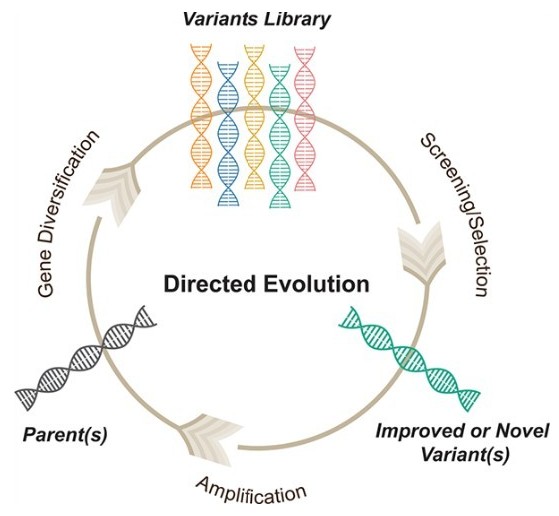 Figure 1. The directed evolution cycle. (Wang et al., 2021)