Anti-Drug Antibody (ADA) Evaluation Service
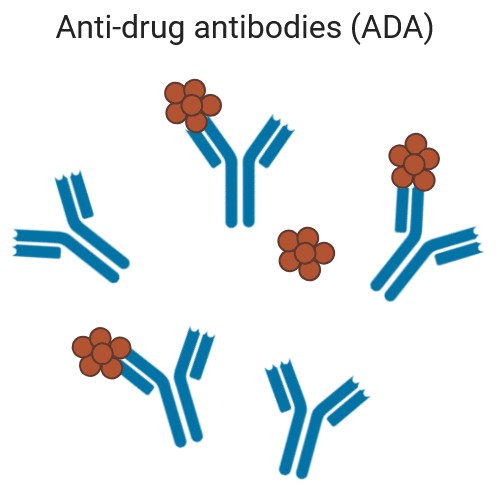
Anti-drug antibody (ADA) evaluation is a cornerstone of immunogenicity assessment for biologic therapeutics. The formation of ADAs against therapeutic proteins, monoclonal antibodies, and other biologics can alter pharmacokinetic profiles, diminish efficacy, and in some cases, precipitate adverse clinical events. A well-designed ADA evaluation program provides critical data on whether a patient has developed antibodies against the therapeutic product, whether those antibodies are specific to the drug, and the relative magnitude of the antibody response.
At Profacgen, we offer comprehensive Anti-Drug Antibody (ADA) Evaluation Services tailored to the unique structural and functional properties of each biologic. Our approach integrates tiered immunogenicity testing, multiple assay platforms, and rigorous bioanalytical validation to support nonclinical development, clinical trials, biosimilar programs, and post-market surveillance.
We support ADA evaluation across a broad spectrum of biologic modalities, including:
- Monoclonal and bispecific antibodies
- Recombinant proteins and enzymes
- Fusion proteins
- Antibody-drug conjugates (ADCs) and conjugated biologics
- Cytokines and peptide therapeutics
- Biosimilars
By distinguishing immunogenicity risk prediction from post-dosing ADA detection, we help clients build scientifically sound, regulatorily robust immunogenicity strategies at every stage of development.
When Is ADA Evaluation Needed?
ADA evaluation requirements vary across the product lifecycle. Early immunogenicity risk prediction during discovery or process development focuses on in silico and in vitro liability assessment, whereas ADA evaluation refers to the actual bioanalytical detection of antibodies in study samples following drug administration. The following scenarios typically warrant formal ADA evaluation:
- Nonclinical study sample analysis: Toxicology and pharmacokinetic studies in animal models require ADA monitoring to interpret exposure data, identify unexpected immune responses, and support dose selection.
- Clinical immunogenicity assessment: Regulatory agencies expect systematic ADA monitoring during clinical trials to characterize incidence, titer, persistence, and potential clinical consequences.
- Biosimilar development: Comparative immunogenicity studies between a biosimilar candidate and its reference product require carefully designed ADA strategies to demonstrate similarity.
- Evaluation following formulation or process changes: Manufacturing modifications that may affect aggregation, glycosylation, or impurity profiles necessitate reassessment of immunogenicity potential through ADA monitoring.
- Investigation of altered PK, loss of efficacy, or hypersensitivity: Unexplained changes in drug exposure, reduced therapeutic response, or infusion-related reactions may prompt targeted ADA investigations.
- Post-market immunogenicity monitoring: Continued surveillance after approval helps detect rare or delayed immune responses in broader patient populations.
Importantly, immunogenicity risk prediction and actual ADA detection are complementary but distinct activities. Risk prediction identifies liabilities before human exposure; ADA evaluation confirms whether those liabilities manifest as measurable antibody responses in treated subjects.
Tiered ADA Testing Strategy
Regulatory guidance and industry best practice support a tiered approach to ADA testing. This structured workflow minimizes false-positive results while ensuring that truly immunoreactive samples are identified and characterized appropriately.
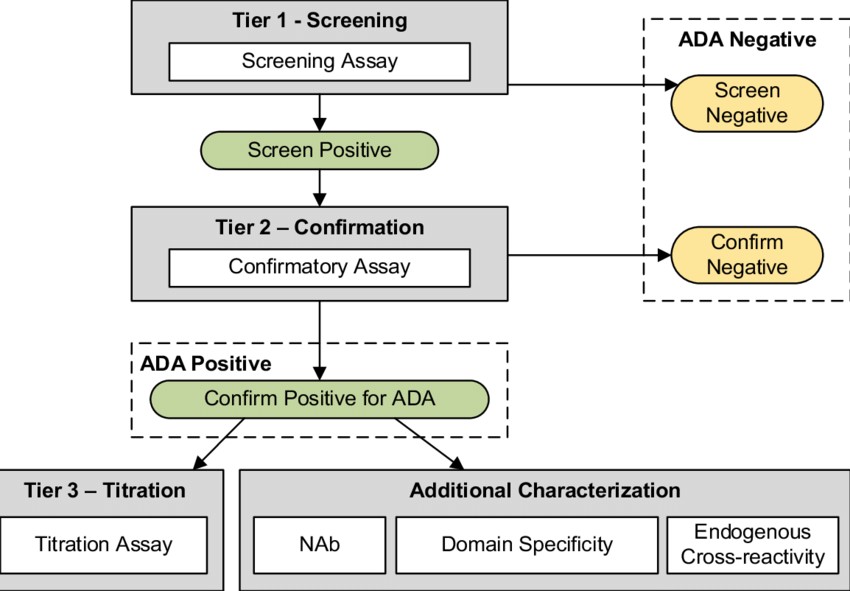 Figure 1. Generic workflow of the harmonized multi-tiered ADA sample testing scheme used to detect and characterize serum samples for the presence of reactive antibodies. (Johnson et al., 2021)
| Testing Tier |
Purpose |
Typical Output |
| Screening Assay |
Identify potentially ADA-positive samples through sensitive initial testing. The screening cut point is established to achieve a target false-positive rate (typically 5%) in drug-naïve samples. |
Screen-positive or screen-negative result |
| Confirmatory Assay |
Confirm drug-specific binding by demonstrating competitive inhibition with excess unlabeled drug. The confirmatory cut point distinguishes specific antibody binding from nonspecific matrix effects. |
Confirmed ADA status (positive or negative) |
| Titer Determination |
Estimate the relative magnitude of the ADA response through serial dilution analysis. Endpoint or dilution-based titers provide quantitative comparison across samples and time points. |
Endpoint titer or dilution-based titer value |
| Characterization |
Further evaluate relevant ADA properties to support clinical interpretation, including antibody isotype, domain specificity, and cross-reactivity profiles. |
Isotype, specificity, or domain-binding data |
Key methodological considerations within this tiered framework include:
- Screening cut point: Statistically determined to optimize sensitivity while controlling the false-positive rate in the target population matrix.
- Confirmatory cut point: Defines the level of signal inhibition required to conclude that binding is drug-specific.
- False-positive control: Established through analysis of drug-naïve subject samples from the intended study population.
- Pre-existing antibodies: Baseline reactivity in treatment-naïve samples must be distinguished from treatment-emergent responses.
- Sample retesting criteria: Defined rules for repeating analyses when initial results are equivocal or when assay performance criteria are not met.
ADA Assay Platforms and Formats
Platform selection depends on the molecular properties of the therapeutic, the anticipated ADA characteristics, and the study objectives. Profacgen supports multiple ligand-binding and detection formats, with platform choice driven by scientific rationale rather than a one-size-fits-all approach.
Bridging Ligand-Binding Assays
Widely used for bivalent therapeutic antibodies. These assays detect ADA capable of simultaneously binding two drug molecules. However, bridging formats may be limited by drug interference, monovalent or low-affinity ADA detection, matrix components, target interference, and soluble receptor competition.
Direct and Indirect ELISA
Enzyme-linked immunosorbent assay formats suitable for diverse biologic structures, with flexibility in capture and detection reagent configuration.
Electrochemiluminescence (ECL) Assays
Meso Scale Discovery (MSD) platform-based methods offering broad dynamic range, reduced matrix effects, and multiplexing capabilities.
Radioimmunoassay
Employed where scientifically justified, particularly for legacy product comparisons or specific regulatory requirements.
Alternative Formats for Difficult Molecules
Customized assay architectures for monovalent therapeutics, small peptides, or highly modified biologics where conventional formats are unsuitable.
Each platform presents distinct advantages and limitations. Bridging assays, while popular for antibody therapeutics, may fail to detect monovalent ADAs or ADA with low affinity for the capture-detection pair. Target interference and circulating drug can produce false-negative or false-positive signals. Platform selection is therefore evaluated during feasibility studies to ensure alignment with the specific biologic and study design.
Assay Development Strategy
Robust ADA assay development requires careful optimization of reagents, format, and analytical conditions. Profacgen follows a structured development workflow that addresses the following parameters:
- Selection and labeling of capture and detection reagents: Reagent choice directly impacts assay sensitivity and specificity. We evaluate biotinylation, direct conjugation, and secondary detection strategies based on the therapeutic's structure.
- Positive control antibody preparation: Generation or procurement of anti-drug antibodies with appropriate affinity and specificity to serve as assay controls and calibration standards.
- Assay format feasibility: Comparative evaluation of bridging, direct, and competitive formats to identify the optimal architecture for the specific therapeutic.
- Minimum required dilution (MRD): Determination of the lowest sample dilution that reduces matrix interference while maintaining assay sensitivity.
- Optimization of antigen concentration: Titration of capture and detection reagent concentrations to maximize signal-to-background ratio.
- Signal-to-background evaluation: Quantitative assessment of assay window to ensure reliable discrimination between positive and negative samples.
- Sample volume considerations: Adaptation of assay design to accommodate limited sample availability, particularly in rodent toxicology studies or pediatric clinical trials.
- Evaluation of hook or prozone effects: Assessment of high-dose hook effects that could mask ADA detection in samples with very high antibody concentrations.
We do not assume that a single platform will be universally applicable. Each project undergoes format-specific feasibility assessment before committing to a development path.
Drug Tolerance and Matrix Interference
Circulating drug, soluble targets, and endogenous matrix components represent significant challenges in ADA bioanalysis. Inadequate attention to these factors can lead to false-negative results and underestimation of immunogenicity incidence.
| Interference Source |
Mechanism of Impact |
Optimization Strategies |
| Circulating drug interference |
Excess unbound drug competes with assay reagents for ADA binding, masking detection. |
Acid dissociation, increased wash stringency, drug-tolerant assay formats, optimized sample collection timing. |
| Soluble target interference |
Target-drug complexes sequester ADA binding sites or generate background signal. |
Target-blocking reagents, alternative capture strategies, sample pre-treatment. |
| Matrix effects |
Serum or plasma components produce nonspecific binding or inhibit specific antibody detection. |
MRD optimization, matrix selection studies, heterophilic antibody blocking agents. |
| Hemolysis and lipemia |
Compromised sample integrity alters assay performance and background signal. |
Sample quality criteria establishment, acceptance limits, collection protocol optimization. |
Additional considerations include selection of the appropriate biological matrix (serum versus plasma, anticoagulant type), sample collection timing relative to dosing intervals, and the implementation of acid dissociation or other drug-tolerance strategies when clinically relevant drug concentrations are expected to persist.
ADA Assay Qualification and Validation
Profacgen distinguishes between assay qualification (typically for nonclinical or early-phase studies) and full validation (required for pivotal clinical trials and regulatory submissions). Both processes follow systematic protocols designed to demonstrate that the assay performs reliably for its intended purpose.
- Screening and confirmatory cut-point determination: Statistical analysis of drug-naïve subject matrices to establish assay-specific thresholds.
- Sensitivity: Determination of the lowest positive control concentration reliably detected at the screening cut point.
- Precision: Evaluation of intra-run and inter-run variability for controls and study samples.
- Selectivity: Assessment of assay performance in the presence of disease-state matrices, concomitant medications, and elevated endogenous proteins.
- Specificity: Confirmation that the assay detects anti-drug antibodies and not unrelated immunoglobulins or matrix artifacts.
- Drug tolerance: Quantification of the maximum circulating drug concentration that does not preclude ADA detection.
- Target interference: Evaluation of soluble target effects on assay performance at clinically relevant concentrations.
- Robustness: Assessment of assay tolerance to minor deviations in operating conditions.
- Stability of controls and samples: Evaluation of positive control, negative control, and study sample integrity under defined storage and handling conditions.
- Inter-assay reproducibility: Longitudinal monitoring of assay performance across multiple runs, operators, and reagent lots.
We avoid unverifiable claims of "FDA-compliant" or "fully regulatory approved" status. Instead, we provide documented evidence that assays are developed, qualified, or validated according to current regulatory guidance and industry white papers.
Sample Analysis and Data Interpretation
Beyond assay development, Profacgen provides comprehensive sample analysis services with rigorous data management and interpretation support.
- Sample receipt and chain of custody: Documented tracking from receipt through final reporting, including temperature monitoring and deviation logging.
- Plate acceptance criteria: Predefined system suitability and control acceptance rules applied before sample results are reported.
- Screening and confirmatory testing: Execution of tiered testing with documented cut-point application and result adjudication.
- Titer analysis: Serial dilution testing of confirmed-positive samples to determine endpoint or relative titers.
- Repeat analysis rules: Clear criteria for retesting samples that fail initial run acceptance or produce equivocal results.
Clinical interpretation of ADA data requires integration of multiple parameters:
- Treatment-emergent versus pre-existing ADA: Comparison of baseline reactivity against post-treatment responses to identify truly drug-induced antibodies.
- Persistent versus transient ADA responses: Characterization of antibody duration to distinguish sustained immunogenicity from transient, self-limiting responses.
- Correlation with PK, efficacy, and safety data: Integration of ADA incidence, titer, and persistence with pharmacokinetic exposure, pharmacodynamic markers, clinical outcomes, and adverse event profiles.
ADA positivity does not automatically imply severe clinical consequences. Interpretation must consider ADA incidence, titer magnitude, persistence over time, neutralizing antibody (NAb) status, associated PK/PD changes, and relevant safety findings.
ADA Evaluation for Biosimilars
Immunogenicity assessment is a critical component of biosimilar analytical similarity and clinical comparability programs. Profacgen supports comparative ADA strategies aligned with regulatory expectations.
- Comparative immunogenicity strategy: Design of head-to-head ADA studies to evaluate whether the biosimilar candidate elicits an immune response profile comparable to the reference product.
- Single-assay versus dual-assay approach: Evaluation of whether one cross-reactive assay can reliably detect antibodies against both products, or whether separate assays are required due to structural differences in immunogenic epitopes.
- Cross-reactivity between biosimilar and reference product: Demonstration that the assay detects anti-biosimilar and anti-reference antibodies with equivalent sensitivity and specificity.
- Assay sensitivity across both products: Confirmation that the positive control antibody and assay conditions perform equivalently when detecting antibodies against either the biosimilar or the reference product.
- Matrix and drug-tolerance comparability: Consistent assay performance in the presence of biosimilar- and reference product-specific matrix effects and circulating drug.
- Consistent interpretation criteria: Harmonized cut points, titer methodologies, and reporting standards applied across both products to enable unbiased comparison.
Deliverables
Profacgen provides comprehensive documentation to support regulatory submissions, internal decision-making, and quality audits:
- Assay development or feasibility report
- Qualification or validation protocol and report
- Cut-point analysis and statistical summary
- Raw and processed data in standardized formats
- Sample-level ADA results with tier status
- Titer results for confirmed-positive samples
- Deviation and repeat-analysis documentation
- Final study report with integrated interpretation
- Recommendations for NAb follow-up testing
Why Choose Profacgen?
- Multiple ligand-binding assay platforms: We maintain capabilities across ELISA, ECL, SPR, and BLI formats, selecting the optimal technology for each therapeutic modality.
- Project-specific assay design: Every assay is customized to the molecular structure, matrix, and clinical context of the specific biologic program.
- Drug-tolerance and matrix-interference optimization: We systematically address circulating drug, soluble target, and endogenous matrix effects to minimize false-negative risk.
- Support for diverse biologic modalities: From monoclonal antibodies to peptide therapeutics, our development experience spans the full range of biologic structures.
- Integration with NAb testing: Confirmed ADA-positive samples can be seamlessly transferred to our neutralizing antibody testing workflows.
- Support across nonclinical, clinical, and biosimilar programs: Our assays are designed to evolve from early feasibility through full validation and sample analysis.
Frequently Asked Questions (FAQs)
Q: What is the difference between screening and confirmatory ADA assays?
A: The screening assay is designed for high sensitivity to identify all potentially ADA-positive samples, accepting a controlled false-positive rate. The confirmatory assay then tests screen-positive samples for drug-specific binding, typically through competitive inhibition with excess unlabeled drug, to eliminate false positives caused by nonspecific matrix binding.
Q: Does every ADA-positive sample require NAb testing?
A: Not necessarily. The decision to conduct neutralizing antibody (NAb) testing depends on the therapeutic's risk profile, the clinical relevance of neutralization, regulatory expectations, and study-specific objectives. High-risk biologics or those with observed efficacy loss typically warrant comprehensive NAb follow-up, whereas lower-risk programs may use a risk-based testing strategy.
Q: How does circulating drug interfere with ADA detection?
A: Circulating unbound drug can compete with assay capture or detection reagents for ADA binding sites, resulting in false-negative results. Strategies to mitigate drug interference include acid dissociation to disrupt drug-ADA complexes, optimized sample collection timing during washout periods, and the use of drug-tolerant assay formats.
Q: What is an ADA assay cut point?
A: The cut point is a statistically determined signal threshold that distinguishes assay-positive from assay-negative results. The screening cut point is typically set to achieve a 5% false-positive rate in drug-naïve samples from the target population. The confirmatory cut point defines the percentage of signal inhibition required to conclude that binding is specific to the therapeutic drug.
Q: Can pre-existing antibodies affect study interpretation?
A: Yes. Some subjects may have detectable reactivity at baseline due to prior exposure to related biologics, cross-reactive endogenous proteins, or heterophilic antibodies. Distinguishing treatment-emergent ADA (responses that develop or increase after drug administration) from pre-existing baseline reactivity is essential for accurate immunogenicity characterization.
Q: What samples and volumes are required for ADA evaluation?
A: Typical sample requirements include serum or plasma collected at baseline and at defined post-dose intervals. Volume requirements vary by assay format and number of testing tiers, generally ranging from 50 to 200 µL per sample for a standard screening-confirmatory-titer workflow. We work with clients to optimize collection schedules and volumes based on assay MRD and study design.
Related Services
References:
- Johnson D, Simmons E, Abdeen S, et al. Sensitive assay design for detection of anti-drug antibodies to biotherapeutics that lack an immunoglobulin Fc domain. Sci Rep. 2021;11(1):15467. doi:10.1038/s41598-021-95055-x