

Coronaviruses are enveloped, positive-sense single-stranded RNA viruses that infect humans and other animals. Human coronaviruses include the seasonal viruses 229E, NL63, OC43, and HKU1, as well as SARS-CoV, MERS-CoV, and SARS-CoV-2. SARS-CoV-2 is the virus that causes COVID-19; COVID-19 is the disease, not the virus itself.
Profacgen's Coronavirus Research Services Platform supports protein-focused discovery programs through recombinant viral protein production, molecular interaction studies, enzyme activity assays, computational analysis, and virtual screening. Individual modules can be commissioned separately or combined into an integrated workflow aligned with the target, assay format, and downstream research objective.
Projects may focus on structural proteins, nonstructural proteins, accessory proteins, or defined viral-host interaction systems. Representative targets include spike and receptor-binding constructs, nucleocapsid, membrane and envelope proteins, main protease (Mpro/3CLpro), papain-like protease (PLpro), RNA-dependent RNA polymerase, and selected host factors. Final target selection and construct design are reviewed for scientific relevance, feasibility, and the intended downstream application.
The platform can support exploratory studies as well as more focused target-validation and lead-discovery programs. For variant-related projects, a harmonized design can be used to compare expression behavior, protein quality, binding, or biochemical performance while minimizing avoidable differences between test articles.
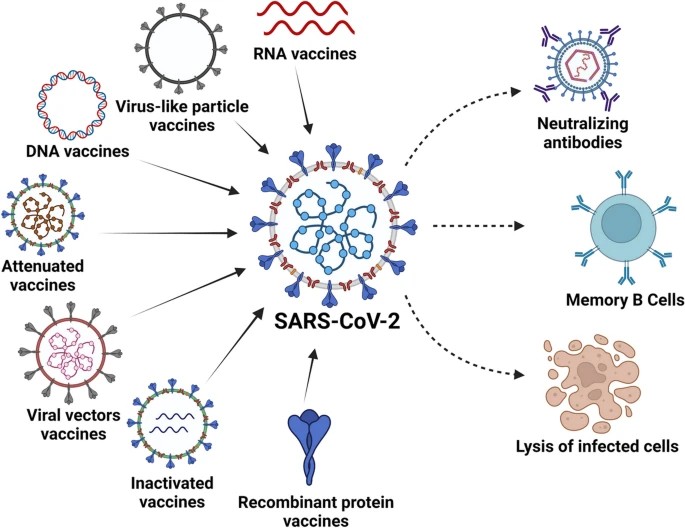 Figure 1. Research scope related to the Coronavirus. (Alagheband et al., 2022)
Viral Protein Expression and Production
Construct design, expression-system selection, expression optimization, purification, and fit-for-purpose quality assessment for recombinant coronavirus proteins and domains. Soluble domains, tagged proteins, and selected complex or membrane-associated formats can be evaluated according to project feasibility.
Molecular Interaction Analysis
Qualitative and quantitative analysis of viral protein interactions with receptors, host factors, antibodies, proteins, peptides, or other research molecules. Assay selection is guided by sample format, expected affinity, throughput, and whether kinetic or endpoint data are required.
Enzyme Activity and Inhibitor Assays
Custom biochemical assay development, reaction optimization, kinetic characterization, and inhibitor evaluation for suitable coronavirus enzyme targets. Depending on the assay, outputs may include activity curves, kinetic parameters, concentration-response analysis, and control performance.
Computational Protein Analysis
Sequence annotation, structural modeling, stability and interface assessment, binding-site analysis, and molecular dynamics support for hypothesis generation and experimental planning. Comparative analyses can help identify regions that warrant targeted experimental follow-up.
Virtual Screening and Hit Prioritization
Target preparation, binding-site evaluation, molecular docking, virtual screening, rescoring, and rational prioritization of candidates for experimental follow-up. Screening strategies can be adapted to the availability of target structures, known ligands, and project-specific filters.
Integrated Study Design
Coordinated protein production, assay development, computational analysis, and data interpretation to reduce handoff gaps across discovery-stage research.
Reliable downstream studies begin with an appropriate construct and well-characterized recombinant material. Profacgen can evaluate sequence boundaries, signal peptides, affinity tags, oligomeric state, and expression-system requirements before production. Depending on the project, analytical assessment may include purity, identity, molecular weight, aggregation status, concentration, and target-relevant binding or activity.
Assays can be developed for defined viral proteins, host receptors, cofactors, antibodies, or candidate ligands. The workflow may cover reagent qualification, control selection, concentration-range design, condition optimization, and data analysis. When appropriate, binding affinity or kinetics can be reported as equilibrium or rate parameters, while enzyme studies may include Km, Vmax, or IC50 analysis.
Computational analysis is most useful when it informs a defined experimental decision. Structural models, predicted interfaces, variant comparisons, or docking results can be used to prioritize constructs and candidates. Selected outputs can then be evaluated through recombinant protein production, binding analysis, or biochemical assays, creating an iterative path between prediction and experimental evidence.
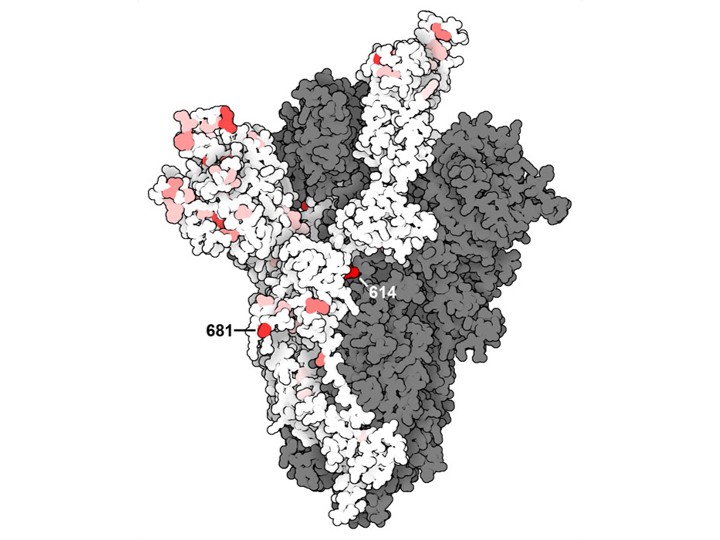
This specialized service provides customized expression and purification of research-use SARS-CoV-2 protein variants and defined constructs. Support may include sequence and construct review, expression-system selection, small-scale feasibility testing, purification strategy development, and analytical quality assessment. The resulting recombinant proteins can support binding studies, antigenicity research, biochemical assay development, and comparative protein characterization.
Learn more about customized SARS-CoV-2 protein variant expression »
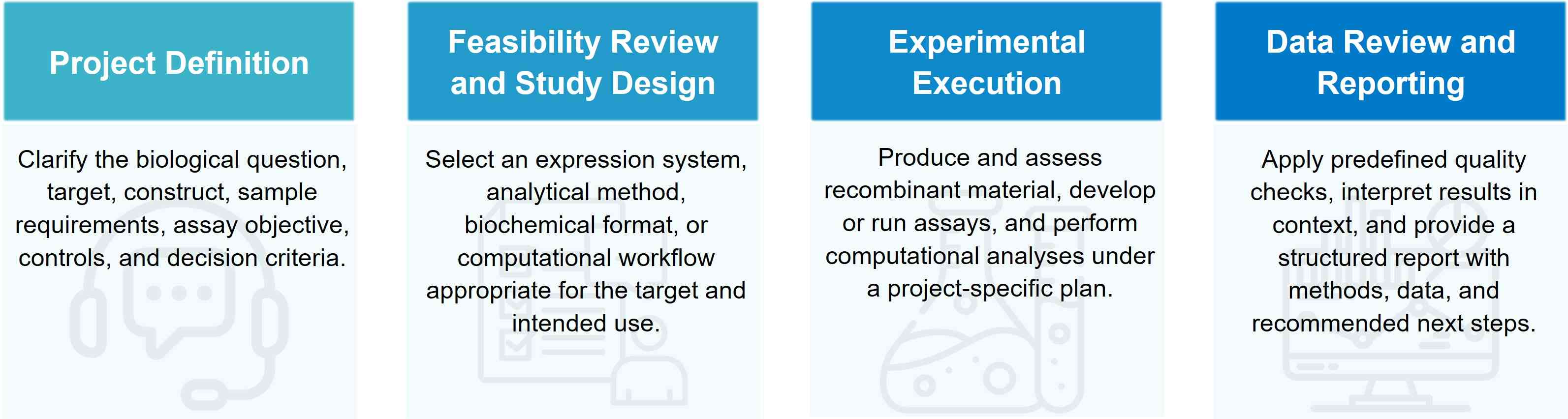
The platform is designed for research programs that require reliable coronavirus protein reagents, defensible molecular data, or an efficient route from computational prioritization to experimental evaluation. The study design can be scaled from a focused feasibility project to a coordinated set of work packages.
Recombinant protein variants can be assessed side by side to examine differences in expression, purification behavior, stability, molecular interaction, or target-related biochemical properties. A consistent construct format and analytical strategy help reduce technical variation and improve the interpretability of comparisons. These studies can support research on sequence-function relationships, antigenic changes, receptor recognition, and the selection of representative proteins for downstream assay development.
For early target research, purified proteins and defined interaction partners can be combined with binding or activity assays to test whether a proposed molecular relationship is measurable and reproducible. Work may include reagent qualification, assay-format selection, signal-window optimization, reference and negative controls, and an initial assessment of repeatability. The resulting workflow can provide a practical foundation for mechanism studies, candidate screening, or subsequent assay transfer.
Computational screening and biochemical testing can be connected to prioritize research compounds against suitable viral protein targets. Structural information, known binding features, and project-specific chemical filters may be used to narrow candidate sets before experimental testing. Confirmatory work can then evaluate concentration-dependent activity, binding behavior, selectivity against agreed controls, or potential assay interference. Results are reported as research findings and should be interpreted together with appropriate orthogonal evidence.
Because coronavirus proteins vary substantially in size, topology, post-translational modification, and stability, there is no single workflow suitable for every target. Project planning therefore considers the intended protein form, required level of characterization, assay sensitivity, relevant controls, and the way the resulting data will be used.
Discuss Your Coronavirus Research Project
References:
Fill out this form and one of our experts will respond to you within one business day.