
Targeted protein degraders are evaluated not only by whether the intended protein decreases, but also by how strongly, how rapidly, and how selectively that change occurs in a relevant biological system. Mass spectrometry provides a direct, antibody-independent strategy for measuring protein abundance changes at the target level or across a substantial portion of the detectable proteome.
Profacgen provides Mass Spectrometry-Based Protein Degradation Analysis as a specialized module within our Protein Degradation Assays platform. Project designs can support target confirmation, dose-response analysis, time-course profiling, candidate comparison, proteome-wide selectivity assessment, and mechanism-focused follow-up. MS results may also be integrated with orthogonal degradation, binding, ubiquitination, viability, or pathway assays to distinguish productive degradation from indirect changes in protein abundance.
Western blot, ELISA, TR-FRET, and reporter-based assays can provide sensitive and efficient measurement of a predefined target. These methods are particularly useful for compound screening and detailed kinetic studies, but their readout is limited to proteins for which suitable antibodies, affinity reagents, or engineered reporters are available. Quantitative mass spectrometry complements these approaches by measuring proteotypic peptides from endogenous proteins and, in discovery workflows, evaluating many proteins in parallel.
In a conventional bottom-up proteomics experiment, proteins are extracted from treated and control samples, enzymatically digested, separated by liquid chromatography, and analyzed by tandem mass spectrometry. Peptide-level signals are assigned to proteins and compared across conditions. A decrease in multiple target-derived peptides supports reduced target abundance; it does not, by itself, prove the molecular mechanism responsible for the decrease. Appropriate controls—such as inactive compounds, E3 ligase perturbation, proteasome or lysosome pathway controls, washout designs, and cell-viability measurements—help establish whether the observed change is consistent with the intended degradation pathway.
This distinction is important. Routine quantitative proteomics generally infers protein abundance changes from representative peptides rather than detecting every transient proteolytic intermediate. Mechanistic claims should therefore be based on the total experimental design and supported by orthogonal evidence when required.
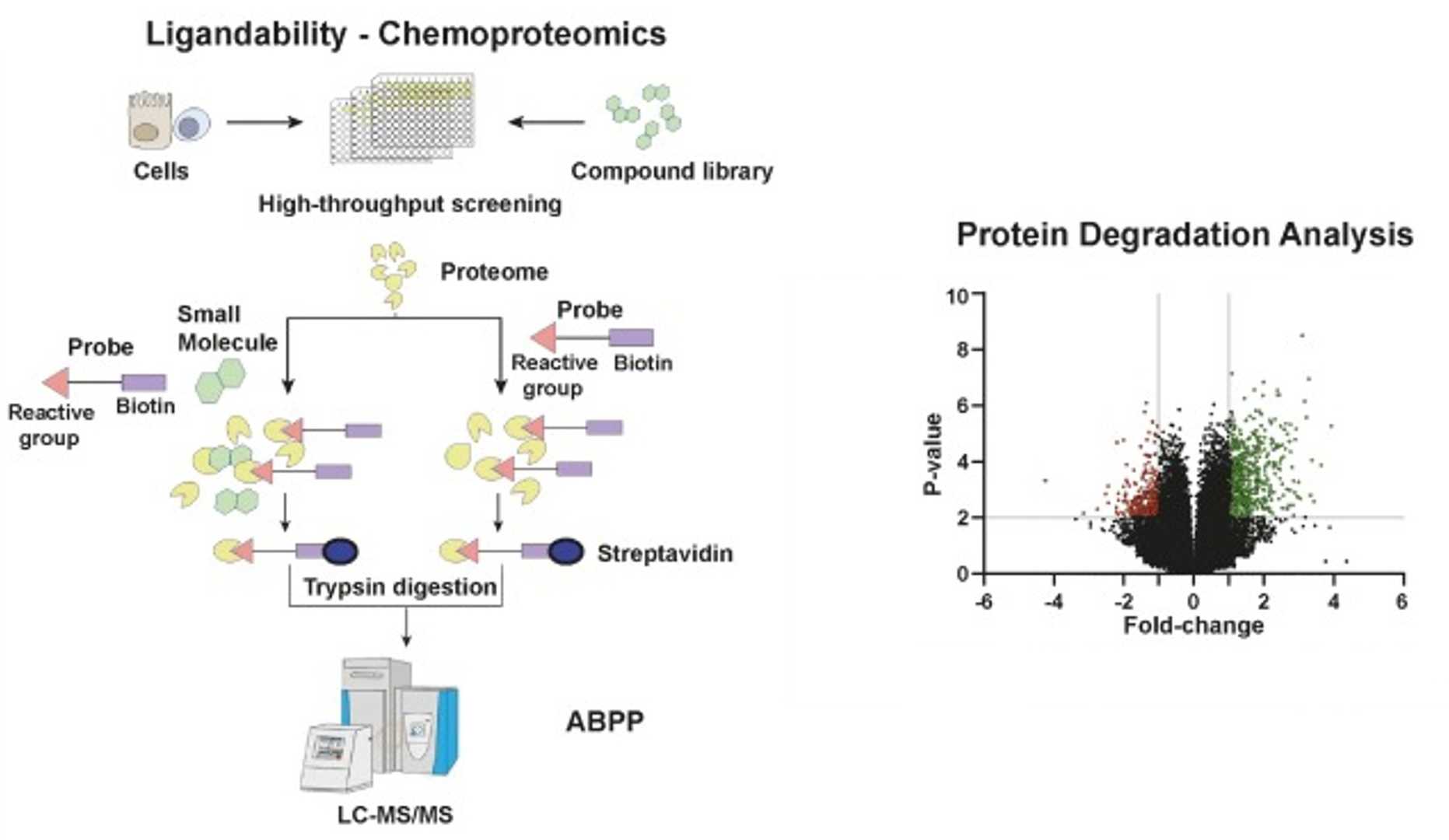 Figure 1. Examples of how proteomics approaches can aid TPD. (Sathe and Sapkota, 2023)
Targeted Protein Quantification
Focused measurement of predefined target-derived peptides for sensitive comparison across selected conditions.
Proteome-Wide Selectivity Profiling
Discovery proteomics designed to identify intended and unintended protein abundance changes following degrader treatment.
Dose-Response Degradation Analysis
Multi-concentration study designs used to characterize degradation potency and maximal effect under a defined exposure period.
Time-Course & Mechanism-Focused Studies
Time-resolved sampling and controlled perturbations used to place abundance changes within a mechanistic framework.
Experimental design has a major influence on the interpretability of degradation data. Cell system, target expression, degrader exposure, sample collection, biological replication, and controls should be selected before MS acquisition begins. The following modules can be used independently or combined into a staged program.
| Study Objective | Representative Design | Primary Output | Interpretive Value |
|---|---|---|---|
| Confirm target reduction | Vehicle versus one or more active treatment conditions | Relative abundance of target-derived peptides | Confirms whether target protein abundance decreases under the tested condition |
| Estimate degradation potency | Concentration series at a predefined time point | Concentration-response curve, DC50, and Dmax when estimable | Supports compound ranking and lead optimization |
| Evaluate temporal response | Matched samples collected at multiple post-treatment time points | Time-dependent target and pathway protein abundance | Defines onset, progression, and persistence of the response |
| Assess proteome selectivity | Biologically replicated vehicle and treatment groups | Protein fold changes, statistical confidence, affected pathways | Identifies intended target loss and candidate off-target or downstream effects |
| Support mechanism of action | Active degrader plus appropriate inactive, pathway, or ligase-related controls | Control-dependent abundance patterns | Helps distinguish productive degradation from indirect regulation or toxicity |
| Assess recovery | Treatment followed by washout and serial sampling | Target restoration profile | Supports interpretation of degradation durability and protein resynthesis |
| Output | Description | Important Qualification |
|---|---|---|
| Relative Protein Abundance | Normalized comparison of protein or peptide signal between treatment groups. | Interpretation depends on peptide quality, data completeness, normalization, and replication. |
| Fold Change | Magnitude and direction of the abundance difference, often reported as a ratio or log2 fold change. | A large fold change is not sufficient without an assessment of variability and statistical confidence. |
| DC50 | Concentration producing 50% of the modeled maximal degradation effect under the specified conditions. | DC50 is condition-dependent and should not be interpreted as a binding affinity constant. |
| Dmax | Maximum modeled reduction in target abundance observed within the tested concentration and time range. | Reliable estimation requires suitable concentration coverage and a sufficiently defined response plateau. |
| Selectivity Profile | Pattern of statistically supported protein abundance changes across the detectable proteome. | Not every cellular protein is measurable in every experiment; absence from the dataset is not evidence of no effect. |
| Recovery Profile | Change in target abundance following compound removal or cessation of exposure. | Recovery can reflect protein resynthesis, continued intracellular compound exposure, and pathway adaptation. |
A well-controlled study provides substantially more mechanistic information than a treatment-versus-vehicle comparison alone. Controls are selected according to degrader modality and project objective and may include:
Real-Time Degradation Kinetics
Monitor target loss and recovery in living cells with reporter-based approaches when temporal resolution is a central project requirement.
TR-FRET Degradation Assays
Develop homogeneous plate-based measurements for efficient target quantification and compound comparison in selected screening workflows.
Ternary Complex Formation
Characterize assembly and binding behavior among the target protein, degrader, and recruited E3 ligase.
Ubiquitination Assays
Evaluate ubiquitination as a mechanistic step linking ternary-complex formation to proteasomal target processing.
For intact mass, peptide mapping, disulfide analysis, and PTM characterization of purified proteins or biologics, visit our Protein Mass Spectrometry Services page.
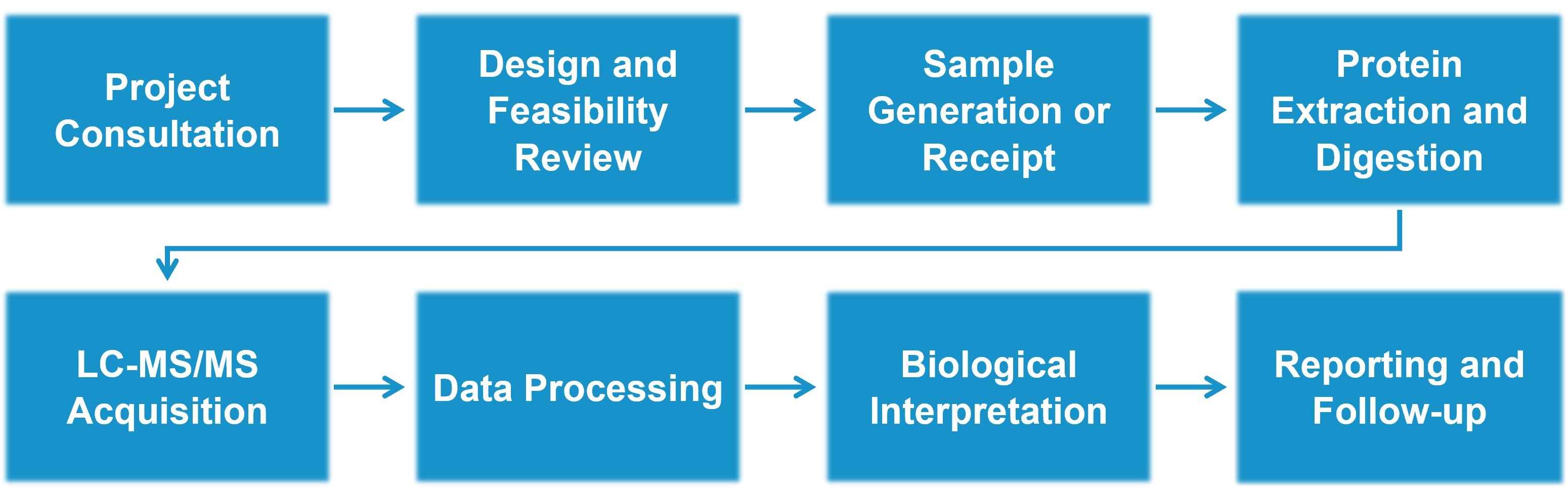
Depending on study design, the final package may include:
Background:
A discovery team had several degrader analogs that produced similar target reduction in an antibody-based endpoint assay. The team needed to determine whether the compounds differed in proteome-level selectivity before selecting candidates for additional optimization.
Our Solution:
Biologically replicated cell samples were treated under matched conditions with vehicle and the candidate degraders. Discovery LC-MS/MS was used to compare protein abundance profiles. Data processing included normalization, protein-level statistical testing, target-family review, and evaluation of pathway patterns that could indicate secondary stress or cytotoxic responses. Selected target and candidate off-target findings were prioritized for orthogonal confirmation.
Outcome:
All candidates reduced the intended target under the tested condition, but one analog produced a narrower set of statistically supported protein changes and no measurable reduction of the closest detected homologs. Another compound altered multiple stress-response proteins despite comparable target loss. The integrated results helped the client prioritize the more selective candidate. Findings from any individual project depend on the biological system, detectable proteome, study design, and confirmation strategy.
Background:
A degrader program lacked a reliable antibody for endogenous target quantification. A reporter assay indicated compound-dependent activity, but the team required confirmation that the native target protein decreased and wanted to compare response profiles for two lead compounds.
Our Solution:
Target-derived proteotypic peptides were selected for targeted LC-MS/MS analysis. Cells were exposed to a concentration series at a defined time point, followed by a focused time course for the leading concentrations. Vehicle controls, an inactive analog, and matched viability measurements were included. Concentration-response models were fitted only where the data provided adequate coverage of the baseline and response plateau.
Outcome:
The study confirmed reduction of the endogenous target-derived peptides and showed that the two compounds differed in both apparent potency and persistence. The inactive analog did not reproduce the target decrease under the same conditions, while viability remained within the predefined acceptance range. These data supported advancement of one compound to broader selectivity profiling and mechanism-focused follow-up.
Consult Our Experts on Your Project
References:
Fill out this form and one of our experts will respond to you within one business day.